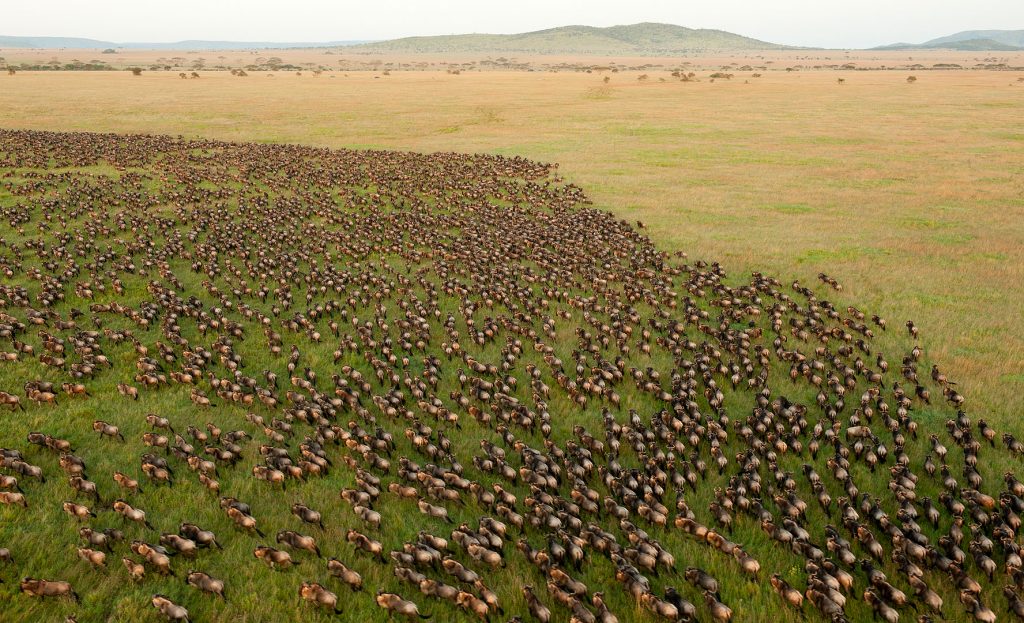
aaa Table mountain national park, South Africa

Table mountain national park, South Africa

While relatively small at only 85 square miles or 221 square kilometres, due to its proximity to Cape town it is one of the most visited national parks in South Africa.


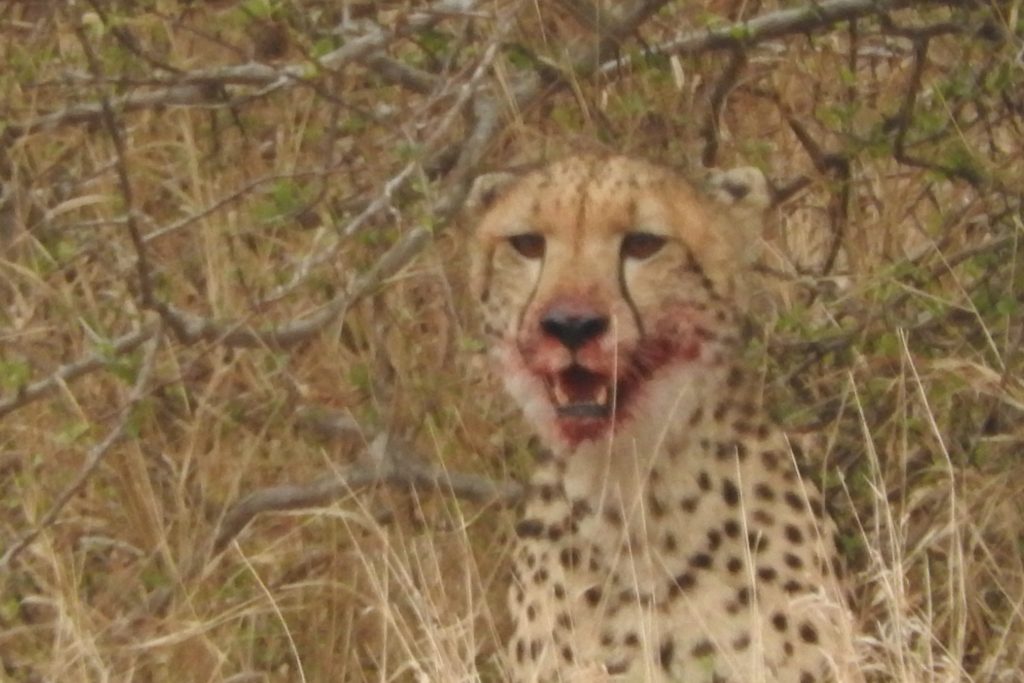
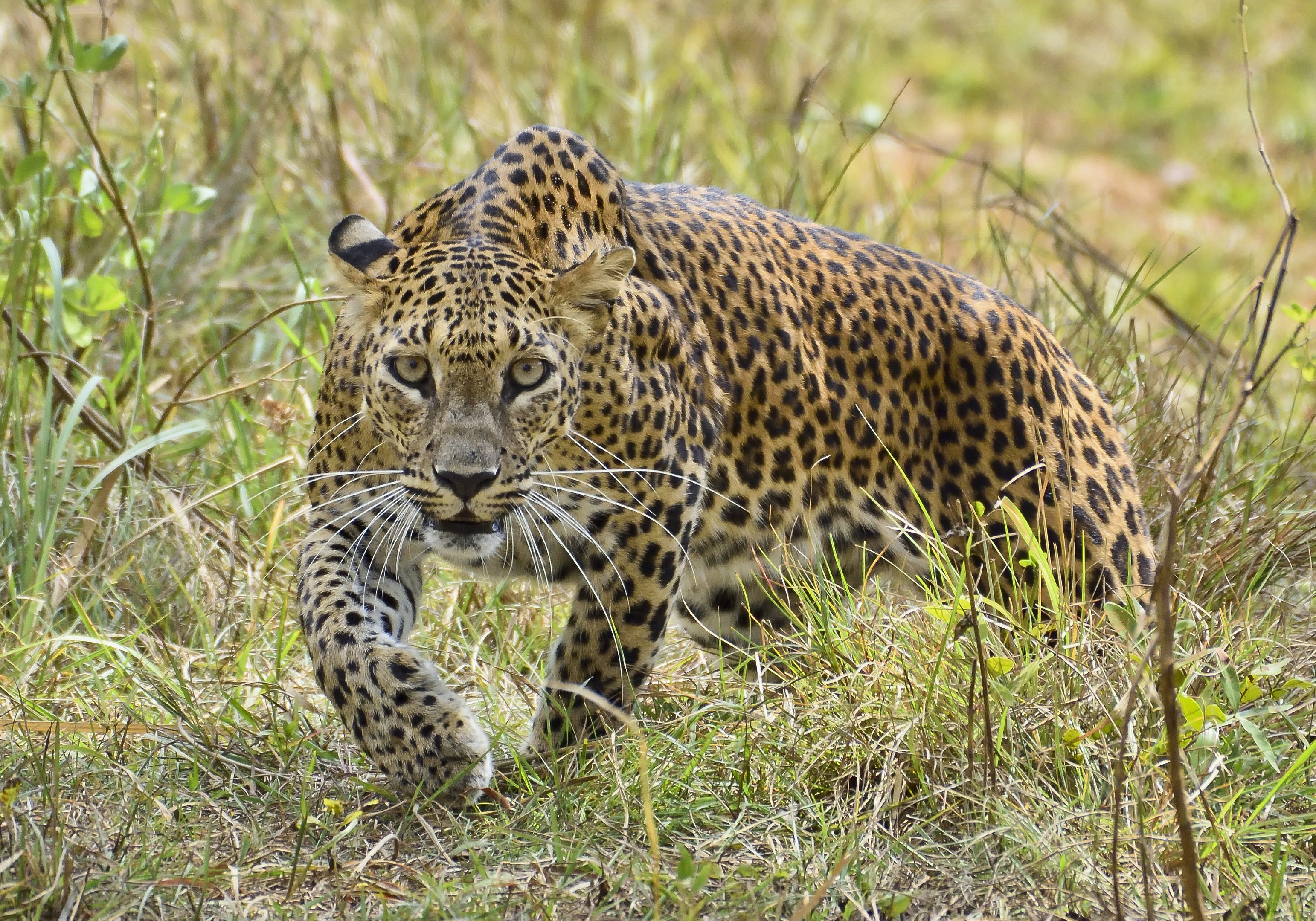
A surprisingly large variety of wildlife is found there, given the size of the reserve. Apart from a sizable and growing colony of African penguins, there is also bontebok antelope, and a large population of baboons. Other species include rock dassies (hyrax), porcupines, mongoose, snakes, lizards, tortoise and a rare species called the table mountain ghost frog which is only found here. While once a big 5 reserve, only the leopard is ever present, and this is only an occasional visit by the roaming cape leopard. The current apex predator is the Caracal, which is a relatively small cat when compared to the Leopard.


Other than this the retrogresses and a handful of wild ostrich. During the meeting season between August and October it also can be a good place to watch southern right whales which come here to breed.

aaa Pureto princesa subterranean river national park

Pureto princesa subterranean river national park, Philipenes

Located in the St Paul mountain range on the west coast of the island of Palawan, the park contains the Puerto princesa subterranean river. 165 species of bird have been recorded in the park including the blue naped parrot and this Tabon scrub-fowl. There are also a total of 30 mammal species recorded, the long-tailed macaque is most often seen in the forest canopy or looking for food along the sea shore at low tide. Other mammals include the Palawan bearded pig, the Palawan stink badger and the Palawan porcupine. There are also a list of 19 reptiles which include the common reticulated python, the monitor lizard, and the green crested lizard.

aaa Zhangjiajie sandstone peak forest reserve, China

Zhangjiajie sandstone peak forest reserve, China

This reserve covers a complex to trevane covered in ravines deep canyons and has a mild climate with abundant rainfall. As a result much of the area is covered by rainforest and there is a great deal of wildlife. It is a total of 1,400 square miles or 3,600 square kilometres.


Animals of particular interest include the leopard, the clouded leopard, the pygmy slow loris, the yellow belly pheasant, and long-tailed pheasant, the giant salamander, five step snake and many more. Others include the stump tailed macaque, the suman sheep, the pangolin, the black bear, the lynx, the otter, the forest musk deer, the samba deer, the jackal, the mandarin duck, the sparrow hawk and a few more.

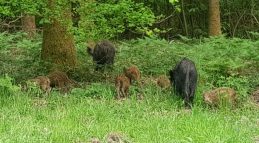
Rare species include the bison, the wild goat, the wild boar, the wildcat, the civit cat, the flying squirrel and several more.


aaa Southern Iberian chain

Southern Iberian chain

A wild mountain range of high areas the carve through the Iberian peninsula is being slowly rewilded. Still housing forests of oak pine and Juniper, the area still feels ancient.


Many species were lost from this area but are being reintroduced. Wild bears and wolves yet to return the Iberian lynx is back along with both Egyptian and Griffin vultures.


The area covered is large, consisting of over 850,000 hectares (more than half of this is officially protected). There are a variety of other interesting birds in the area, as well as deer, wild boar and mouflon. As a result of a reducing human population since the 1960s, nature tourism is increasingly important for the local economy. A network of 14 old growth forest reserves have also been created totaling about 2000 hectares, which are fascinating to explore and incredibly important for carbon sequestration.


Visit to help ensure that this project continues and the locals benefit from its wok

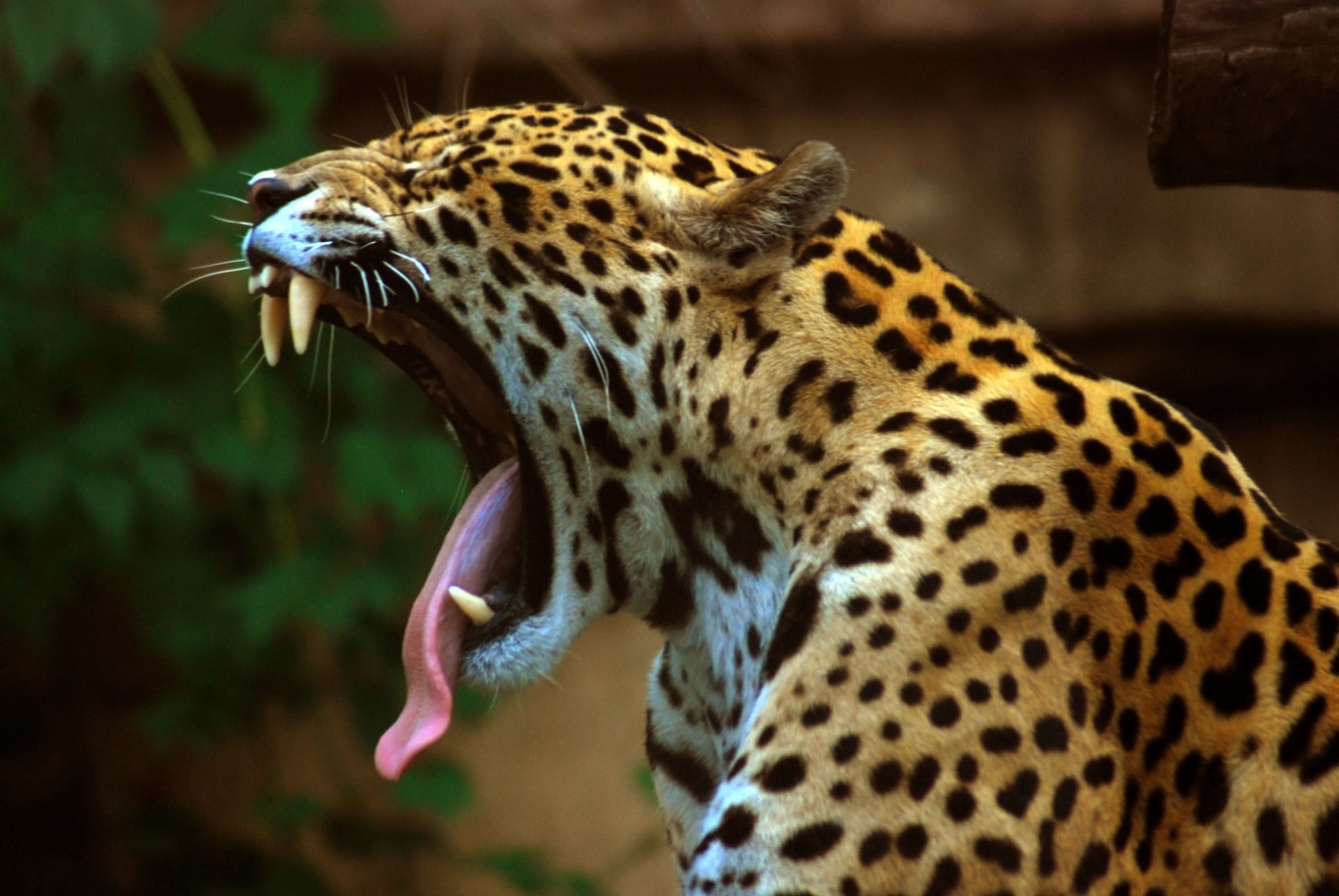
Jaguar

Jaguars are the only big cat not found on the supercontinent. Dominating much of South America, and before the arrival of humans much of Southern North America

photo credit MarcusObal

Jaguar

Jaguars are the only big cat that is found in the Americas. Superficially looking like a Leopard, it is actually no more closely related to a Leopard, than a Lion or Tiger.

Once (as late as the year 1900) ranging from Southern Argentina- north through the rest of South America, and throughout Mexico and the Southern United states (some 19 million square km) its current range is greatly reduced, see the map below.

A map of Jaguar range. Red is the current range, pink is the range back in 1900. As you can see, it only leaves the Jaguar as the king of the Amazon

Wonderful swimmers, fantastic hunters and strong cats, they were undisputed as the apex or one of the apex predators in every environment in which they lived.

They are known to regularly take livestock where it is possible. Possibly as a result of having only millennia rather than the eons that native animals have, they have not learnt to fear humans and keep their distance as healthy populations of lion leopard and tiger do.

However, there is also a huge draw to see this animal in its native habitat. The easiest way to see Jaguar, is usually from a boat on a river.

As with other species on this site, I hope to add many destinations over the next few years. Below these links will be a list of all articles on Jaguars,  and we  will add all the destinations and links we have, as we make them below the news section.

From the great Pantanal – Brazil’s area of wetland, to a number of reserves across the amazon rainforest (it is estimated that 57,000 Jaguars still survive in the fragments of the Amazon rainforest that still stand.  On top of this, there is still significant jaguar habitat in Mexico and central America. One of these was set up by the late great Alan Rabinowitz, who fought right up to hist death for protecting places like Cookscomb basin reserve in Belize.

As with many other wildlife around the world, travel to see these animals is essential, if we are to give a financial incentive to those who live and work in the country. Get in touch if you work in conservation of this incredible animal, or tourism. Link is at the top of the main page (or click here)


Lion

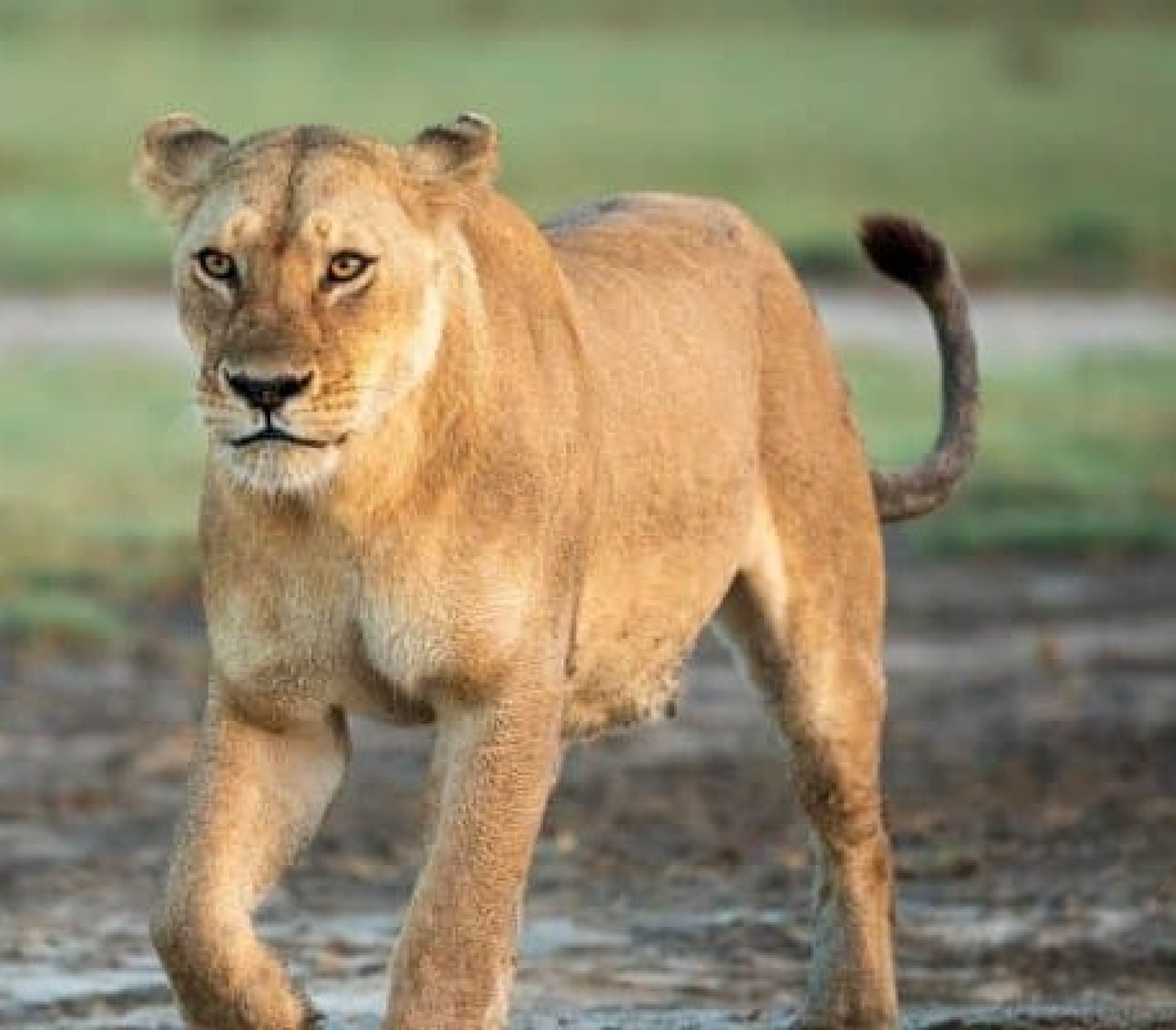
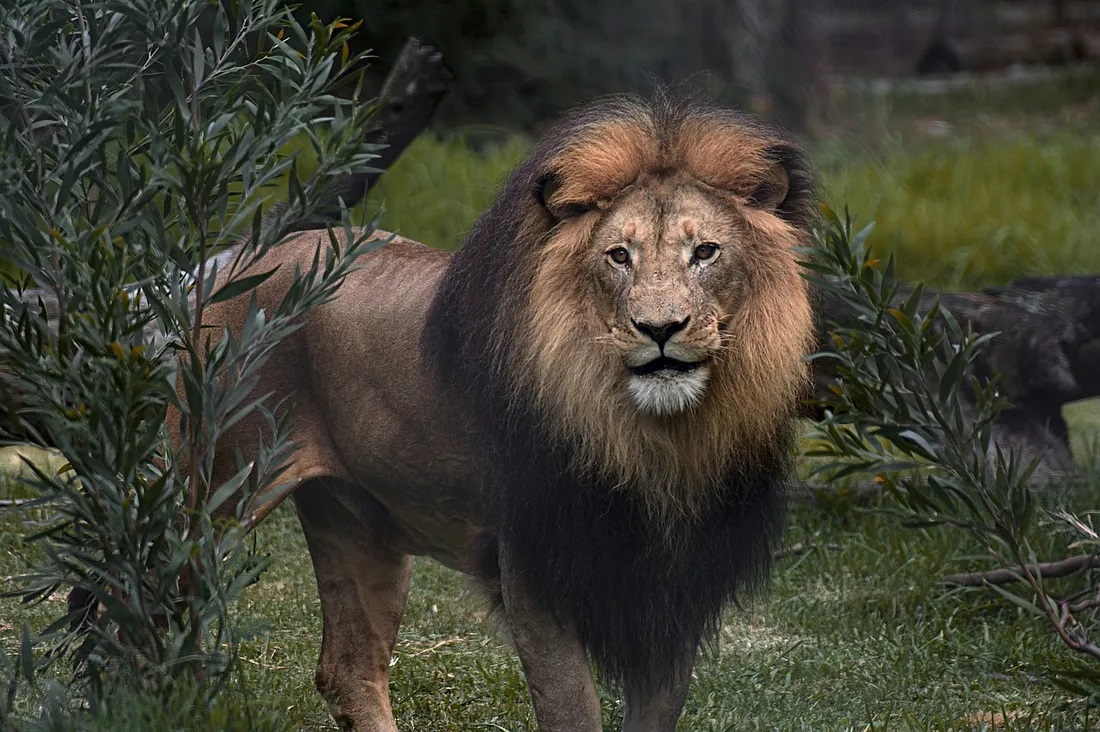
Photo credit Ross Couper

Lion

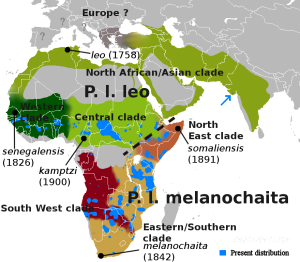
Altaileopard https://en.wikipedia.org/wiki/User:Altaileopard – Own work using: File:Lion_distribution.png Scientific source: Bertola, L. D., Jongbloed, H., Van Der Gaag, K. J., De Knijff, P., Yamaguchi, N., Hooghiemstra, H., … & Tende, T. (2016). Phylogeographic patterns in Africa and high resolution delineation of genetic clades in the lion (Panthera leo). Scientific Reports, 6, 30807.

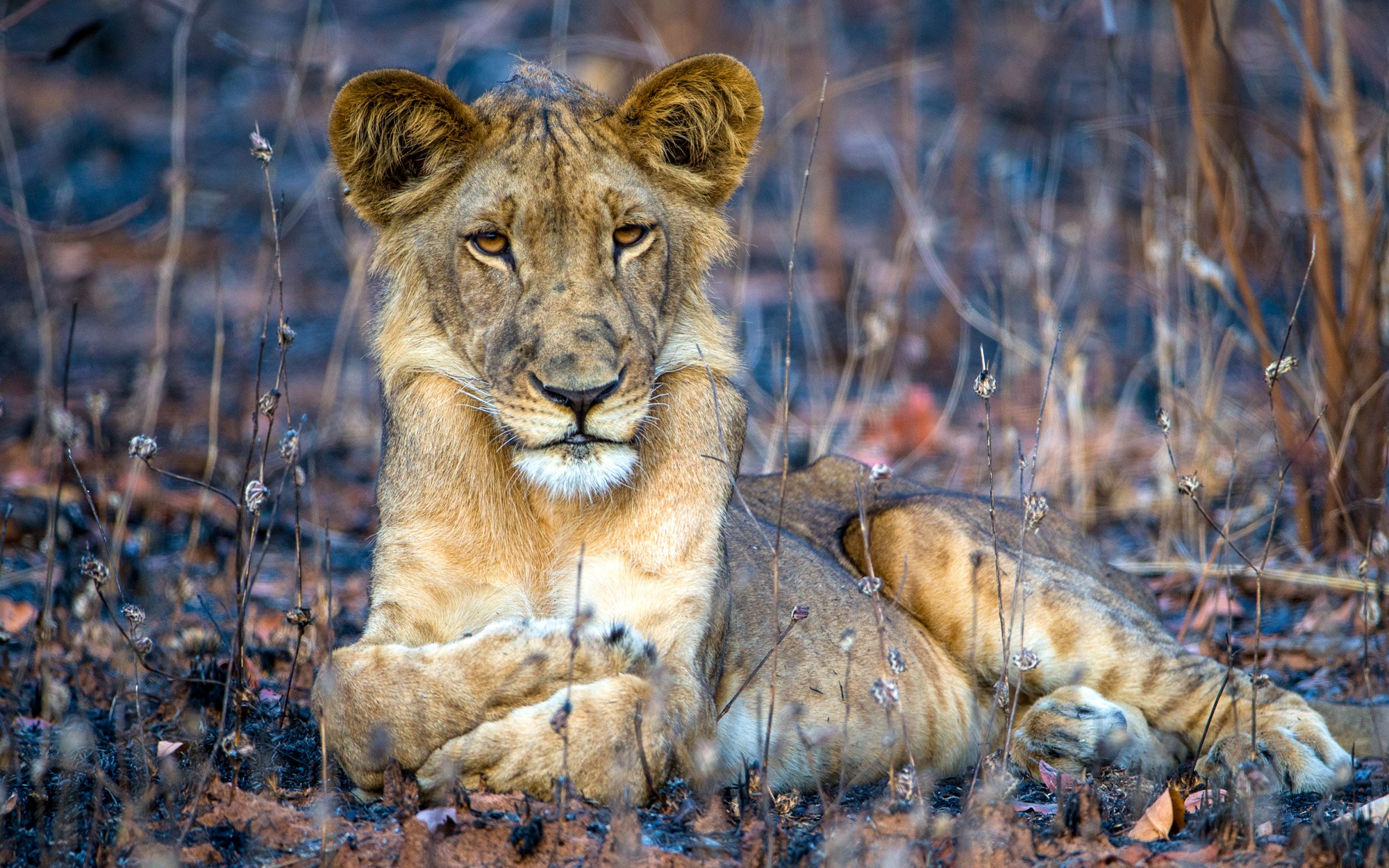
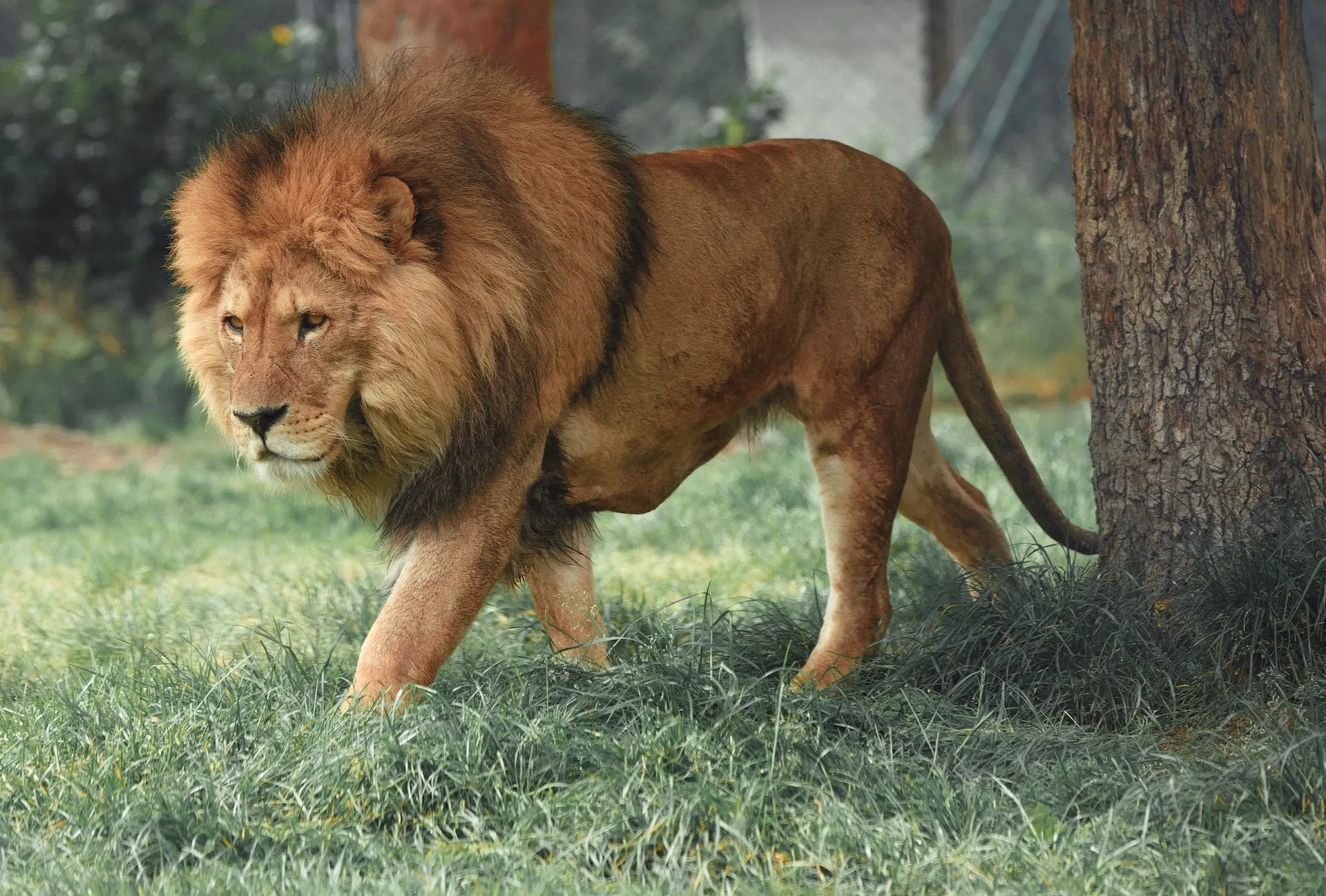
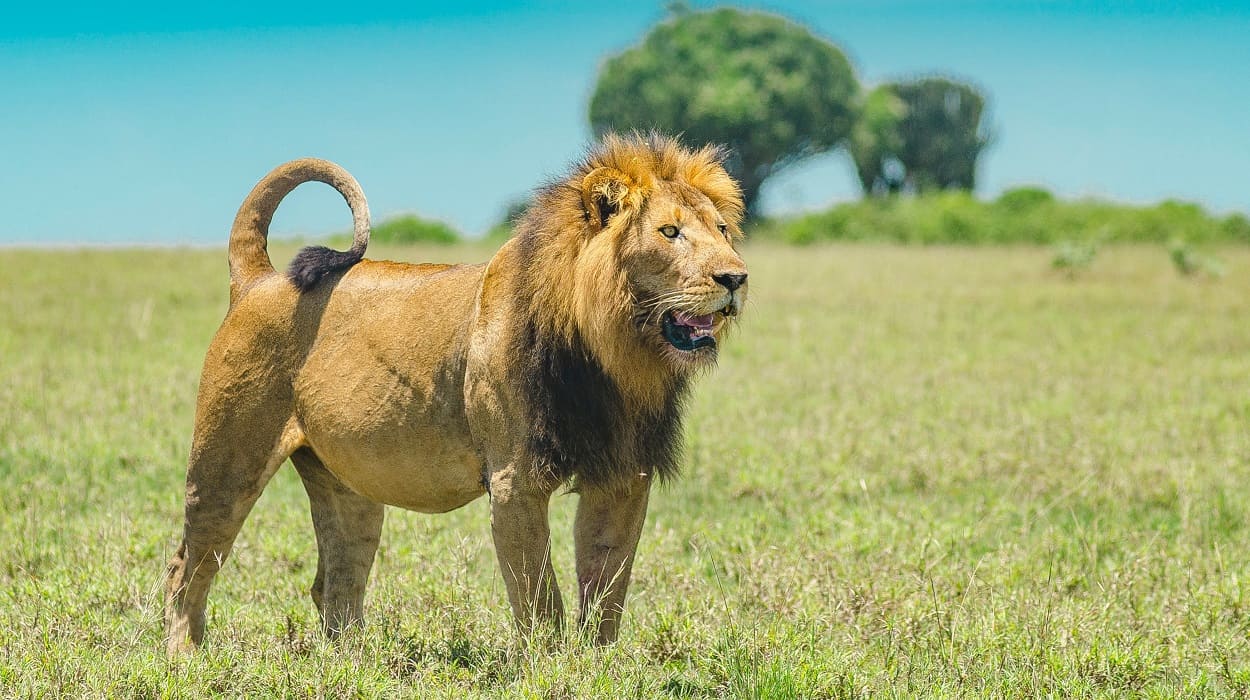
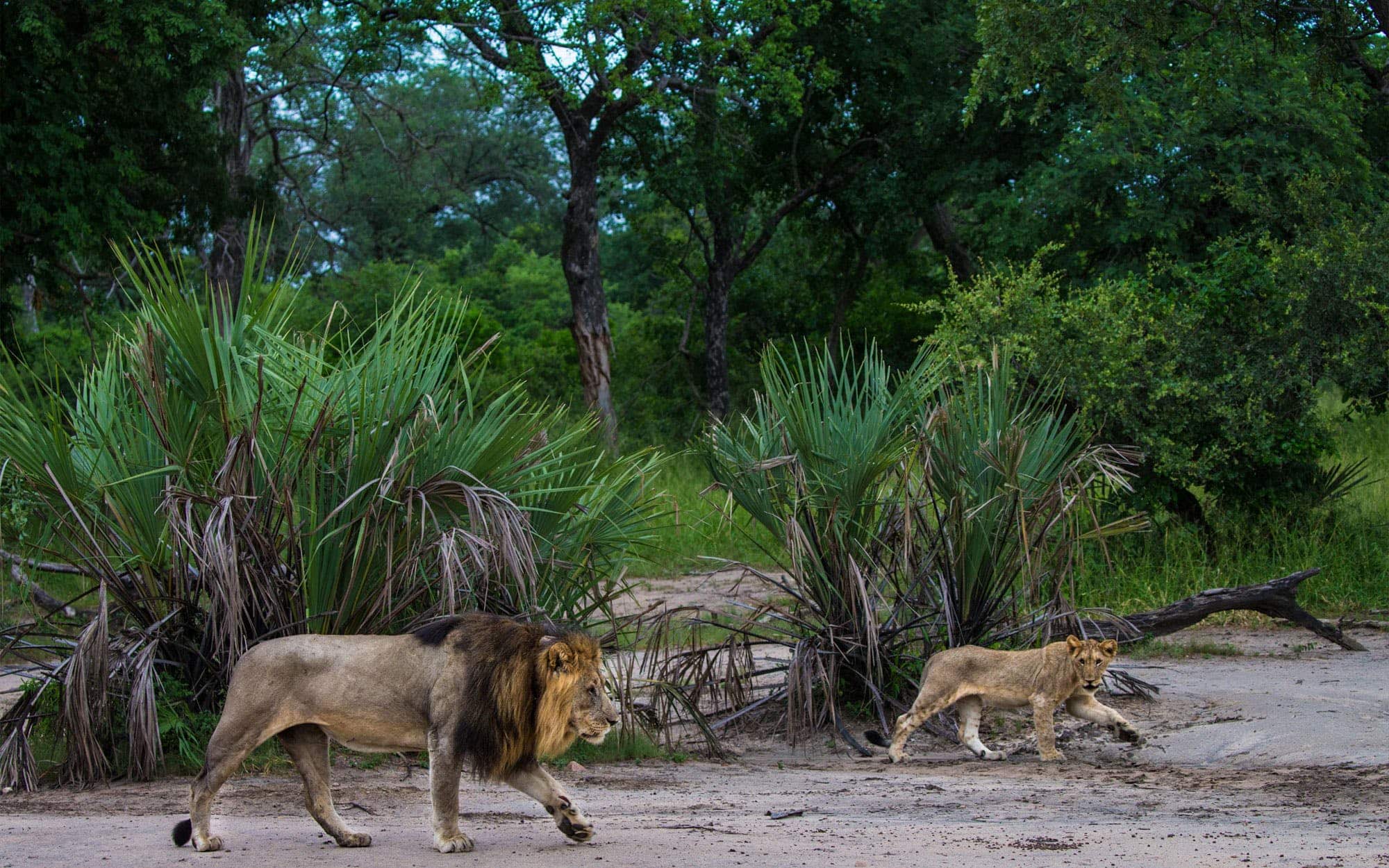
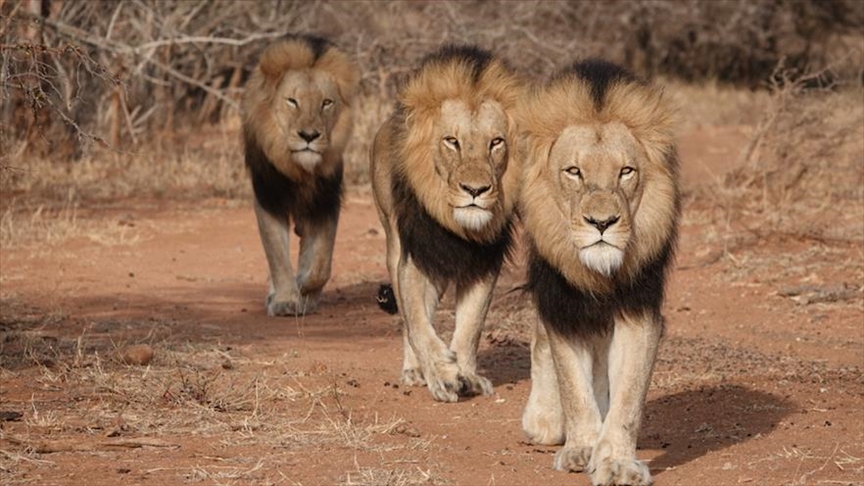
Lions- often referred to as ‘The king of the jungle’ (odd as they are rarely found in the jungle) are usually one of the animals visitors want to see if not the main one.

They are very impressive and it is understandable why they are popular. No other predator dares lie out dozing in the open plains all day.

However over the last few decades, lion declines have been horrific, with declines of more than 2/3 since the 1960s.

Lion conservation is important, because to have a thriving lion population, you need a very large protected area, and an intact ecosystem- so all the other animals benefit. I have used a large variety of sources to compile this, but one study of great interest is “Lion conservation in West and Central Africa” by Hans Bauer, published in 2003. In 1996 the estimate for the lion population in Africa was thought to be between 30,000 and 100,000, however the IUCN African Lion Working Group suggested a more realistic number was 18,000-27,000. They also suggested, that of 38 reserves and parks across these regions that used to have lions, they are definitely lost from 23.

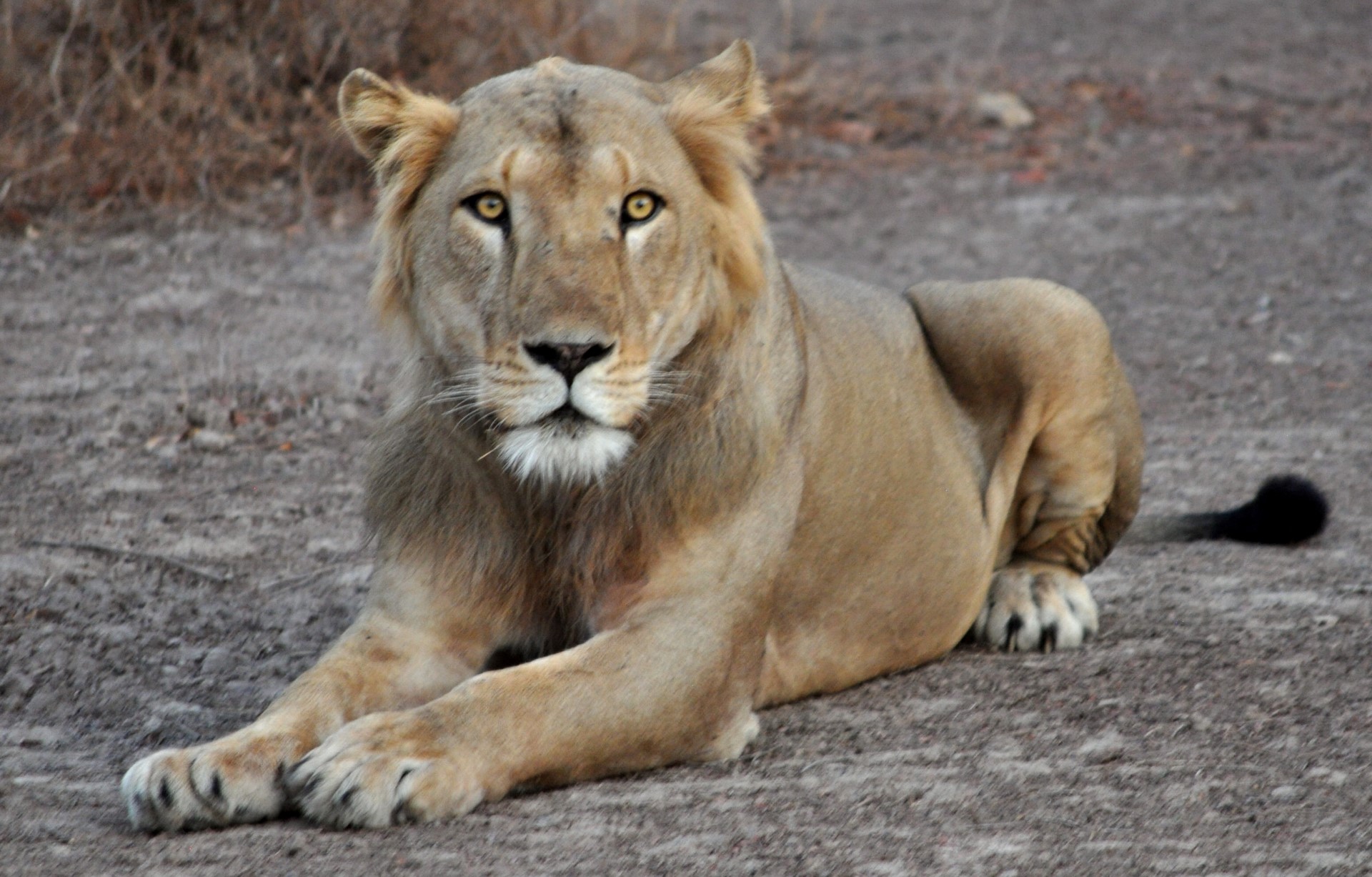
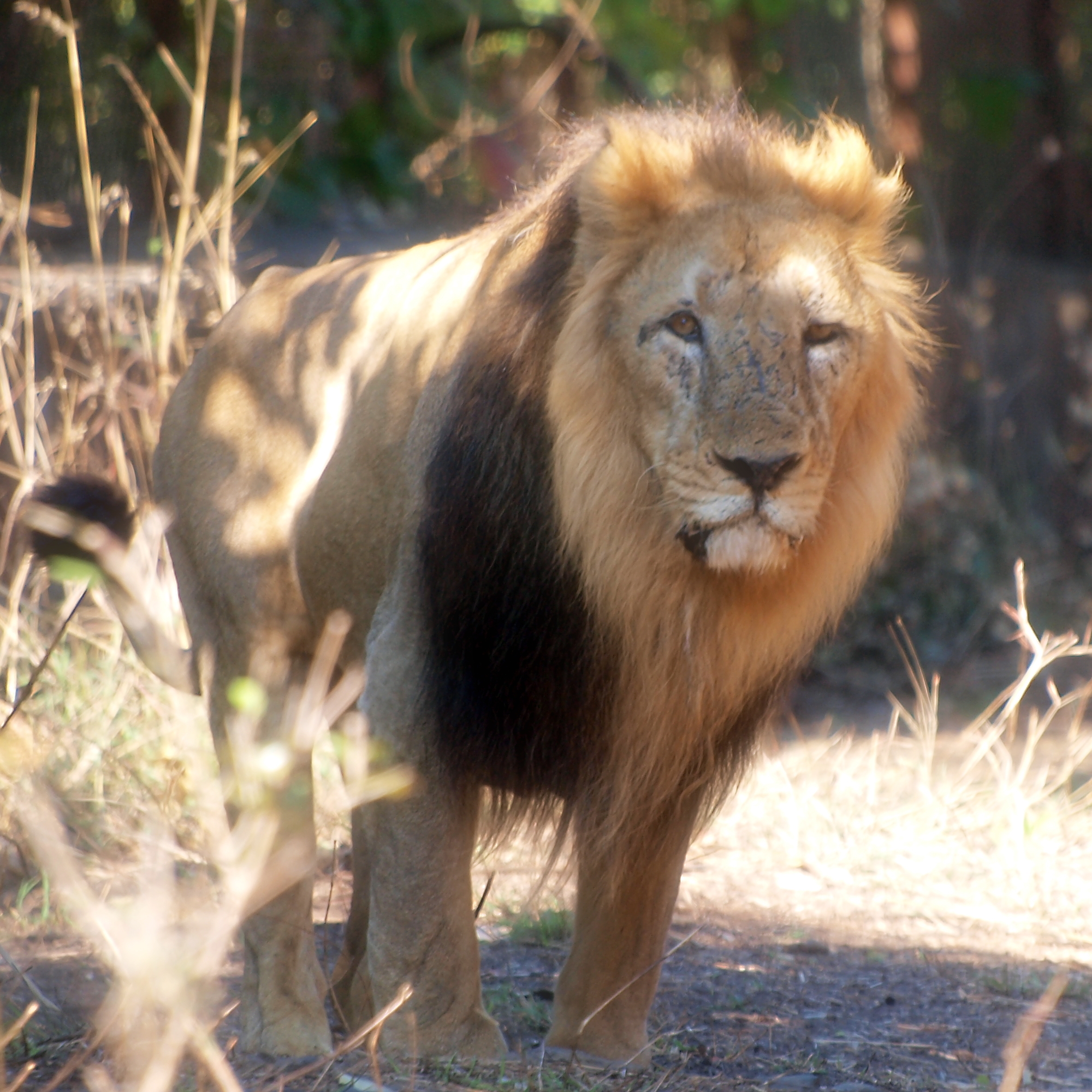
The Asiatic lion is different; Its only current home in Asia, is the Gir forests of western India. However, something that many people do not know is that the Asiatic lion population of Gir is a tiny relict of possibly the largest spread lion subspecies. The Asiatic lion still exists in Africa – the western and northern lion population are very closely related to the Asiatic lion and are thought to have last naturally interbred a few centuries ago. Importantly, they are still so genetically similar that they are not different sub species. This is important, as it means that only just over half of the Asiatic lions live in and around Gir, the rest live in Africa. I hope to add many more destinations over time. If you run safari lodge or camp or tours please do get in touch through the above link “list your wild place”. We are keen to list as many of the places to see wild lions as possible. 

It should be noted, that in historic times the Asiatic lion population spread as far as Spain, though the last ones were likely lost around the time of Jesus. Asiatic lions survived in the Caucuses for far longer, surviving until around the end of the first millennium (1000AD). Ecologically, the conditions of Southern and Eastern Europe have not changed much in the last millennium. However, until a significant change in human habitation, there is no space for lions to return to this area.

Current estimates suggest that at most there are 20,000 lions in Africa (Some suggest 20,000-25,000, though LionAid did a thorough assessment of the lions on the continent in 2020 and came up with just 9200). If this lower number is correct, then there is no longer more than 10,000 wild lions in the world. Having said that, below is the 5 largest populations, which are relatively well known, and these add up to above that number. Time will tell.

As keystone species, and apex predators, lions are incredibly important, as such it is a species that is followed closely on this website.  On each tab, you will find a list of articles about that species. Find below a list of articles on lions, below that is links to places we list where you can see lion. Please note, tab 2 and 3 refer to two separate populations of the Asiatic subspecies if only recently confirmed through genetic testing.


As you can see from the map above, the name African lion is not particularly accurate, given that half of Africa was inhabited by the Asian Lion. Still, even taking into account this number of African lions which belong to the Asiatic lion subspecies, still the population of African lion subspecies account for the majority of lions left in the world. It should be noted, that while Tanzania is still claiming a lion population of 14,000-15,000 Lionaid survey in 2020 claimed around 9600 in the world, so someone is definitely wrong. The image at the top of the page is an African Lion. 

It is unfortunately a fact, that many of the small lion populations have not survived over the last 20 years. Small reserves across Africa, once had no fencing, allowing the wildlife, including Lions to migrate as prey densities would support. However, as the human population has grown, these small reserves have become islands of wilderness, in a sea of humanity. Many of these small islands of wilderness have lost their lions. IUCN estimated a population of 23000-39000 lions in Africa in while an Oxford university estimate suggested 20000-25000 in 2023. It should be noted that the numbers I have quoted for each country, comes from this website. Given the most thorough assessments suggest a lower number, some of these should be taken with a pinch of salt, however, I am going to use these numbers until I get more reliable ones to replaces them

Over time, I hope that the destinations that we list on this site will grow fast, but for now we list the large lion ecosystems- hopefully with a few more coming soon. You will find more detail and when there is a link, within each countries tab below.

1. Kruger national park, and the greater Limpopo 2500                          

2. Serengeti and surrounding reserves 3000 

3. Kalahari Zambezi 1500 (though with the size of this

 reserve, there is space for much growth)

4. Selous (Nyerere national pakr 4000-5000 though as most of this vast reserve is set aside for hunting, much if it is unavailable to photographic safari (latest survey suggests 4300)

5. Ruaha national park (Tanzania) 4000

This accounts for around anything from 40% up to 64% (it is likely to be at the top end of this estimate as this includes the biggest lion populations of Africa) on the lions of african depending on which estimate you trust. Indeed, given Lionaids estinate, it accounts for as much as 167%.  We hope to add other populations in the coming years.

While it is undeniable that the lion populations in the East and South of the continent have reduced, there would have to have been a significant population in west and north of the continent as well. While, clearly, much of this space has been lost to human expansion, there is still much space for a great increase in this population, whether it ever gets a chance to grow is something we will have to wait and see.

Known as Panthera Leo Leo, the Asiatic Lion is more complicated than once thought. Historically found throughout North, West and Central Africa, Large parts of Asia as well as throughout Southern Europe. Different parts of this huge area have been lost at different times. Oddly despite this, it appeared to be officially forgotten for some time, so that only recently it was demonstrated genetically that the West African lion and the Central African lion are the subspecies as the Asiatic lion, and as such there ar

e actually more Asiatic lions in Africa. As such, the Asiatic lion is split into 3 clades. Which will be handled separately.

So here, the west African Lion clade:

1. W-Arly-Pendjari Transfrontier park was estimated to hold 250-500 members (it should be noted that it is likely close the botto at the current time)

2. Senegal’s Niokolo-Koba national park formerly a stronghold, the number of lions as low as 30 at the moment (down from as high as as 120 in 1996)

3. Waza national park, Cameroon is was thought to host 14-21 lions in 2010, I  dont know what has happened since

4. Kainji Lake National Park, Nigeria is thought to host around 30, while Yankara may only have 5 left.       

5. Bénoué ecosystem: (Faro, Bénoué and Bouba-Ndjidda national parks as well as 32 hunting areas, covering 30,000 square km) contains 250 lions 

Are these over-estimates? A significant number of sources claim just 250 in the world, though others suggest around 400. Having said that, should we assume the minimum population for the WAP complex and Benoue estimate being accurate (studies are recent and thorough) this gets us to to over 400 already. 


What is unfortunate though is the populations in the other 3 reserves. 

Having said that, back around 1900 there was only an estimated 20 lions left in India, so a similar recovery could give each of these reserves a 400 population in 50 or so years. I would estimate given the reliability of these numbers that at the time of the study in 2020 the total population numbered around 800. though even half of this would be enough for a recovery over a relatively short term.

The western and the central lion population was (relatively recently) far larger. 1900 it is thought that there may have been as many as 200,000. Even as recently as 1970 there were thought to have been 90,000.

Unfortunately, at the current time, I have no links in these place – but would love to, please get in touch if you work in one of these reserves, we would love to help people find you.

 
[smart_post_show id="30299"]

Known as Panthera Leo Leo, the Asiatic Lion is more complicated than once thought. Historically found throughout North, West and Central Africa, Large parts of Asia as well as throughout Southern Europe. Different parts of this huge area have been lost at different times. Oddly despite this, it appeared to be officially forgotten for some time, so that only recently it was demonstrated genetically that the West African lion and the Central African lion are the subspecies as the Asiatic lion, and as such there are actually more Asiatic lions in Africa. As such, the Asiatic lion is split into 3 clades. Which will be handled separately.

So the central African lion is thought to have a population of around 2200 (as of 2015-2016): I have not been able to calculate a proper number for this, I hope to have more information in the future.


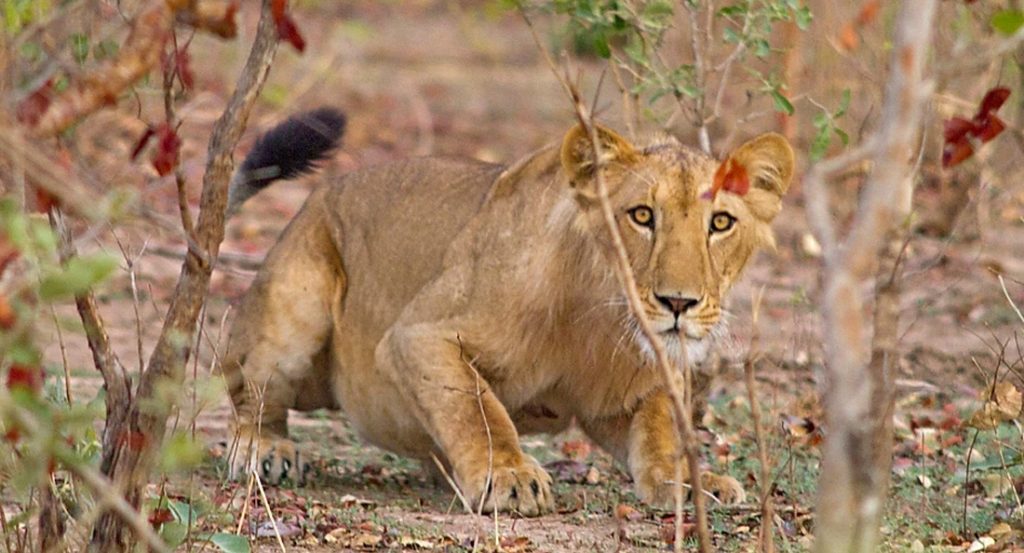
Asiatic lion from the Gir fores

Known as Panthera Leo Leo, the Asiatic Lion is more complicated than once thought. Historically found throughout North, West and Central Africa, Large parts of Asia as well as throughout Southern Europe. Different parts of this huge area have been lost at different times. Oddly despite this, it appeared to be officially forgotten for some time, so that only recently it was demonstrated genetically that the West African lion and the Central African lion are the subspecies as the Asiatic lion, and as such there are actually more Asiatic lions in Africa. As such, the Asiatic lion is split into 3 clades. Which will be handled separately.

So the North African and Asiatic clade: The north African lion, otherwise known as the Barbary lion, was lost some time ago (the last one was shot in 1942). However, there has been much discussion about reintroducing them to Morocco, for some time. It could well be done in the near future. 

The rest of this clade (remembering that the West and Central African lions are the same subspecies as this) are found in the Gir forests of India. This population is thought to be as high as 600, though deaths have been particularly high for a significant period of time. This population only currently has one protected home, from which the lions are overflowing- the Gir forest. The forest is home to as many as 600 lions, though only covering 1400 square km (545 miles) the best reserves in Africa have roughly 1 lion per every 5 square miles. Many of these lions live outside, with as many as 200 having made their home by the sea, a great distance form the park.


Scientists have long argued that some of the lions should be moved to another reserve as having all of them in one place leaves the entire clade vulnerable to natural disasters or indeed an epidemic. Indeed, it has gone all the way to the high court in India, but the Chief minister of Gujarat has simply refused to enforce the order (he does not want to loose the status of housing the only wild Asiatic lion (at least the Asiatic clade). There was much effort to give the Indian lions a second home, but the government saw them as their property and refused to allow any to be moved. The proposed home was set up for them – the Kuno reserve, with a number of villages moved to accommodate them. The Gujarat government has suggested all sorts of reasons to refuse, including that the reserve is unacceptable – despite being almost identical to Gir.

Kuno is now the home of the cheetah reintroduction (not that this should rule it out, as they lived alongside each other in the past, and from where they have been moved). Never-the-less, Gujurat has refused to budge even having lost the case in the supreme court.


It seems absurd that something this important can be held up because of politics but there we are. There are plans to move 40 lions to Barda wildlife sanctuary, which would at least give a second home. However, given the Asiatic Lions historical range covering such a vast area, the idea that one state in India could block translocations to anywhere else is quite scary. 

Never-the less, it is still a fascinating place to visit.


Lion information by country (first west and central, then east, then south, then Asia) then any vagrants

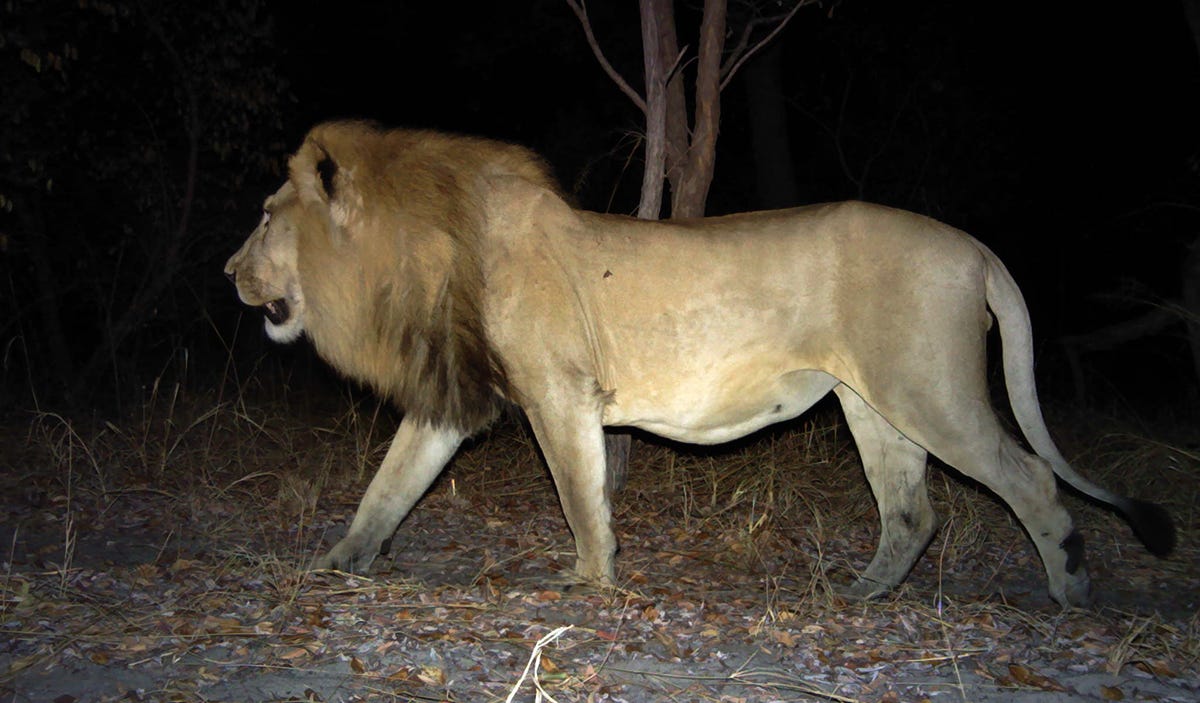
A rare Angolan male lion pads gently past a Panthera camera trap by Phillip Henschel (Panthera)

Formerly around 1000, currently the number of lions in the country is probably only between 10 and 30

Angola has had its lion population fallen dangerously in the last couple of decades. A 2020 ground survey in Angola’s largest areas has an estimated 30 lions. Similarly, the Panthera Foundation estimated 10-30 lions in the country. However, previous estimates were much higher (for the same area).  The IUCN estimated a population of 750–1,000 lions in 2006, while Duke University estimated 1,900 lions (in 2013). A 2021 survey found no lions, though a 2021 camera trap survey, photographed 5 lions. This area in question is Luengue-Luiana and Mavinga National Parks. What is terrifying, is that this decline appears to have occurred in just 12 years. It should be noted, that these two national parks are small sections of the Kalahari Zambezi transfrontier park – should the protection improve, there is clearly space for an impressive wilderness. On the other hand, given the current situation, we could find that any lions that cross into Angola get poached, and therefore it will be bad for the lions of the KAZA and Africa as a whole (the whole of the KAZA has a population of roughly 3500).

Looking at the map of Lion range, there are small specks of lion north of these parks in question. Unfortunately, current feelings is that these lion populations no longer have any lions (of course, whether these reserves might one day be a good place to translocate lions, is another question) .

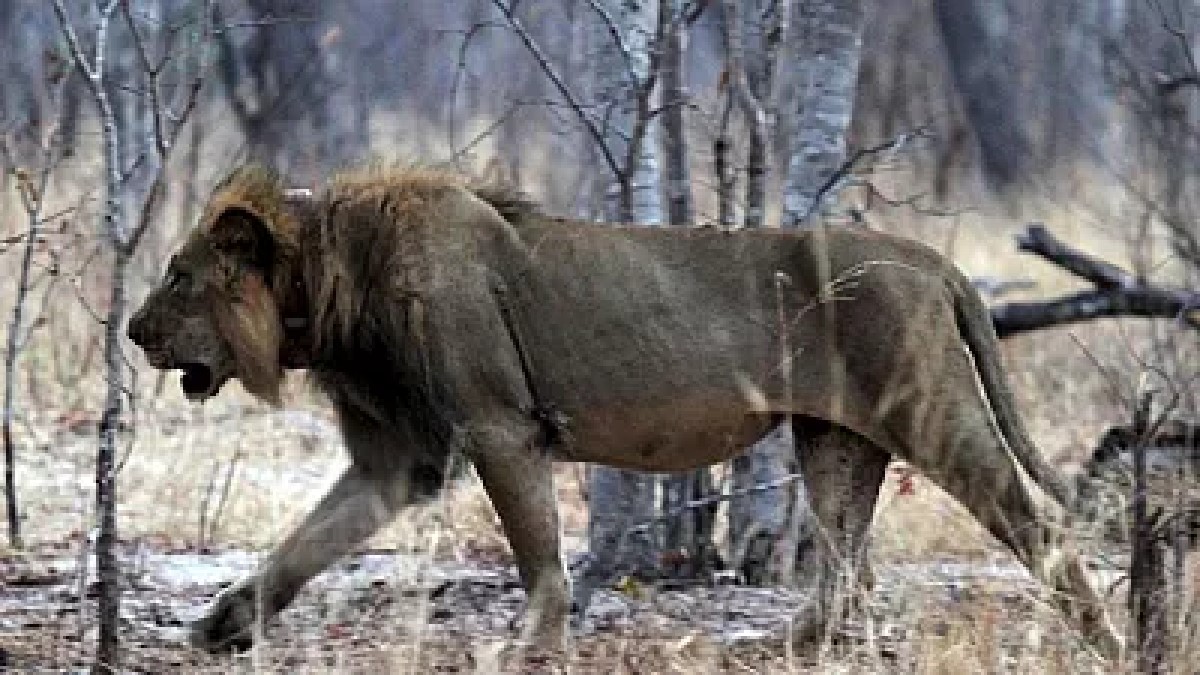
A young male roaming the Arli National park in Berkuna Faso section of the WAP complex

Currently estimated at 250 lions in the country.

Burkina Faso has a total of 4 national parks as well as 2 well known reserves (amongst many more, often smaller). I hope to cover all, in the future. However, here only those with lions are of interest. There may be more than listed below, but these will be added in the future as I become aware of them.

Arli National Park: is perhaps the jewel on the crown for this country. It is the Brukina Faso section of the WAP complex which is an area of  . It also includes the Singou Reserve, also within Burkina Faso (one of just 3 “complete” reserevs which is a specific class). The WAP complex covers over 17,000 square km (6500 square miles, around 1000 square miles than the world famous Kruger national park, so large enough to protect its wildlife long-term). The WAP complex is an incredibly important reserve for a whole variety of wildlife. Its own numbers claim 246-466 west African lions (many sources claim this population is only 250 mature individuals left, while ranges usually put the population between 120 and 374). Wherever this population number lies, it is suggested that 80-90% of the remaining west African lion population are within this reserve. It should be noted that this is a clade of the Asiatic lion subspecies, and this population could possibly be a similar size to those living within Gir forest national park in India (though it should be remembered that many lions live outside this national park as well – this will be covered in the India tab). This makes this reserve an important reserve for lions as a whole, and the western/central African Lion clades of the Asiatic lion in particular. When a page for the Arli national park, and the WAP complex  in general is added, this will be linked from this text.

Lions in the Pendjari national park

Benin has an estimated 120 lions, mostly found within Pendjari National Park (part of the WAP complex). This national park is currently thought to host around 70-100 wild lions, though it is thought that its carrying caacity is 400-500, so with better management, this park could allow a siginfican recovery in lions within this country. The W national park borders this park, also within Benin, and it is likely that the lions move pretty freely between the parks. 

It should be noted that these lions roam outside the park, and regularly kill local peoples cattle. As such, there should be significant concern about retaliatory killing reducing this number. While there may well be another reserve or national park with wild lions, I have not found reference to it. The remaining 30-50 lions may well be free roaming in the area around Pendjari national park. I hope to add more information in the future

The countries lion population is estimated at 100 (see here), however estimates of the number of lions in Cameroon do vary, with the numbers below adding up to roughly 330.  

 
  • Bénoué complex: A 2015 study estimated that there were 250 lions in the Bénoué complex, which includes the national parks of Faro, Bénoué, and Bouba Ndjida.
     
  • Bouba Njida: Estimates suggest that there are around 80 lions in Bouba Njida. 
     
    However, a more recent estimates suggest that Cameroon’s national population is around 270 lions, split between these two areas. It should be noted that as each of the areas listed above are transboundary, and the lion populations of both are considered significantly reduced, it would seem that the lions of these two transboundary area are more free to roam, and are less likely to have to fight for good territory elsewhere. As such, it is likely that the lion population of Cameroon would vary more from year to year, than other countries.

As with many other countries on this list, it would appear that Cameroon has enough land set aside for wildlife, to support a far larger population of lions. Whether poaching has depressed these numbers or other more natural forces, it suggests that the Cameroon lion population has the capacity to bounce back in a way that most Southern African populations do not. While I hope to be able to assist your travel to these places in the future, I have no links at the current time. Having said this, a visit to Cameroon, to see their lions is likely to have a greater impact on their conservation than perhaps a better known lion destination.

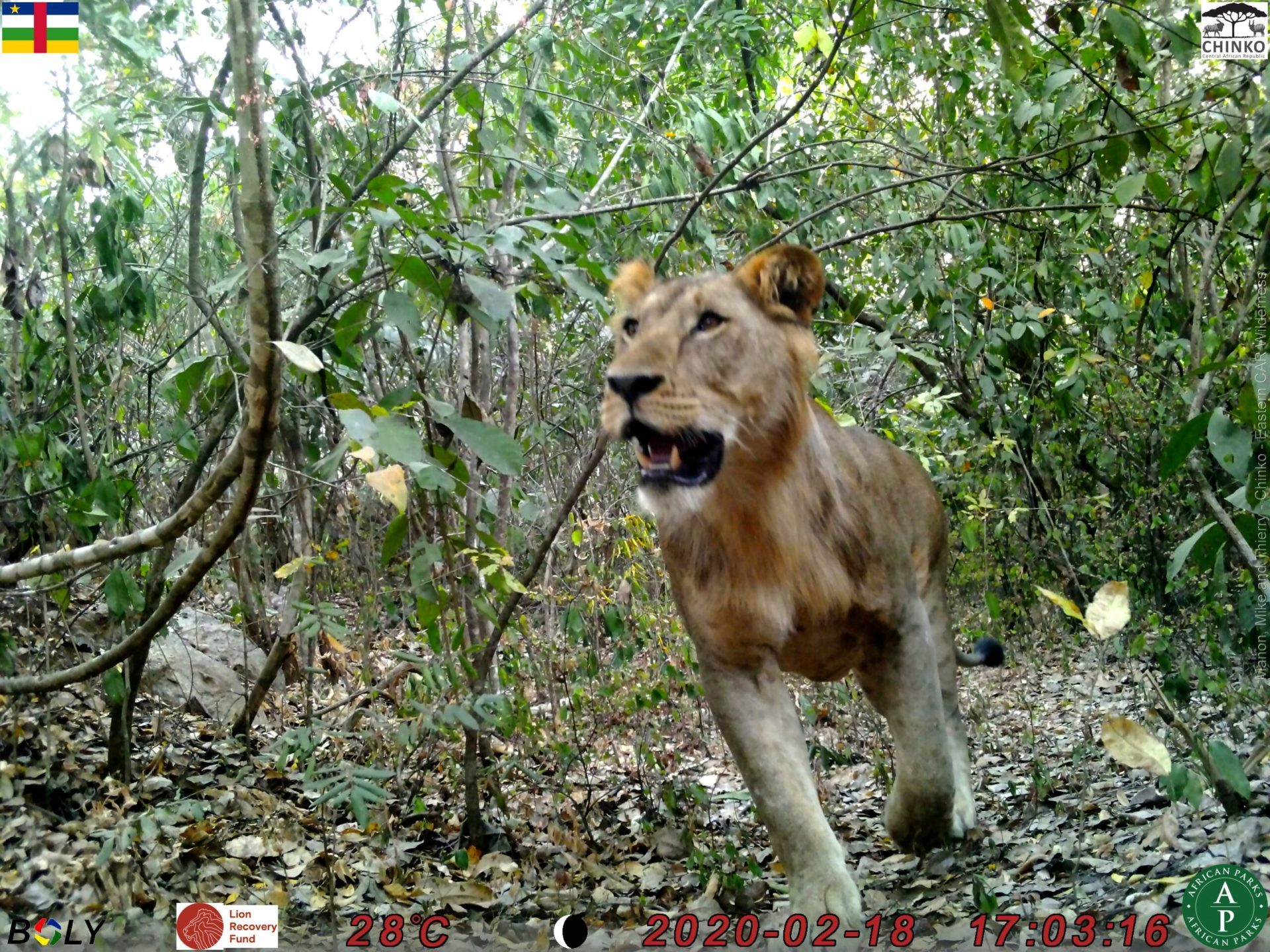
Central African republic lion in Chinko national park

The central African republic has an estimated 50 lions remaining, with 30 residing in the Chinko Nature Reserve.

Other reserves claiming wild lions in the country (population estimates have to be taken with a large pinch of salt, as various reserves claim healthy lion population, which would dwarf the whole country population – still, I hope to add these destinations in the future) include:

  • Bamingui-Bangoran National Park and Biosphere Reserve – claims to still have lion, though if there was a healthy population within this reserve, it could dwarf the population estimates for the whole country. I cannot find infomation to say etiher way.
  • Manovo-Gounda St. Floris National Park – assessments and reports from as early as 1997 suggest that this park lost its lions (and black rhino) this long ago.
  • Awakaba National Park
  • Aouk Aoukale
  • Yata Ngaya
  • Nana Barya
  • Zemongo Faunal Reserves
  • Several hunting reserve (while lions may well be hunted in these reserves, it is not going to be officially sanctioned, as the lion here cannot be hunted sustainably.
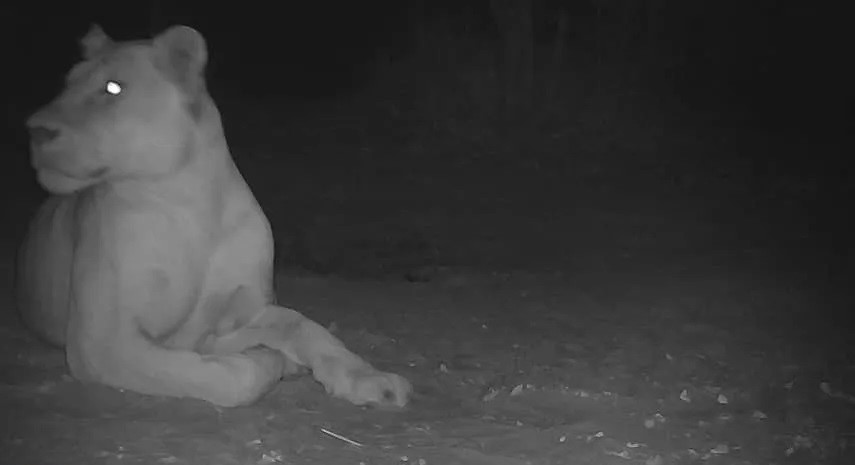
Female lion caught on camera trap, in Sena Oura national park, where they had not been seen for around 20 years

Chad is thought to have a wild lion population of roughly 200.

Sena Oura national park was in the news in the recent past, for a lion being seen for the first time in 20 years (click here to read our article on this news from the time).

Zakouma National Park is home to popular predators including a more significant lion population, as well as  hyenas and leopard, but also large herds of central African savannah buffalo, elephant, and endemic species such as the pale fox and the kordofan giraffe.

Lions are present in the Democratic Republic of the Congo (DRC), but their population is threatened by human activities. There population is down to 211 from around 1600 in the 1970s. There is definitely space for this population to grow – but these are the current known lion habitats

 
  • Ishasha Valley

    The Ishasha River valley is a good place to see lions, hippos, elephants, and buffalo. However, the population of lions in the valley has been reduced by poaching, land invasion, and conflict.  The lions in this area are known for their tree-climbing habits.

     
  • Odzala-Kokoua National Park

    In the 1990s, this park was considered a lion stronghold, but by 2014, no lions were recorded there, making the population locally extinct.  

     
  • Lésio-Louna Reserve

    There is physical evidence of lions in this reserve, but there is no estimate of the population density or distribution. 

     It is not clear, whether the factors that lead to this decline have reduced, but it is thought that generally not. Never-the-less as time goes by, often places are getting better at looking after the wildernesses that remain within its boundaries. Furthermore, it would be really good for the DRC, to be able to offer its many forest safaris, alongside safaris more familiar within eastern Africa. 

Formerly widespread across northern Nigeria, today lions survive in only two sites in the country: Kainji Lake National Park (thought to have a lion population of roughly 30 (as of 2021) alongside various species including African wild dog, elephant, leopard and various antelope) and Yankari Game Reserve (thought to have between 8 and 10 wild lions, alongside  African bush elephant, olive baboon, patas monkey, Tantalus monkey, roan antelope, hartebeest, lion, African buffalo, waterbuck, bushbuck and hippopotamus (there is a youtube video of a group of researchers looking for these last lions in the Yankari game reserve, unfortunately it is from a channel which does not allow videos inserted into other websites, so click here to follow the link


This suggests a lion population of Nigeria of around 40. Nigeria has a large and growing population, and there has been a great deal of destruction of the natural world within the country. Having said this, there is still much hope, and many people who are eager to protect the natural world, both for its own intrinsic value, but also for the tourism money that thriving ecosystems can generate.

While it is not clear how many roam the W national park of the WAP complex, not only are they tracking 8 but this is a young lion photographed in the area

The population of Lions in Niger (150 or there abouts) is thought to be restricted to its section of the WAP complex, which is a transboundary area, including land in Benin and Burkina Faso and is perhaps the last good hope for the west African lion – around 80-90% of the western lion population live within this protected area. While the other countries have a separate national park, protecting an area of land, Niger only has part of a single park (W national park) which stretches across the borders of all 3 countries). 

It is unclear how many lions live within this national park, though it is definitely greater than 8 as there is currently a study that is following 8. Given that W national park contains around 1 third of the land in the WAP complex, so it should hold around 150 lions within it. 

Whether the land is currently capable of supporting this number is questionable. It should be noted that the WAP complex is roughly twice the size of the Kruger national park, suggesting that the entire area might be able to support around twice the lion population of the Kruger – this is roughly 3000 lions. Now, it is quite possible that this area is drier, and therefore has a lower carrying capacity, but this gives space for a large increase in the lions within the WAP complex. It should be noted, that this might well be an over estimated, as some of the WAP complex is hunting areas, and while they will not hunt many (if any) lions with in these, hunting prey will also reduce the number of lions that these areas can support. If this was accurate, one could expect a lion population of W national park in Niger, of around 2000. While we are a long way from this, it suggests that with better conservation, Niger could have a lion population that would give it the sixth largest population in Africa.

The senegal has a wild lion population that is not agreed. One states 150 lions, which are found within Niokolo-Koba National Park. However, others suggest that while this is the one place in the country where lions still live, there are actually only around 20 within the park. This park also hosts leopards, Derby Eland and even a population of roughly 150 wild chimpanzee.

This makes the park particularly interesting, as we can see how chimpanzee avoid being hunted by these big predators, and even might be a good way to see how early hominids lived shortly after leaving the trees.

Ethiopia is thought to have roughly 200-300 remaining lions (though there are sources which claim as much as 800 lions). It should be noted, that Ethiopia once hosted a separate subspecies, however, only 8 of these survive and all live in a zoo.

Truly wild lion populations within Ethiopia include

Alatash National Park: In 2016, an international research team led by Oxford University conservationist Hans Bauer discovered a previously unknown lion population in Alatash National Park, which is located near the border with Sudan. The team used camera traps to capture images of lions and footprints, and estimated that there were between 100 and 200 lions in the area.

Kafa biosphere reserve: In southwest Ethiopia, there are around 25 lions in the Kafa biosphere reserve. However, little is known about the lions, including whether they are resident year-round or just migrate through.

Other areas where lions have been spotted include Boma-Gambella, South Omo, Welmel-Genale, Ogaden, and Awash. I have listed them below. I should add, that I have included the number of lions each area claims, however, they cannot possibly be correct, as if you add them up, you get a number of roughly 4000, which would give Ethiopia a lion population second only to Tanzania

Awash Valley and Gambella areas: These areas have seen an increase in human-lion conflict and retaliatory killings by local communities. 

 Boma-Gambella: This area has a population estimate of 500 lions. 

 South Omo: This area has a population estimate of 200 lions. 

 Welmel-Genale: This area has a population estimate of 100 lions. 

 Ogaden: This area has a population estimate of 100 lions. 

 Bale: This area has a population estimate of 2,373 lions. This is highly questionable. The park is 2200 square km (850 square miles) and even with an average density of one lion for every 5 square miles, this would require of over 10,000 square miles of unprotected land to be protected. It should be noted, that these lion are famous as the black maned lions. The largely recognized figure, is around 50 lions in this area. 

Nechisar: This area has a population estimate of 1,030 lions. This is also completely rubbish, as the park is only around 400 square miles, and it is thought that its carrying capacity is roughly 23. Only 4 lions have been visually identified.

This does not suggest that lions within Ethiopia are particularly secure, but they are clearly better than a range of other places. We dont currently list any of these places to visit, but are eager to in the future – if you work in out of these areas do get in touch.

 
Kenya lion from the massai mara reserve

In 2021, Kenya did a survey of its wild area, and estimates that there is 2589 lions (this is around 74 lions more than the list I have been using for most of these numbers)

So, where are the Kenyan lions?

The Massai Mara national park  is found in Kenya. It has an estimated population of 850-900 (this is a lifetime dream location for many people interested in wildlife). Look up the Serengeti ecosystem, for links in this ecosystem. We hope to add far more over time.

Ambosseli national park hosts roughly 100 wild lions. It is a big 5 reserve, and even has cheetah and a few wild dog, making it an ecotourism big 7 reserve (something that many larger reserves cannot claim). This reserve is only 392 square km. The  Tsavo Amboselli ecosystem is thought to have roughly 675, thought these numbers are estimates, and it is unclear how accurate they are. While this whole ecosystem is very large, parts like Tsavo West are not good for animals like lion, which means that their density is likely to be higher than these numbers would suggest.

Niarobi national park has roughly  35 lions. It should be noted, that the range of the lions is thought to be around 400 square km, which is almost 3 times the size of the park at 140 square km. This park is odd. Once opening to the open savannah, the suburbs have expanded, and now largely completely surround it. Never-the-less, there is few other places in Africa where you can see lions with skyscrappers in the background. This reserve has 4 of the big 5 (missing elephants)

Hells gate national park is tiny, at half the size of the Niarobi national park. It was a big 5 reserve in the 1950s, and there is a suggestion that there are still a handful of lions, but not more than this. It is one of quite a few national parks, split by relatively short distances of human settlement, but it might as well be the other side of the moon, for the abillity for most small animals to move between.

The Abadares mountains national park still has a few lions, though it is unclear how many. In 2000 100-200 lions were killed to help a local antelope on the verge of extinction to survive.

Lake nakuru national park has a small lion population. A 2018 survey counted just 16, even though earlier surveys had counted 60. I have personal history here, as this was the first African wilderness that I visited.

Meru national park has an estimated 76 wild lions. It covers 870 square km (340 square miles)

Mount Kenya National Park is 715 square kilometers (276 square miles) in size. Despite its relatively small size, it is a big 5 reserve, though leopard and rhino are both rarely seen.

Samburu Nature reserve has a population of 40-50 lions, alongside all of the big 5 (and both species of African rhino). Cheetah are found, and even wild dog.

Ruma National park has lions leopards and cheetah (though the lion and leopard are very hard to see) the last roan of Kenya survive in this national park, but only 19 or so are still there.

Kora national park is another ecotourism big 7 reserve. While the number of lion is hard to ascertain is the place where George Adamson worked in the 1970s. George Adamson, (husband of Joy Adamson – author of Born free along with many other books) his brother Terence, and Tony Fitzjohn worked together to rehabilitate lions and leopards in the park from 1971–1988. How easy it is too see wild lions is unclear, but well worth a visit.

Shimba hills nature reserve


Buffalo Springs National Reserve

Mount Elgon National Park 

Shaba National Reserve

Chyulu Hills 250 lions

Marsabit National Park

Sibiloi National Park claims to have lions (though a survey from 2020 found none)

Malka Mari National Park has lions in its 1500 square km area this is another Ecotourism big 7

There are also likely a wide array of private reserves that are linked to these above, and perhaps even private reserves off on their own that are likely to host lions. I hope to grow the links as fast as possible
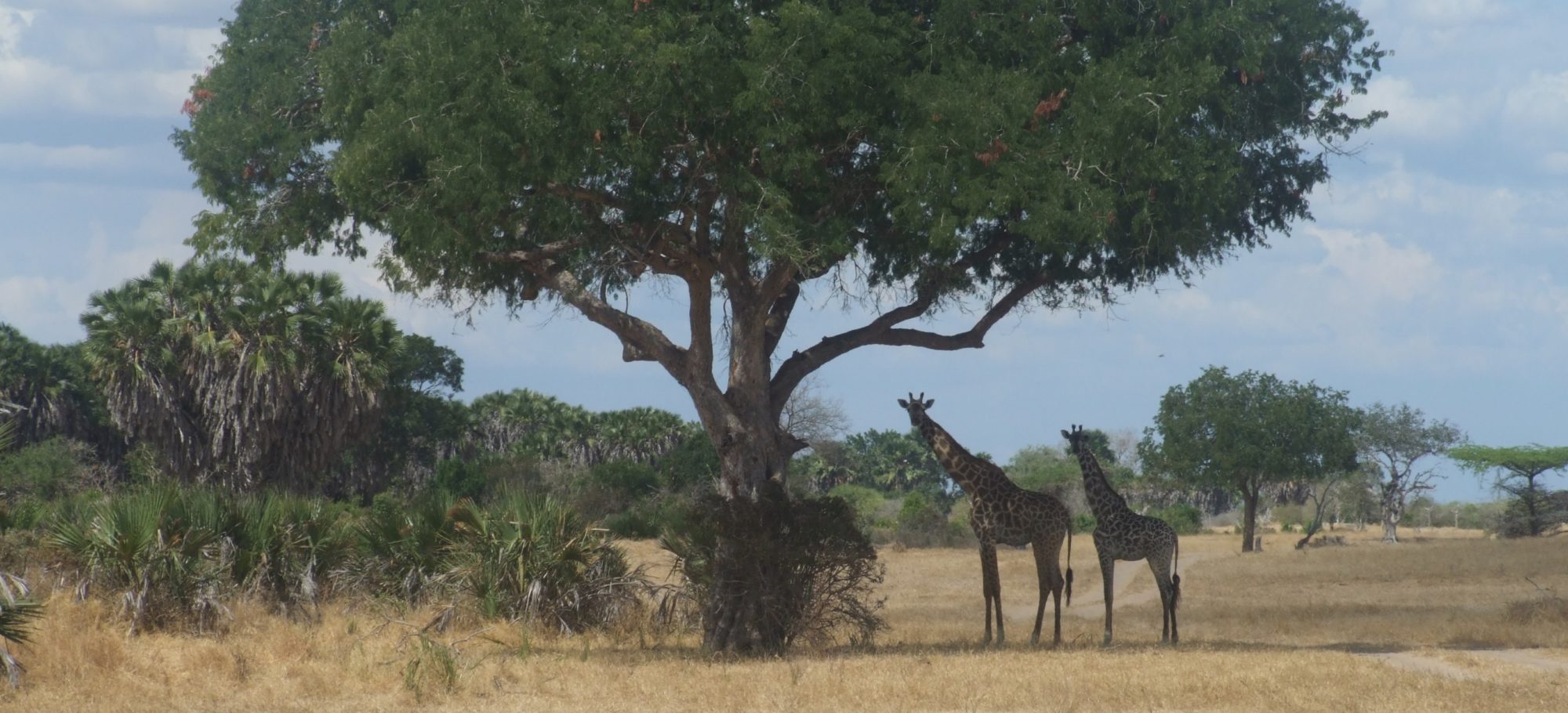
Lions in Malawi are restricted to two regions of the country. 

  • Liwonde National Park – this park returned the lion after 20 years absence and is a big 5 reserve, while cheetah were returned in 2019 and in 2021 wild dog returned to this reserve as well. The last update on the lions was in 2021, when the lion populatin had grown from the 9 moved, to a total of 13. Provided that they are not bothered by poachers, this population should continue to grow. At 548 square km (211 square miles, this reserve should be able to host perhaps 40 lions, so much space to expand.
  • Majete Wildlife Reserve has a thriving lion population (and indeed provided the lions for the reintroduction to Liwonde national park) and as well as housing the big 5, has in recent years, had both cheetah and wild dog return (translocation). It should of course be noted, that both of these species are likely to be pretty rare until they have had time to increase in number. It covers 700 square km (270 square miles) . This reserve currently has 52 lions – which assuming 5 square miles per lion, is very close to carrying capacity (which would be 54). As such, Majete would likely continue to be a prime example of place to translocate lions out of – without this continuing, the lions are likely to start self regulating with more regular fights and males killing males (and if a dominant male is killed, this leads to all the young cubs of the pride dying, along with many of the females who will often defend their cubs to the death).

Mozambique have a significant number of lions, with the countries population estimated at around 1500

There are a handful of reserves, but some are large.

Niassa Special Reserve – 800 -1000 lions, making this one of the largest single populations (after the selous, serengeti, Ruaha, Kruger KAZA). Having said this, I find it sad, that a population of 800-1000 could be the 6 largest lion population in the whole of Africa)

Limpopo National Park only has around 66 lions of its own, but as a part of the LImpopo transfrontier park, should the poaching end, it could likely hold far more lions ( at the current time around 1600 lions roam the kruger. The Kruger is roughly 19500 square km, to the limpopo national parks 11,000, suggesting that the limpopo national park, should be able to support around 1000 lions in the right state

Gorongosa National Park has a total population of 146 lion, however covering 4000 square km, or around 1500 square miles, this reserve could in theory have the capability of supporting around 800 lions. Since 2002, over 5000 animals have been transferred, and so it would seem sensible to translocate lion, though, this may be thought that this can wait for the population to become more secure.

Other smaller lion populations include the Zambezi delta lions (a relatively recently reintroduced population of roughly 26), and the Cahorra Basa region which could have around 200.

However, there is much plans for expanding protected areas, so this population has the potential to grow in the future.

Only one reserve in Rwanda contain lions, and this is Akagera National Park, which in 1990 was known to have 250-300 lions. Unfortunately during the Genocide they were all killed, with a survey in 2002 not counting a single one. In 2015, 7 lions were moved to the reserve and  in 2024 had a lion count of 78, This suggests that with this sort of recovery, the lion population could keep growing well, though time will tell if the local human population will allow this to occur.

So this countries current lion population is around 78 individuals. This can be good for Rwanda, as while it is a popular destination for forest safaris, being able to also offer savannah ecosystems will make it more popular, as someone could both trek with chimpanzee and gorilla  and see lion in the same week.

Although lions cling on in parts of Somalia, there are not many photos of these animals.

It may come as a shock that much wildlife continues to cling on in Somalia. It is certainly true, that when a country falls into civil war, that this is bad for the country as a whole, but it is not necessarily bad for the wildlife, as much poaching for money stops. It is true that often the poaching of a reserve signals the end of its useful period but this is not true.

Lions are mainly found in the southern part of Somalia, with smaller populations in the north. Other wild animals in Somalia include:

Hyenas, Foxes, Leopards, Warthogs, Ostriches, Small antelopes, Birds, Somali cheetah, Reticulated giraffe, and Hamadryas baboon.

Sudan has been at war for a very long time. While there has been some surprise that things like the migration in South Sudan has survived, many wildlife species have not done so well.

Dinder national park in Sudan had a survey done in 2018, which counted around 150 lions. There are probably small numbers in other places, but there is little information on this.

Like Sudan, having spent much of the last few decades in civil war (only ending with the splitting of the country – forming the country of South Sudan) little is known. There is a huge migration that takes place within the country – and it is therefore assumed that there are lions thriving in this area, but we do not know.

Southern national park definitely has lions though the number is uncliear. The biggest potential for lions is the migration where every year, around six million antelope migrate from South Sudan to Gambella National Park in Ethiopia. The migration includes white-eared kob, Mongalla gazelle, tiang, and reedbuck. However, the size is quite phenomenal – the Serengeti migration contains around 1.5 million wildebeest alongside a range of other animals which adds some extra size. However, that suggests that the South Sudan migration is 3-4 times the size of this migration. Could this migration be the way for South Sudan to pull its country out of poverty? It is quite conceivable for the migration in South Sudan to be able to attract millions of visitors and potentially billions of dollars of tourist money.


Tanzania is the undisputed king of lion areas. Out of a continent population which may be as low as 22,000, 14000-15000 lions live within its boundaries.

Many of the biggest destinations are listed on this site, though I hope to include them all.

Serengeti national park is thought to have roughly 3000 lions

Ruaha national park is thought to have 1000 lions

Nyeres national park (formerlly Selous, along with the remains of the Selous reserve) has around 5000 (1700-6900 wide bands)

Other wilderness areas will add another several thousand lions.

I have had my most exciting moments with lions in Tanzania, when one wandered through our camp at night.

Uganda consists of both forests and open land, so the lion population is not a high, with estimates suggesting that it is between 150-400 individuals.

There are estimates of between 214 and 400 lions in Uganda, but the population is declining:

  • Queen Elizabeth National Park: Home to about 130 lions, including four prides in the Ishasha plains. The Ishasha sector is known for its tree-climbing lions, which are a major tourist attraction.
  • Murchison Falls National Park: Home to a large lion population – estimated at up to 250
  • Kidepo Valley National Park: Home to an estimated 70 lions.
  • Lake Mburo National Park: possibly home to lions with sightings of a single male in recent times.
It should be noted (by those of you paying attention) that these numbers add up to 451, which is higher than the range that I quoted at the top. This appears to be down to the fact that generally country estimates are more accurate, while individual reserves have an incentive to exaggerate, so as to get a bigger share of the tourist visits.

Zambia is thought to contain roughly 1200, however, with 40% of the country protected, it seems reasonable to assume that this population has the space to expand significantly over time.

South Luangwa national park has around 9 large prides (up to 30 lions in a pride)

Kafue national park has around 200 lions

Lower Zambezi national park also has a good number of lions

The latest survey of Zimbabwe counted 1709 lions in total.

Hwange National Park only has 500 – 700 lions, however, spread across an area of 5000 square miles (almost 15000 square km) however, it is considered a particularly good park to visit to see the wild lions because it has diverse habitat with grasslands and forests, a high density of prey animals, and the presence of permanent waterholes which concentrate wildlife, especially during the dry season, making lion sightings very common. 

This is also part of a huge protected area, straddling 5 countries and protecting over 250,000 square km. We have several destinations within Hwange click here to see more about this huge reserve and the Hwange in particular.

Mana pools – having a similar density of lions, this is also a good place to see the animals.

Gohnarhezou national park, is a part of the larger Limpopo transfrontier park, and as such also has significant populations of lions. mallilangwe reserve is also attached to this national park, and this is one of the destinations we have listed click here to read more

There are also a variety of fantastic places to see lions, which I will add in the future.

Lion shot from Singita Sweni which is an amazing place to go, explore our Limpopo page to find this link)

South Africa has a lion population which is only second to Tanzania in terms of lions with 3284. Between 1600 and 2200 (so over half) of these can be found within the Kruger national park and greater Limpopo transfrontier park (click here to see our links). As or perhaps more famous is the Sabi Sands private reserve. This is not only one of the best known private reserves, but also one of the largest in Africa. We also offer a number of destinations within Sabi Sands. We hope in the near future to allow booking of public campsites within the kruger national park as well – perhaps more intrepid, as you have to do things yourself, but also far cheaper. Please note, that each of the links below, send you to an ecosystem page. There are already often multiple places to stay, with an aim for this to only increase.

Kgalagadi Transfrontier Park (of which South Africa hosts the Kalahari Gemsbok National Park and the Gemsbok National Park in Botswana.  The whole reserve is estimated to have a population of 3500 lions, with the South African section hosting around 750 lions (with the other 2700 living in the various Botswanan sections).

A reserve with a smaller lion population includes Sanbona Nature reserve (click here) Welgevonden (click here) and Madekwe game reserve  (click here). There are of course plenty more than just these few, and I hope to be able to add these in the future.


Definitely not a cat that avoids the water, but if you live in an area that floods, you must be willing to swim

With a population of 3063, Botswana is the country with the third highest number of lions.

Much of botswanas lions live within the Kaza transfrontier park (click here), which protects the Kalahari desert and the Okavango delta. However, another big source of lions is the Kalagadi transfrontier park (our only destinations within this ecosystem can be reached here), which is shared between several areas in Botswana and South Africa, across the border.

Botswana has set aside a large portion of its country for wildlife, so this is one of the shining lights in terms of places where the lion might survive.

Looking like somewhere that little wildlife would survive, you might have been right, except that a large area of the desert is flooded each year by the okavango delta, allowing enough food to grow, to sustain year round populations

Namibia hosts a population of 1435 lions in a variety of habitats.

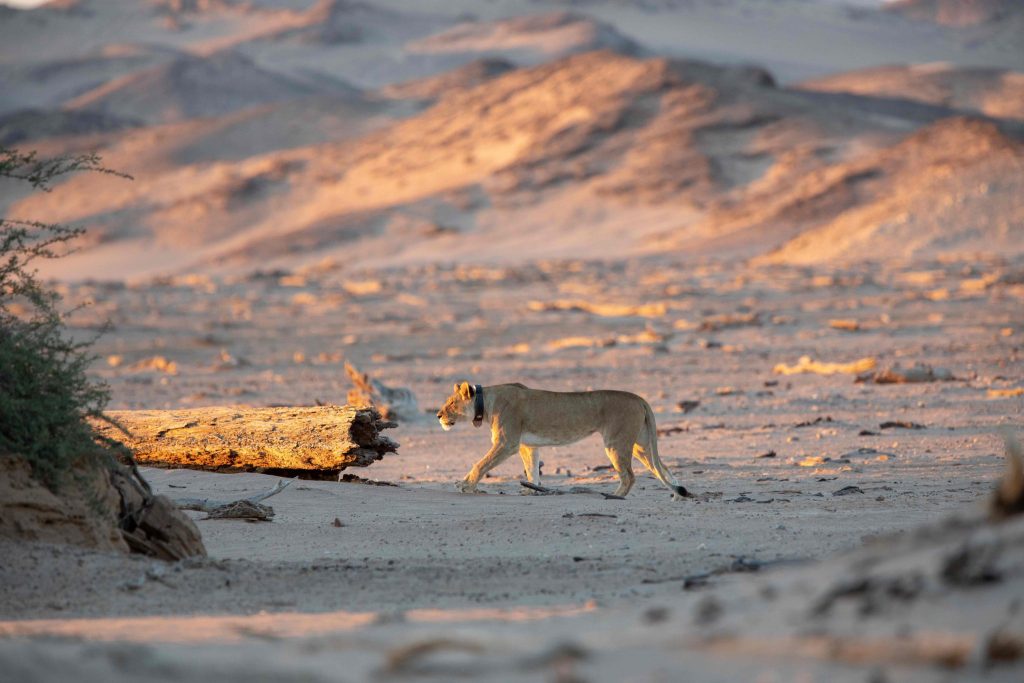
Of particular interest is the Kalahari desert, I hope to add destinations for this fascinating area, in the near future.

All lion news on the site

Limpopo Transfrontier park including Kruger sabi sands and other conservation areas
Greater Serengeti

African Savannah

African Savannah animals

The aim here is not to give you the number of every species that exists in each reserve. Rather, the aim is to give you a rough idea of the health and size of each reserve. In places where there are private reserves on the edge of a larger reserve, complete ecosystem numbers will be given. Please note that they will not be precise, as even straight after a thorough count numbers are only estimates – furthermore, some reserves do not publicize their numbers.

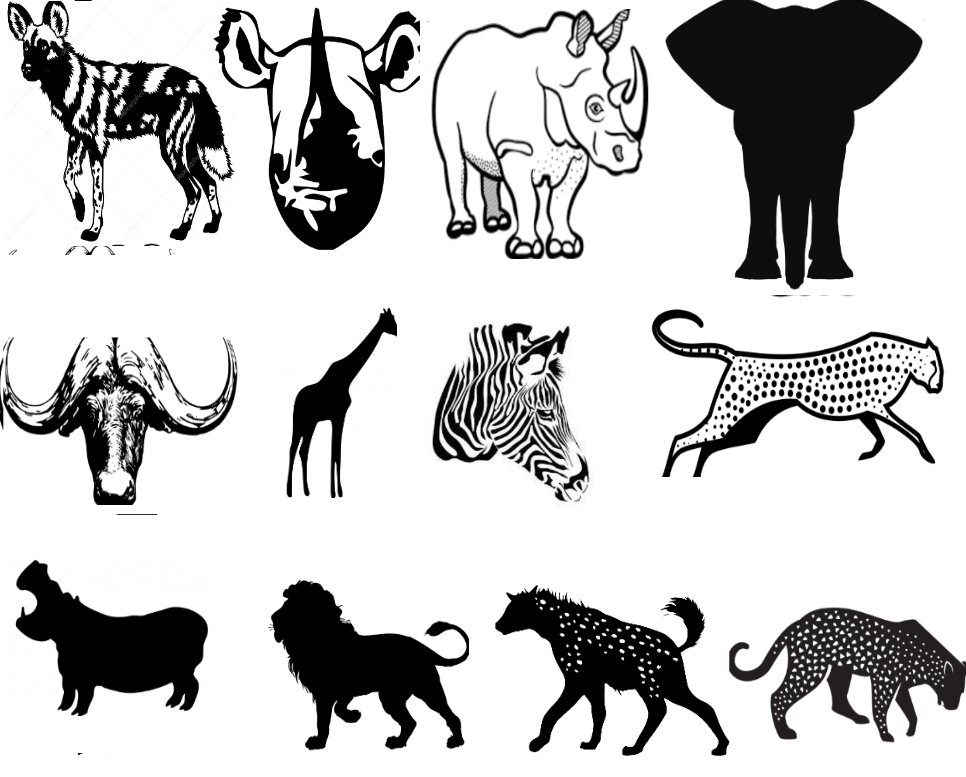
The grid of animals that I have included above are as follows (below):

African wild dog Black rhino White rhino(Really wide rhino) Elephant Buffalo Giraffe Zebra Cheetah Hippopotamus Lion Hyena Leopard

This is going to be the standard animals for Savannah ecosystems within Africa, however each different Biome will have different species so there will be a variety of these pages. I will give you brief information on each. In the long-run we hope to have animal pages for each and these will be linked from the Bold animal names. Those not bold not not yet have a link page. At the bottom of each animals page is a list of places which you can book to see the animal in question; each currently have at least a few choices, but I hope to be able to direct to many more as time moves forwards.

African wild dog (or sometimes known as Cape hunting dog or painted dog). This animal is an incredible sighting if you get lucky. Now, they live at low densities, so are generally found in the largest reserves. If a reserve still has African wild dog, it is clear that the reserve is in pretty good health (usually). Furthermore, as they are very susceptible to various diseases that domestic dogs can carry (such as canine distemper) – this wiped out the population in the Serengeti in 1995. Thankfully, wild dogs have returned to the Serengeti, though currently only 100 or so are in the ecosystem – meaning it is unlikely that you will see them here. Any sighting is a wonderful thing. Member of ecotourism big 7

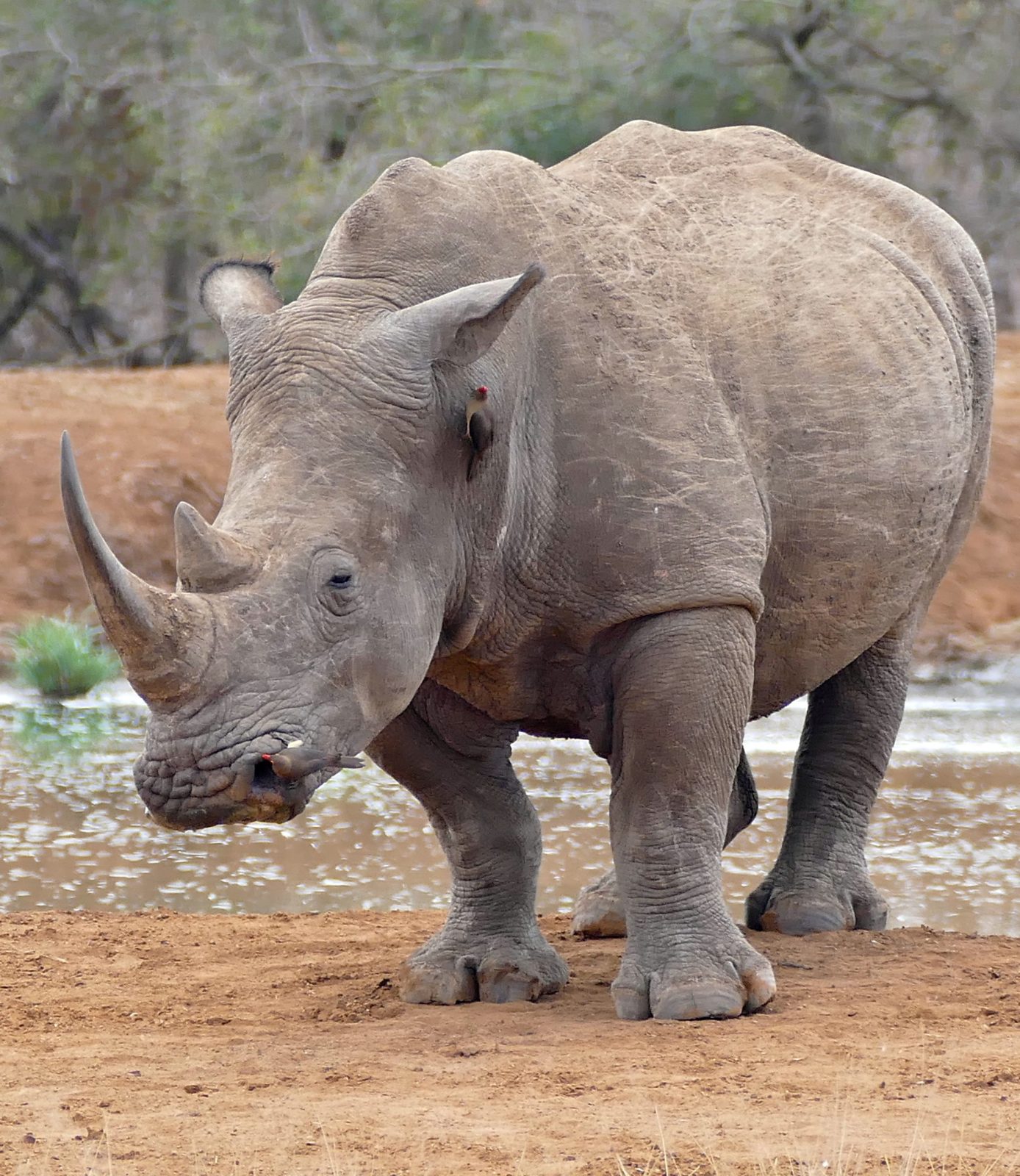
Black and White Rhino Two different species, Black rhino had a far larger range, unfortunately they are highly endangered across most of their range. White rhino, once found in central Africa (there are now only 2 of these animals left, held at Ol Pejeta conservancy in Kenya) are now only found in Southern Africa – South Africa, Namibia and Zimbabwe. The Kruger, once hosted as much as 10,000 or more white rhino, but now only have about 3000. Note: white rhino appears to be a mistranslation from the Africaans Weit, meaning wide, these rhino are not white. Pictures are Black then white rhino. Member of big 5 and ecotourism big 7

Elephant One of the species that so many people visit Africa for, the Savannah African elephant is doing okay, though the populations is far below historical levels. Places like the Selous (now much of this reserve is Nyerere National park) lost perhaps 80% of there historical elephant population. Encouragingly, if the poaching stops the population often rapidly recovers. The African forest elephant has seen horrific poaching over the last few decades, and without a rapid change this species might be heading for extinction (the African forest elephant is closer related to the Mammoth than the African Savannah elephant. Member of the big 5 and ecotourism big7.

Buffalo: A member of the big 5, the buffalo is essentially a wild cattle species. They are a member of the big 5 and ecotourism big 7. The big 5 is so named because these were the most dangerous animals to hunt on foot. Buffalo are often the species which you are likely to have encounters with if you go walking on foot.

Lion Often referred to as the King of the Jungle (despite not being found in jungles), is generally considered the apex predator. Certainly a wonderful thing to see, never-the-less they do not get their own way all the time. The population of Lions in Africa has seen precipice falls in the last century, and this has not stopped. Tourism is one tool we have to give them financial value to those who share their space with them. Member of the big 5 and ecotourism big 7

Giraffe: While this is a species that is found in the majority of Southern and Eastern African reserves, they are officially classed as endangered, as their population is currently falling so fast. The selous in Tanzania is nicknamed the Griraffe park as there are so many of them.

Zebra are also found in most reserves in Africa, though the number of them is still of interest.

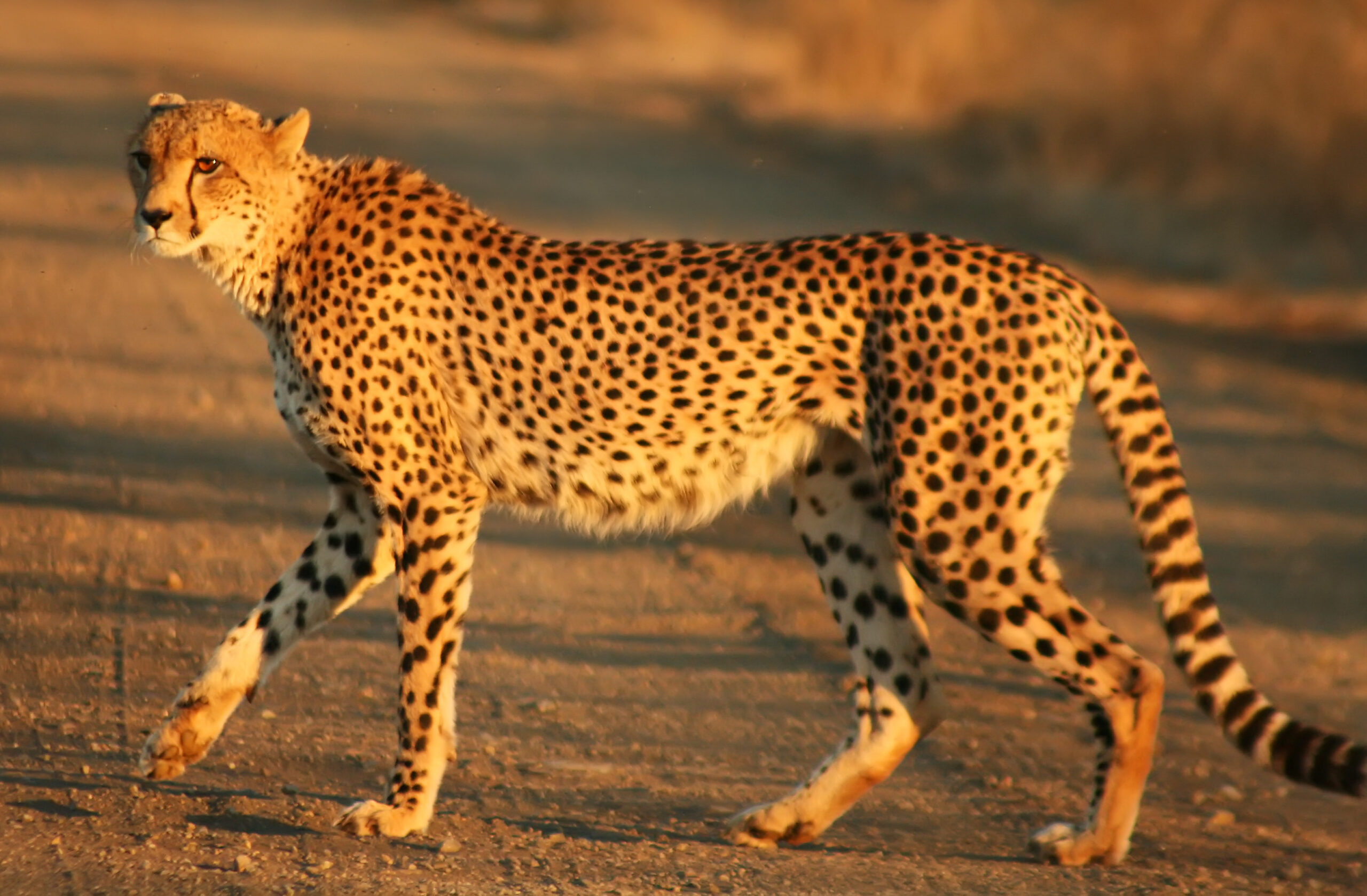
Cheetah Like African Wild dog are a key indicator of the health of the ecosystem. Living at low densities in most reserves (except in places like the Serengeti plains). These are rare sightings, and most reserves do not have many cheetah. Indeed of all the big species, the cheetah is one of the few predators who do better outside reserves.

Hippopotamus: This is another species that does reasonably well outside protected reserves, but their population has fallen fast over the last few years.

Lion Lions are a very clear indication of the health of each ecosystem. If there is a significant population of Lion, then it is a large reserve and therefore there is plenty of space for other species. Check our links at the bottom of the lion page for some of the best place to see them.

Hyena There are thought to be more than 100,000 spotted hyena in Africa, making them the most numerous predator on the continent. They are exciting animals to see, and their call is often one of the species that you hear from your campsite – the weird rising whoop which is the contact call they use between them. Watch the video below to see what I mean. The advantage of the population size is that you are likely to find them in most wilderness areas. Brown hyenas are also widely found, never the less, as they do not do well in close proximity to spotted hyenas which means they are more often found on the edge of reserves and outside them.

Leopard The last member of the big 5 and Ecotourism big 7, the Leopard is a fascinating species. A solitary animal (except mothers with their young) they are the only big cat, or indeed member of the big 5 that is reguarly found outside protected reserves, though this is decreasing over time. A fantastic sighting, they can be very hard to find, and sightings in big reserves are usually very crowded. Generally found near river courses, as these are the places where large trees are found, allowing the Leopard to rest out of danger.

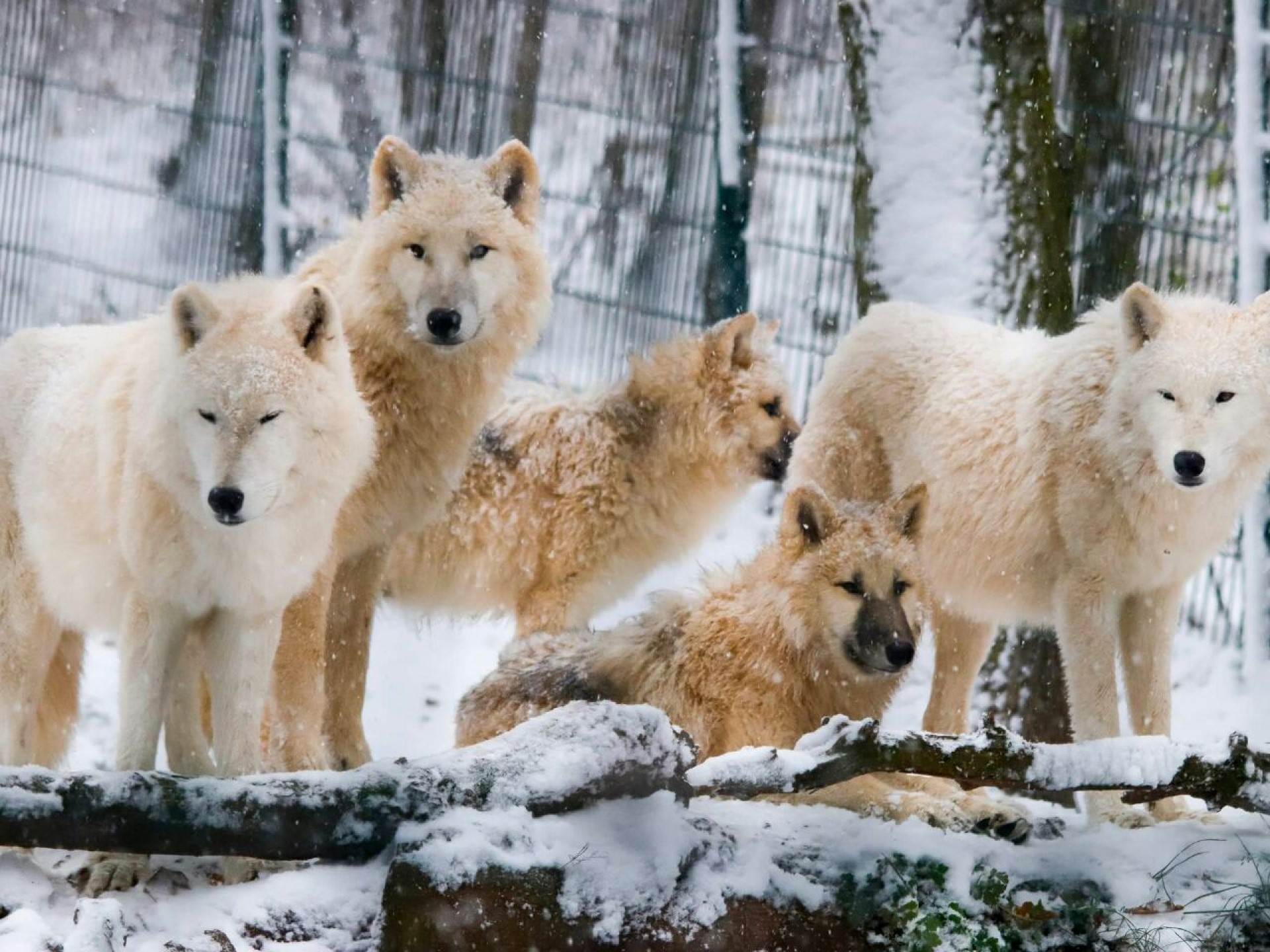
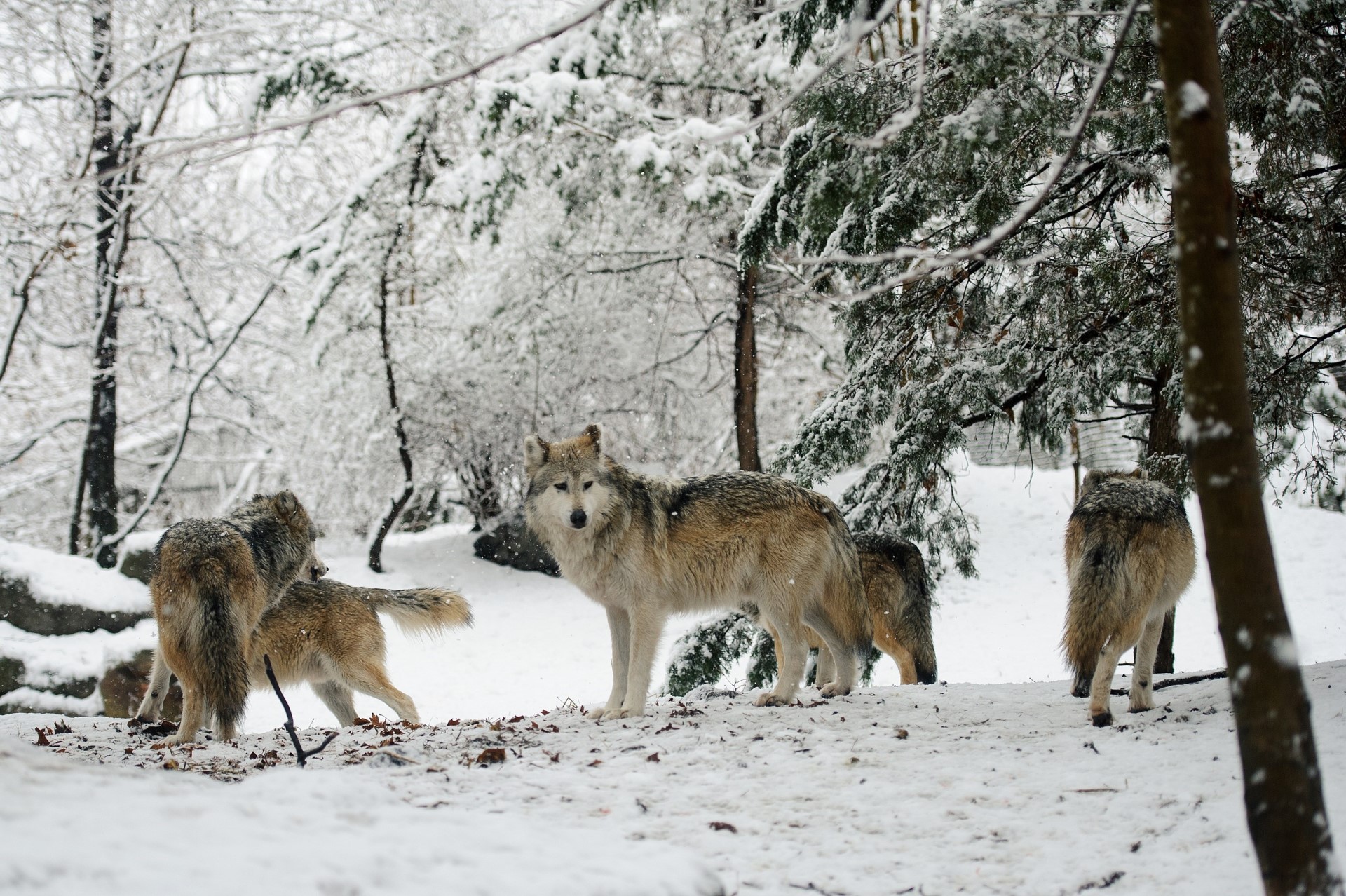
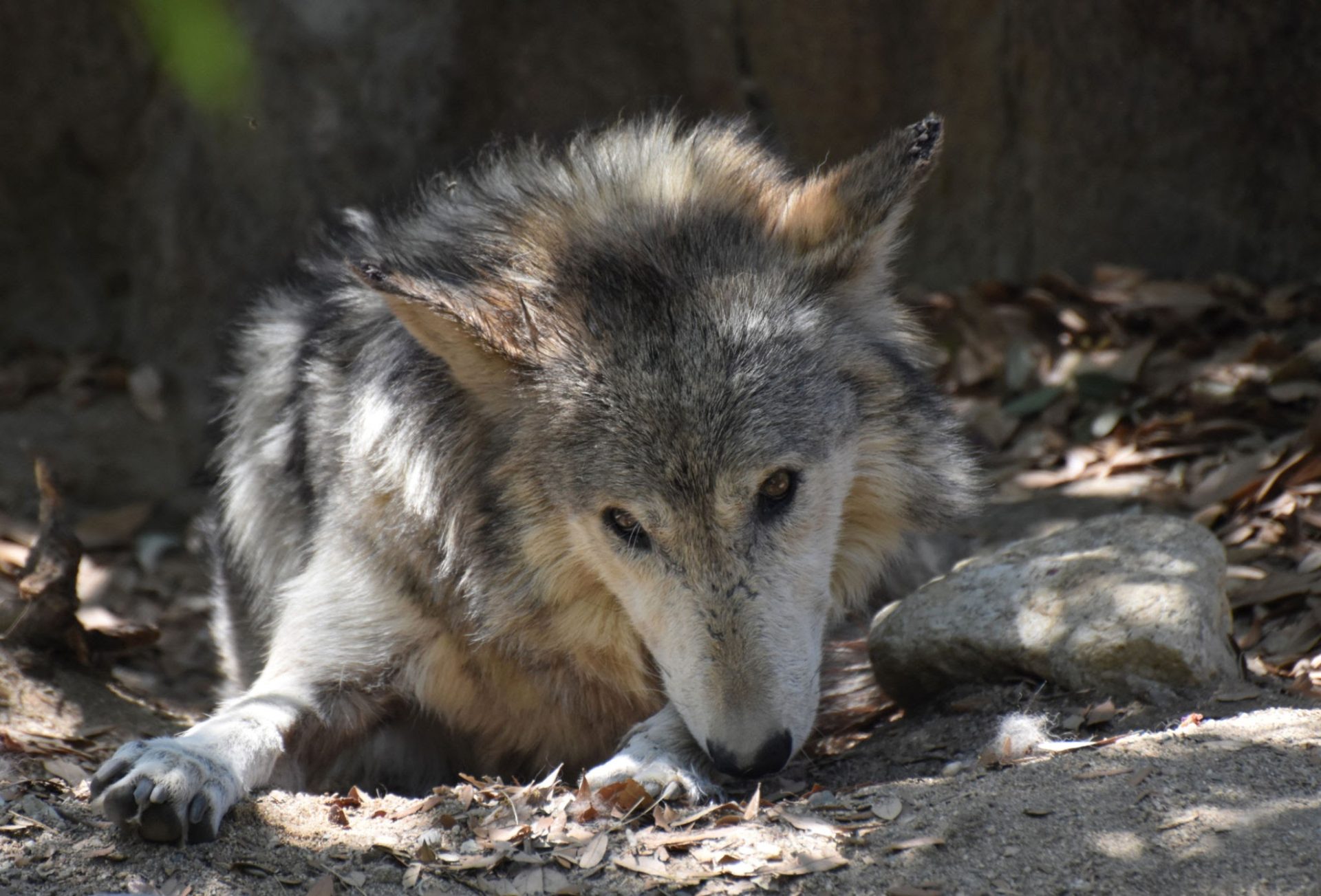
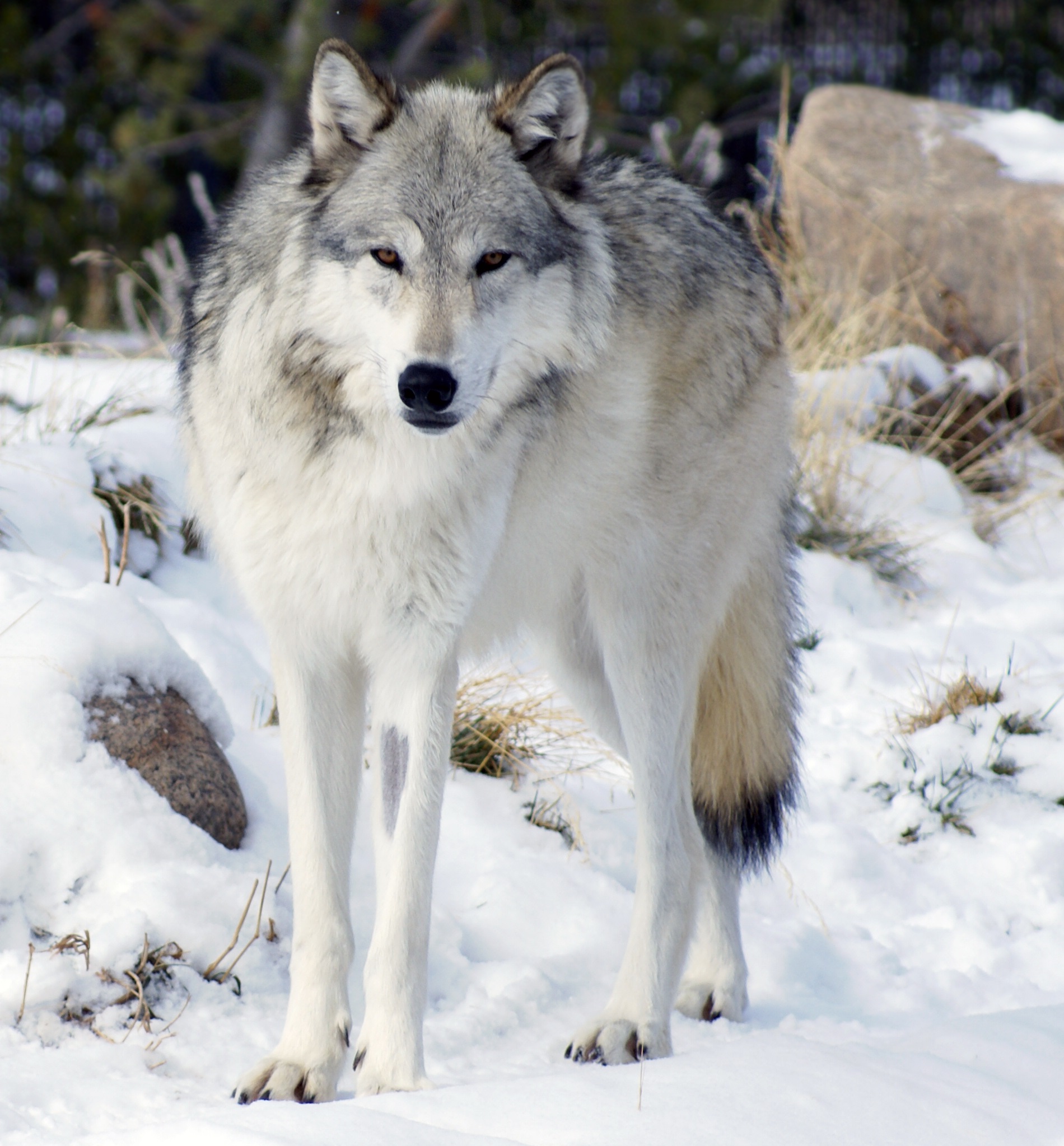
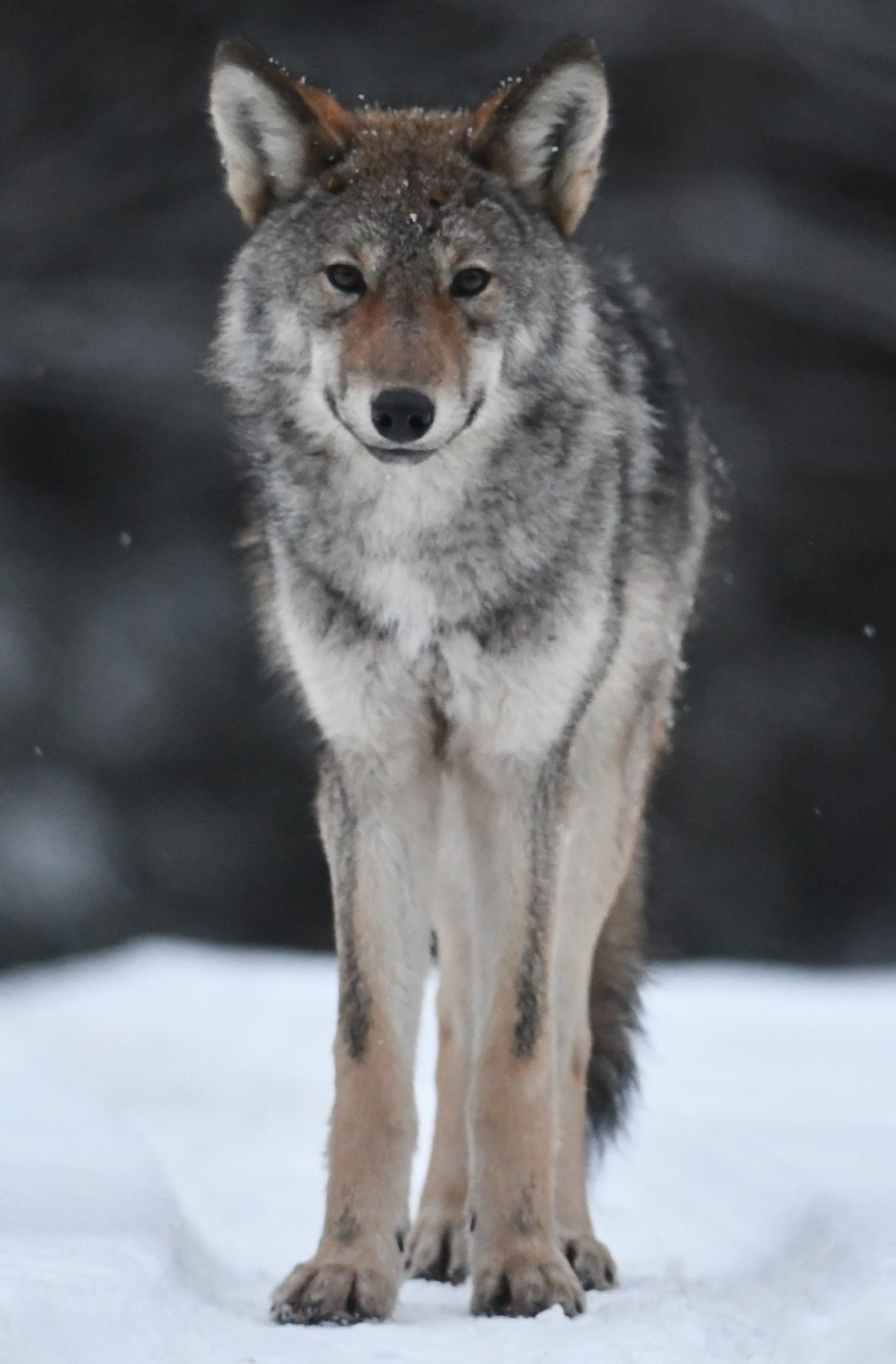
Wolf

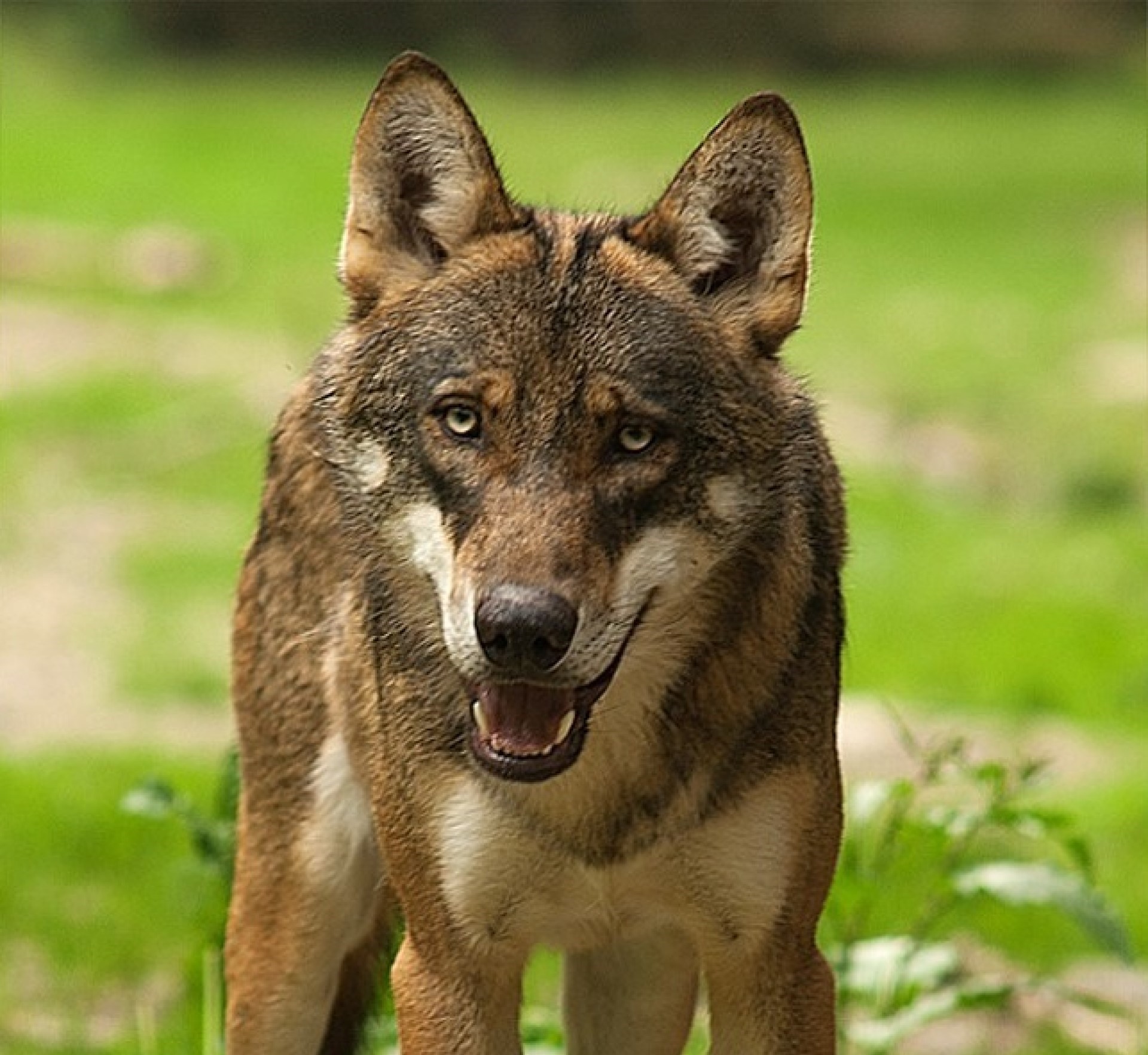
An Iberian wolf out alone

Wolf

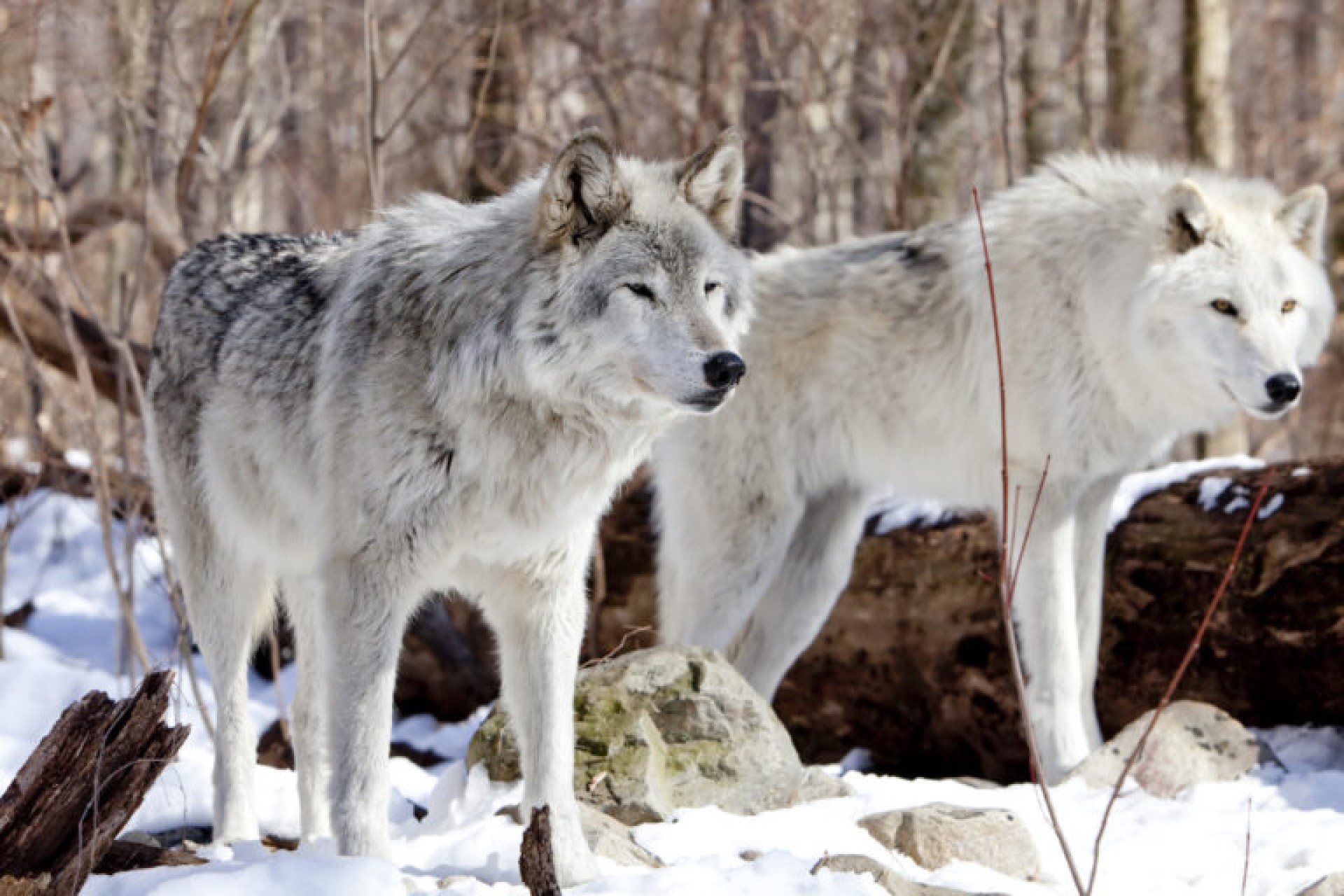
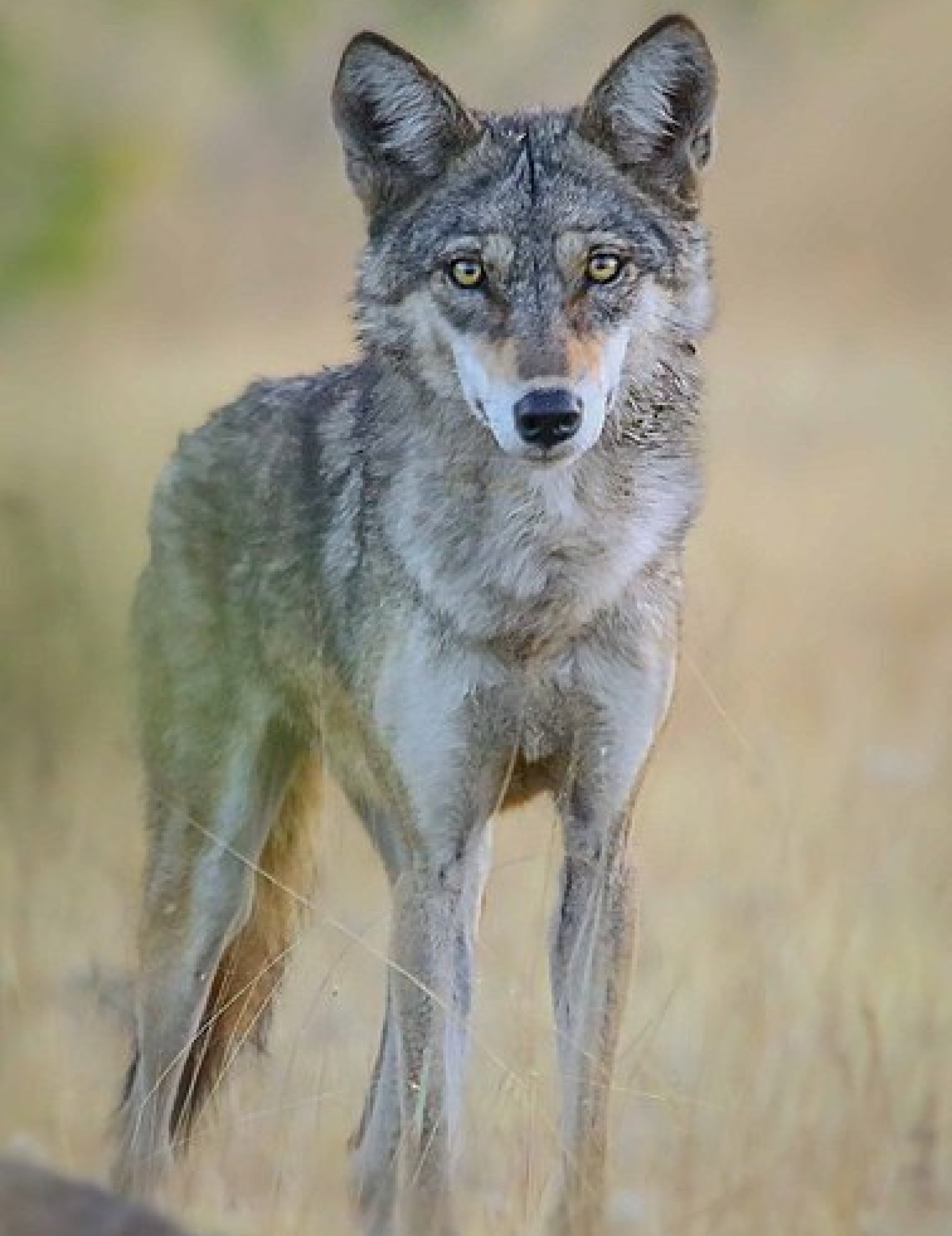
The wolf is a species that is often on the top of the list of animals that people would like to see in the wild before they die. It is truly a wonderful thing to see.

I have been lucky enough to see them twice, once from a bear hide in Sweden (look at the hide list, this one is the only currently available) as well as also seeing an Iberian wolf briefly, as well as hearing them in the distance.

There is something magical about being in an ecosystem where you are not the only dangerous animal. Wolves are not dangerous in the same way as the big 5 from Africa. Even spending years in the field, you are unlikely to actually to get close to a wolf, and if you do, more often than anything it will run. For much of Europe, humans are having to get used to living alongside them, having destroyed the population in the last few hundred years. But they are essential for a balanced ecosystem – i certainly hope that eventually they will return to this country.

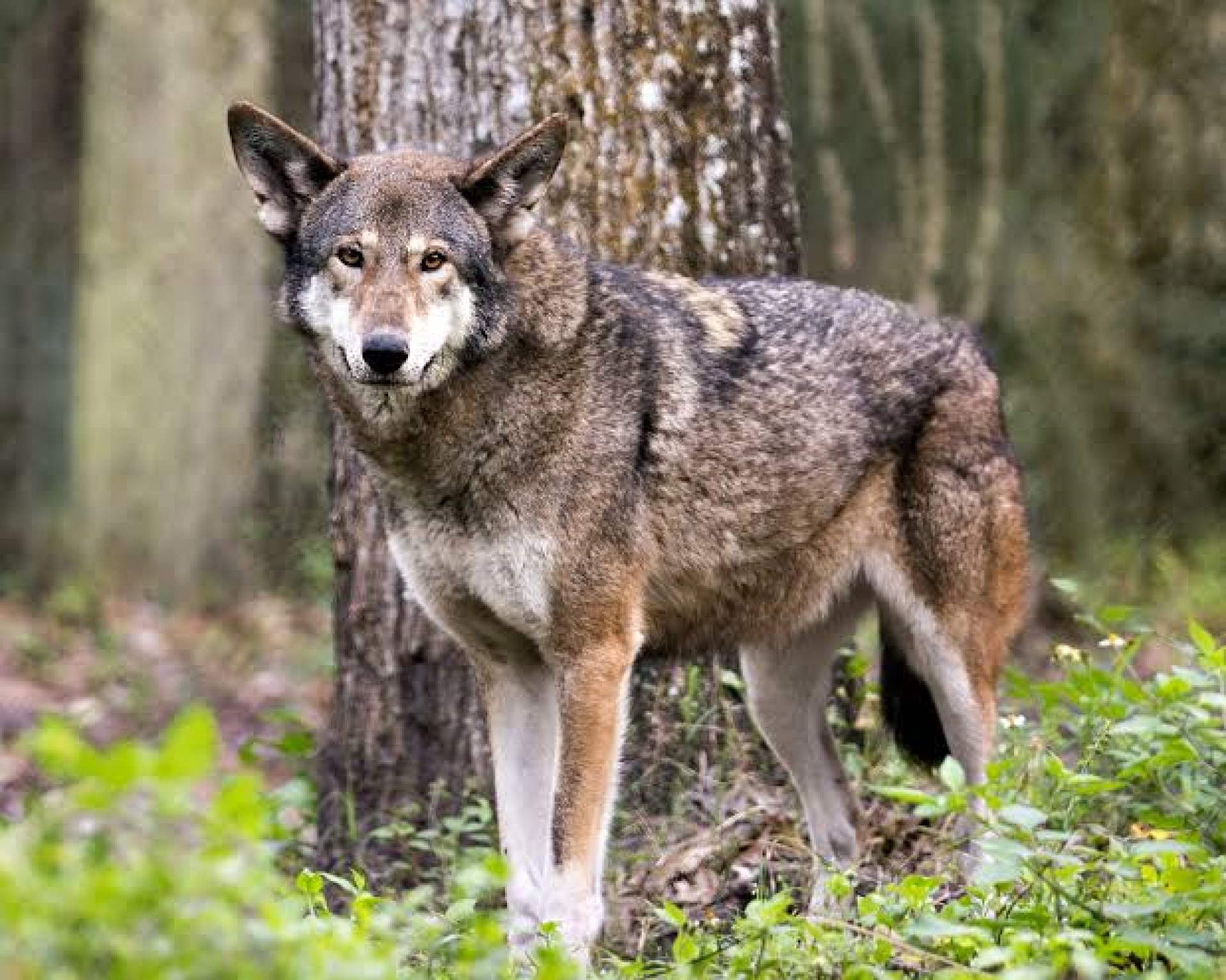
As many as 38 subspecies are listed, and as we make contacts for people to see the wolves, we will add more subspecies. Some examples include the Eurasian wolf, the Indian wolf, the Iberian wolf and even the domestic dog. However, it was found that many of these interbred along their boundary suggesting they are more of a clade than a subspecies. As such, below i have split the wolf species into 2 groups, old and new world wolves. Each will have a page, thought these will remain relatively sparse until we start adding links for where you can see them. I should add (once again) that this is a page for subspecies of the grey wolf. Any closely related wolf like the Alonquin wolf (eastern wolf) or the red wolf have pages of their own, as they have been granted separate species status (as opposed to separate subspecies, which will be listed on this page)

There is a great thirst in our increasingly artificial lives, for people to experience the wild. It is true that many do this on safari in Africa, or on a whale watching trip, but the interest in seeing wolves in their native environment only grows as time goes by.

The wolf is an apex predator. By hunting in packs, they are able to take down much larger prey than they would be alone, though a number of different subspecies have given up this advantage to be able to survive in places where large prey is not available. Subspecies like the African wolf subsist on rats and birds and rabbits and species of similar size. They are incredibly intelligent (when trekking in the Romania mountains we saw the sign of recent visits by the wolves, in order to plan their attack on the vast sheep flocks which would be herded through this narrow valley, several months later) and can plan a significant distance into the future. The Ethiopian wolf (a species that is not a subspecies of the grey wolf, but closely related) hunts in a very similar way, but not being a subspecies of the grey wolf will not appear on this page (it has its own page, accessible from the wild dog page or click here). The domestic dog is a subspecies. The African wild dog, is a relation of the wolf, but is not a subspecies. It is thought that it last shared an ancestor with the wolf around 2 million years ago.


Below is an image of a range of  old world wolf subspecies. Each one will have a page devoted to it, and over time, we hope to list places to see each one in the wild. We rely on people who live alongside these animals to list places that people can see them (the whole purpose of this website is to create a wildlife travel marketplace, if you live somewhere wild, list it and make money while showing the world the amazing wildlife on your doorstep (if it is not a wolf, find your species – we wish long term to cater for all)

Old world grey wolf subspecies – Europe Asia Africa (note- the name of each has wolf after it – Iberian wolf etc. This does not apply to the last two). Below is a map of the rough range of the old world species

The Iberian wolf is a subspecies of the grey wolf found on the Iberian peninsular. It reached its minimum in the 1970s with 500-700 iindividuals living in the wild. Until the middle of the 19th century, it was widespread, throughout the Iberian peninsular. It should be noted, that wolves have never had high densities, and the wolves of western Europe are not thought to have ever had a population much above 848–26 774 (depending on which end of the estimate you rely – but is the founding population of both the Iberian and Apennine population).

They have been gradually spreading from their 1970s holdout – in a hunting reserve called the Sierra de Culebra which is a hunting reserve straddling the North eastern border of Portugal, and across the border in Spain. This reserve is fascinating, and may well be a good way to support wolves in other areas. There is significant belief that the wolf populations in Southern Spain is extinct, however, should the recovery of the Iberian wolf is allowed to continue, I could well see wolves re-settling these areas within the next couple of decades

They have in recent years, started to meet with Apennine wolves, who re-entered France back in 1991-1992, and settled in the  Pyrenees. The small pockets of wolves in Southern Spain are isolated and are certainly threatened long-term. The Iberian wolf had its last survey in 2021, and at that time the number of wolves was estimated at 2000-2500. It should be noted that in 2021 wolf hunting was banned in Spain – between 2008 and 2013, 623 Iberian wolves were hunted legally, and I think that it is fantastic that this has been banned. Having said that, it means that the wolf hunting number was around 5% of the wolves in the country each year. This is at a level which should allow the population to grow over time.

These wolves are fascinating to see in the wild (I have seen them and heard them), and the best way to make sure that they say in the wild is to go see them. They are fantastic for ecosystems, and are very exciting to see in the wild. As we add destinations, they will appear below.

The Apennine wolf is also known as the Italian wolf. Back in the 1970s the population reached its minimum, where the population reached 70-100 individuals. It has recovered well since then, with an Italian population of roughly 3300. However, since the early 1990s, this subspecies has been gradually moving into France. As such, at the end of 2022 the number was estimated at 1104 wolves in France.

The Italian wolf is considered the national animal of the country (at least by some) and features heavily in writings from across the history of the country (going back as far as the Roman empire). It was listed as a subspecies back in 1921, and the range almost exactly 100 years ago in 2019 is shown to the right. It should be noted, that wolf range is likely to have increased significantly in the 5 years that have run since this map was created.

The genetics of this subspecies suggests that it went through a genetic bottleneck in the last 20,000 or so year, and it is thought wolves were isolated south of the alps, and unable to exchange DNA with any other group of wolves. Now they have been able to move beyond the alps, this isolation appears to be over, and there are already couples breeding, which will improve the health of each population as a whole.  Keep an eye on the news box below which will list articles on this subspecies.

The Apennine wolf is found throughout  much of Italy, and an increasingly large parts of France, as well as even sections in Spain in the Pyrenees. There is much wilderness across its range, and as such there is likely space for a far larger population. It is also worth noting, that the deer population across Italy and France is higher than it has been for some time, and as such a recovered wolf population is likely to control these at more natural levels.

Never-the-less, there is much tourism in all of the range of the Apennine wolf. Any places that we have listed to see this wolf subspecies will appear below.

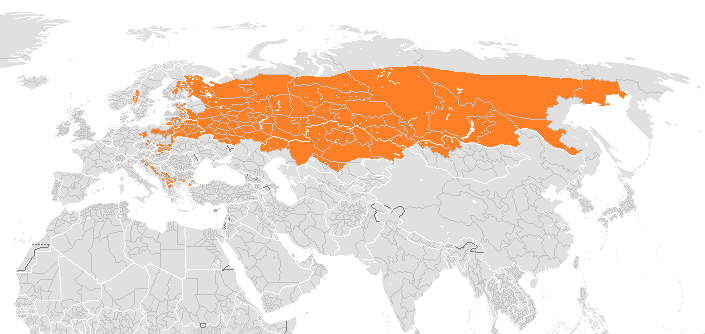
The Eurasian wolf (often referred to as the Russian wolf), is the subspecies which runs down the east coast of the Adriatic sea, as well as the majority of Russia and northern Europe. 

 It ranges through Scandinavia, the Caucasus, Russia, China, and Mongolia. Its habitat overlaps with the Indian wolf in some regions of Türkiye.

In South eastern Europe it is found in much of the countries in which it lives, but not throughout the area (its distribution is patchy, but relatively easy to move between areas where they are found). The numbers are thought to be roughly 3900 throughout this area.

Its Scandinavian population is not large, but it is thought to still be connected with its Russian population so there is no worry about genetic bottlenecks. Norway and Sweden are thought to have a population of around 450 in total. Around 80% of these are in Sweden, though this is by choice- despite the large area of Norway, they state than 95% of the country should remain wolf free, and the remaining area can only support 3 breeding pairs. This is not scientific but political and as such takes intensive culling each year. Finland has a current population of 300 which is the highest for a century, though modelling suggests a population under 500 is unlikely to remain healthy for long; though given the proximity of Finland to Russia, wolves are able to regularly interbreed across the border.

The Russian wolf population is the largest, and accounts for most of Russia’s wolves. The population was estimated at 40,000. They are hunted, but at the current time, their population appears to be pretty stable.

The Chinese population is 10,000-12,000, while Mongolia has 10,000-20,000

Although, the only subspecies to take the name Russian, Russia hosts a range of wolf subspecies. Also known as the Northern Asian subspecies. I have not found much information on this subspecies, but hope to add more soon as it becomes available.

In places like reserves, these wolves are seen relatively regularly. The reserve we visited a bear hide, has a permanent person looking after it, and he claimed he saw wolves about once a week. While this sub-species does not have a population growing particlarly fast, it is also not shrinking fast either.

We will aim to list places to see them below. Do get in touch if you have somewhere that you do see these wolves regularly, and would like to list your destination. Letting other people pay to see the wildlife that you see all the time, can help reward their ongoing survival as well as bringing in some money which can help you .

The Tundra wolf – Canis lupus Albus is the Eurasian equivalent of the Arctic wolf. Also known as the Turukhan wolf, it is native to Eurasia’s tundra and forest-tundra zones from Finland to the Kamchatka Peninsula. It was first described in 1792 by Robert Kerr.

The tundra wolf generally rests in river valleys, thickets and forest clearings. In winter it generally feeds on female or young wild and domestic reindeer, though smaller animals like hares, arctic foxes and other animals are sometimes taken. A survey of stomach contents of 74 wolves caught around Nenets Autonomous Okrug in the 1950s were found to consist of 93.1% reindeer remains. In the summer period, tundra wolves feed extensively on birds and small rodents, as well as newborn reindeer calves.

They are classed as least concern, and as can be seen, have a large range. There is no estimate of their numbers, but it is likely to be one of the more numerous in the world. (if anyone has further information do let me know). As yet, I have not written about the Tundra wolf – it is not easy to find information on it. However, as blogposts are written on this subspecies, they will appear below. It should be noted that when you look up Arctic or Tundra wolf, a number of webpages quote figures of 200,000


Indian wolf

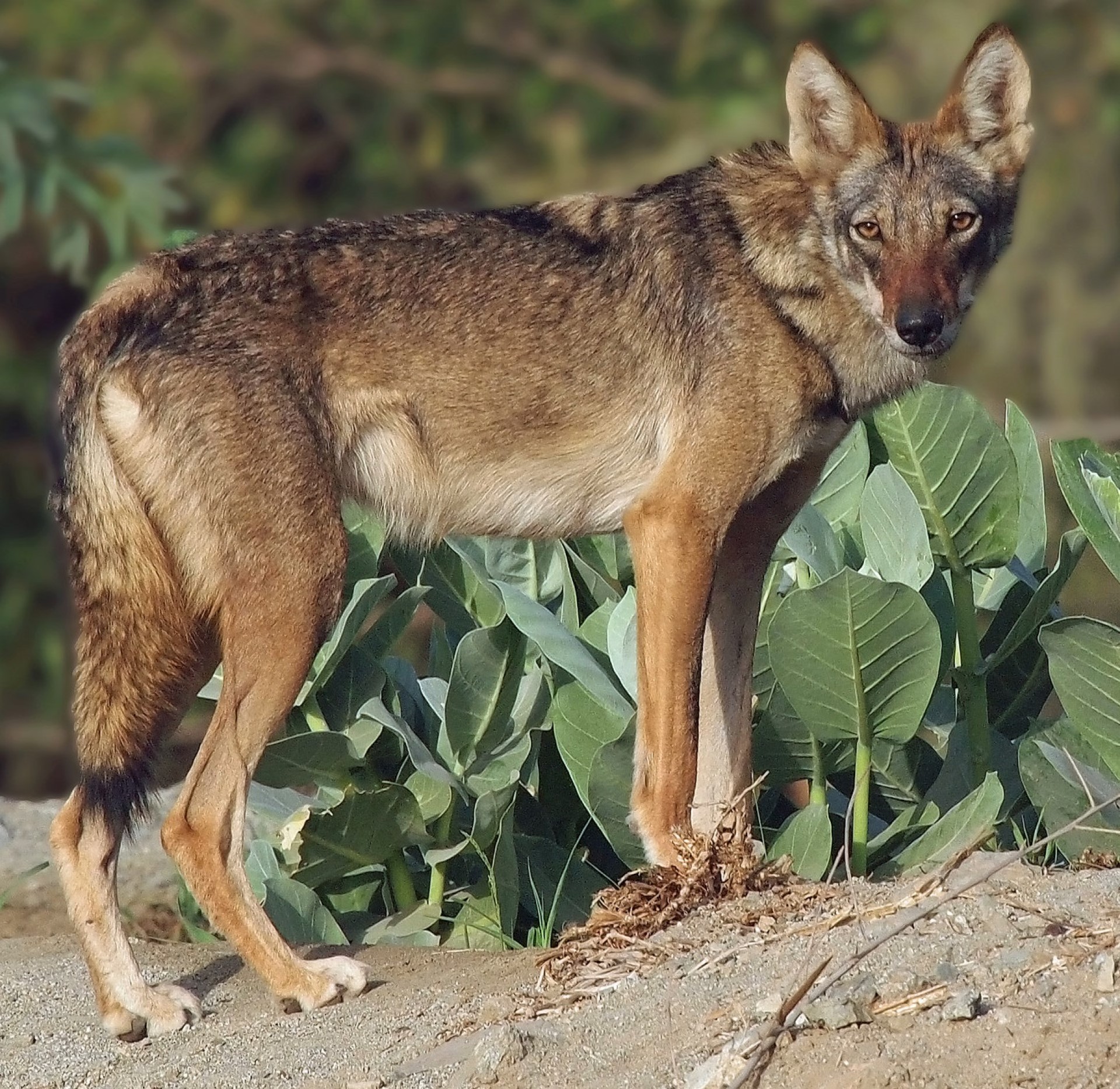
The Indian wolf is one of the more well known, partly as their starring role in the Jungle book by Rudyard Kipling. I do remember my great grandmother talking about seeing 4 wolves running in the distance. It is thought to have 2000-3000 individuals left in the wild, though given its former large range, this does not appear very high. It should not be surprising, therefore, to hear that this is considered as one of the most endangered subspecies of the grey wolf – it officially has the conservation status of endangered – now it is considered endangered, and people talk about it at high risk, but it should be remembered that there are still 2000-3000, which is a pretty high number for a species considered more than just endangered.

It is found in arid and semi-arid peninsular plains of India, though from the distribution map to the right, you can see that much of its range is found outside India. The Indian wolf lives in smaller packs of 6-8. It has a reputation for cunning, and makes far less noises than other wolves, having very rarely been known to howl. As you can see from the map to the right, although called the Indian wolf, its range stretches far beyond the borders of India

It was described in 1831.


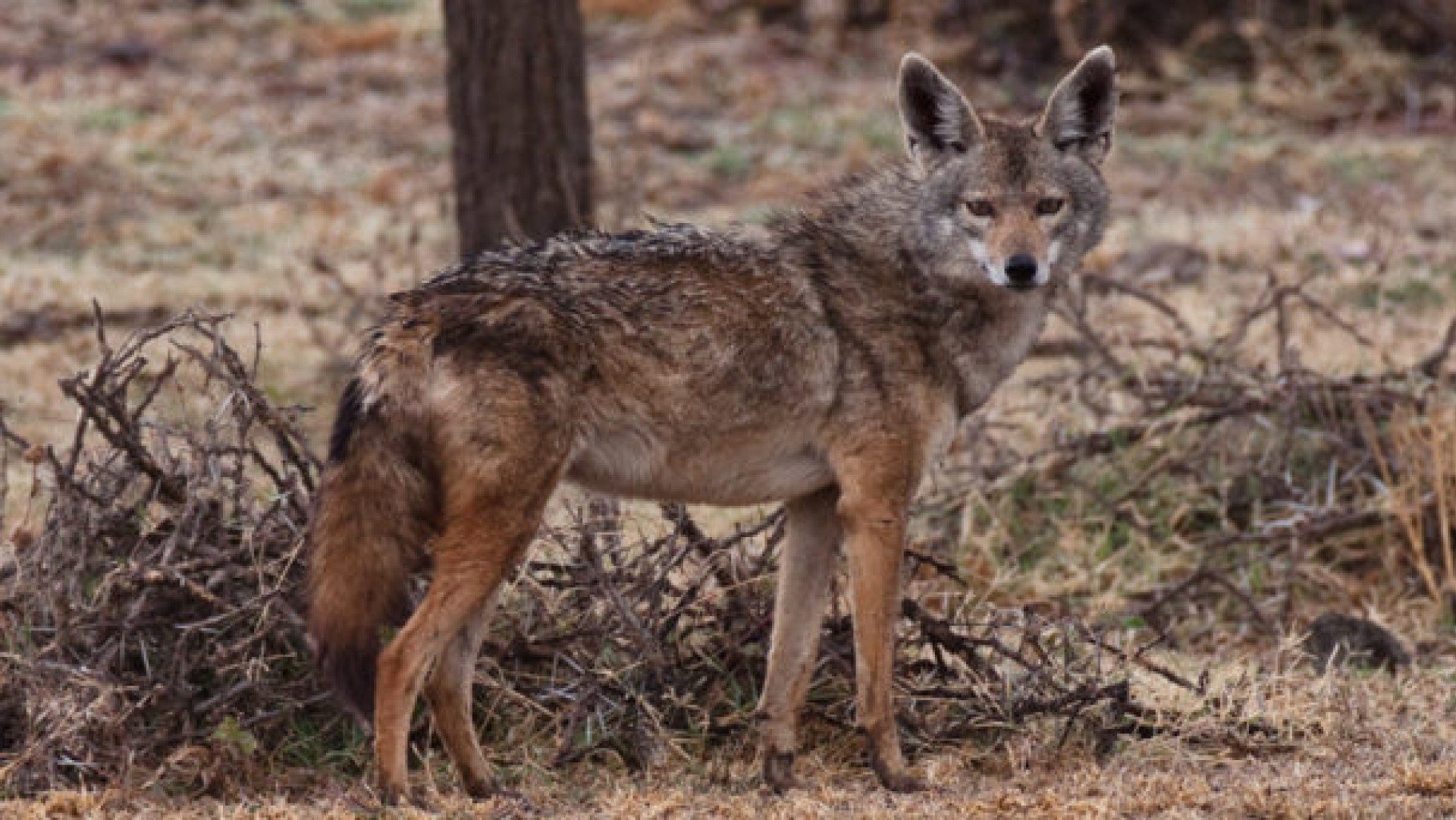
Also the most recently confirm subspecies of the wolf – the African wolf. The move onto the African continent has required a number of changes in behaviour, which makes it easily confused with Jackels, but the African wolf is indeed a wolf. It split from the wolf/coyote ancestor just over a million years ago. Previously, it was considered a subspecies of the Golden Jackal.

There are two genetically distinct populations, one in North-West Africa and the other in East Africa. It appears to be roughly 72% genetically grey wolf, with the rest coming from the Ethiopian wolf (while the Ethiopian wolf is considered a separate species, it is a closely related Canid).

It was only reidentified (having been originally identified in 1820) in 2015, so there is still much to be done, both in identifying size of population and variations of he population across Africa. Given the huge area that they are found in, it seems quite reasonable that there will be further splitting of the African wolf into separate subspecies (or merely populations, though given the huge distances between them we will have to wait and see) but we will find this out in time.


There has been little study of this species, and it is unclear exactly how much range that it has. Hopefully, this will happen in time, but it is clear that the big problem is telling the difference between golden jackals and golden wolves. 


African wolf range

There are a number of subspecies of the African wolf (quite quick, given it was not redeclared as a species 6 years ago. They are classed as a least concern. While not all sub-species have a clear estimate of the current population, genetic analysis suggests that the historic population was not smaller than 80,000 females.


  • Algerian wolf – range Algeria, Morocco and Tunisia -A dark-coloured subspecies, with a tail marked with three dusky rings. It is similar in size to the red fox
  • Senegalese wolf – Senegal – Similar to the Egyptian wolf, but smaller and more lightly built, with paler fur and a sharper muzzle.
  • Serengeti wolf – Kenya, northern Tanzania – Smaller and lighter-coloured than the northern forms. The wild population is 1500-2000
  • Egyptian wolf – Egypt, Algeria, Mali, Ethiopian Highlands, and Senegal – A large, stoutly built subspecies with proportionately short ears and presenting a very gray wolf-like phenotype, standing 40.6 cm in shoulder height and 127 cm in body length. The upper parts are yellowish-gray tinged with black, while the muzzle, the ears and the outer surfaces of the limbs are reddish-yellow. The fur around the mouth is white.
  • Somali wolf – Somalia and the coast of Ethiopia and Eritrea – A dwarf subspecies measuring only 12 inches in shoulder height, it is generally of a grayish-yellow color, mingled with only a small proportion of black. The muzzle and legs are more decidedly yellow, and the underparts are white.
  • Variegated wolf – Sudan and Somalia – A small subspecies standing 38 cm (15 in) at the shoulder, and measuring 102 cm (40 in) in length. The fur is generally pale stone-buff, with blotches of black.
Steppe wolf or caspian sea wolf user Mariomassone Creative Commons Attribution 3.0 Unported

The Steppe wolf also known as the Caspian sea wolf is a wolf subspecies that is found in the region around the Caspian sea, though the Steppe wolf is perhaps more useful a name as it extends far from the Caspian sea. Much of its range is in Kazakhstan as the working figure is 30,000 individuals, however, the survey which produced this number was completed in 2007, and given the lack of any protection and the widespread enjoyment, got from hunting wolves, it seems highly unlikely that the current population is anywhere near that size. 

As you can see from the map, its range is largely split between Kazakhstan and and teh western end of russia.

The Arabian wolf is found sporadically around the edge of the Arabian peninsular, with a total population of 1000-3000. The Arabian wolf was once found throughout the Arabian Peninsula, but now lives only in small pockets in 

  • Southern Israel: 100-150 live over the Negev and the Ha’arava. While harassing or killing wolves is prohibited, there is no compensation for livestock losses, meaning retaliation kills are more likely (80-100 Indian wolves are also found in the north of the country – Carmel, Galilee, and Golan Heights)
  • Palestine: possibly merely sharing the population numbers above (few surveys due to issue with getting in there). Both Arabian and Indian wolves are present.
  • Southern and western Kuwait: A significant amount of illegal killing, and having gone on for some time. It is thought that it is locally extinct, though with its continued presence in surrounding countries, it could return on its own.
  • Oman- wolves still exist in parts of the country, including the valley of the wolves (video below this text box). While surveys are rare, an Oryx survey between 1991 and 1997 encountered wolves on 17 occasions. Hunting was banned in recent years, and the wolf has increased since then. There is hope that the wolf will fully recover without help.
  • Yemen
  • Syria: the wolf is unprotected, and while there are no recent surveys, it is thought that around 200 wolves survive (no compensation is paid for lost of livestock).
  • Lebenon has around 50 wolves, though they have no legal protection and there is no livestock damage compensation
  • Jordan has 200 wolves, though little or nothing is known about them, including whether the population is growing or shrinking.
  • Saudi Arabia: hosting between 300 and 600  wolves, there is no protection and no livestock damage compensation
  • Parts of the Sinai Peninsula in Egypt are thought to host small numbers of wolves
  • UAE the wolf is currently listed as extinct
 Bahrain and other countries in the region are not thought to have wolves at the current time. Having said this, the range of the Arabian wolf is not large and in other places wolves have dispersd thousands of miles, so it is essential that the other countries in the area and set up to allow wolves to return if this happens.


There is wolf tourism in a variety of places across the middle east, but merely expressing interest in them could well show locals their potential value.

Should you live in an Arabian wolf range area and would like to be able to show visitors these fascinating animals (and get paid for the privilege, do get in touch, we are eager to work with people on the ground. Below is a list of any articles from the website that mention this species, below that is a video of this species in the wild.

The range of the Himalayan wolf is shown in pink

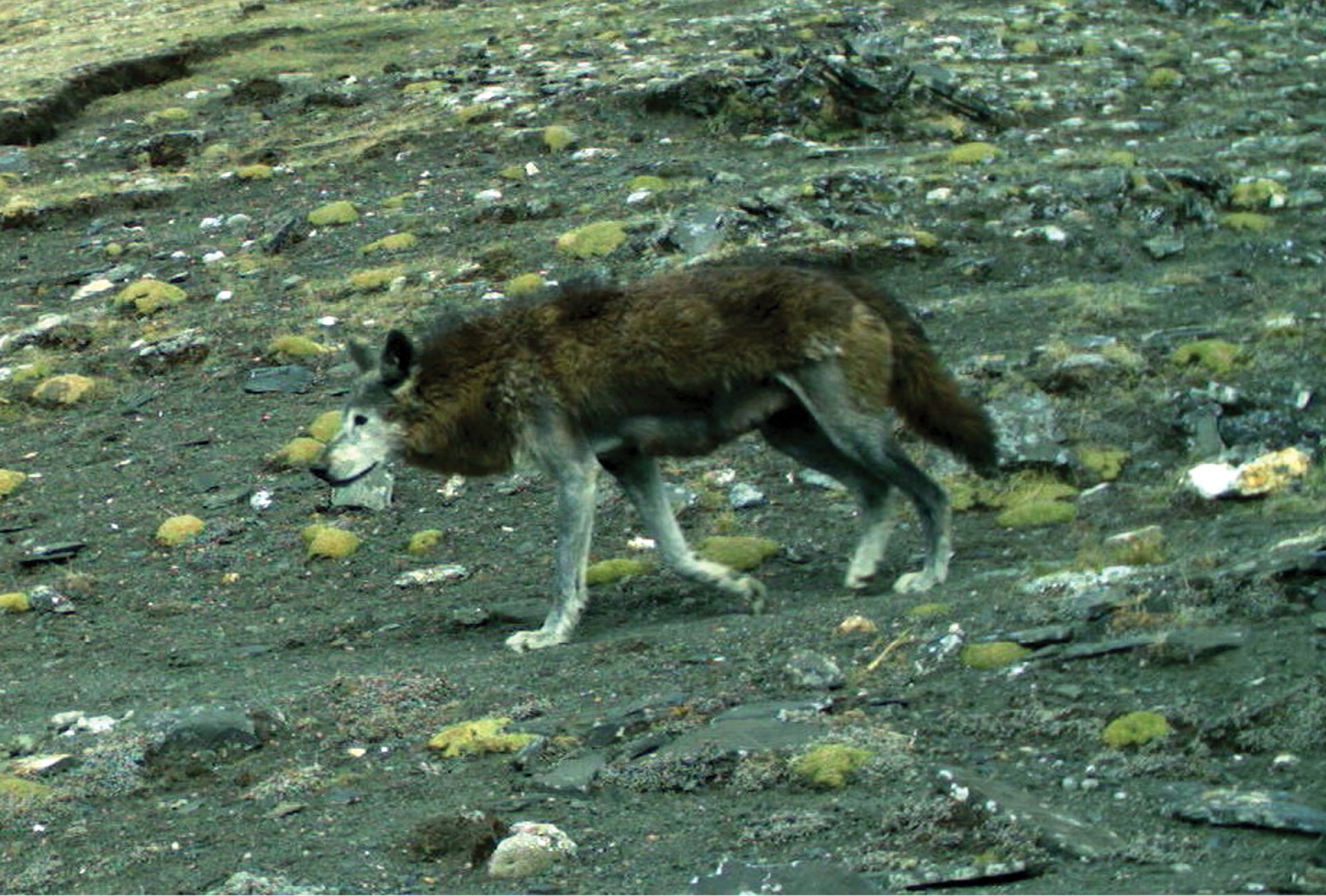
The Himalayan wolf (scientifically known as Canis lupus chanco) is a member of the dog family, whose position is debated. Its genes show it is  genetically basal to the Holarctic grey wolf, genetically the same wolf as the Tibetan and Mongolian wolf, and has an association with the African wolf (Canis lupaster). No striking morphological differences are seen between the wolves from the Himalayas and those from Tibet. The Himalayan wolf lineage can be found living in Ladakh in the Himalayas, the Tibetan Plateau, and the mountains of Central Asia predominantly above 4,000m  in elevation because it has adapted to a low-oxygen environment, compared with other wolves that are found only at lower elevations.

Some experts have suggested that this subspecies is so different to other wolves, that it should be listed as a separate species. In 2019, a workshop hosted by the IUCN/SSC Canid Specialist Group noted that the Himalayan wolf’s distribution included the Himalayan range and the Tibetan Plateau. The group recommends that this wolf lineage be known as the “Himalayan wolf” and be classified as Canis lupus chanco until a genetic analysis of the holotypes is available. The Himalayan wolf lacks a proper morphological analysis. The wolves in India and Nepal are listed on CITES Appendix I as endangered due to international trade.

The Himalayan wolf is found in the Himalayan region encompassing India, Nepal and the Tibetan Plateau of Western China. The IUCN report noted that only 2,275 to 3,792 individuals of the Himalayan wolf (Canis lupus chanco) are left in the wild.

 The Mongolian wolf (Canis lupus chanco) is not restricted to just Mongolia, but is found in a range of countries in the area as well (see the map to the right for more information). For reference, the blue is the Mongolian wolf range, while the pink is the Himalayan wolf range.

Generally, there is little fear of the Mongolian wolf, and while they do occasionally take livestock they are not persecuted. There is a harvesting of wolf pelts but this is currently done at a sustainable level.

They are considered endangered; they are classed as endangered, with a Mongolian population of 10,000-20,000. I have been unable to identify an overall number for the population.

The new guinea singing dog (also known as the New Guinea highland dog, it is restricted to the highlands of New Guinea. There are a number of different possible names, and places where it fits into the dog family as its taxonomic status is debated, with proposals that include treating it within the species concept (range of variation) of the domestic dog Canis familiaris, a distinct species Canis hallstromi, and Canis lupus dingo when considered a subspecies of the wolf.

Rare amongst canines, it is incapable of barking, instead making an odd yodelling sound, which gives rise to its name.


Genetic analysis suggests that this subspecies is descended from multiple different wolf subspecies. However, it is still debated, though an IUCN workshop in 2019 came to the conclusion that both the singing dogs and the dingo to be populations of the domestic dog, and therefore not needing of protection, or needing to be listed on the IUCN red list.

Oddly, this species was thought to have gone extinct in the wild in 1970 and it was only in 2020 that several wild dogs were genetically tested and found to be this species. Still surviving in captivity, it was a big shock to find them living at heights of over 4km high.

The IUCN will not list them, as it considers them a domestic dog breed, but if this is the case, they are still of interest as they appear frozen in time – a so called “proto domestic dog”. There are around 100 animals in zoos and as domestic exotic pets, but these all originate from around 8 wild members, which means that there is little genetic diversity – leading to possible infertility.

In 2012, a tourist took a photo of an animal which looked suspiciously like the singing dog – taken in a remote mountainous area of New Guinea. When the photo found its way to a certain person, who had been running a program to find it since 1996. McIntyre, the leader of this project, launched a trip to the area and set up many camera traps. Oddly, while some tracks were found, no animals were seen until the last day when a whole pack walked in front of one of the camera traps. While they looked exactly as required, recognizing it would take more than photos to resurrect the singing dog from the dead, he mounted a second trip to the area and set out traps – he caught 2 males, and after taking blood and attaching tracking collars he released them.

After testing against captive singing dogs, it was found to have come from a fully diverse group of wild singing dogs. Some other researchers did suggest that no-one believed these animals to be dead (having found scat on a trip) but there we are.

Might this species be alive and thriving in remote parts of New Guinea? I will hope to write on it in the future – do get in touch if you have information on this fascinating species.

Closely related to the new Guinea singing dog, the Dingo is a dog species that has a relatively wide range. There is some debate about how it got to some of its homes, and whether it may have come alongside early humans.

The earliest remains of Dingoes in Australia are dated to almost 3500 years ago, While they are now quite happy living alone or alongside humans, it seems that this may be the descendant of early domestic dogs. Interestingly, both genetically and in body shape, these dogs do not appear to have changed much in the 3450 years that they are known to have been in Australia, suggesting a high level of self determination in choice of mate, as opposed to what might have happened with human lead selective breeding. It should be noted that it is thought it arrived far earlier than these earliest remains, with studies suggsting that a sensible arrival date was around 8300 years ago

Given that they have now been on the continent for likely well over 3000 years, it is quite likely that they have done whatever damage that their arrival might cause, and so they are to all intents and purposes a native Australian species.

There is not a particularly strong estimate in the number of Dingoes currently living wild, but it is thought to be between 10,000 and 50,000. Recent genetic studies have shown that over half of the dingoes are pure dingo, with no dog ancestry – putting paid to some attempts to suggest that they are little more than feral dogs, which would make their culling far easier to agree to.

Fraser island, off the coast of Queensland is one of the best places to see the dingo, though there are plenty of other places to head. We hope to add many in the near future, do help us get there.

New world wolf subspecies- until recently, as many as 38 wolf subspecies were recognized in North America. The current agreement is that there is just 4-6 (it should be noted that while it has been a debate for over a century, the current agreement is that the red wolf is a separate species and not a subspecies of the grey wolf). 
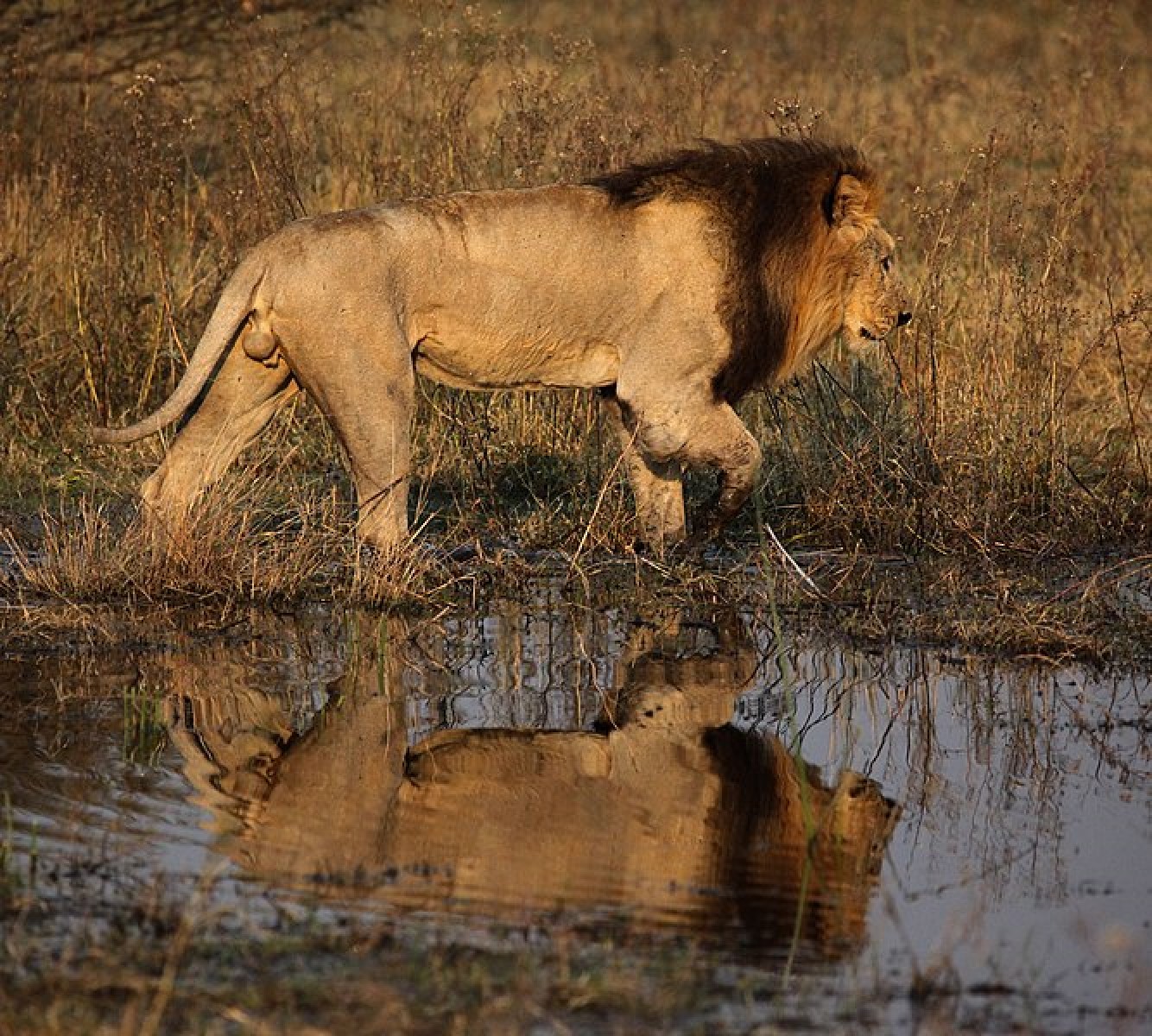
Wolves in the USA have been heavily persecuted since Europeans arrived on the continent, and as such in 1967 when they reached their minimum, there were only around 1550 individuals left. The map below shows where they still range.

Thankfully, given that most wolf subspecies has range outside the USA, we still have all of these subspecies (though the health of their population varies from subspecies to subspecies – we will cover this below in each one in turn.

The Trump administration gave the handling of the wolf population over to the states. While some took this responsibility seriously, others allowed the wolf to be all but exterminated once again.

This listing includes 5 of these subspecies, I may add or remove one as further evidence is found.

It should be noted that this image shows the layout of the wolf subspecies in north America, it does not show their current range. I have included a link to our red wolf page, it should be noted that the red wolf is not a subspecies of the grey wolf, it is a separate species which appears to be a hybrid between wolves and coyotes but split from grey wolves long in the past

Scientifically known as Canis lupus Arctus, some question the Arctic wolf classification as a subspecies, and it is certainly clear that it is only recently that wolves moved up from North America. Recent researchers have found that the Arctic wolves have no unique haplotypes (group of unique genes inherited from one parent) and that as such, they do not warrant the subspecies status, and are actually just north American wolves.

One thing to note, is that they are listed as data deficient in terms of population size, though even so, it is listed as least concern – having said this, there are clear threats. In 1997, there was a decline in the Arctic wolf population and its prey, muskoxen (Ovibos moschatus), and Arctic hares (Lepus arcticus). This was due to unfavourable weather conditions during the summers for four years. Arctic wolf populations recovered the next summer when weather conditions returned to normal. It is unclear where the information came from, but a very large number of websites list this animal as having a population of around 200,000 individuals. Given the global population of wolves is only thought to be around 200,000-250,000, there is no way that the Arctic population can be anywhere near this number. A reduction in the number of Musk ox, in recent years did also cause a decline in the Arctic wolf population. 

Although quite rightly considered apex predators, polar bears will on occasion hunt arctic wolves.

While listed as least concern, they are only relatively common in Alaska where there is plenty of food. Elsewhere they are very rare. Below will show a list of any articles written on this subject. If there is anyone who is interested in writing about this species (a researcher or similar) we would be fascinated to hear, while I will endeavour to write, I have found that there is little information on this highly specialized wolf subspecies.
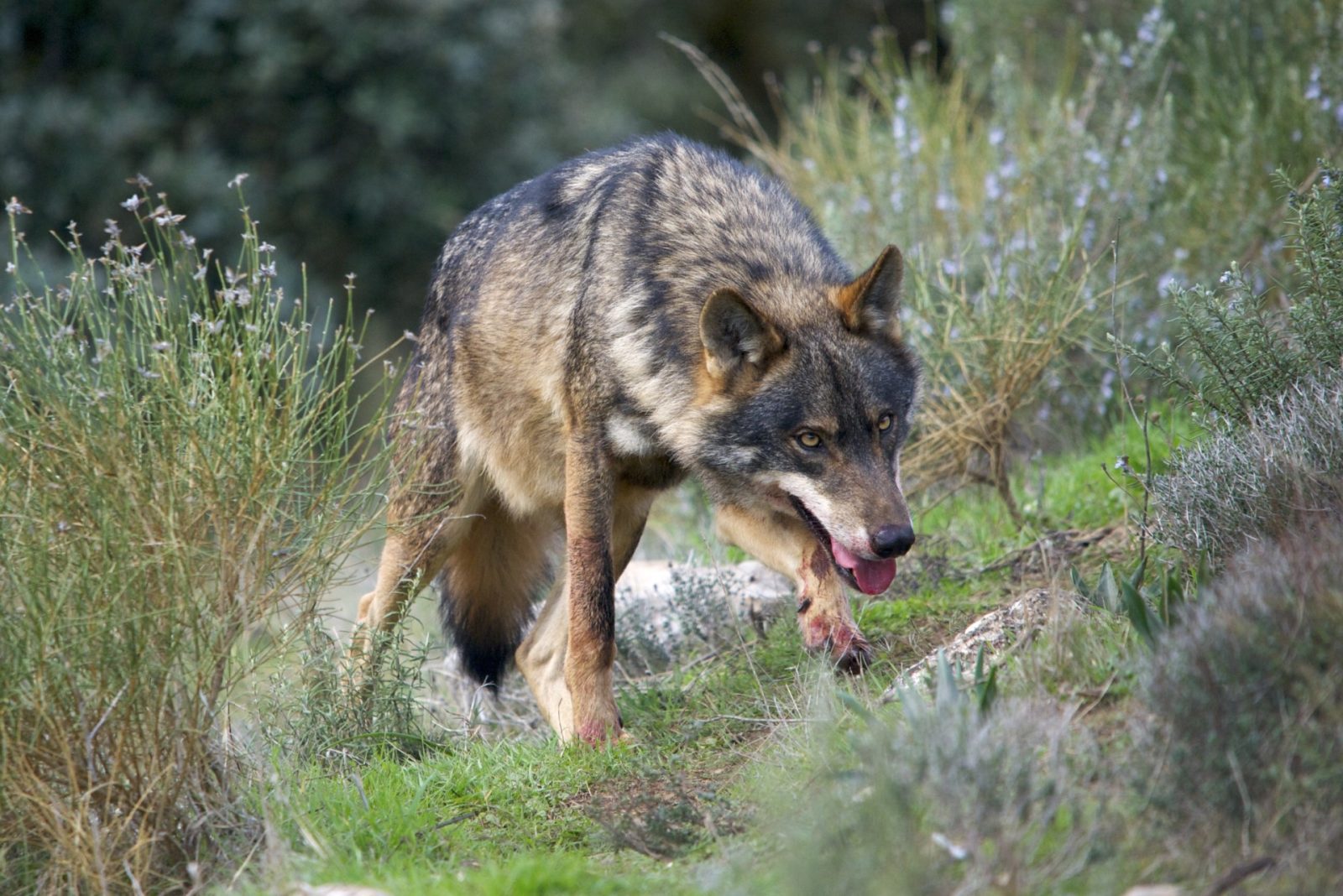
Click here to watch a program on this subspecies called “Following the Tundra wolf”. Unfortunately certain names are used interchangeably – here they are not talking about the Tundra wolf, but the Arctic wolf, confusingly sometimes known as the tundra wolf

Mexican wolves (scientific name is Canis lupus baileyi) are currently only found in a small area as seen on the map to the right. It is a fantastic improvement on the situation around 1970 when the species was extinct in the wild. The first reintroduction was carried out in 1998. Unfortunately, founded by just 7 individuals, the population is highly inbred. Never-the-less, currently, the USA has 257 wild Mexican wolves, while 57 live across the border in Mexico, up from just 11 that were reintroduced into the wild. A further 380 are in captivity. 

As always with small populations, hybridization is a big threat. Both coyotes and other wolf subspecies can interbreed, and overlap territory in places.

If you visit an area where these wolves live, paying to do some wolf watching is the best way to support this subspecies long-term survival. If you have anything that will help with this, do click on list your wild place at the top of the page, so we can help people find you.

Tourism is one of the easiest ways to fund conservation projects, and while this species is currently not in danger, it certainly needs help to come back from its near extinction. 314 is a great population when compared to zero, but it is also a terrible one compared to the population that might exist werein not for human persecution.

The Great Plains wolf (scientific name is Canis lupus nubilus), alternatively known as the buffalo wolf or loafer, is a subspecies of gray wolf that once extended throughout the Great Plains, from southern Manitoba and Saskatchewan in Canada southward to northern Texas in the United States. The subspecies was thought to be extinct in 1926, until studies declared that its descendants were found in Minnesota, Wisconsin and Michigan. They were described as a large, light-colored wolf but with black and white varying between individual wolves, with some all white or all black. The Native Americans of North Dakota told of how only three Great Plains wolves could bring down any sized bison. 

First, described in 1828, it was thought to have been hunted to extinction in 1926, until studies declared that its descendants were found in Minnesota, Wisconsin and Michigan. However, later studies found wolves in Minnesota, Wisconsin and Upper Michigan that were descendants of Canis lupus nubilus. Even then, their number became fewer and fewer until they were federally protected as an endangered species in 1974 (this is the same as all wolves living in the USA). Since then, their population became larger in the Great Lakes region and by 2009, their estimate grew to 2,992 wolves in Minnesota, 580 in Michigan and 626 in Wisconsin. Given the USA has a wolf popluation of 14,000-18000, a population of 4000 great plains wolves is actually significant (and more than 10 times the total population of the Mexican wolf).

Provided there is not a non-scientific return to hunting in the USA, it seems likely that they are safe for the future.

The North-western wolf (scientific name is Canis lupus occidentalis), is also known as the Mackenzie Valley wolf, Alaskan timber wolf,  Canadian timber wolf or the Northern timber wolf. Arguably the largest gray wolf subspecies in the world, it ranges from Alaska, the upper Mackenzie River Valley; southward throughout the western Canadian provinces, aside from prairie landscapes in its southern portions, as well as the North-western United States. The subspecies was first described in 1829 by Scottish naturalist Sir John Richardson. He chose to give it the name occidentalis in reference to its geographic location rather than label it by its color, as it was too variable so a colour referencing name would apply to not many of the wolves in question.

According to one source, phylogenetic analyses of North American gray wolves show that there are three clades corresponding to north-western wolf, Mexican and great plains, each one representing a separate invasion into North America from distinct Eurasian ancestors. The north-western wolf, the most north-western subspecies, is descended from the last gray wolves to colonize North America. It likely crossed into North America through the Bering land bridge after the last ice age, displacing great plains wolf populations as it advanced, a process which has continued until present times. Along with great plains wolves, north-western wolves are the most widespread member of the four gray wolf subspecies in North America, with at least six different names that it goes by (I named 3 of the at the start of this article).

Currently classed as “apparently secure” (one step down from secure) , this is the subspecies that was reintroduced into Yellowstone, and has since spread to the surrounding region. Many would argue that this is the largest subspecies of wolf in the world. Unfortunately this is another subspecies, where accurate population estimates are not forthcoming.

This suggested subspecies has been in recent times, lifted to its own species status – as such I have listed it in its own species status. You can find this species on the canine page, but to look at its page now, click here

It needs to be remembered, that the red wolf is its own species (with its own subspecies). It is a close relation of the grey wolf. Click here to jump to the red wolf page

Why are wolves so fascinating?

  • Is it just their incredible level of intelligence?
  • Their incredible attachment to each other, and the care that they show, in feeding the young, as well as the old and frail.
  • Might it be a throw-back to the time when wolves were a great threat to livestock in the last few millennia
  • Might instead, it be a greater throwback to the time when wolves and humans hunted together – a likely way that wolves started to become the domestic dogs, that we share our houses with.
  • Or perhaps, it is simply the spine-tingling thrill to have an encounter with an animal that makes the whole natural world where it lives, quake by its howls. Whatever, it is, there are a wide range of destinations across a great swarth of the world, looking to spend an evening with a local guide, trying to see them, gives them value. If everyone traveling to wolf areas were to pay to spend one evening during their stay looking at the local wolves, it would likely secure virtually all wolf populations across the world (there would be far more money in eco tourism than in hunting in almost all places – even in old hunting reserves like the Sierra de Culebra, there is far more to be made from eco-tourism than in hunting the 10 wolves a year that the reserve can support.
The only destination that we currently have listed, is the Sweden bear-hide,  but please get in touch – whether you live in an area where wolves live, work in hospitality or wildlife guiding in the same areas, we want to help people find you – As with everything on this site, we take a small cut of income so should we find you no customers, it costs you nothing. Click on list your wild place, to get in touch or to build your page – it is very simple and will only take a few minutes.
 
We are eager to make this work – we want to make it so that living in the shadow of wildlife is capable of making people in these places more than they loose from the animals themselves (predation, threat to life and damage to property)

To jump back to the dog family tree species, click here
[smart_post_show id="12150"]

White Rhino

White rhino

In Africa there has been horrible decline of rhinos. The northern white rhino was as recent as 1960 still living in numbers over 2000. Found through  Chad, the Central African Republic, South-western Sudan, the Democratic Republic of Congo (DRC), and North-western Uganda. Unfortunately this population has since crashed, and while they are not yet extinct there are so few left it is unlikely to recover. Embryos have been frozen in the hope that in the near future Southern white rhinos could host these.

Unfortunately, while the southern white rhino is doing far better with 18,000 (only a 12% decline in the last decade) it is not healthy and at the rate that poaching has occurred it’s not inconceivable that this population could be largely poached out of existence in a decade. In 2021, 457 rhinos were poached in South Africa with 77 lost from the Kruger. While this is horrific, it would suggest that Kruger is finally managing to protect its rhinos more effectively. Currently only 30% of Southern white rhino live in Kruger, which in the past this percentage was far higher (as high as 80-90%). Hopefully in the future rhino poaching will go back to being a thing of the past – while Kruger has the space, it cannot stop hundreds of determined poachers, while smaller reserves can do this more easily.

In the early 1900s, the Southern white rhino population fell to 50-100, thankfully this direction changed with (they are hoping) in August this year. The problem remains, that despite it having no medicinal benefit, if a rhino horn is valuable then people living near the breadline in the surrounding area will look on it with envy. Even if locals do not do it, it is worthwhile for criminal gangs. At the moment, white rhino horn can be sold for around $60,000 per pound, and an average white rhino horn weighs just short of 9 pounds. This means that each white rhino has half a million dollars attached to its nose. 

One important thing to note, is that the name white rhino does not come from the colour of its skin. Indeed, with a white and a black rhino standing next to each other it would be hard to notice a difference in the colour of the skin. Instead, it gets its name from the afrikaans word weit which means wide – the white rhino has a wide mouth for grazing, while the black rhino has a pointed mouth for browsing.

Either place gives you a good chance to see rhino in their home.

As time passes, we hope to add more destinations for each species. There is a list of all articles on this species below the destinations available.

Note:  to look at the rest of the rhino family click here

Limpopo Transfrontier park including Kruger sabi sands and other conservation areas
Greater Serengeti
[smart_post_show id="26287"]

Cheetah

Cheetah

Cheetahs are the undisputed king of speed – at least over the relatively small distances. They are stunning animals, and any sighting is a memory to be treasured.

Cheetah numbered as much as 100,000 wild members just one century ago. Now there is just 7000-8000. What happened? Well a large part of their decline is down to habitat loss. Unlike other cats, cheetah thrive outside protected reserves. This is not because cheetah never get killed by farmers – there are certainly problems, and some will be killed, however compared to the problems that the cheetah have when pushed into small reserves which dont allow enough space to get away from lions and leopards. In South Africa, as much as half of the cheetah population (which is about 1000) live on farm land. Despite the fact that they kill very little livestock, and indeed can actually benefit farmers by eating vermin that might eat crops.

Generally, cheetah live at low densities (except in the best reserves- places like the Serengeti, where their sprint ability is so useful) for instance, the Kruger which is the size of Wales, tends to only have a 100-200 cheetah in the whole area.

This makes them hard to see in the wild. On the other hand, one of the benefits is that Cheetah tend to hunt in the day (they hunt by site) and as such, if you go out in after lunch when most wildlife are lying in the shade.

All this means, that there is definitely a possibility to greatly improve their wild numbers, through a combination of removing poaching, and reintroducing them to places where they existed in the past.              

This is a cheetah that we encountered on a kill, on our last trip to the Kruger

There are currently 5 recognized subspecies of the cheetah, 4 in Africa, and the last few remaining in Iran. 

  • The northwestern africa cheetah is close to extinction (200 maximum – also known as the Saharan cheetah) is only seen occasionally and so is not one tourists go to see.
  • The north-east cheetah lives in South Sudan and Ethiopia and numbers between 1000-4000 (its status in Sudan, Eritria, Doubouti and Somalia is unknown.
  • The only remaining habitat of the Asiatic cheetah is in Iran where it is thought only 12 animals remain. It was lost from India 70 years ago.
The other two subspecies – are both well protected and well studied. These are represented in many of the reserves that we have listed (We hope to add reserves that cover the other subspecies as well, but these will be far harder to find the animal). 
  • Southern African Cheetah 
  • East African Cheetah                                                                                                                                                                                                                                                                                                                                                                   

Some of the biggest and most well protected Cheetah populations – to go and see them for yourself. We are eager to list any place with cheetah (in protected land or on other land). Click on list your wild place (on the home page) or click here


      • Kruger -400 with the south African population being around 1300

      • Serengeti massai mara ecosystem up to 1000

      • Namibia – reserves and free roaming, account for up to 3500 ( that high may be lower)

    Limpopo Transfrontier park including Kruger sabi sands and other conservation areas
    Greater Serengeti

    It should be noted that adding up these estimates already exceed the African cheetah population, but this is the case with plenty of reserves – an overestimate in the number of the species in an area often makes people more willing to visit. Possibly as this website grows we might be able to help in correcting this.

    The Saharan cheetah roams a large area around the fringes of the Saharan desert, and only has around 100 wild members at the current time.

    Other species in the Cheetah lineage (it shares its clade with nothing else) include the Jaguarundi and the Mountain Lion

    Alternatively, to visit the rest of the cat family click here.

    See Animals Wild

    Read more news

    Join as a wild member
    to list your wild place & log in

    Join as an ambassador supporter to
    support this site, help save wildlife
    and make friends & log in

    Join as an Associate member
    to assist as a writer, creator, lister etc & to log in

    List a wild destination

    List a destination in
    the shadow of man

    List a hide for animals more easily seen this way

    Highlight some news
    missed, or submit a
    one-off article

    Browse destinations for fun or future travel

    Temporary membership
    start here if in a hurry

    Casual readers and watchers