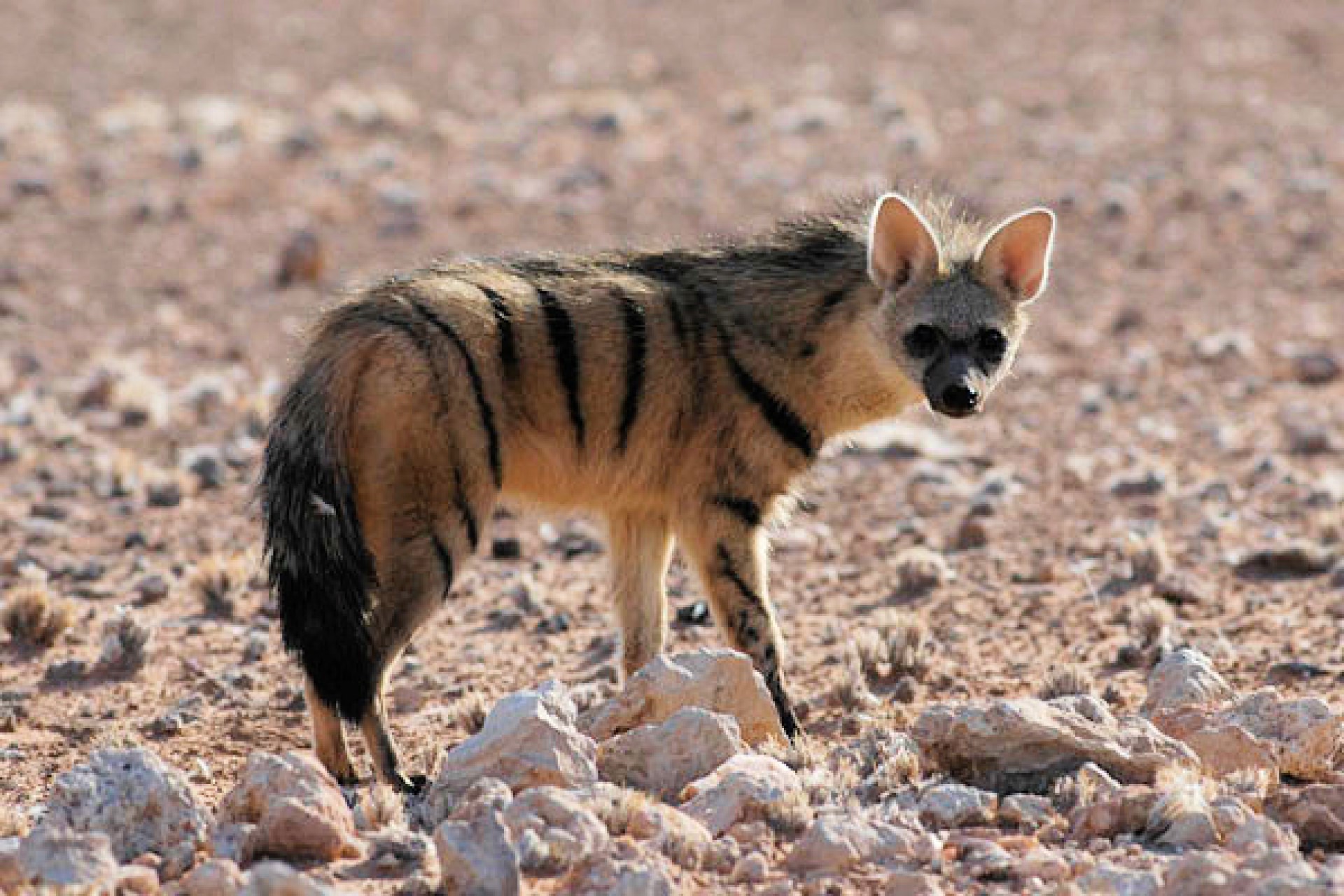
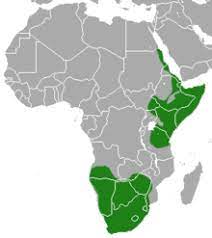
The aardwolf is the smallest member of the Hyaenidae family, as you can see from the map, it is a species with two separated populations, one in East Africa and one in Southern Africa. It is insectivorous, and exclusively nocturnal, and is generally thought of as one of the harder animals to see in the wild. If incredibly lucky, you can see them feeding alongside Aardvarks, and even Pangolins, but this is rare. They favour open dry plains and savannahs.
Looking at first glance rather similar to a thin striped hyena, but with a black mane running from its neck, down its back, it can raise this during a confrontation.
As it ages, it can loose its teeth, however, due to the softness of most insects, this is not the death sentence that it is in many wild animals.
They will defend a territory from others, that covers 1-4 square km, during the breeding season, but are solitary the rest of the time. Both sexes mark their territory, and they will maintain as many as 10 dens throughout their territory, giving them a nearby bolt-hole should danger approach.
They are careful not to destroy a nest that they raid, and will remember where they are, so that they can return for another meal a few months later.
They generally have a density of 1 per square km at most (though this is far higher than animals like lions.
While some farmers mistakenly kill them, thinking that they threaten their livestock, their diet of insects is often good for the farm animals. Their hide is worth a little.
Below is a video of this species and below this is a list of any articles that mention this species. When we have more contacts, you will find them below the news section.
Striped hyena are found across a far larger area than the brown Hyena. historically, its range would have stretched into Europe, but now the nearest place is Turkey.
There are no recognized subspecies, however there is some geographically variation in the animal. Hyenas in the Arabian peninsula have an accentuated blackish dorsal mane, while the colour of Arabian hyenas is grey to whitish grey, with dusky grey muzzles and buff yellow below the eyes. Hyenas in Israel have a dorsal crest which is mixed grey and black in colour, rather than being predominantly black. The largest striped hyenas come from the Middle East, Asia Minor, Central Asia, and the Indian subcontinent, while those of East Africa and the Arabian peninsula are smaller.
They are almost exclusively nocturnal, and monogamous, with the male establishing a den with the female and helping to raise the offspring. While they will dig their own burrows, they are happy to take over an abandoned one if it is going, They can be found establishing their lairs natural features such as caves, rock fissures, erosion channels as well as in burrows previously made and used by other animals such as porcupines, wolves, warthogs, and aardvarks. A hyena burrow often stands out from others, as they will leave bones from their food around the entrance. During the day striped hyena hides in caves, niches, pits, dense thickets, reeds, and plume grass to shelter from predators, heat, or winter cold. The complexity of their den varies from area to area; dens in the Karakum have entrances 0.67–0.72 m wide and are extended over a distance of 4.15–5 m, with no side tunnels or special chambers. In Israel the can be far more large, exceeding 27 m in length.
As with other hyenas, the striped hyena is a scavenger, and will eat from almost any carcass it finds, though when it encounters live prey that is the right size it will happily kill to eat as well. One on one, a striped hyena can dominate a wolf, though not a pack. They live in close proximity surprisingly happily, and will on occasion share a burrow. Striped hyena have also been known to travel with and hunt with a wolf pack, presumably because each have skills that benefit the other. Leopards cheetah and tiger cubs can all be pushed off kills by a striped hyena, though adult tigers are a different issue.
They are known for occasionally taking dogs, sheep and goats though accusations of predation of bigger livestock are probably more down to scavenging from a carcass. While usually timid of humans, there have been documented attacks on humans, normally on sleeping individuals that are outside – though scavenging from corpses is more common.
Though hunted by various groups, their fur is not nice, which means it is normally killed to stop its attacks and scavenging, not for the carcass itself. They have been tamed, and if raised with dogs, can form strong bonds with them.
Their conservation status is near threatened, with a population size estimated to be around 10,000, though given their range, this does not sound particularly high.
Any links we find will get added below the news section.
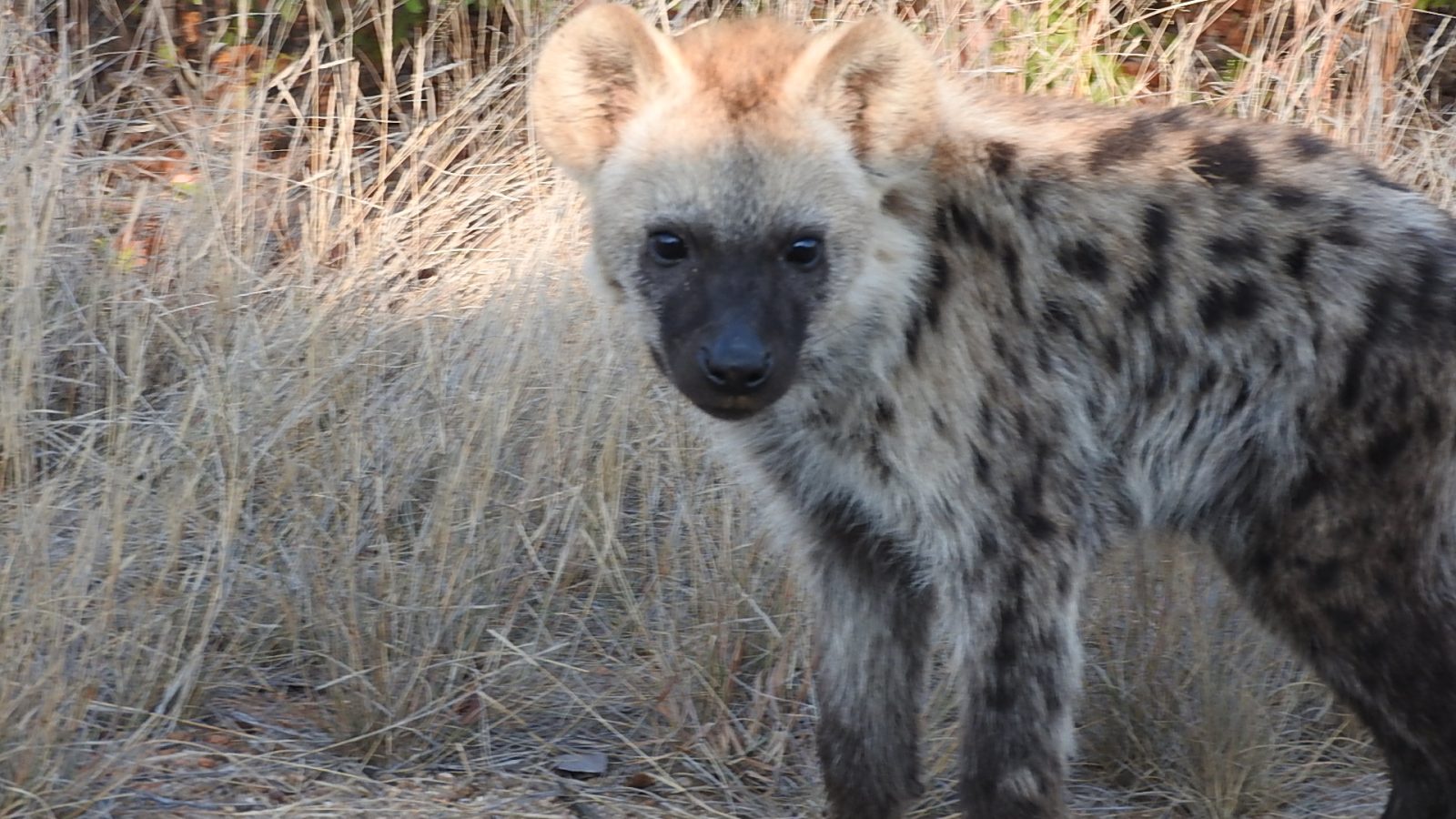
The spotted hyena (also known as the laughing hyena) is a predator that roams across sub-Saharan Africa. There are thought to be between 27,000 and 47,000 of these predators across the continent (figures quoted as low as 10,000 are clear underestimates, but figures of 100,000 is also likely to be clear overestimates).
Although incredibly efficient hunters in their own right, they are well known as scavengers. They are actually incredibly efficient hunters, and in places like the Ngorongoro crater, lions steal more kills from hyenas vs the other way round. One of the reasons that they are shaped well for extreme long distance running. In this sense, their hunting technique is more similar to wild dogs than to lions. They can run at 37mph (60kmph) for at least a few miles, which is usually long enough to catch their prey.
However, having a digestive system which can cope with bone and jaws that can break them up, hyenas can still get plenty of nutrients from a carcass that appears picked clean. In addition, being strong and highly capable, these jaws can be used to kill rather than to break into bones, which means that this species can both hunt effectively and and scavenge effectively.
Hyenas behave in different ways in different places. While they spend much of their time alone, hyenas are also part of a clan, and this can come together to help defend individual members and hunt large prey. Studies have shown, that in actual fact hyenas kill between 66 and 90% of the food they eat.
They are also capable of living in smaller reserves than lions, and in these places (such as Malawi’s Nyina Plateau), where there are no lions, and as a result hyenas have become a dominant predator. In places where lions or leopards do live, spotted hyenas often make calls which alert the bush to the presence of a lion or leopard kill.
They do also roam outside reserves, and appear to be able to do this more effectively than the big cats.
While clearly not currently threatened, but they are going to need care taken. Translocations of hyenas into reserves missing bigger predators are likely to be capable of trophic cascade.
Clickhere to view our wild places – currently the majority of these are in Africa and have hyenas. Below is a list of every article which mentions this animal, and below that are 2 of largest and best protected, but we have many more, and hope to add far more in the near future.
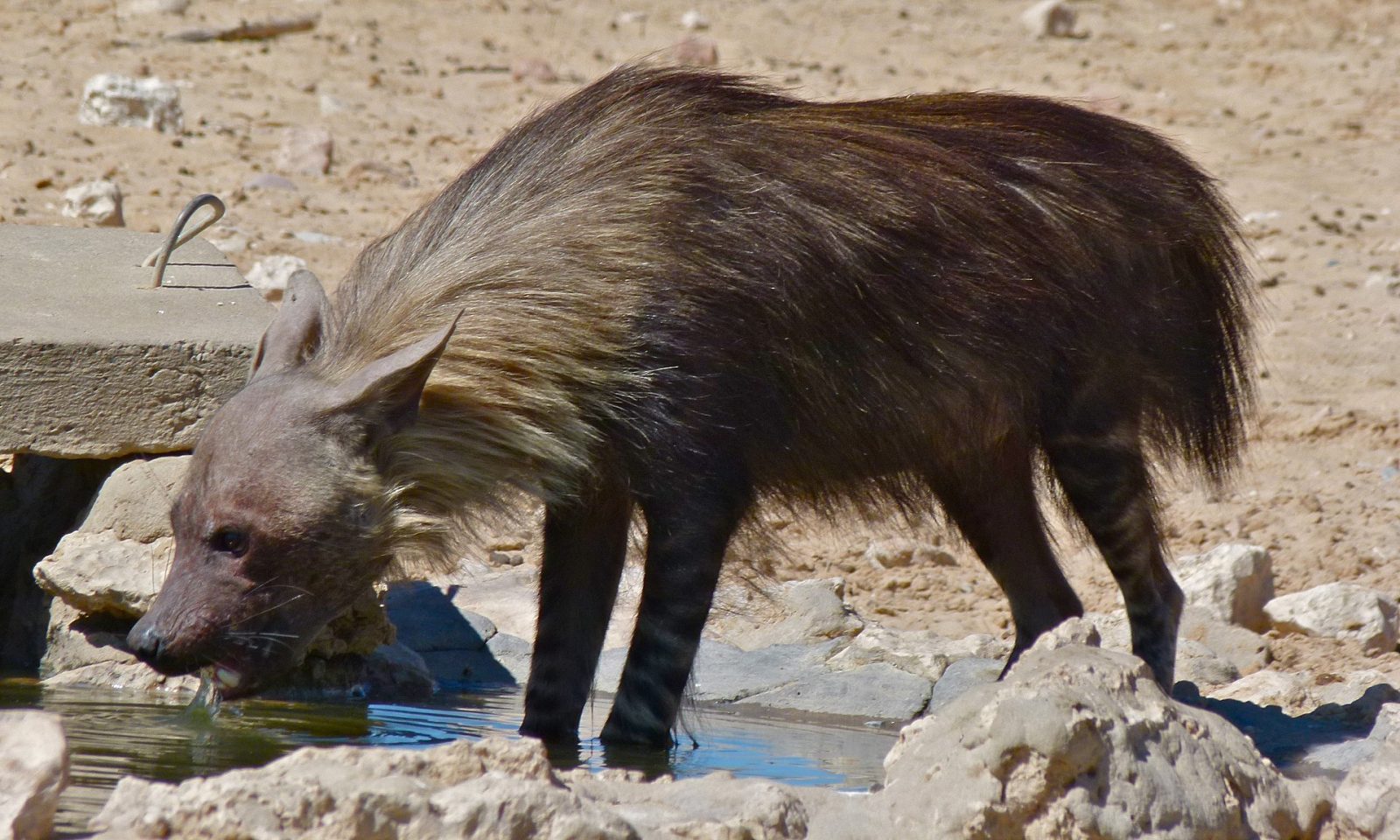
Brown hyenas are found throughout southern hyena – found in Namibia, Botswana, Zimbabwe (south and west), Mozambique (south) and South Africa. The IUCN estimates that the number of wild members of this species is thought to be between 4000 and 10,000.
Also known as a Strandwolf, it is the rarest hyena species in the world, it is slightly smaller than the spotted hyena. They are easy to pick out, as their fur is long, so it is hard to confuse a spotted hyena for this species.
Its most secure and largest population is in the Kalahari desert, with the Central Kalahari Game Reserve (Botswana), the Kgalagadi Transfrontier Park (Botswana/South Africa) and the coastal and northern desert regions of Namibia all the top places to look. You may also see them in northern South Africa, notably in the Madikwe and Pilanesberg reserves. They do poorly in places where it is close to spotted hyena, and sightings in the Kruger are incredibly rare. However, being smaller, the brown hyena is able to do better outside reserves.
In the past, the brown hyena had a wider range, which included the Iberian peninsular in Southern Europe, where fossils of them has been found.
They are pretty nocturnal, with the Kalahari hyenas having 80% of their active time at night. Their social behaviour is most similar to wolves, with a dominant mating pair, and the rest of the group made up of their offspring. Generally, the dominant female is the oldest, but with the males it is not unusual for an older dominant males to be killed for a junior male to move up the pecking order. Emigration, particularly amongst males when reaching maturity is common.
Below is a clip from seven world one planet, where a brown hyena was filmed hunting seals on the beach. It is not the first time that a similar sequence has been seen in bbc documentaries.
[TS_Video_Gallery id="2"]
There are a variety of places where brown hyenas are worth looking for. Many of them are within the KAZA transfrontier park, click on the link to read more. We hope to have far more links within the area, but there are already some there for your future travel interests. This species should be of interest.
Below is a list of any articles written on this subject, below this will be any further links that might interest you, in terms of traveling and trying to spot one in its native environment.
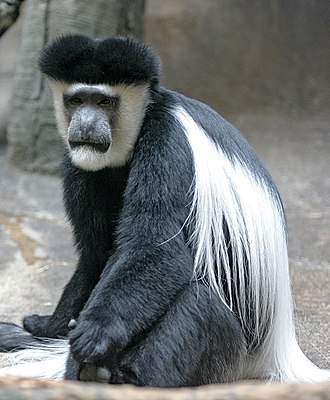
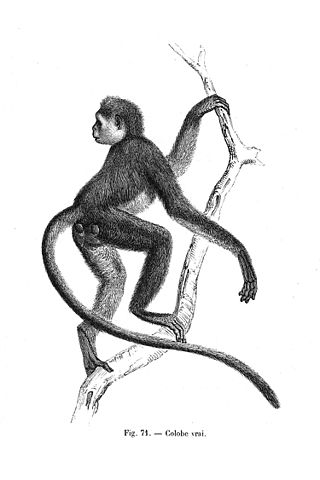
Black colobus group (genus Colobus) and the Olive Colobus Monkey
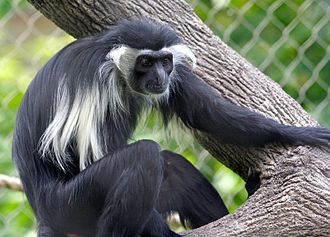
Angola Colobus Monkey
The Angola colobus is also known as the Angolan black-and-white colobus, or the Angolan colobus.
There are 6 recognized sub-species (though there is another suspected undescribed subspecies from the Mahale mountains in Tanzania)
Sclater’s Angola colobus, C. a. angolensis –Sclater’s Angolan colobus, found in Angola and northward to the great bend in the Congo River
Powell-Cotton’s Angola colobus, Friedrichs’s Angolan colobus, Cordier’s Angolan colobus, and Prigogine’s Angolan colobus , in regions of the Democratic Republic of Congo, Rwanda, Uganda, and Tanzania;
Ruwenzori colobus C. a. ruwenzorii (Thomas)
Cordier’s Angola colobus, C. a. cordieri
Prigogine’s Angola colobus, C. a. prigoginei, from Mt. Kabobo
Peters Angola colobus or Tanzanian black-and-white colobus, C. a. palliatus -There are 3100-5000 individuals in Kenya
The Angola colobus occurs in dense rainforests, both in the lowlands and coastal mountains. It lives in most of the Congo Basin, to the south and northeast of the Congo River, as far as Ruwenzori, Burundi and southwestern Uganda. The species can also be found in East Africa, especially in the interior and coastal forests of Kenya and Tanzania and in isolated mountain areas. Although the species is named after Angola, it is quite rare in that country. Of all species, the Angola colobus occurs in the southernmost latitude. The geographical range lies south of that of the Mantled guereza. It is found up to 2,415 m above sea level in Kenya.
They are listed as least concern, though estimates for their whole population are hard to come by. Hopefully, I will be able to add more detail in the future
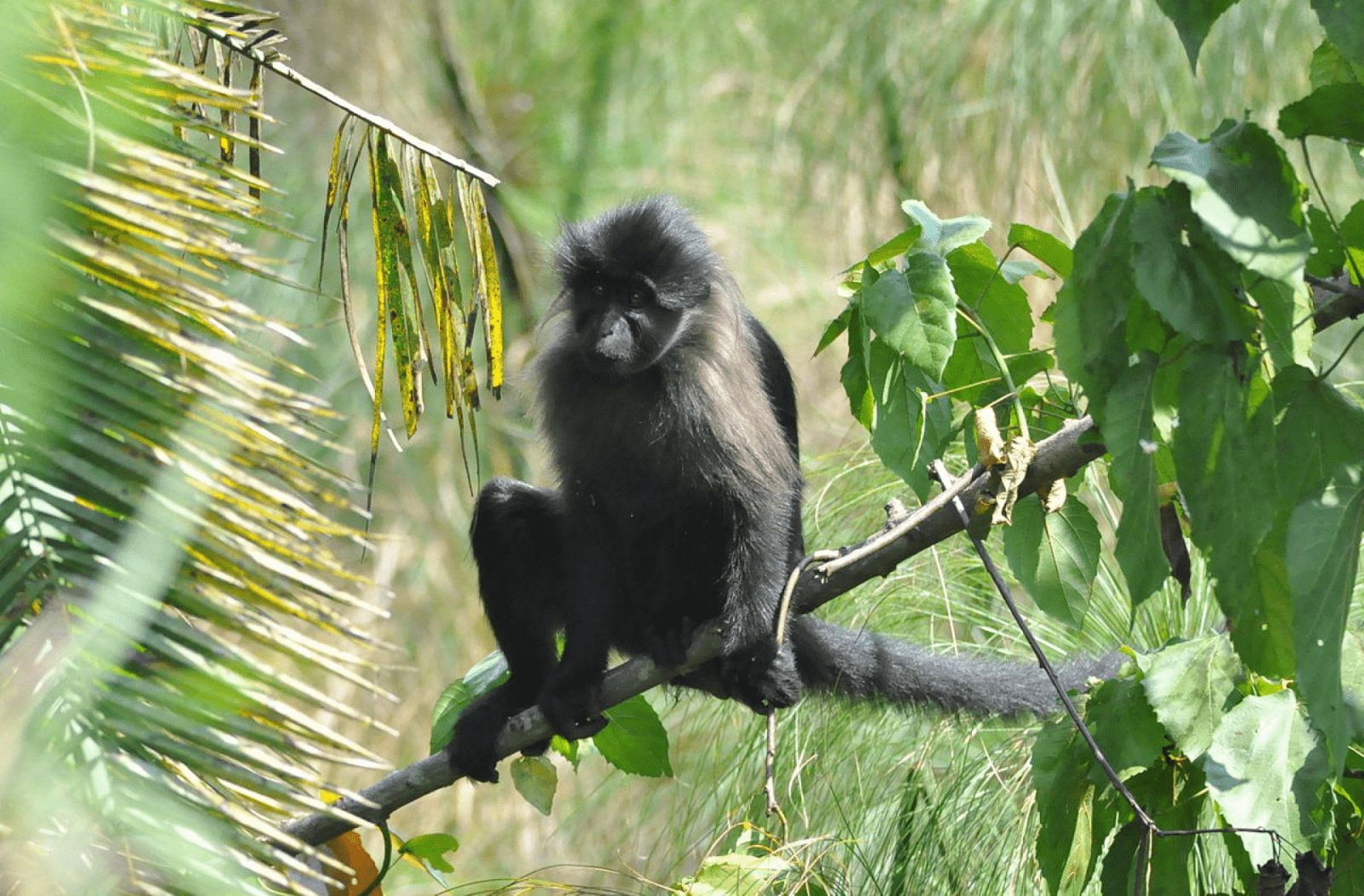
Black Colobus Monkey
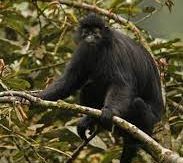
The black colobus (Colobus satanas), or satanic black colobus, is a species of Old World monkey belonging to the genus Colobus. The species is found in a small area of western central Africa. Black colobuses are large, completely covered with black fur, and like all other Colobus monkeys, do not have a thumb. The species has faced large declines in population due to habitat destruction and hunting by humans, and was consequently listed as Vulnerable on the IUCN Red List in 1994.
The black colobus monkey is one of five recognised species in the genus Colobus. The black colobus is the oldest species in this genera and is thought to have diverged 3-4 million years ago.
There are two subspecies of black colobus monkey:
Colobus satanas satanas – Bioko black colobus (Waterhouse, 1838)
Colobus satanas anthracinus – Gabon black colobus (Le Conte, 1857)
The black colobus monkey is found in Equatorial Guinea, south west Cameroon and central and north-western Gabon. Small populations may also occur in the north of the Republic of the Congo. The subspecies C.s.satanas is only found on Bioko Island, off the coast of Cameroon. The distribution of the black colobus has decreased dramatically – the species is now rare or absent in some areas of its range due to its habitat being destroyed for logging. Black colobuses are known to live at low densities, but there is currently no total population estimate for the species. One of the largest remaining populations of the species, consisting of 50,000-55,900 individuals, is found in Lope Reserve, Gabon. Other remaining large populations are found in the Foret des Abeilles in central Gabon and Douala-Edea Reserve in Cameroon.
The black colobus is an arboreal species that lives high in the canopy of dense rainforest and occasionally coastal sand dune or wooded meadows. Black colobuses are unable to survive in secondary forest that has regrown after a major disturbance such as logging and therefore tend to avoid areas populated by humans. The black colobus cannot be bred in captivity due to the food and habitat it requires. The black colobus monkey is one of the most threatened primate species in Africa and is currently listed as Vulnerable on the IUCN Red List. This is because the species’ population has declined by over 30% in the past 30 years. The subspecies C.s.satanas is classified as Endangered as its population has declined by over 60% in the last 30 years. The black colobus monkey is now only found in areas which cannot be easily accessed by humans. The species has faced population declines due to logging and illegal hunting for the fur trade which began in the 19th century. Due to improved roads and increased wealth in the area, commercial hunting for the species has become more profitable.
Today, black colobus monkeys are mainly traded for their meat and account for 20% of the Bushmeat sold in Malabo One adult black colobus carcass is sold for around US$20.42.The black colobus monkey is listed under Appendix II of CITES, which restricts international trade of the species. The species is also listed under Class B of the “African Convention on the Conservation of Nature and Natural Resources” African Convention on the Conservation of Nature and Natural Resources. Further information and data is needed to in order to help conserve the species. Conservation programs such as the Bioko Biodiversity Protection Program aim to work with local people to learn more about the black colobus monkey and protect it from extinction.
King Colobus Monkey
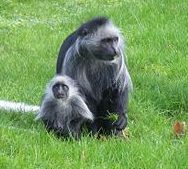
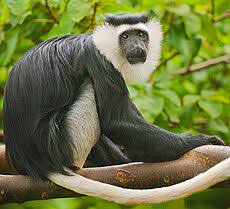
The king colobus is also known as the western black-and-white colobus and is a species of Old World monkey, found in lowland and mountain rainforests in a region stretching from Senegal, through Guinea-Bissau, Guinea, Sierra Leone and Liberia to the Ivory Coast.
African King colobus monkeys have distinctive long, strong, white tails which act as an extra support as they live mainly up in tall trees of the rainforest canopy and feed on leaves, flowers and fruit. In fact, they spend much of their time eating as leaves have little nutritional value so a great many are needed to fill their quite large stomachs.
Habitat destruction and the bushmeat trade have reduced the numbers of King colobus and they are now classed as Vulnerable of the IUCN list of endangered species. They are also predated by birds of prey and leopards.
Living up to 30 years, these monkeys produce just one baby a year which is completely white when it’s born – this means it takes a long time for them to recover from reductions in their population. They darken over time until they’re completely black with a white frame to the face and the white tail.
They are considered Vulnerable with a population that has halved in the last 30 years.
Mantled Guereza
The Mantled Guereza (alsok known as the Guereza colobus monkey, the mantled colobus, eastern black-and-white colobus and the magistrate colobus, is found in a widespread area in central africa. Starting in Nigeria, east and west of the Niger River and the upper Donga River tributaries to the Tabassi District of Cameroon, to Equatorial Guinea, through Chad, Gabon, the Central African republic, republic of Congo into Northern DRC through south Sudan to Ethiopia, Kenya, Uganda Rewanda and southern Tanzania.
The guereza colobus monkey is recognized as the “parent” species to seven “children,” or subspecies. Each of these subspecies occupies a specific range and exhibits slight variations in appearance.
Western guereza (C. g. occidentalis) is found from eastern Nigeria, Cameroon, south to Gabon, eastward to southwestern Sudan, and into Uganda, west of the Nile River.
Omo River guereza (C. g. guereza) is found in forested areas of the Ethiopian highlands, west of the Rift Valley and within the lowland areas along the Awash River, the Omo River, and in the Blue Nile gorge.
Djaffa Mountains guereza (C. g. gallarum), also known as Neumann’s black-and-white colobus, is found only in the Ethiopian highlands east of the Rift Valley.
Dodinga Hills guereza (C. g. dodingae) is found only in the Didinga Hills of southeastern Sudan.
Mau Forest guereza (C. g. matschiei) is found in Kenya, west of the Rift Valley, inhabiting forestland within the Rift, west to Mount Elgon (Kenya and Uganda), and south to the Ngorongoro Crater and the Grumeti River in Tanzania.
Uarges guereza (C. g. percivali), also known as Percival’s Black-and-White colobus, is found only at Mt. Uarges, the highest peak in the Matthews Range of central Kenya.
Kenya guereza (C. g. kikuyuensis) is found in central Kenya, from the Ngong Escarpment, Mt. Kenya, and the Aberdare Mountain Range.
Subspecies classifications for the guereza colobus are still being debated, so it may be some time, before it is understood the exact situation.
They are found in both primary and secondary forests (those that have been disturbed by humans) but appear to prefer disturbed forests. Deciduous and evergreen forests are also used, but only ones which have had time for the trees to create a true canopy.
It is thought to be the “parent” from which the other subspecies came.
They are considered least concern
Ursine Colobus Monkey
The ursine colobus, also known as the white-thighed colobus, Geoffroy’s black-and-white colobus, or the white-thighed black-and-white colobus, is a West African species of primate.
The ursine colobus is quite distinctive, with predominantly black fur and lacking a white mantle. They have a black and naked face which is surrounded by a thick white halo of fur. The ursine colobus is further characterized by white patches on the thighs which vary in width and length. Like other species of colobus, the babies are born with an all white fur coat, which starts to turn black at around three months of age. In contrast to other species of colobus, they have slender bodies and ischial callosities, a hard thickened area of skin on the buttocks that allows comfortable sitting on branches.
Ursine colobus are diurnal and highly arboreal, coming down from trees only occasionally when feeding. Their social behavior is like that of many polygynous monkeys, with each group consisting of related females their juvenile offspring and a territorial male. The males are highly territorial and disperse upon reaching sexual maturity.Ursine colobus use a roaring call to advertise territory and location, this roar is a low “rur, rur, rur” noise. They also have alarm calls that alert group members when predators have been seen which are a “snorting” sound, made by all members of the group except infants. Ursine colobus are mainly vegetarian and have a diet which is made up of new leaves and seeds, with the occasional addition of fruits, insects, and termite clay.
The ursine colobus is threatened by both hunting and deforestation. Its range falls within a region which includes a dense and rapidly growing human population, where forest destruction has been extensive, and there is uncontrolled hunting of wildlife in many places. However, in some parts of their range these monkeys are held to be sacred. It is listed as Class A under the African Convention, and under Appendix II of CITES. They are known to live within a number of protected areas including Comoe National Park Fazao-Malfakassa National Park and Mole, Bui and Digya National Parks (Ghana).
It is listed as one of the worlds 25 most endangered primates and is critically endangered. It is thought that around 1000 remain in the wild. it is listed as critically endangered because between 1992 and 2019 the population fell by over 80%.
Olive Colobus Monkey
The olive colobus monkey is also also known as the green colobus or Van Beneden’s colobus. Its English name refers to its dull olive upperparts. It is the smallest colobine monkeys and is rarely observed in its natural habitat because of its cryptic coloration and secretive nature. It is found in the rain forests of West Africa, ranging from southern Sierra Leone to Nigeria. The IUCN Red List classifies the olive colobus as vulnerable (previously near threatened), and the change has been caused by habitat loss and hunting. Though much of the land within the range of the olive colobus has been affected by human activities, it retains its ability to thrive in small degraded forest fragments (an advantage, as many other primate species do not do well in this way).
It is a small-bodied mammal with an average body weight of 4.6 kilograms for males and 4.1 kilograms for females. Their coloration allows them to stay camouflaged within the trees reducing the risk of predation. They have large feet for a colobus monkey.
The natural habitat of the olive colobus includes second growth within tall forests, palm forests and swamps, where they feed in the lower and middle vegetation strata. The olive colobus is mainly folivorous (herbivore which specializes in eating leaves), although it may consume fruits and seeds when available. The diet consists primarily of young leaves, and they tend to avoid mature leaf parts altogether. This is related to the fact that it is a forestomach fermenter with a small body size, which requires it to obtain a very high quality diet. The fact that olive colobus monkeys utilize this type of fermentation also relates to their lack of fruit consumption, because fruits that contain high levels of acid can overly lower the pH of the stomach, causing negative and sometimes lethal effects on microorganisms living within it.[8]
The olive colobus monkey is a very cryptic and shy animal, which can make the observation and understanding of its behaviour difficult. What is known about interactions between olive colobus monkeys and other related species shows that their social structure is very complex.
Olive colobus monkeys are found in small groups containing multiple breeding males, several females, and their infants. Though found in groups of only a few individuals, olive colobus monkeys are almost always seen in association with other monkeys, particularly the Diana monkey. There have been many suggestions as to how this relationship benefits the olive colobus, such as reducing the risk of predation. A piece of evidence that gives support to this idea is the willingness of the olive colobus to travel to higher altitudes in the tree tops to feed when other species are nearby.
In addition to serving as a means of predator avoidance, the close association with Diana monkeys is a mechanism used by male olive colobus monkeys to obtain new female mates. The olive colobus mating system is unique in that unlike many species living in small groups, there is no evidence of male monopolization over females. It has been proposed that females use aspects of their reproductive biology(long receptive periods, promiscuous mating, and mating overlap among females) along with mating behaviours to limit the monopolization of males in a group. Benefits to the avoidance of male monopolization include direct or indirect female mate choice, decreasing the risk of infanticide, and increased paternal care for offspring.
As with almost all primate species, the olive colobus monkey is very susceptible to habitat loss due to increased encroachment of hunters and farmers on both protected and unprotected lands. In order to ensure that this threatened species is protected, the olive colobus has been listed under Appendix II of CITES and as a Class A species under the African Convention on the Conservation of Nature and Natural Resources, which monitor the international trade of species and their status in the environment. The olive colobus is also covered in many protected areas including Taï National Park on the Ivory Coast of West Africa, which was declared a Forest and Wildlife Refuge in 1926 and accepted as a biosphere reserve in 1982. The park has a total area of 330,000 hectares, plus a 20,000-hectare buffer zone, where new plantations and settlement are prohibited.
Though efforts have been established in order to protect the olive colobus monkey and its habitat, illegal farming and hunting are still a fundamental threat to this species’ survival. To ensure that the olive colobus will thrive in the future, stricter enforcement of laws and regulations should be implemented, as well as the development of educational and public awareness plans. The olive colobus will also benefit from further study and observation.
Video Gallery of each species above (in the same order as they are listed above
As we start to connect with places where you can view each of these macaques (and this page becomes too big) we will gradually separate them out onto different pages. For now, I am going to deal with the whole group on one page, as I will with a number of primate groups. Help me necessitate the splitting of this page as soon as possible
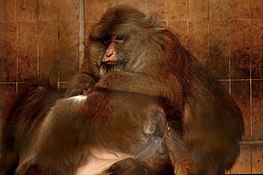
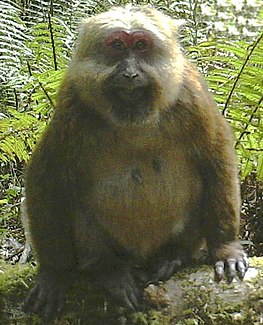
Arunachel macaque
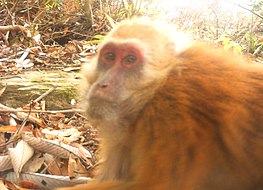
The Arunachal macaque is a macaque native to Eastern Himalayas of Bhutan, China and India. It is a relatively large brown primate with a comparatively short tail. Its species name comes from mun zala, meaning deep forest (mun) monkey (monkey), as it is called by the Monpa people of West Kameng and Tawang.
It was scientifically described in 2005.
A camera trap photograph of Arunachal macaques in Eaglenest Wildlife Sanctuary, India
It was discovered as a new taxon in 1997 by the Indian primatologist Anwaruddin Choudhury, but he thought it to be a new subspecies of the Tibetan macaque; It was left to a group of scientists from the Nature conservation Foundation, India to describe it as a new species in 2005. It is the first species of macaque to have been discovered since 1903, when the Indonesian Pagai Island macaque was first described. This monkey was reported on the basis of a good quality photograph as the holotype. In 2011, some researchers suggested, on the basis of morphological variation within the Assamese macaque, that it might be better treated as a subspecies. Subsequently, it was also discovered in Bhutan, where it was observed and photographed in the Trashi Yangshi area in 2006.
It is compactly built and has a very dark face. It lives at high altitudes, between 2000 m and 3500 m above sea level, making it one of the highest-dwelling primates. It belongs to the M. sinica species-group of macaques (those on this page). The Arunachal macaque is apparently physically similar to the Assam and Tibetan macaques, while genetically closely related to the bonnet macaque of southern India. This is probably the result of convergent evolution which is a process where similar environment produces similar animals even though they evolved independently.
Kumar et al. (2008) and Sinha et al. (2006) report at least 569 individuals in thirty-five troops; thirty-two troops in Tawang and three troops in West Kameng.[1] The monkey is severely persecuted in some parts of its known distribution by locals retaliating against crop raiding.It is listed as Endangered on the IUCN Red List.
[smart_post_show id="19674"]
Assam macaque
Found in South and South-East Asia, this macaque has been listed as Near Threatened on the IUCN Red List since 2008, as it is experiencing significant declines. This is a result of poaching (essentially illegal hunting) deforestation, and fragmentation. Fragmentation is a risk because if you cut down most of the forest, but leave the section that the primates live in, it is unlikely to have access to enough forest to be able to survive, and if it can, it will be unable to connect with others of its kind in order to be able to breed. There are 2 recognized subspecies:
The eastern Assamese macaque, occurs in Bhutan, Arunachal Pradesh, Assam, Manipur, Meghalaya, Mizoram, Nagaland, Sikkim, and Tripura in northeastern India, into northern Myanmar, southeast through the Myanmar-Thailand border ranges as far as Chongkrong, to the upper Mekong in Tibet, into the provinces of Guangxi, Guizhou, Tibet and Yunnan in southwestern China, in Thateng in northern Laos, and Hoi Xuan in northern Vietnam;
The western Assamese macaque, , is found from central Nepal through Uttar Pradesh, Sikkim, Assam and northernmost West Bengal in northern India, into central Bhutan and the Sundarbans in Bangladesh. This subspecies only numbers around 1000 in the wild
Its conservation status, is near threatened,
[smart_post_show id="19681"]
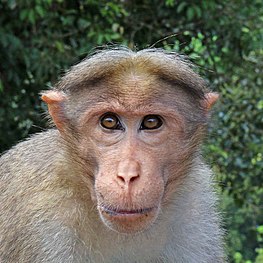
Bonnet macaque
The bonnet macaque, also known as zati,is a species of macaque found in to southern India. Its distribution is limited by the Indian Ocean on three sides and the Godavari and Tapti Rivers. Furthermore, it is hemmed in from the North by the Rhesus macaque, which stops its expansion in that direction. Land use changes in the last few decades have resulted in changes in its distribution boundaries with the rhesus macaque, raising concern for its status in the wild, this is because in general, land changes mean removing habitat from the wild and turning it into housing or farming land
The bonnet macaque is active during the day, arboreal, and terrestrial. Males have a head-body length of 51.5–60 cm with a 51–69 cm tail while females are 20-30% smaller. Males weigh 5.4–11.6 kg and females around half that. It can live up to 35 years in captivity.
The bonnet macaque feeds on fruits, nuts, seeds, flowers, invertebrates, and cereals. In southern India, this macaque exists mostly harmoniously to humans, feeding on food given by humans though it also raids crops and houses – generally with wild species, when they realize that you are a source of food they become more dangerous (there are many parts of the world, where a fed animals quickly becomes dangerous and has to be killed).
Two subspecies of bonnet macaques have been identified and recognized:
Macaca radiata radiata, dark-bellied bonnet macaque,[1] found in South and West India between the Tapti River, Palni Hills, and Timbale. In the 16th century it was introduced to the Mascarene Islands (Mauritius and Réunion).
Macaca radiata diluta, pale-bellied bonnet macaque, found in Southeast India in the states of Kerala and Tamil Nadu. From the southern coast north to Kambam at the base of the Palni Hills and east to Puducherry.
Bonnet macaques are sexually mature at the age of 3 or 4. The majority of births take place from February to April, before the arrival of the monsoon. Bonnet monkeys are polygynandrous. The gestation period lasts 24 weeks and a single infant is the normal result of a pregnancy.The young will breast feed for six to seven months and begin assisted feedings of solid food from their mother thereafter.Other members of the troop, especially related females, will express interest in the infant in its first months of life. The bonnet macaque has a very wide range of gestures and behaviors, which can be easily differentiated. Lip-smacking is one of the most common affiliative behaviors, where one individual may open and close its mouth in rapid succession, with its tongue between its teeth and its lips pressing against each other, giving an audible sound. A grimace is the most common gesture of fear or submission that a subordinate shows to a dominant individual during aggressive encounters. It consists of pulling back its upper lip, showing its upper teeth. It also has distinct alarm calls for predators such as pythons and leopards.
Bonnet macaque with baby in Kerala
The bonnet macaque are very social animals and they communicate in a different range of facial expressions. The bonnet macaque, like other macaques, shares a linear dominance hierarchy; the alpha male is the most dominant male of the troop, followed by a beta male and a gamma male, and so on according to their dominance. Similarly, females also follow this linear hierarchy. The male and female hierarchies are different and of a non-overlapping or non-mixing types. Males are usually dominant over females. In their social groups females tend to stay in the same group they were born in, whereas males tend to disperse.
The females’ dominance hierarchy is stable, whilst the males’ dominance hierarchy is very dynamic. In the male hierarchy, males close in rank often fight to rise in rank; A male has the best chance of obtaining a high rank in his prime age, resulting in the greatest benefits to reproduction because high rank gives first access to breeding females. females are only capable of becoming pregnant in a few months of the years, so competition is fierce. In this situation, the ranks established by aggressive encounters come into play, mostly these aggressive encounters are easily resolved, but when males are of similar size and fitness, they can go on a long time, and can lead to death. Female bonnet macaques attempt kidnappings of lower-ranking females, though these are done mostly by mother females and the majority of the time they are not successful in completing it. Different males may employ various means to rise in rank. Coalition formation between unrelated males to oust a more dominant male has been observed. Males often move from troop to troop to gain a higher rank with the resulting benefits, however, males remaining in a single troop have also been observed to rise to become dominant male of that troop.
An important note is male bonnet macaques are generally far more laid back and carefree in their social lives than many other macaque species. Competition among male bonnet macaques is much more subdued and there is a much higher emphasis on pacifism. Male bonnet macaques groom each other, hug each other, sleep near each other, play together and engage in male-male mounting as a social defuser. While assertive males may take measures to monopolize matings, they cannot control females and these females will mate promiscuously, as macaques do. In this way, their behaviour seems to mimic the bonobo rather than the common chimpanzee. Some mysterious environmental pressures must have driven the bonnet macaque to form an unusually egalitarian social structure.
It is unclear why some macaques have developed this more laid back behaviour towards sex and mating, though they generally inhabit more fertile habitats with more abundant food. Bonnet macaques are also strong swimmers.
In the case of females, the stable dominance hierarchy is a result of female philopatry, when individuals tend to remain with the troop into which they are born. This results in the formation of matrilinear groupings of closely related females.
Their conservation status in vulnerable
[smart_post_show id="19682"]
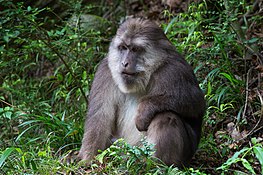
Tibetan Macaque
Also known as the Chinese stump-tailed macaque or Milne-Edwards’ macaque, it is found from eastern Tibet east to Guangdong and north to Shaanxi in China. It has been reported from north-eastern India, though it is unclear how many live in this area. This species lives in subtropical forests (mixed deciduous to evergreen) at eleveations from 800 to 2,500 m above sea level (a significant height).
There are four recognized subspecies:
M. t. thibetana
M. t. esau
M. t. guiahouensis
M. t. huangshanensis
The Tibetan macaque is the largest species of macaque and one of the largest monkeys found in Asia with only the proboscis monkey and the larger species of gray langur are bigger in-size among Asian monkeys. It has long dense fur, to keep it warm high in the mountains where it is found.
The Tibetan macaque lives in mixed sex groups; in their complex social system, females remain for life in their natal group, but males leave once they reach sexual maturity (at around 8 years old). Macaque societies are hierarchical, with higher-ranking males getting better access to food and sexually-receptive females. Alpha males dominate the group, being those that are typically large, strong and newly mature (different to chimpanzees and gorillas which are usually dominant later in life). As they age, males tend to gradually lose their social standing and are frequently subject to challenges for dominance from other males, dethroning of a dominant male can be very violent, and death is not an unusual outcome. Studies of Tibetan macaques at Mount Emei and Huangshan Mountains, China, found the average tenure for an alpha male only lasted about one year (while this sounds short, given the size of troops, the male may sire several dozen offspring, during their year at the top). When troop size becomes quite large (in the 40 to 50 range) and competition grows over increasingly stretched resources, some individuals (males, females and juveniles) split from the main group to form a new, smaller group, known as ‘fissioning’, and move on to a different home range. Usually, it is the lowest-ranking individuals that will split from the main group – this is rational, as the lowest ranking individuals stand little chance to breed or get the best food, so they have little to loose by branching off in a new group.
Females first breed at around five years of age. The gestation period is six months with a single offspring being produced at each pregnancy. Most infants being born in January and February. Young macaques are nursed for a year and may continue to do so longer if the female does not give birth again the following year. Males of the group may also be involved in alloparental care.
This species spends most of its days foraging on the ground for leaves, fruit, grass and, to a lesser extent, flowers, seeds, roots and insects. When available, bamboo shoots, fruits and leaves are particularly favoured.
This species is classified as Near Threatened by the IUCN and is listed on Appendix II of the CITES list. Its main threats are all human-related. The main threat, as with many primates, is habitat loss, however they are sometimes poisoned by herbicides and pesticides while eating and may catch diseases transmitted from humans. Illegal poaching may occur, for the bushmeat trade/
[smart_post_show id="19684"]
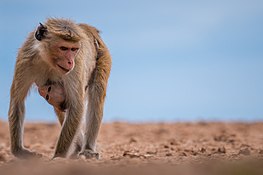
Torque macaque
Found in Sri Lanka, its name is in relation to the whorl of hair at the crown of the head, which has been compared to a brimless torque cap.
The generic name Macaca is from Portuguese macaco, is not easily tracked to its origin, while sinica means “of China,” though the species is not found there. The population as a whole, is decreasing, with it having halved in the last 40 years. There is significant persecution of toque macaques as they are considered crop pests, as such, they are shot and poisoned as ways to keep them out of crops. They are also known zoonotic vectors of Trichuris, Ascaris, and certain strongyle worms
While they have a life expectancy of as high as 35 years in captivity, their wild life expectancy is lower. Individuals can live to be 30, but the average is 4.5-8 years.
There are three recognized subspecies of toque macaques:
Macaca sinica sinica, dry zone toque macaque or common toque macaque. This subspecies is found from the Vavuniya, Mannar to the lowlands of Anuradhapura, Polonnaruwa, Puttalam, and Kurunegala; and along the arid zone of the Monaragala and Hambantota districts. It is classed as endangered
Macaca sinica aurifrons, wet zone toque macaque or pale-fronted toque macaque. This subspecies is found sympatrically with the subspecies above within intermediate regions of the country in Kegalle and parts of Kurunegala. It is also found in south-western parts of the island in the Galle and Matara districts near Kalu Ganga. It is classed as endangered.
Macaca sinica opisthomelas, highland toque macaque or hill zone toque macaque. Only recently having been identified as a separate subspecies. It can be found in the entire south-western region of Ratnapura and in the Nuwara Eliya districts. It is also found around Hakgala Botanical Garden and other cold climatic montane forest patches.This subspecies is similar to subsp. aurifrons, but has a long fur and contrasting golden colour in the anterior part of its brown cap, allowing them to be told apart (each subspecies can be identified by looking at its crown)
[smart_post_show id="19689"]
White-cheeked macaque
The white-cheeked macaque is a species of macaque found only in Mêdog County in southeastern Tibet and Arunachal Pradesh in north-eastern India. The white-cheeked macaque lives in tropical, primary and secondary, evergreen broadleaf, mixed broadleaf and conifer forests.. The species was initially described by Chinese primatologists Cheng Li, Chao Zhao, and Peng-Fei Fan, in the American Journal of Primatology in 2015. It is the most recent macaque to be described. While the species’ exact conservation status has not yet been determined, it is likely threatened by poaching, deforestation, and increased human development of its habitat, much like the other primates which inhabit the area. In terms of its current status Cheng Li said:
“Currently, Modog is the only known habitat of the white-cheeked macaque, though its range may extend to neighboring counties in China and regions of southeast Tibet controlled by India,” and he estimates the population at about 500.
As we start to connect with places where you can view each of these macaques we will gradually separate them out onto different pages. For now, I am going to deal with the whole group on one page, as I will with a number of primate groups.
Help me necessitate the splitting of this page as soon as possible
Booted macaque
The booted macaque is a macaque of the Sulawesi Island, Indonesia. This Old World monkey is active during the day and spends most of the day in the trees. It is 50–59 cm long plus a tail of 35–40 cm.
It feeds on figs, buds, invertebrates and cereals. Two subspecies are recognized: 1. M. o. ochreata and 2. Muna-Buton macaque
It is currently listed as Vulnerable
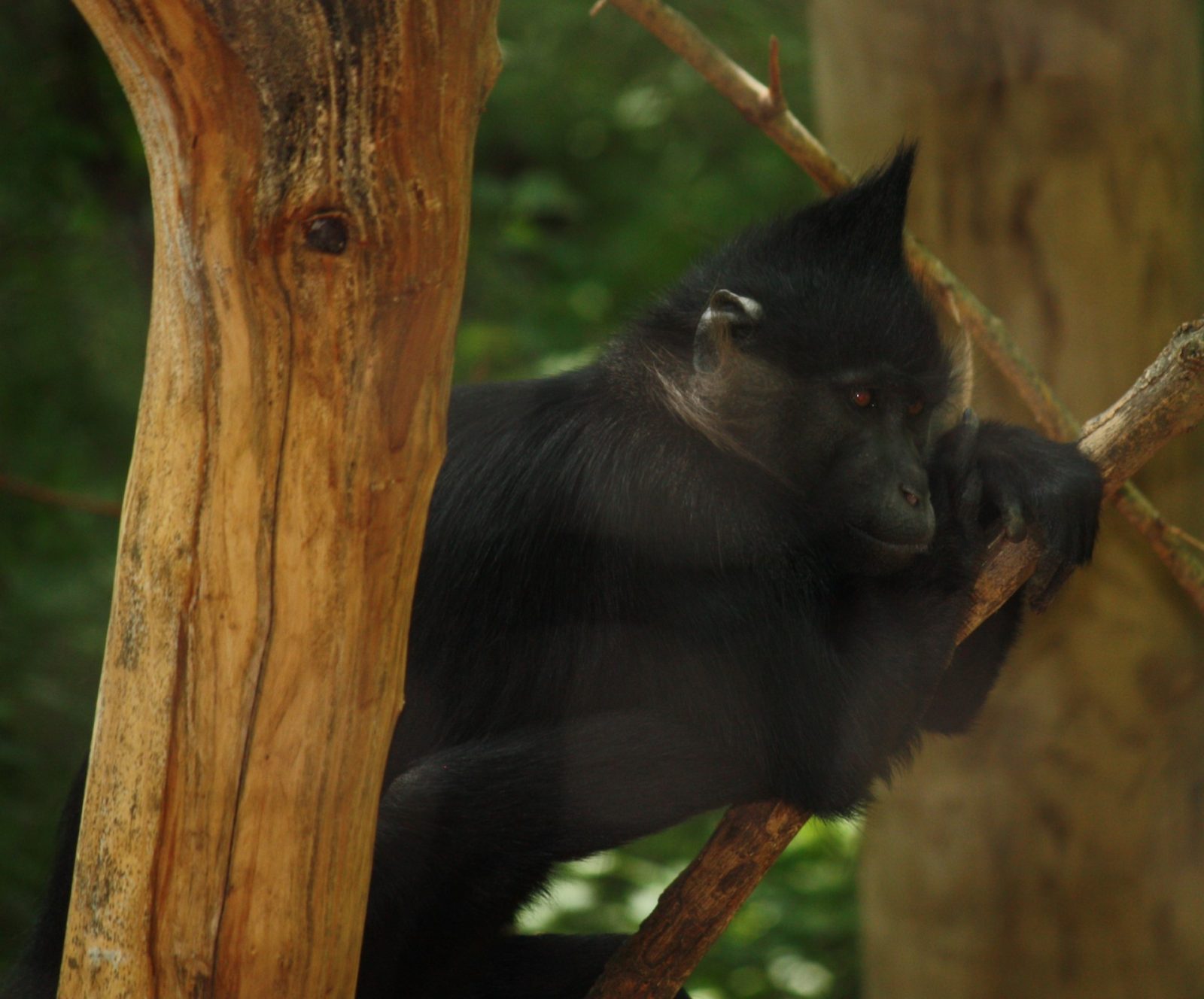
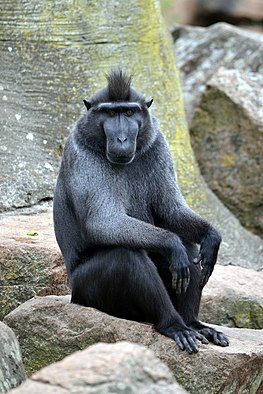
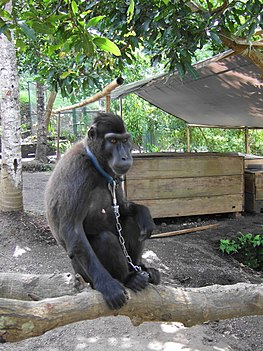
Celebes crested macaque
Also known as the crested black macaque, Sulawesi crested macaque or the black ape, it is an old world monkey that lives in the Tangkoko reserve at the north-eastern tip of the Indonesian island of Suluwesi and some of the smaller islands around. This is the species, which took a selfie in 2011 and generated a great deal of conversation as to whether the photographer owned the copyright, or whether it should be owned by the monkey itself.
The Celebes crested macaque is active during the day and a rain forest dweller. This macaque spends more than 60% of its day on the ground foraging for food and socialising, while sleeping and searching for food in the trees. It is frugivorous, with 70% of its diet consisting of fruits. It also consumes leaves, buds, seeds, fungus, small birds and bird eggs, insects (such as beetles and caterpillars) worms, snails, and the occasional small lizard or frog.
It is listed as critically endangered, though it has 5000 remaining wild members. It is listed as critically endangered because its habitat is being logged, and should it continue as planned there is unlikely to be any left in the future.
Gorontalo Macaque
Also found on Sulawesi, they were originally considered a subspecies of the Cerebes crested macaque (above), but in 2001 was declared a separate species after 50 years of debate. Having said this, its range overlaps with the Cerebes crested macaque and the do hybridize along their overlapped ranges; they also overlap with the Hecks macaques on the eastern banks of the Bolango river where their species ranges also overlap.
It is listed as vulnerable
Heck's Macaque
Another Sulawesi macaque, active during the day, and feeding on fruit, its range overlaps with the above, and they do interbreed.
It isconsidered vulnerable, the current wild population is estimated at around 100,000
Moor macaque
Again, a Sulawesi macaque (the island of Sulawesi is recognized as biodiversity hotspot), this species is around about 50–58.5 cm long, and eats figs, bamboo seeds, buds, sprouts, invertebrates and cereals in tropical rainforests. It is sometimes called “dog-ape” because of its dog-like muzzle (though not dissimilar to a few other primates) , although it is no more closely related to apes than any other Old World monkey is. Between 1983 and 1994, its wild population fell from 50,000 to 10,000 as a result of habitat loss, It is threatened by logging, hunting tourism and agriculture.
While finding accurate up to date estimates for the population size does not appear to be easy, it was added to the IUCN red list of endangered species in 2015, so it is reasonable to assume that the population has continued to fall.
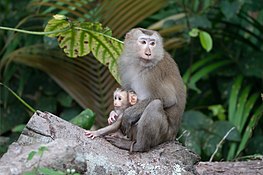
Traditionally, it was considered a subspecies of the southern pig-tailed macaque, but is now classified as an individual species. In the 21st century, the pig-tailed macaque was split into the northern pig-tailed macaque species and the Sundaland pig-tailed macaque species. This reclassification was aided by the observation of sexual swellings and basic attributes that distinguish the two. The northern pig-tailed macaque is frugivorous and their social grouping is matriarchal, where sexual dimorphic traits can distinguish males and females.
Their adaptation to omnivorous diets occur in periods of fruit scarcity, munching on wild vegetation and crops, human foods, and small insects and mammals. Despite their adaptability, northern-pig tailed macaques experience viral threats such as the human immunodeficiency virus type 1, pathogenic simian immunodeficiency, and coronavirus.
Human impacts are also present, such as agricultural expansions, aquaculture, transportation infrastructure, hunting and logging for meat and trophies, and the illegal pet trade; that result in habitat loss, forest fragmentation, and a reduced well-being.
India currently has a population of around 1500, and 1700 in China, as well as small populations in the rest of the countries listed above. It is considered vulnerable to extinction
Southern pig-tailed Macaque
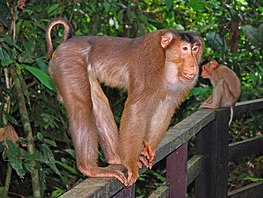
Also known as the Sundaland pig-tailed macaque, Sunda pig-tailed macaque, Beruk, Sundaland pig-tailed macaque. Historically the northern pig–tailed macaque was considered a subspecies of this species. While mostly terrestrial species, this monkey can climb well when required.
This macaque is mostly found in rainforest up to 2,000 metres, but will also enter plantations and gardens ( of course, for many of these areas, they were rainforest in living memory)
It is found in the southern half of the Malay Peninsula (only just extending into southernmost Thailand), Borneo, Sumatra and Bangka Island. There are reports of the species having been present in Singapore before 1950, but these were likely escaped pets. The only pig-tailed macaques in Singapore today are introduced monkeys.
The current population is estimated at 900,000, and is considered vulnerable.
Pagal Island Macaque
This macaque is found on Mentawai Islands on the west coast of Sumatra. The Siberut Macaque below was once considered a subspecies of this species but has been raised to full species status with more evidence. This was once considered a subspecies of the Southern pig-tailed macaque.
They are naturally found in rainforests, but being adaptable, they can also survive well in riverine and coastal swamp-forests. They live in the canopy, and forage between 24m and 36m up (this would, at the top end, be between 8 and 9 storeys above the ground). They often sleep at 45m up.
Their primary food-source is figs, and generally split into smaller groups to forage and sleep. They will often eat alongside Mentawal langur groups of 5-25 individuals. Groups are usually a male with adult females and their offspring – the male decides where to go, and communitcates with high pitched cries. Solitary Pagal macaques may challenge the dominant male for his position – usually settled through a violent fight. Their predators include rested serpent eagle and reticulated python, for which the alert (once spotted) is a gruff, brief bark.
It is critically endangered
Siberut Macaque
Once a subspecies of the above Pagal island Macaque, it was found to be distinct enough to warrant separate species status (as the above was also at one time considered a subspecies of the Southern pig-tailed macaque, so was this). It lives on Siberut island, in Indonesia, but has had a rapid fall in numbers. Back in 1980, there were around 39,000 living in the wild, in 2005 if was estimated that the population was between 17000 and 30000. In 2015 an survey of the only protected area on the island (covering around 40% of the area of the island) had a population of around 9000. It is reasonable to suppose that there are also populations of this primate outside the reserve, and certainly taking the initial 39,000, 40% of the island should be able to house almost twice the current reserve population, never-the-less, provided the reserve continues to protect the wildlife within it, the Siberut macaques future is relatively safe.
They are listed as endangered by the IUCN
Tonkean Macaque
Also known as the Tonkean black macaque, it is found in central Sulawesi as well as the Tongean islands which are close by. Its main threats come from habitat loss, as well as from mining that occurs in central Sulawesi.
Tonkean Macaques look rather like apes, and males are a little bigger than females. Severalf matriarchs enforces a relatively fluid and lenient pecking order. Tonkean macaques make great efforts to stay without fighting in the group and practice conflict resolution to a great degree. Despite being pacifists, matrilines remain rigid and unchanging, even if they’re relaxed compared to other macaque species. However, this peacefulness does not extend to outside troops, and if two tonkean macaque troops cross paths, intense intense fighting can arise.
In a far better state than some other primate species, they are only considered vulnerable.
They have an estimated population of around 150,000, and are currently listed as vulnerable to extinction
Lion-tailed Macaque
Also known as the Wanderoo, this species lives in the Western Ghats mountains of India.
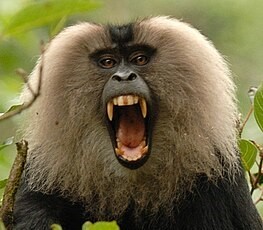
Lion-tailed macaques are covered in black fur, and have a striking gray or silver mane that surrounds their face which can be found in both sexes. The face itself is hairless and black, being pinkish in infants less than a year old. They are named for their tail, which is long, thin, and naked, with a lion-like, black tail tuft at the tip. The size of their tail is about 25 cm in length. Their eyes are a shade of hazelnut with highlighting black eyelids. Lion-tailed macaques, like other macaques, have deep cheek pouches useful for storing food, and are quadrupedal with opposable digits. The mane that surrounds its face gives this monkey its German name Bartaffe – “beard ape”. With a head-body length of 40-60cm and a weight of 2–10 kg, it ranks among the smaller macaques species. Offspring are born with lighter faces and no mane, with the adult mane growing by 2 months old.
Lion-tailed macaque in the Anamalai Hills
The lion-tailed macaque lives in the rainforest, often being found in the upper canopy of tropical moist evergreen forests or monsoon forests. It is diurnal, meaning it is active exclusively in daylight hours. When they’re active, they will spend half the day foraging, and the other half will be spent resting or finding new areas to forage. Unlike other macaques, it typically avoids humans when possible. In group behaviour, the lion-tailed macaque is much like other macaques, living in hierarchical groups of usually 10 to 20 members, which usually consist of few males, typically 1-3, and many females. They have a polygynous mating system with no specific breeding season. While there is no specific breeding season, they do tend to breed in the wet season when resources are most abundant. Little time is spent grooming or playing with others in the group. Of the few males, only one will be the dominant male, who will protect his troop from others and be the one who breeds. It is a territorial animal, defending its area first with loud cries and bared teeth towards the invading troops. If this proves to be fruitless, it brawls aggressively, which can result in severe injuries due to lacerations from their large canines. Other forms of communication come in the form of mounting to show strength, branch shaking to scare off, lip-smacking as a friendly greeting, or yawning with a grimace to indicate dominance.
Mating
Lion-tailed macaque behaviour is characterized by typical patterns of arboreal living. This patterns involve selectively feeding on a large variety of fruit trees, large interindividual spaces while foraging, and time budgets with high proportion of time devoted to exploration and feeding. Lion-tailed macaques are omnivores, primarily eating indigenous fruits, seeds, flowers, insects, snails, and small vertebrates in virgin forest. Lion-tailed macaques are very important for seed dispersal, and are able to transport seeds long distances by either dropping or defecating seeds. However, due to changes in their environment, adaption to rapid environmental change has occurred in areas of massive selective logging through behavioural modifications and broadening of food choices. These changes involve a large increase in ground foraging and feeding on far more non-native plants and insects. These feeding changes include fruits, seeds, shoots, pith, flowers, cones, mesocarp, and other parts of many non-indigenous and pioneer plants. In the forests of Kerala they were observed preying on nestlings and eggs of pigeons.
Gestation lasts approximately six months. The young are nursed for one year. Sexual maturity is reached at four years for females, and six years for males. The life expectancy in the wild is approximately 20 years, while in captivity is up to 30 years.
While lion-tailed macaques are preyed on by snakes, raptors, and large carnivores, its impact on population is tiny compared to our impact. The primary threat is habitat fragmentation due to large amounts of timber harvesting and exotic plantations, such as tea and coffee.
This fragmentation leads to many issues that the lion-tailed macaques are facing. They are struggling to find food, being hit by cars, and being electrocuted by power lines. Due to their low numbers and high levels of fragmentation, they are also highly susceptible to inbreeding, which can cause many genetic issues. Their second largest threat is from humans hunting and trapping them for meat, especially within areas that have primates as their preferred food. There are also many human-primate conflicts occurring now due to macaques venturing out of their forests to find food.
Conservation and population
An assessment in 2003 for IUCN reports 3000–3500 of these animals still live in several areas in Tamil Nadu, Kerala, Karnataka. Their range has become increasingly isolated and fragmented by the spread of agriculture and tea, coffee, teak and cinchona, construction of water reservoirs for irrigation and power generation, and human settlements to support such activities. They do not live, feed or travel through plantations. Destruction of their habitat and their avoidance of human proximity have led to the drastic decrease of their population.
From 1977 to 1980, public concern about the endanged status of lion-tailed macaque became the focal point of Save Silent Valley, India’s fiercest environmental debate of the decade. From 1993 to 1996, 14 troops were observed in Silent Valley National Park, Kerala, one of the most undisturbed viable habitats left for them. Silent Valley has the largest number of lion-tailed macaques in South India. Other protected areas in Kerala include Neyyar Wildlife Sanctuary, Peppara Wildlife Sanctuary, Shendurney Wildlife Sanctuary, Periyar Tiger Reserve and its premises (Gavi and Konni), Eravikulam National Park, Pambadum Shola National Park, Parambikulam Tiger Reserve, Annaimalai Tiger Reserve, New Amarambalam Reserved Forest, Aralam Wildlife Sanctuary and Chimmony Wildlife Sanctuary and Wayanad region.
A self-sustainable single population of 32 groups of lion-tailed macaques occurred in Sirsi-Honnavara, Karnataka, the northernmost population of the species. A local census concluded in 2007, conducted in the Theni District of Tamil Nadu, put their numbers at around 250, which was considered encouraging, because until then, no lion-tailed macaques had been reported in that specific area.[
The species is also prominently found in the Papanasam part of the Kalakkad Mundanthurai Tiger Reserve of Tirunelveli district, the Palani Hills Wildlife Sanctuary and National Park of Dindigul, the Anaimalai Tiger Reserve of Coimbatore in Tamil Nadu. Many zoos take part in breeding programs which help to secure the survival of this species. About 338 of these macaques are reported to live in zoos.
Encouragingly, it is no longer on ‘The World’s 25 Most Endangered Primates’ list, after the international body compiling it determined that the local governments in southern India had acted positively to protect it. Attention, and tourist visitors will help keep this species conservation on local officials minds.
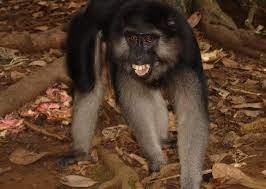
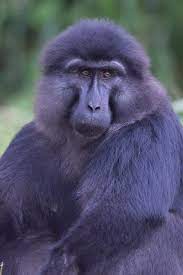
Also known as the White-cheeked mangabey, this species is found, in the forests of central Africa. Found between Cameroon and Gabon, mostly found in either swampy or primary forests, though it has been encountered in the secondary forests as well. Generally found in groups of 5-30, with one or more males though generally none of them are dominant. If the group gets too big, it usually splits. Young males move on, while females stay with their group of birth. Generally, confrontations are rare, and are avoided when possible. Generally, each groups territory covers a few miles, it can overlap with other groups and shift from time to time.
The Ugandan Mangabey is a subspecies of this species.
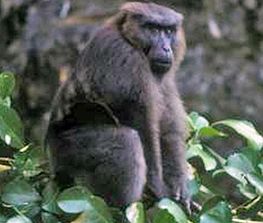
The black crested mangabey (also known as the black mangabey( is a species of primate in the family of old world monkeys from Africa. It is only found in Democratic Republic of the Congo with a small habitat extending to Angola (though it is possible that it is extinct is Angola).
Its natural habitat is subtropical or tropical dry forests. It is threatened by habitat loss and unregulated hunting for the bush meat trade (they are often targeted because the are bigger than many monkeys in the same area). They are still found through much of the DRC, though their range is now patchy due to deforestation. In the little areas which are still suitable they spend the majority of their time foraging between the middle and upper canopy – they prefer primary and secondary tropical forests – though generally prefer either areas which are undisturbed, or have regrown after clearing. Some can also be found in swamp and gallery forests.
Below is a list of any articles on this species (if any) and below that we will add any contacts or links that will help arrange travel to see this species in the wild
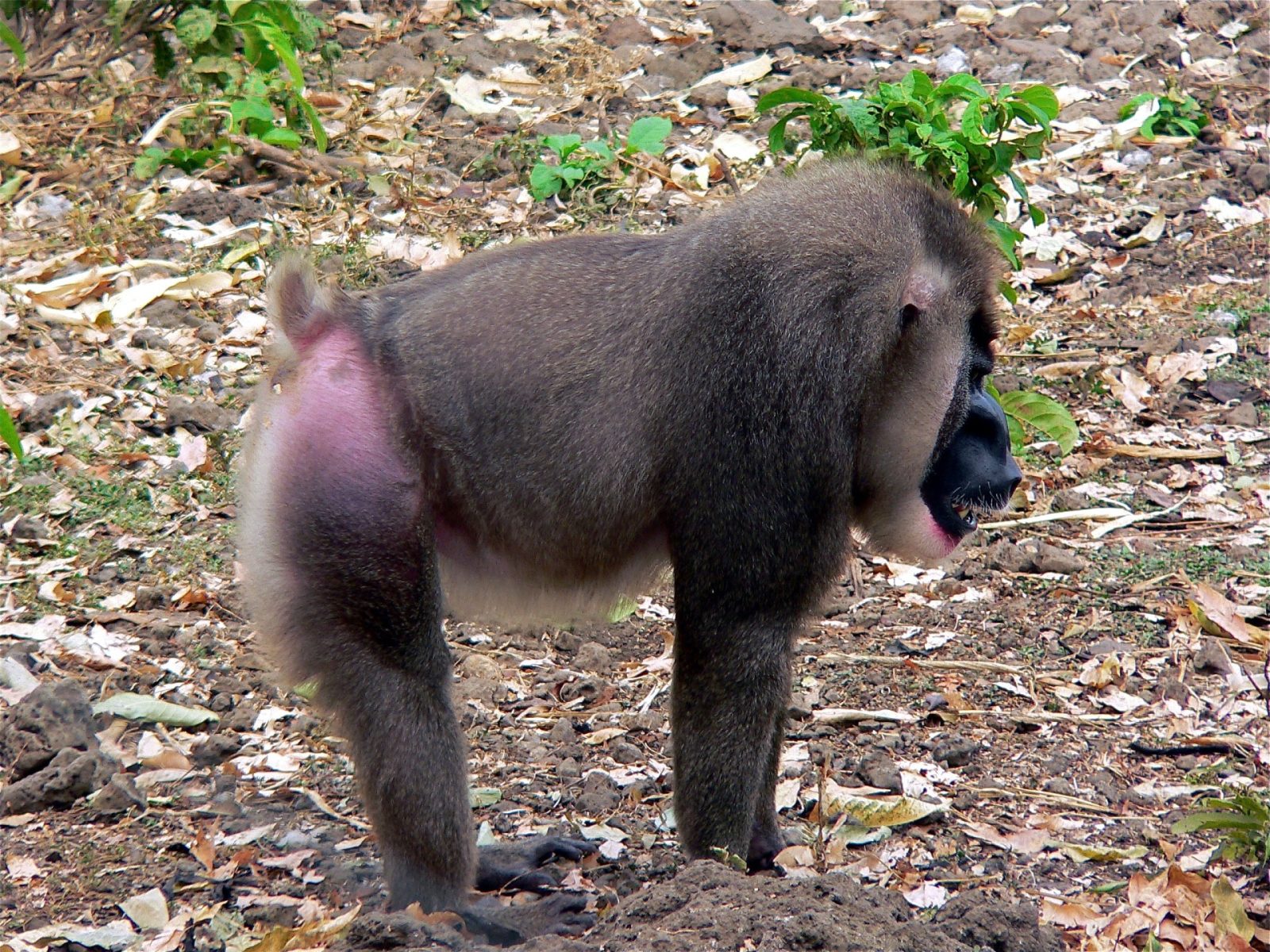
The Drill is a species of primate, from the old world family and is found in Africa. It was previously thought to be a baboon, but is merely a close relation. Its closest relation is the Mandrill. It has a short tail, and has a body around 70cm long. It looks like a mandrill, but does not have the bright blue and red it its face that the Mandrill does. Males weigh up to 20kg, while females weigh up to 12.5kg
The body is a dark grey-brown; Mature males have a pink lower lip and white chin on a dark grey to black face with raised ridges on the nose, while the rump is pink, mauve and blue. Female drills lack the pink chin.
Two subspecies of drill have been proposed, though not fully accepted.
Mainland drill, Mandrillus leucophaeus leucophaeus While the current range of this species is not fully known, it is all found between Southern Congo and Eastern Nigeria. the range is not continuous, with this population broken into at least 11 different areas, largely cut off from each other.
Bioko drill, Mandrillus leucophaeus poensis While a population estimate is hard to assertain, 4500 drill carcasses have hit the bushmeat trade on the is land in just the last 13 years. The island has around 1 third 779 square miles officially protected (it appears that this is largely a paper park).
The total population is thought to number only 5000-8000 – the IUCN red list claims that just 4000 remain. Due to the remote area in which this species lives, accurate figures are expensive to ascertain, and as such estimates are very vague. The problem is, that if we take these figures at face value, we have 12 subpopulations, with little or no genetic exchange between them. While the Bioko population is a recognized subspecies, if there is no genetic difference in the 11 mainland populations, then humans need to be translocating members regularly, in order to retain genetic diversity. This species sounds like it needs much help. To view the page on the closely related Mandrill click here
Below is a documentary on this species. Below that is our usual list of any articles written on the subject (if any). Below this, we will endevour to add links and contacts that will help in your travel to see these monkeys
 The aardwolf is the smallest member of the Hyaenidae family, as you can see from the map, it is a species with two separated populations, one in East Africa and one in Southern Africa. It is insectivorous, and exclusively nocturnal, and is generally thought of as one of the harder animals to see in the wild. If incredibly lucky, you can see them feeding alongside Aardvarks, and even Pangolins, but this is rare. They favour open dry plains and savannahs.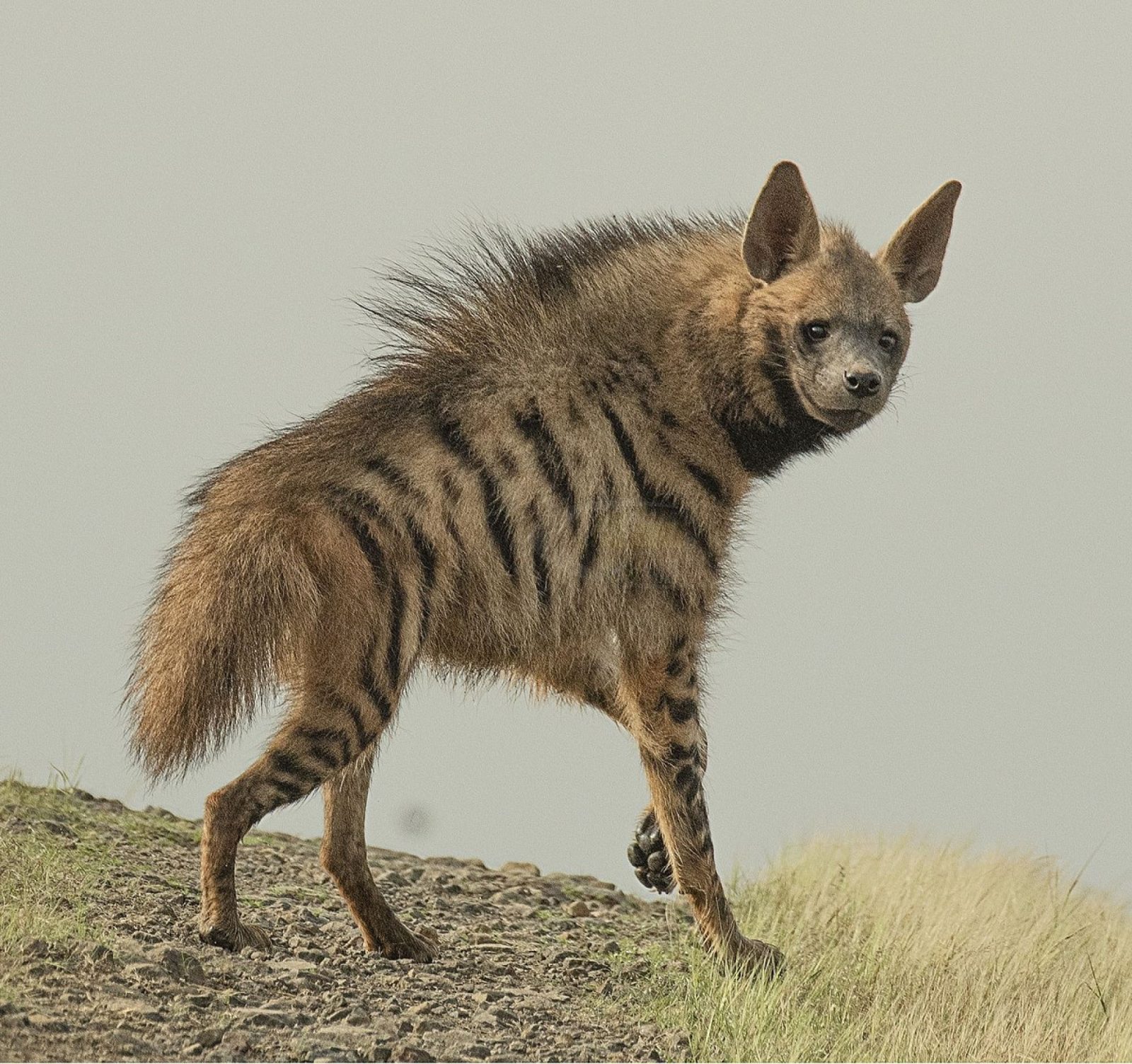
 Striped hyena are found across a far larger area than the brown Hyena. historically, its range would have stretched into Europe, but now the nearest place is