1. Tragelaphini – spiral-horned antelope

1. Tragelaphini - spiral-horned antelope

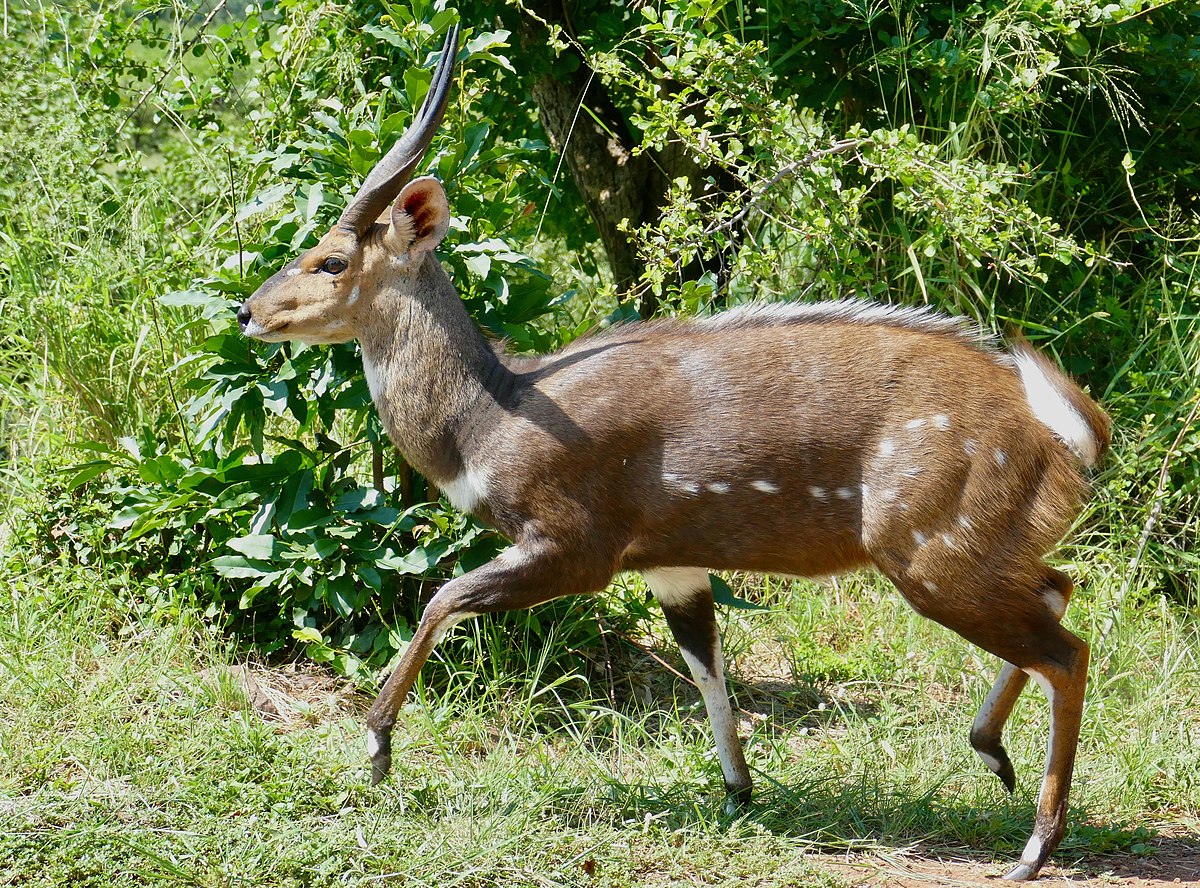
Bushbuck

The Cape bushbuck , also  known as imbabala is a common, medium-sized and a widespread species of antelope in sub-Saharan Africa. It is found in a wide range of habitats, such as rain forests, montane forests, forest-savanna mosaic, savanna, bushveld, and woodland. Its stands around 90 cm at the shoulder and weigh from 45 to 80 kg. They are generally solitary, territorial browsers.

Although rarely seen, as it spends most of its time deep in the thick bush, there are around 1 million in Africa

Common Eland

The common eland (southern eland or eland antelope) is a large-sized savannah and plains antelope from East and Southern Africa. An adult male is around 1.6 m  tall at the shoulder (females are 20 cm  shorter) and can weigh up to 942 kg with a typical range of 500–600 kg. Only the giant eland is (on average bigger). It was described by Peter Simon Pallas in 1766. Population of 136,000, can form herds of 500
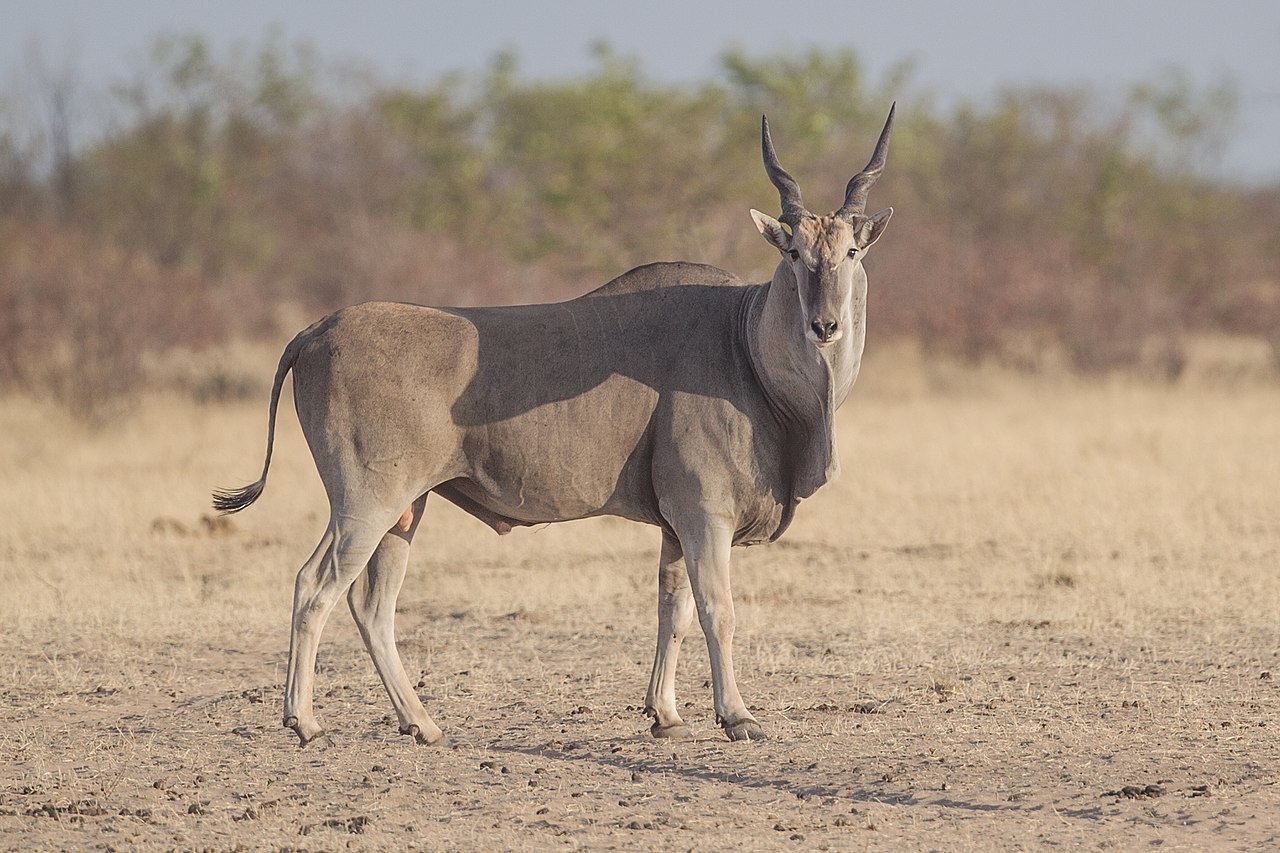
Common Eland
[smart_post_show id="41401"]

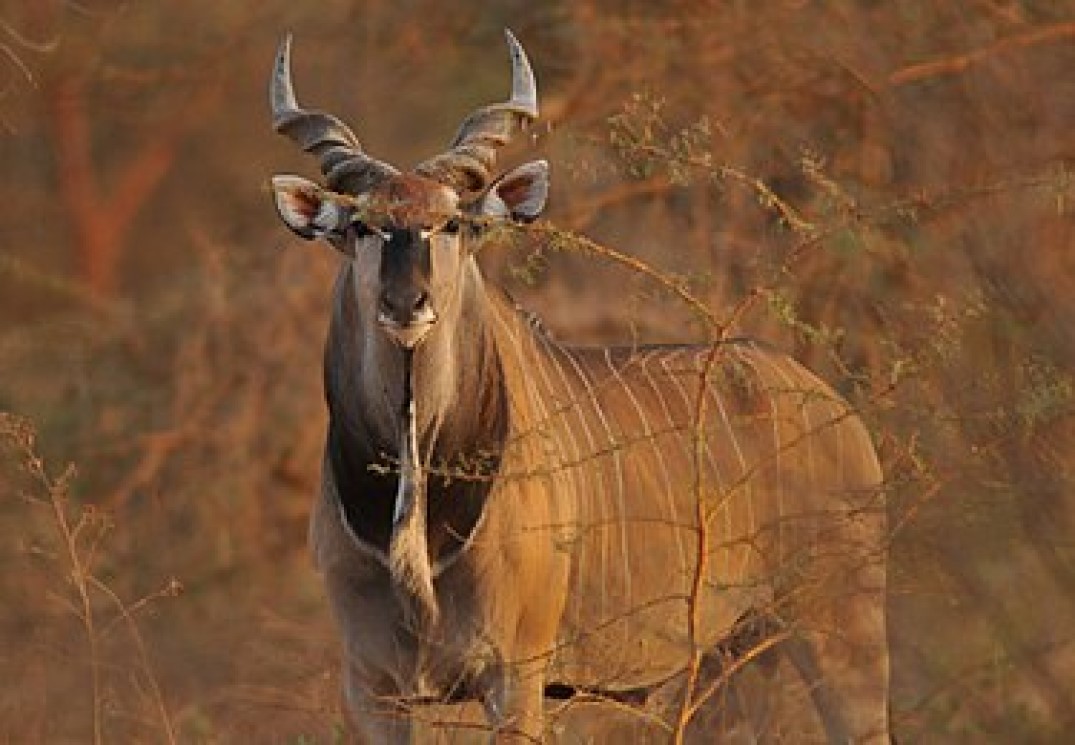
Giant Eland

Giant Eland
[smart_post_show id="41408"]

The giant eland, (also known as Lord Derby’s eland and greater eland) is an open-forest and savanna antelope.

 It was described in 1847 by John Edward Gray. The giant eland is the largest species of antelope, with a body length ranging from 220–290 cm (87–114 in). There are two subspecies: T. d. derbianus and T. d. gigas.

The giant eland is a herbivore, living in small mixed gender herds consisting of 15–25 members. Giant elands have large home ranges. They can run at up to 70 km/h.  They mostly inhabit broad-leafed savannas and woodlands and are listed as vulnerable and have a wild population of 12,000-14,000

Greater Kudu

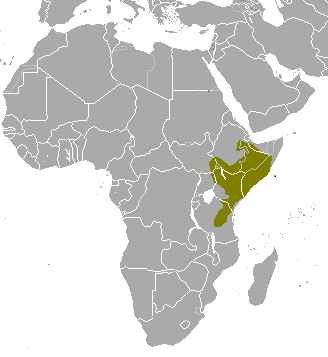
The greater kudu  is a large woodland antelope, you can see its distribution on the map. Despite occupying such widespread territory, they are sparsely populated in most areas due to declining habitat, deforestation, and poaching. 

The spiral horns are impressive, and grow at one curl every 3 years – they are fully grown at 7 and a half years with 2 and a half turns. Three subspecies have been agreed (one described has been rejected) :

  • T. s. strepsiceros – southern parts of the range from southern Kenya to Namibia, Botswana, and South Africa
  • T. s. chora – northeastern Africa from northern Kenya through Ethiopia to eastern Sudan, Somalia, and Eritrea
  • T. s. cottoni – Chad and western Sudan
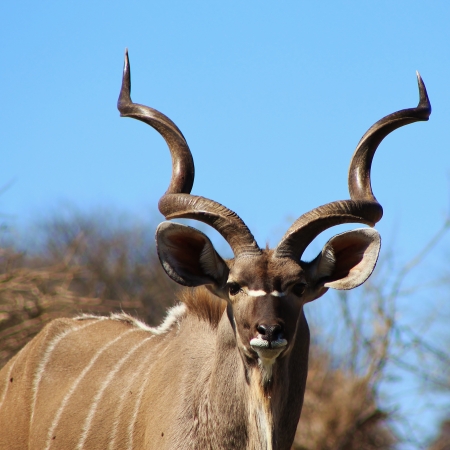
They are listed as near threatened with 118,000 in the wild
[smart_post_show id="41410"]
Greater Kudu

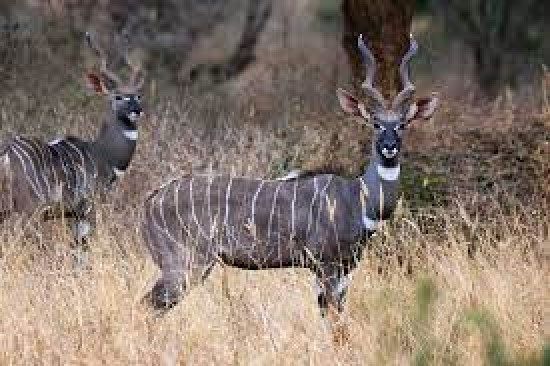
Lesser Kudu

[smart_post_show id="41417"]

The lesser kudu  is a medium-sized bushland antelope found in East Africa.  It was first scientifically described by English zoologist Edward Blyth (1869).It stands around 90 cm at the shoulder and weigh from 45 to 80 kg. They are generally solitary, territorial browsers.

While currently rated not threatened, its population is decreasing. It currently stands at 100,000, but it is loosing territory to humans
Common Bongo (and mountain or Eastern Bongo)

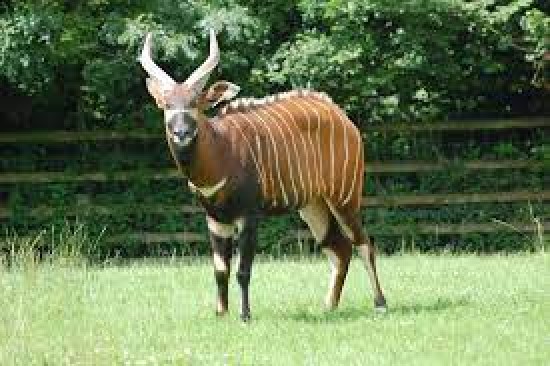
The bongo  is a large, mostly nocturnal, forest-dwelling antelope, native to sub-Saharan Africa. Bongos are characterised by a striking reddish-brown coat, black and white markings, white-yellow stripes, and long slightly spiralled horns. It is the only member of its family in which both sexes have horns. Bongos have a complex social interaction and are found in African dense forest mosaics. They are the third-largest antelope in the world.

The Common (western or lowland bongo), faces an ongoing population decline, and the IUCN considers it to be Near Threatened. The picture to the right is of a common bongo. Beneath that is a short video about a common bongo. The mountain bongo, which is discussed below, has a video below the common bongo.

The mountain bongo (or eastern) of Kenya, has a coat even more vibrant than the common version. The mountain bongo is only found in the wild in a few mountain regions of central Kenya. This bongo is classified by the IUCN  as Critically Endangered (where it breeds readily). (this is not on the map above). Only 100 live wild, split between 4 areas of Kenya

 T
[smart_post_show id="41425"]
Common Bongo

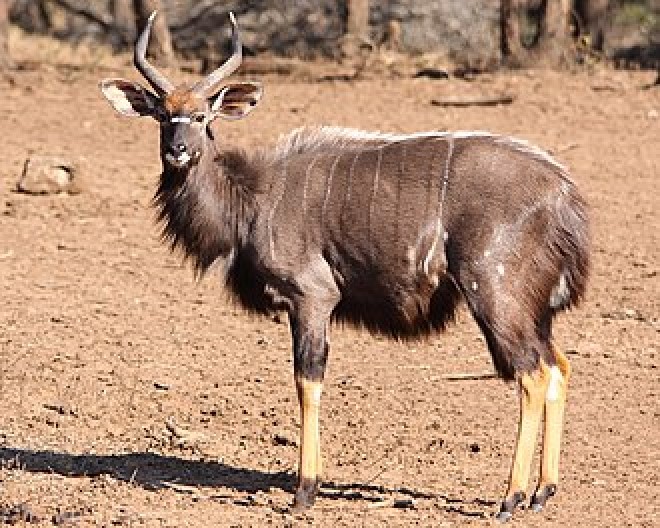
Nyala

[smart_post_show id="41438"]

The Nyala is a spiral horned species found in Southern Africa. The nyala is mainly active in the early morning and the late afternoon. It generally browses during the day if temperatures are 20–30 °C  and during the night in the rainy season. The nyala feeds upon foliage, fruits and grasses, and requires sufficient fresh water. It is a very shy animal, and prefers water holes to the river bank. Not territorial, they are very cautious creatures. They live in single-sex or mixed family groups of up to 10 individuals, but old males live alone. They inhabit thickets within dense and dry savanna woodlands. The main predators of the nyala are lion, leopard and African wild dog, while baboons and raptorial birds prey on juveniles. Males and females are sexually mature at 18 and 11–12 months of age respectively, though they are socially immature until five years old. They have one calf after 7 months of gestation. Its population is stable, with the greatest threat coming from habitat loss as humans expand. There are thought to be 36500 and the population is stable.

Mountain Nyala

 The mountain Nyala (also known as the Balbok) is a large antelope found in high altitude woodlands in just a small part of central Ethiopia. The coat is grey to brown, marked with two to five poorly defined white strips extending from the back to the underside, and a row of six to ten white spots. White markings are present on the face, throat and legs as well. Males have a short dark erect crest, about 10 cm (3.9 in) high, running along the middle of the back. Only males possess horns.

The mountain nyala are shy and elusive towards human beings. They form small temporary herds. Males are not territorial. Primarily a browser. They will grazing occasionally. Males and females are sexually mature at 2 years old.. Gestation lasts for eight to nine months, after which a single calf is born. The lifespan of a mountain nyala is around 15 to 20 years.

Found in mountain woodland -between 3000m and 4000m. Human settlement and large livestock population have forced the animal to occupy heath forests at an altitude of above 3,400 m (11,200 ft). Mountain nyala are endemic to the Ethiopian highlands east of the Rift Valley. As much as half of the population live within 200 square km (77 sq mi) area of Gaysay, in the northern part of the Bale Mountains National Park. The mountain nyala has been classified under the Endangered category of the  (IUCN). Their influence on Ethiopian culture is notable, with the mountain nyala being featured on the obverse of Ethiopian ten cents coins.
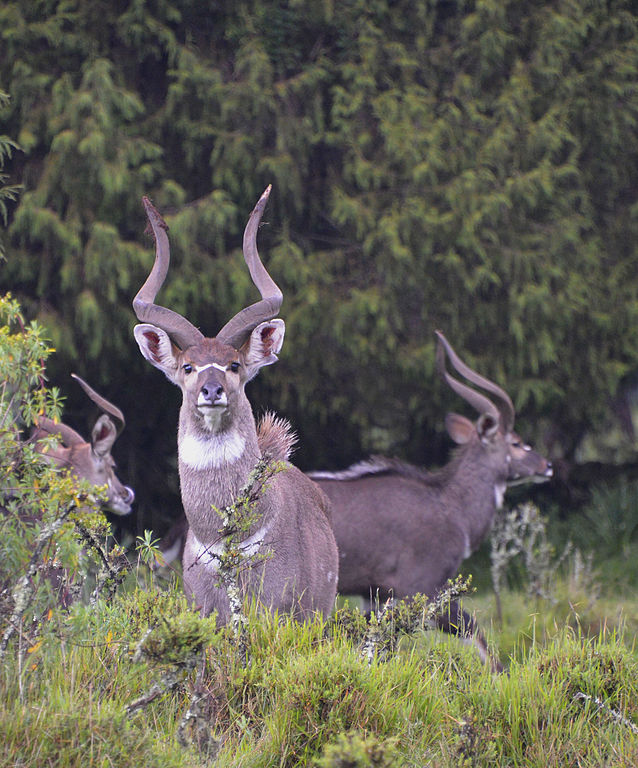
[smart_post_show id="41439"]
Mountain Nyala

Sitatunga Antelope

Situnga
[smart_post_show id="41441"]

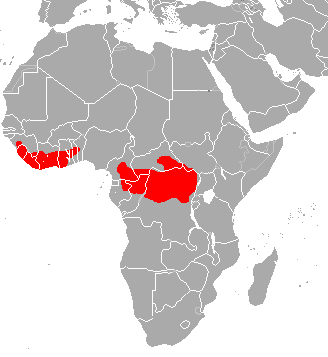
The sitatunga  (or marshbuck)is a swamp-dwelling medium-sized antelope found throughout central Africa (see the map to the right. The sitatunga is mostly confined to swampy and marshy habitats. Here they occur in tall and dense vegetation as well as seasonal swamps, marshy clearings in forests, riparian thickets and mangrove swamps.

The scientific name of the sitatunga is Tragelaphus spekii. The species was first described by the English explorer John Hanning Speke in 1863.

It is listed as least concern with 170,000-200,000, and are found in 25 countries. However 40% live outside reserves, so the situation could get worse fast.
Note: these animals have been dealt with in less detail than others. Should you be interested in finding out if I have written on these animals or what exactly I said, you can find a list of articles about each below its information.

2. Subfamily Reduncinae: rhebok reedbuck and Waterbuck

2. Reduncinae - Rhebok, Reedbuck, Waterbuck

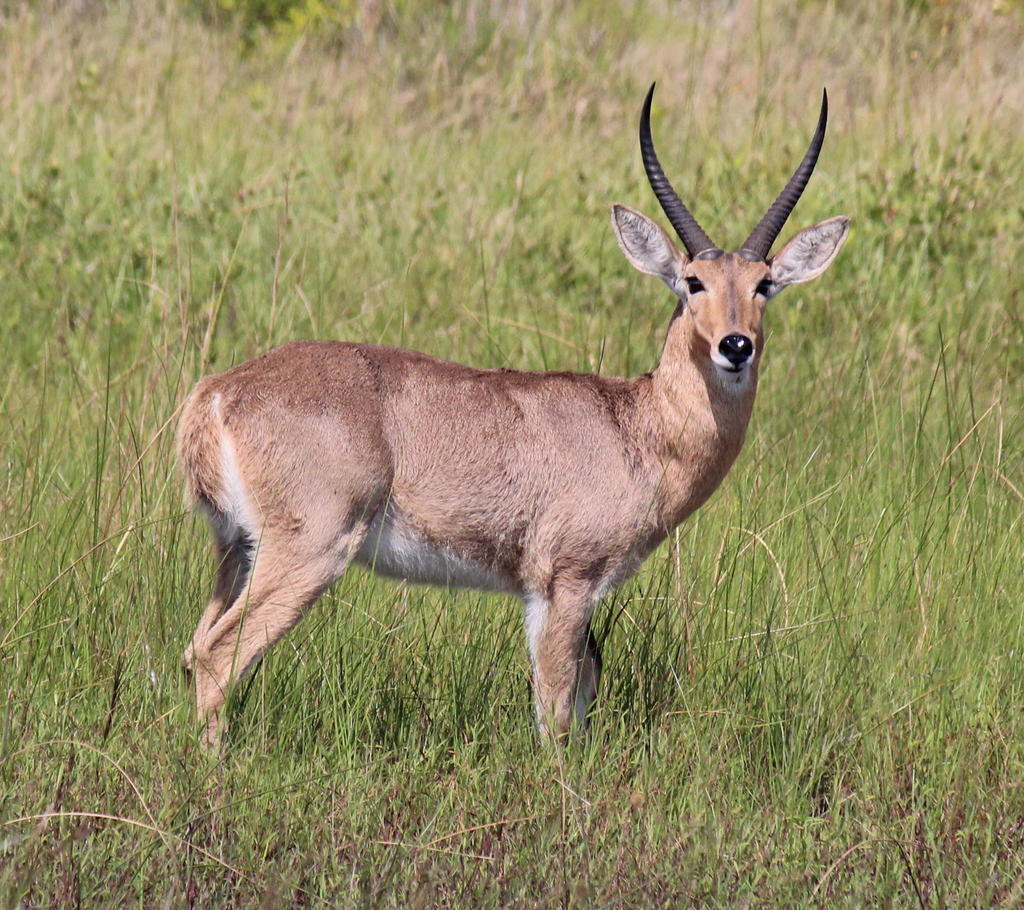
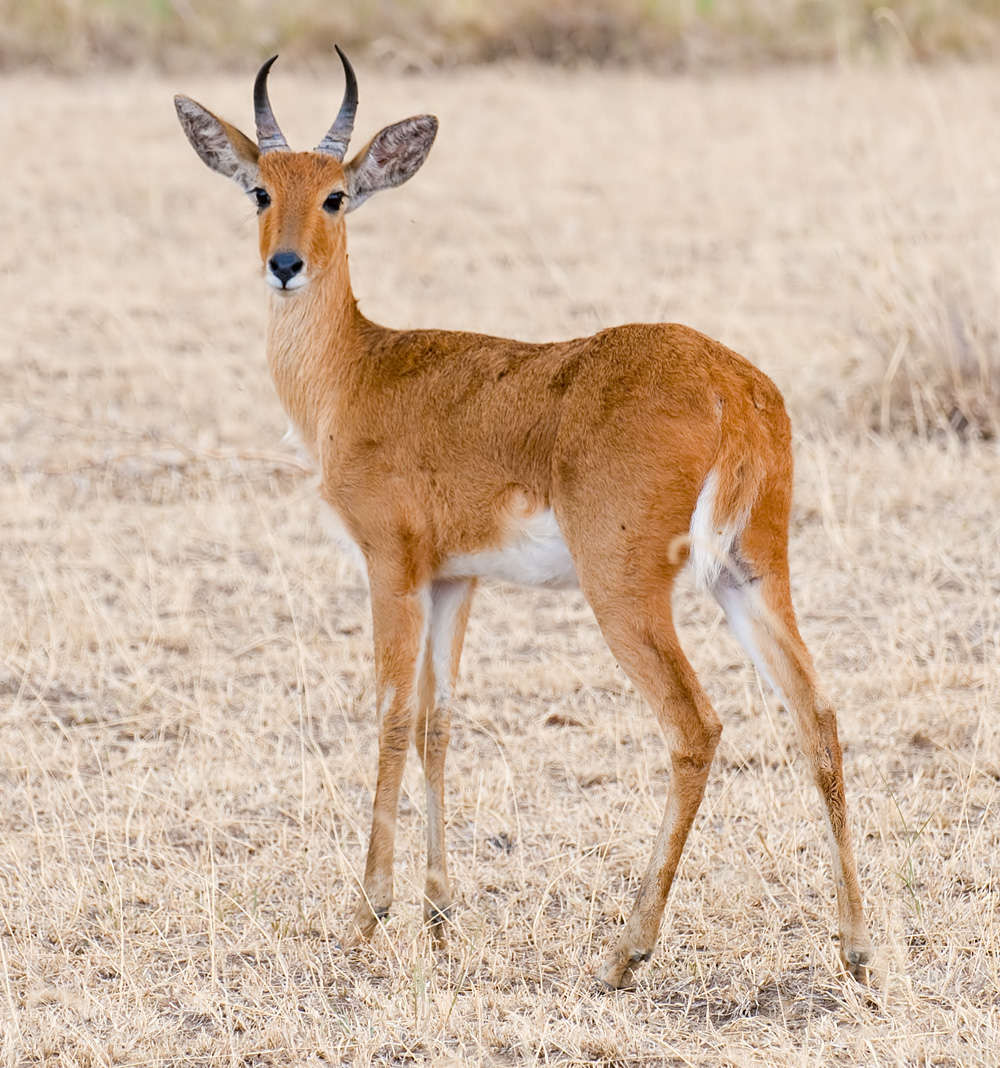
Bohor Reedbuck

The bohor reedbuck  is an antelope native to central Africa.

The head-and-body length of this medium-sized antelope is typically between 100–135 cm. Females are smaller. This sturdily built antelope has a yellow to grayish brown coat. Only the males possess horns which measure about 25–35 cm long. There are 5 subspecies:

  • R. r. bohor Rüppell, 1842: Also known as the Abyssinian bohor reedbuck. It occurs in southwestern, western and central Ethiopia, and Blue Nile (Sudan).
  • R. r. cottoni (W. Rothschild, 1902): It occurs in the Sudds (Southern Sudan), northeastern Democratic Republic of the Congo, and probably in northern Uganda.
  • R. r. nigeriensis (Blaine, 1913): This subspecies occurs in Nigeria, northern Cameroon, southern Chad and Central African Republic.
  • R. r. redunca (Pallas, 1767): Its range extends from Senegal east to Togo. It inhabits the northern savannas of Africa. 
  • R. r. wardi (Thomas, 1900): Found in Uganda, eastern Democratic Republic of the Congo and eastern Africa. 
The total population of this species is 100,000, and while it is decreasing, it is not currently low enough to justify a near threatened rating, though this might change in the near future. At the current time, I cannot see any of the subspecies being in a worse position but can change this if I find out more.

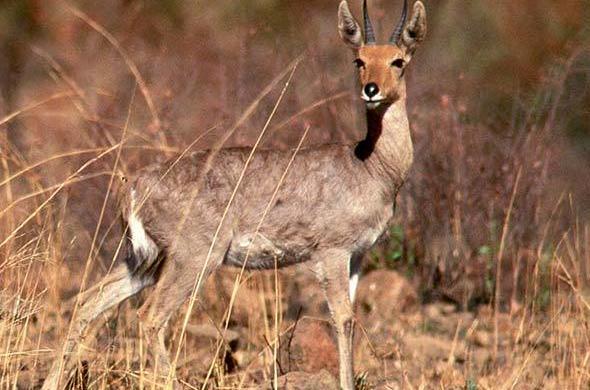
Mountain Reedbuck

 The mountain reedbuck has 3 subspecies. The western mountain reedbuck only has 450 individuals still living wild, (shown on the map in red) also known as the Adamwa mountain reedbuck which is restricted to the highlands of Cameroon. The Eastern mountain reedbuck (or Chanlers) has 2900 wild individuals, is found in parts of Kenya and Ethiopia. The Southern moutnain reedbuck, blue, (33,000) is found in the Drakensburg mountains of South Africa.

Mountain Reedbuck

Southern Reedbuck

The Southern, or common Reedbuck is found in Southern Africa. It is a midsized  antelope, standing 134-167cm tall
 It was described in 1785 by Pieter Boddaert. Southern reedbucks live in pairs or alone, though occasionally they will form herds of up to 20. They prefer to lie in grass or reed beds in the heat of the day and feed during sunrise and sunset, or sometimes even at night. Old reedbucks are permanently territorial, with territories around 35-60 hectares, and generally live with a single female, preventing contact with rival males. Females and young males perform an ‘appeasement dance’ for older males.  Within this territory, it is active all the time in summer, but it is nocturnal in the wet season. It regularly uses paths to reach good sites to rest, graze, and drink water. They are hunted by all the top predators in the area, including Lion, Leopard, Cheetah hyena and wild dog, as well as animals like snakes.

They are easily hunted, and combined with loss of territory to human expansion, the population is down. About 60% occur in protected reserves, but in some countries like Gabon and the DRC are though to almost be locally extinct.

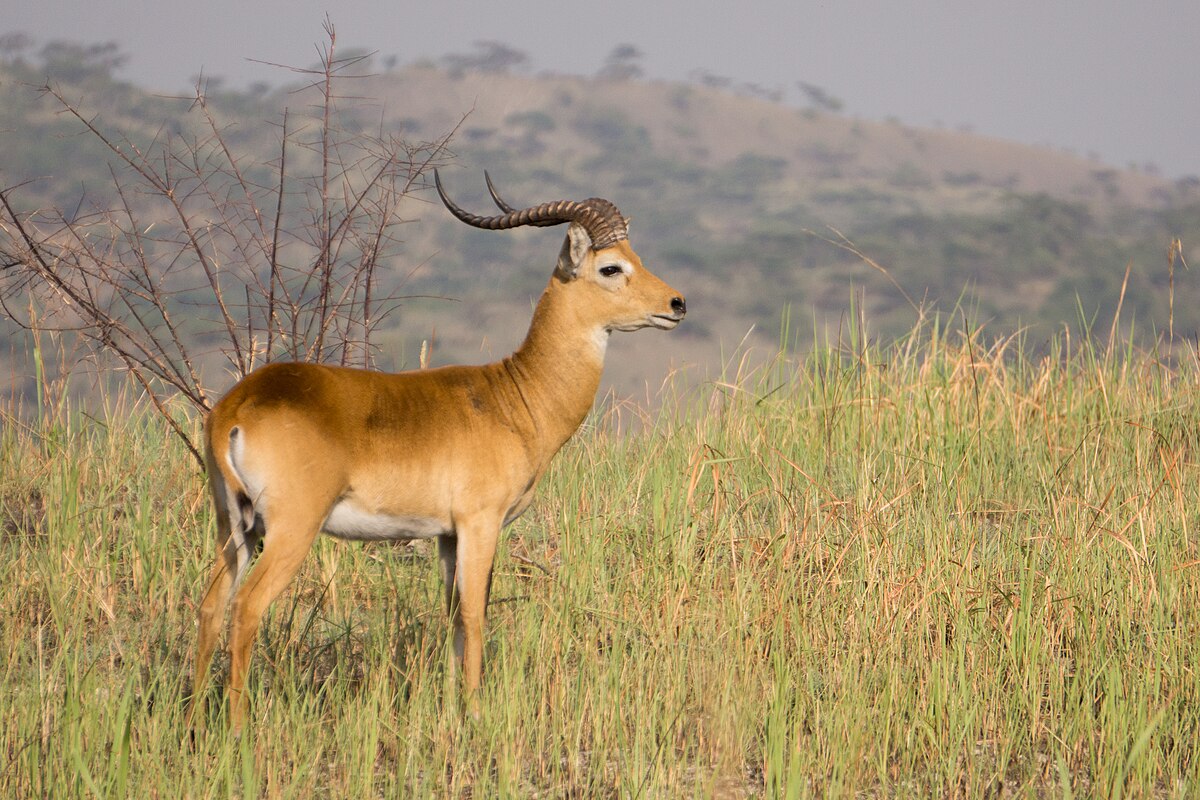
Kob

The puku  is a mid-sized antelope found in wet grasslands in Southern Democratic Republic of Congo, Namibia, Tanzania, Zambia and more concentrated in the Okavango Delta in Botswana.

Nearly one-third of all puku are found in protected areas, zoos, and national parks due to their diminishing habitat (though this still leaves 2/3 of Puku living outside all protected areas.

Kob (queen Elizabeth national park)

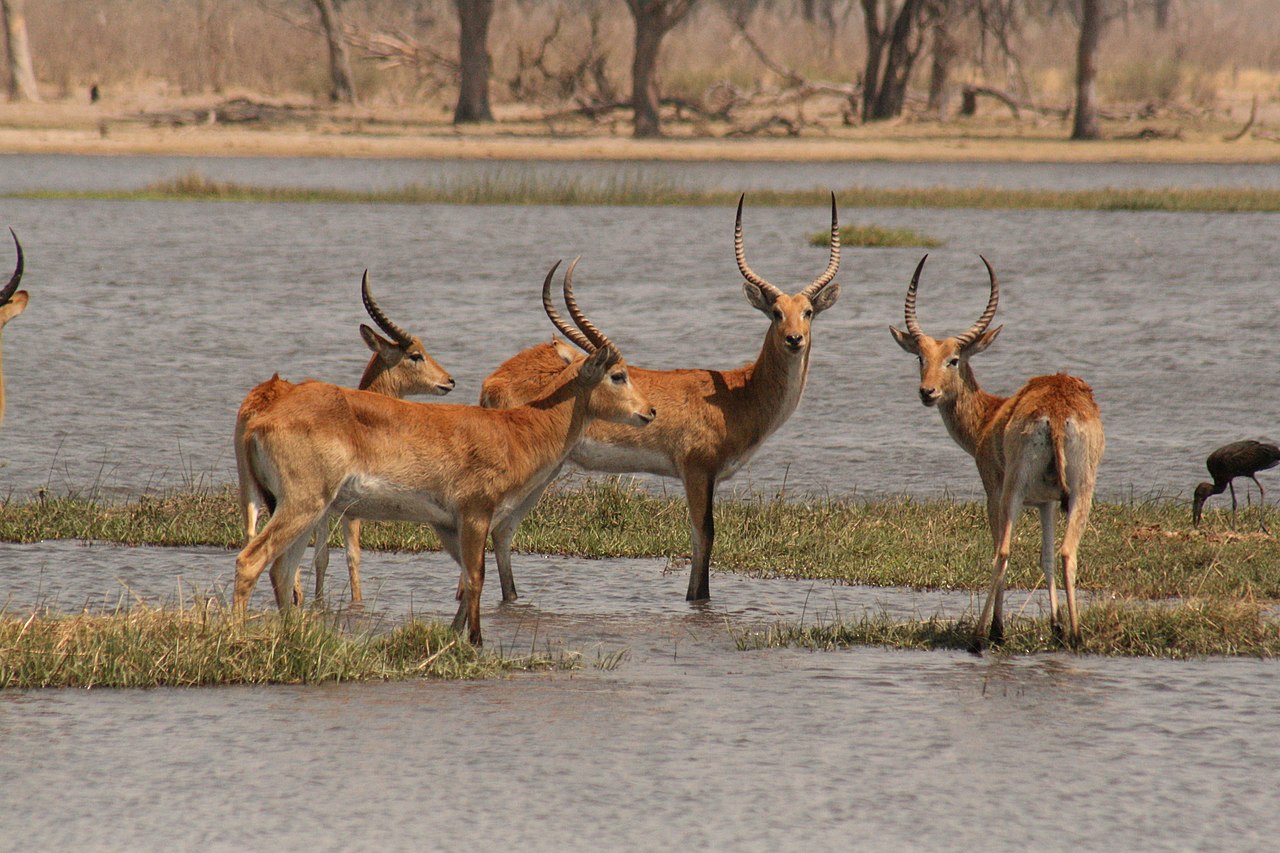
Red Lechwe

Red Lechewe is a species of antelope found in the south of eastern African. The red lechwe is native to Botswana, Zambia, southeastern Democratic Republic of the Congo, northeastern Namibia, and eastern Angola, especially in the Okavango Delta, Kafue Flats, and Bangweulu Wetlands. They are found in shallow water, and have a substance on their legs which allows them to run pretty fast. Total population is around 160,000

Four subspecies of the lechwe have been recognized

  • Common red lechwe (Gray, 1850) – Widely distributed in the wetlands of Zimbabwe, Botswana, Namibia and Zambia. (80,000)
  • Kafue Flats lechwe  (Haltenorth, 1963) – It is confined within the Kafue Flats (seasonally inundated flood-plain on the Kafue River, Zambia). (28,000)
  • † Roberts’ lechwe  (Rothschild, 1907) – Formerly found in northeastern Zambia, now extinct. Also called the Kawambwa lechwe.
  • Black lechwe (Kobus leche smithemani) (Lydekker, 1900) – Found in the Bangweulu region of Zambia. (50,000)

In addition, the Upemba lechwe (1000)  and the extinct Cape lechwe are also considered subspecies by some authorities. Although related and sharing the name “lechwe”, the Nile lechwe (below) is consistently recognized as a separate species.

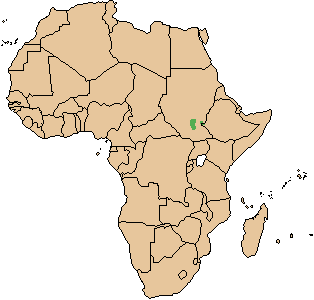
Nile Lechwe

The Nile lechwe or Mrs Gray’s lechwe  is an endangered species of antelope found in swamps and grasslands in South Sudan and Ethiopia.
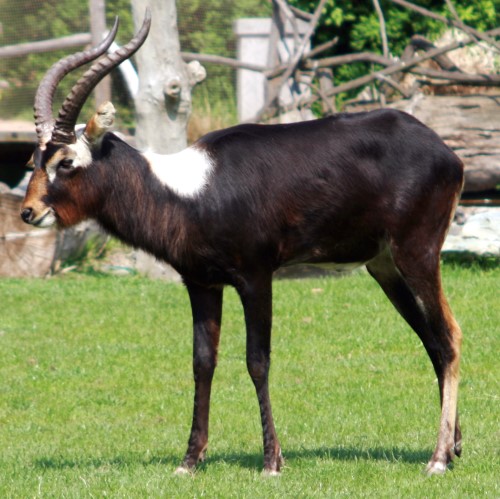
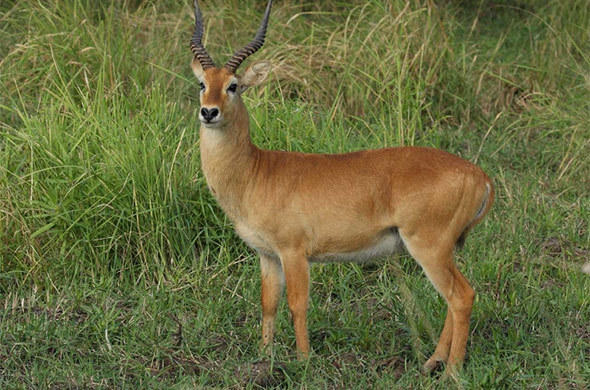
Nile lechwe can visually signal and vocalize to communicate with each other. They rear high in the air in front of their opponents and turn their heads to the side while displaying. Females are quite loud, making a toad-like croaking when moving. Known predators are humans, lions, crocodiles, cheetahs, wild dogs, hyenas and leopards. They flee to water if disturbed, but females defend their offspring from smaller predators by direct attack, mainly kicking. Nile lechwe are crepuscular, active in the early morning and late afternoon. They gather in herds of up to 50 females and one male or in smaller all-male herds. They divide themselves into three social groups: females and their new offspring, bachelor males, and mature males with territories. A males with territory sometimes allows a bachelor male into his territory to guard the region and not to copulate. They are sexually mature at 2.

Nile lechwe feed on succulent grasses and water plants. They have the special capability to wade in shallow waters and swim in deeper waters, and may feed on young leaves from trees and bushes, rearing up to reach this green vegetation. Nile lechwe are also found in marshy areas, where they eat aquatic plants.  Around 32,000 and are classed as endangered

Nile Lechwe

Puku

Puku

The puku  is a medium-sized antelope found in wet grasslands in southern Democratic Republic of Congo, Namibia, Tanzania, Zambia and more concentrated in the Okavango Delta in Botswana. Nearly one-third of all puku are found in protected areas, zoos, and national parks due to their diminishing habitat (the issue here, is that these 2/3 are clearly at danger of disappearing if humans change their behaviour. They are currenly listed as not threatened
Two subspecies exist:

  • Senga Puku
  • Southern Puku
Both appear to be not threatened.
They are found in Hluhluwe Umfolozi Game Reserve, Kruger National ParkMoremi Game Reserve, Ngorongoro Crater Conservation Area and the Serengeti National Park

Waterbuck

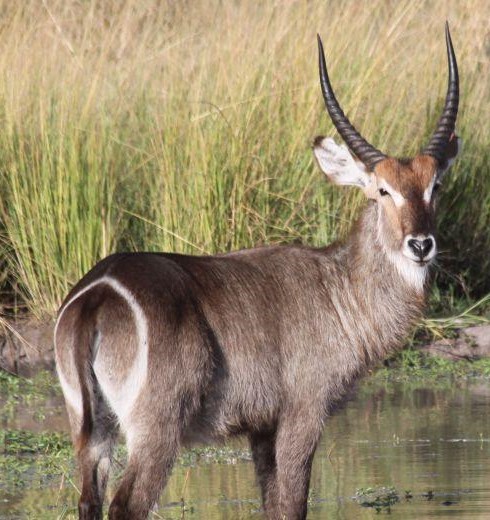
The waterbuck  is a large antelope found widely in sub-Saharan Africa.It was first described by Irish naturalist William Ogilby in 1833.

Its 13 subspecies are grouped under two varieties: the common or ellipsiprymnus waterbuck and the defassa waterbuck. The head-and-body length is typically between 177 and 235cm  and the typical height is between 120 and 136cm. In this antelope, males are taller and heavier than females. Males reach roughly 127 cm at the shoulder, while females reach 119cm. Males typically weigh 198–262 kg and females 161–214 kg. Their coat colour varies from brown to grey. The long, spiral horns, present only on males, curve backward, then forward, and are 55–99 cm long. Waterbucks are rather sedentary in nature. As gregarious animals, they may form herds consisting of six to 30 individuals. These groups are either nursery herds with females and their offspring or bachelor herds. Males start showing territorial behaviour from the age of 5 years, but are most dominant from the six to nine. The waterbuck cannot tolerate dehydration in hot weather, and thus inhabits areas close to sources of water. Predominantly a grazer, the waterbuck is mostly found on grassland. In equatorial regions, breeding takes place throughout the year, but births are at their peak in the rainy season. The gestational period lasts 7–8 months, followed by the birth of a single calf.

Waterbucks inhabit scrub and savanna areas along rivers, lakes, and valleys. Due to their requirement for grasslands and water, waterbucks have a sparse ecotone distribution. The IUCN lists the waterbuck as being of least concern. More specifically, the common waterbuck is listed as of least concern. while the defassa waterbuck is near threatened. The population trend for both is downwards, especially that of the defassa, with large populations being eliminated from certain habitats because of poaching and human disturbance.

The common waterbuck is listed as least concern, while the Defassa is listed as near threatened. Only 60% of this subspecies population is in protected areas, so it could get worse, if they are lost.

Waterbuck

Indian Greater one horned rhino

Indian greater one horned rhinoceros

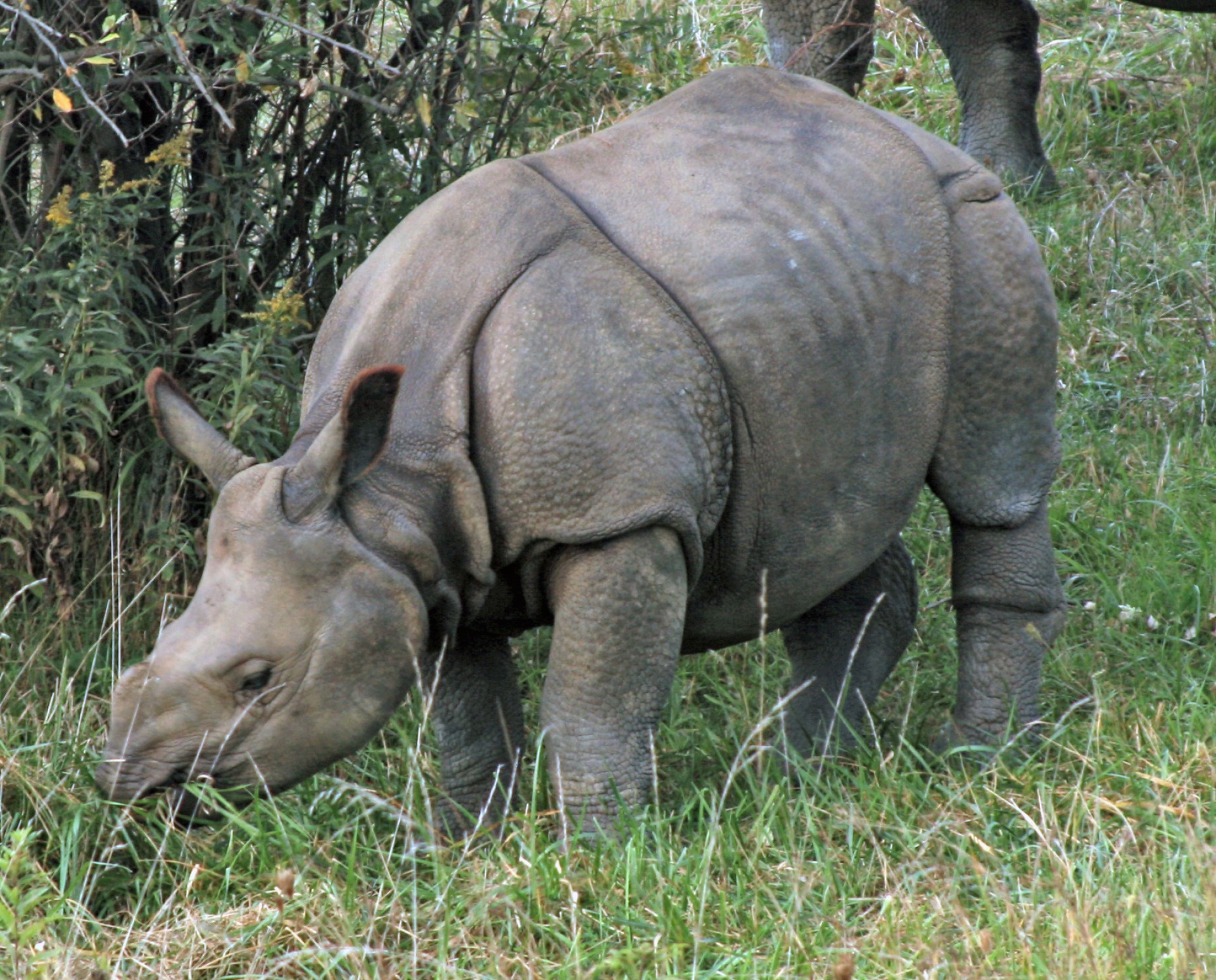
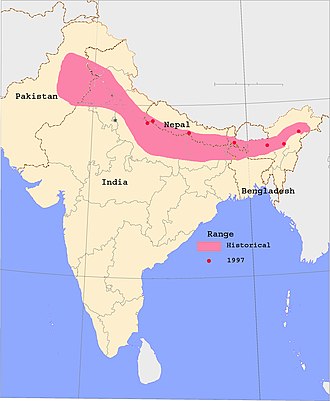
Native to the Indian sub-continent, it is listed on the red list, and is only found across 20,000 square kilometres, or 7,700 square miles This is a smaller area than the size of Wales. Unfortunately, as you can see, the rhino does not roam this whole area, to the contrary, it is only found in a few small areas.
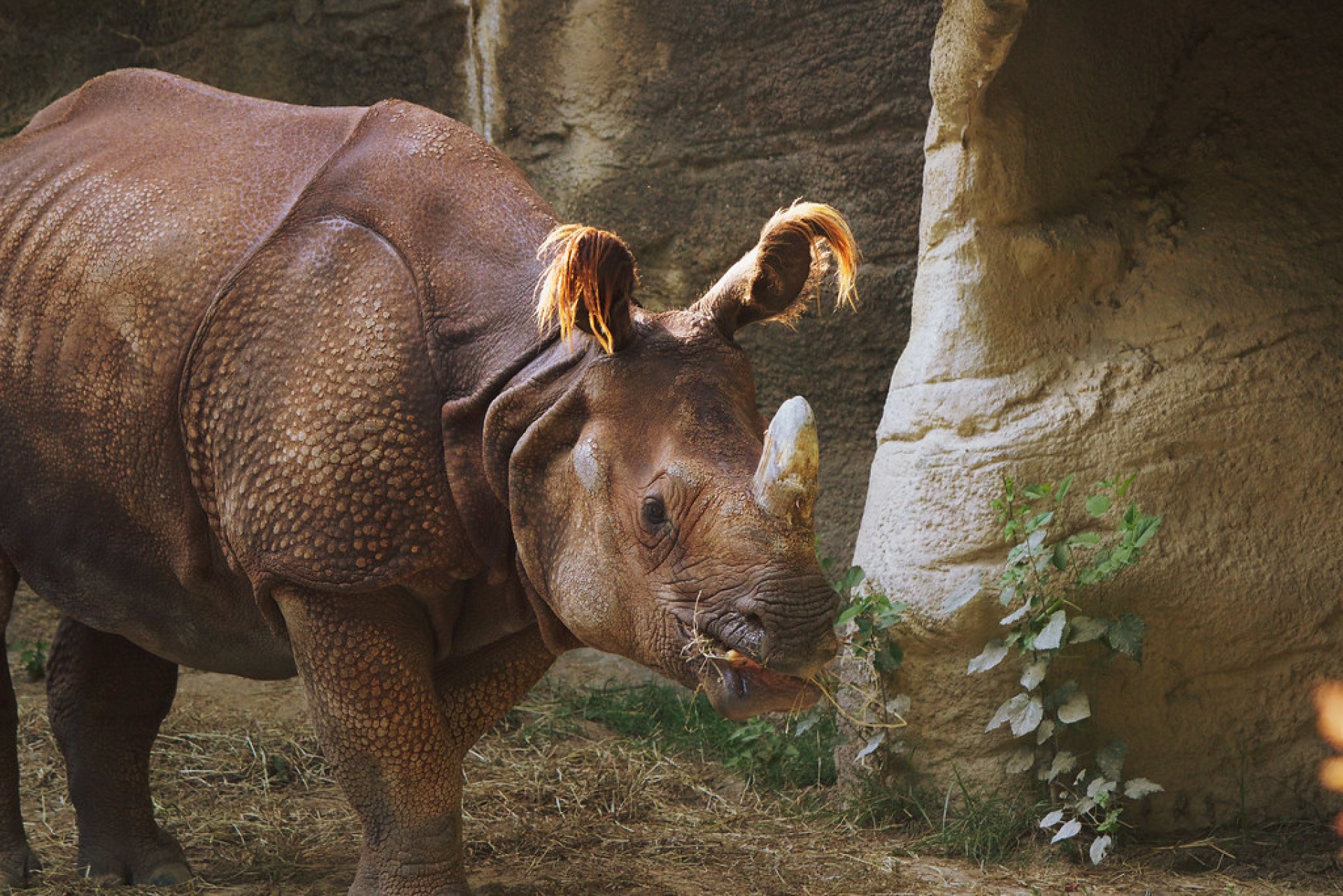
At the last full assessment (August 2018) the population was estimated to at 3588 individuals (recent estimates suggest a population of over 4000, but I will use the numbers from 5 years ago, as it is unclear how this growth has been split within the sites). Of this number 2939 were in India, witht he rest in Nepal. In 2009 2048 of these rhinos lived in Kaziranga national park. 

Other places include translocated 18 rhinos from Kaziranga National Park and Pobitora Wildlife Sanctuary to Assam’s Manas National Park on the India-Bhutan border. As of 2017, Manas was home to 29 rhinos.

As of August 2018, the global population was estimated to comprise 3,588 individuals, including 2,939 individuals in India and 649 in Nepal Kaziranga National Park alone had an estimated population of 2,048 rhinos in 2009. Pobitora Wildlife Sanctuary in Assam has the highest density of Indian rhinos in the world with 84 individuals in an area of 38.80 km2 (14.98 sq mi) in 2009.

Note:  to look at the rest of the rhino family click here


[smart_post_show id="20257"]

Sumatran Rhino

Sumatran Rhinoceros Photo Credit Kat Jenkinson

Sumatran Rhinoceros

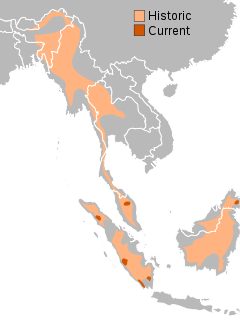
Sumatran rhino is also known as a  hairy rhinoceros or Asian two-horned rhinoceros. Like the Javan rhino, the Sumatran rhino once had a range which covered a far larger area: rainforests, swamps and cloud forests in India, Bhutan, Bangladesh, Myanmar, Laos, Thailand, Malaysia, Indonesia and southwestern China, particularly in Sichuan.

There are still 3 on the island of Borneo, as you can see, the map still lists a population on the Malay peninsula though it is thought that this group is extinct. The 3 subspecies are:

  • The Sumatran island population: Western (34-47 individuals). This is unfortunately split in to 4 populations
  • The Borneo island population: Eastern (may be as low as 3). This was only discovered in 2016 in            East Kalimantan, after the population in Sabah, Malaysia (northern part of the island) was declared extinct in 2015
  • The mainland population: Northern (this is thought to be extinct as of 2010, but it is possible that a small group remain).
The Sumatran rhino spends most of its life alone, except for courtship and raising of young. It is more vocal than other rhino species, as well as communicating through marking soil with its feet, twisthing saplings into patterns, and leaving excrement. the species is much better studied than the similarly hard to see or find, for the Javan rhinoceros, in part because of a program which bought 40 Sumatran rhino into captivity in an attempt to preserve the species. Though a number of rhinos died once at the various destinations, and no offspring were produced for 20 years.

Only four areas are known to contain Sumatran rhinoceros: Bukit Barisan Selatan National park, Gunung Leuser national park, and Way Kambas National park on Sumatra, and on Borneo west of Samarindah.

We hope to be able to list trekking for seeing animals like this in the future, do get in touch if you work in this field.

Note:  to look at the rest of the rhino family click here

[smart_post_show id="20248"]

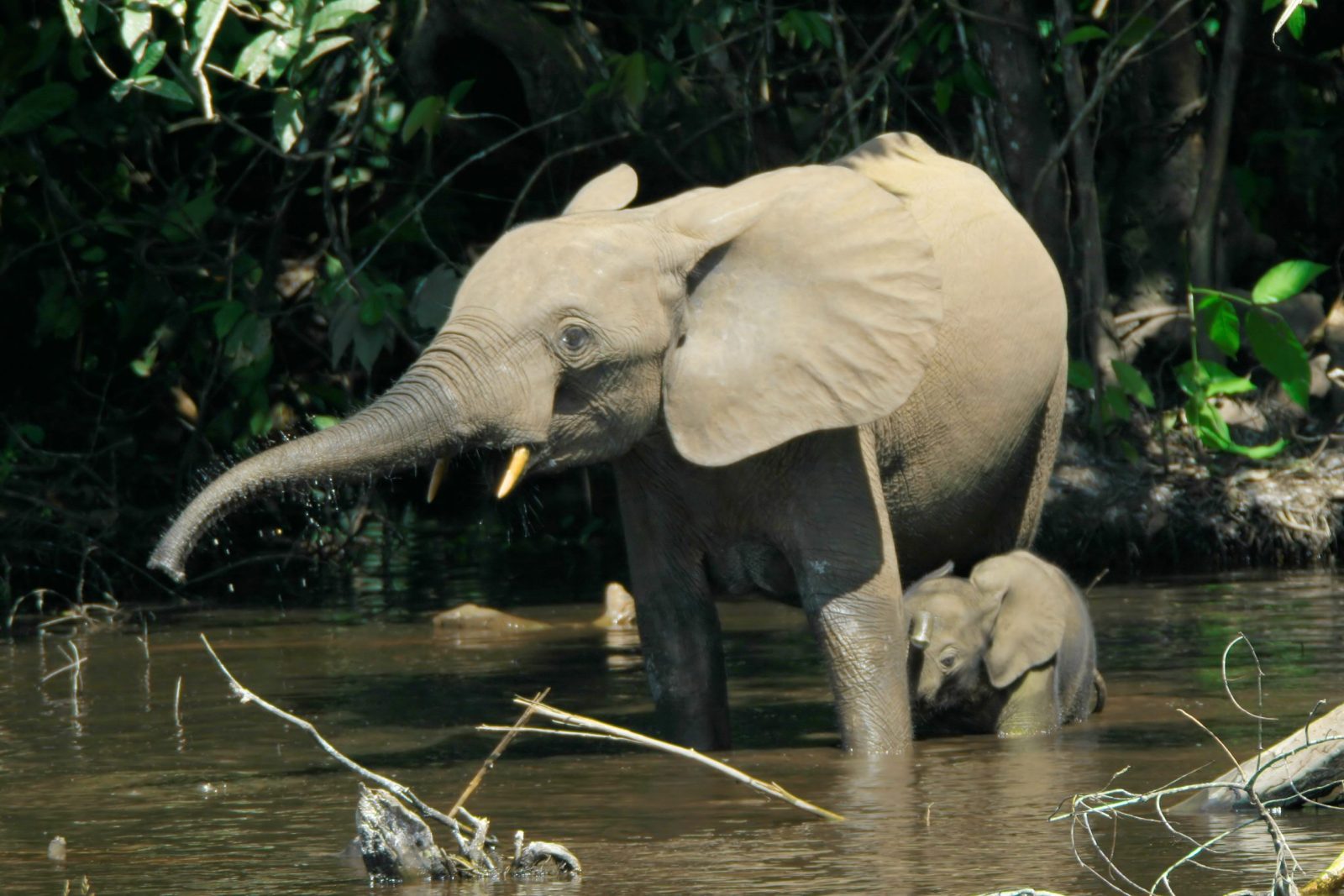
African forest Elephant

African Forest elephants

There are three species of elephant, the African savanna elephant, African forest elephant and the Asian elephant

With the African species, Forest elephants have declined 86% between 1986 and 2015, African Bush elephants declined 60% 1965 and 2015 leaving just over 400,000. African forest elephants are thought to number between 100,000 and 150,000.

Perhaps the most scary fact is that the African forest elephant was only declared as a separate species in 2021 only 2 years ago. These species are not particularly similar – indeed the Asian elephant is more genetically similar to the mammoth, than the African savannah elephant is to the African forest elephant

The African forest elephants population has declined precipitably in the last few years. Given the recognition that the forest elephant is a separate species only came 2 years ago, it is hard to get accurate historic figures. Never-the-less, the combined african elephant species population was thought to be around 26 million in 1800, and 1.34 million in 1976. The estimate is currently around 100-200,000 forest elephants. One of the problems, is that the African forest elephant is an essential part of the ecosystem. There are many trees, which rely on forest elephants to carry their seeds through the forest, so that they germinate a good distance from the original plant (more than a few of the same plant in the same area, causes the pest that feeds on the tree to multiply to the point where it can kill the tree. While it is true that other animals like gorillas and chimpanzees can do this, they do it far less. Should the forest elephant be lost, the African rainforest is likely to be far less capable of of handling the various changes, like climate change that is coming.

The last strongholds are in Gabon (a survey last year suggested Gabon has 95,000 forest elephants, rather than the 60,000 that was originally thought) and the Republic of the Congo and Democratic republic of the Cong, with smaller populations remaining in other African countries (Cameroon, Central African Republic, Equatorial Guinea) and Cote d’Ivoire, Liberia and Ghana in west Africa. There is much space for forest elephants to greatly recover, if the poaching is able to stop.

Below this, you will see a video on this species, and below this is a list of any times that the african forest elephant has been mentioned within this blog.

Below this, at the bottom of the page, we hope to list places where you can go to see this species in the wild – if you work in conservation or tourism around this species, do get in touch. we would love to list you, and it costs nothing to be listed, we merely work on commission.

[smart_post_show id="15217"]

Clouded leopard and Sunda clouded leopard

Clouded leopard and sunda clouded leopard

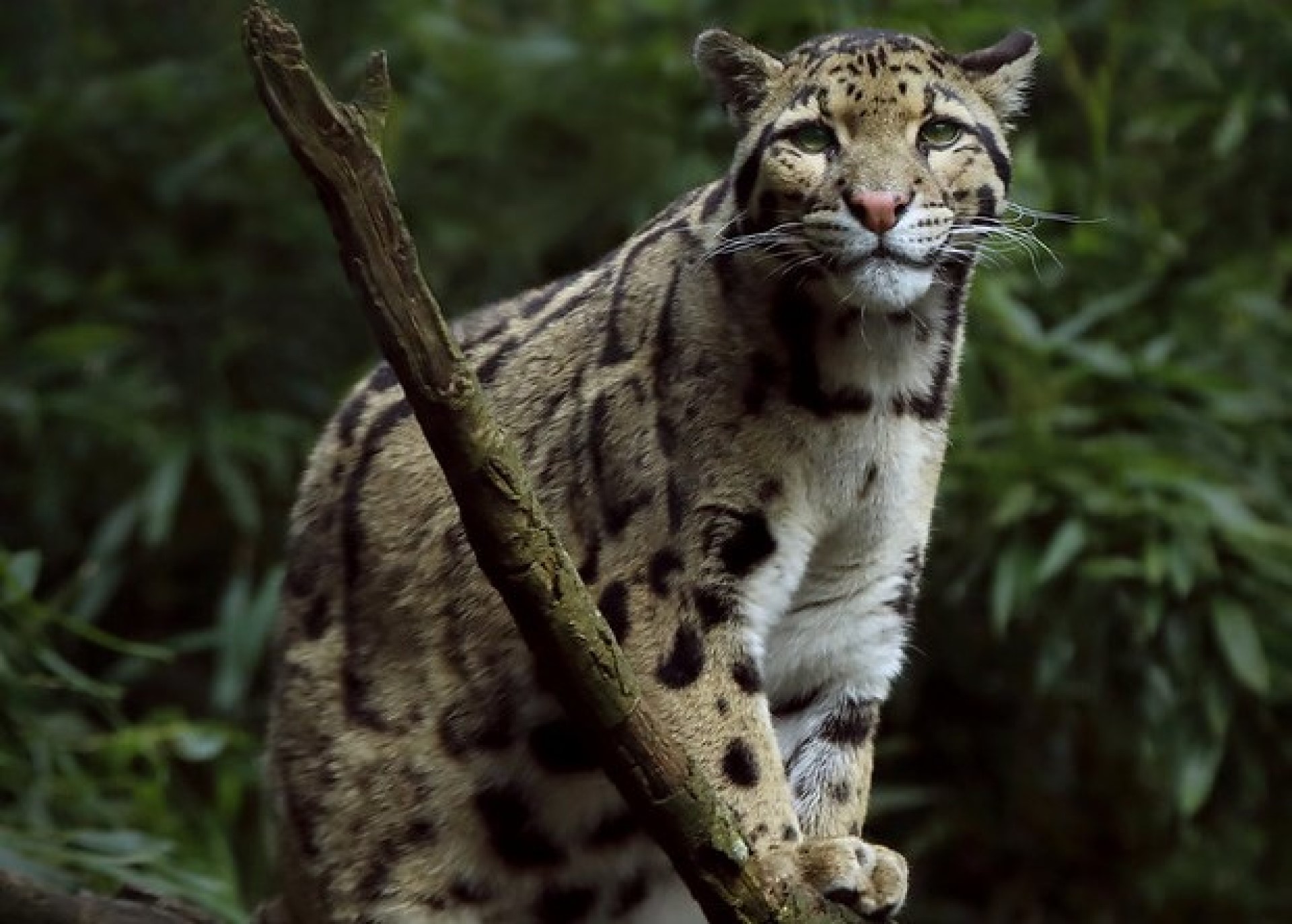
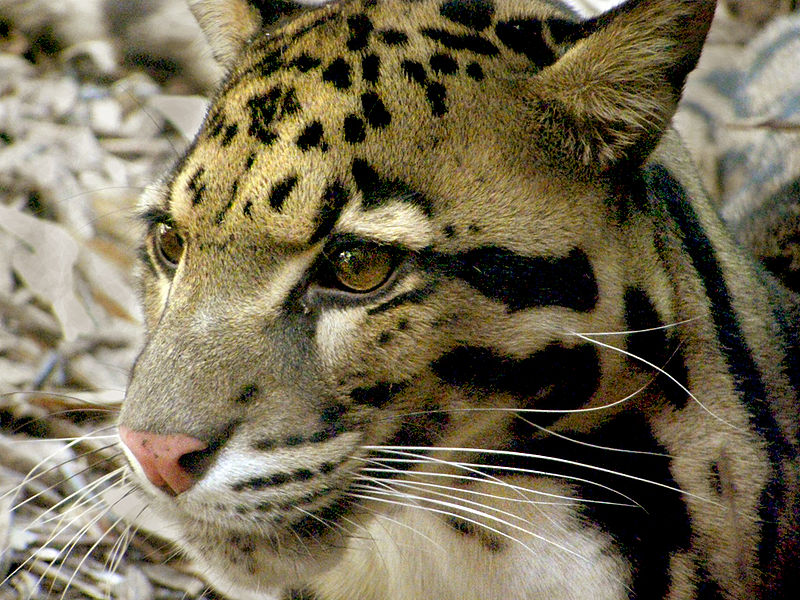
Clouded leopards are actually one of the most ancient cat species, however due to their inability to roar or purr, they cannot officially be considered a big cat (roar) or a small cat (purr) due to their definition, which puts them in an odd category. They are most closely related to snow leopards, and are in the same family as the big cats from genetic research. It has recently been confirmed that there are 2 different clouded leopard species, one on the mainland, and the other on the islands (the sunda clouded leopard.

Both species are considered vulnerable. The mainland clouded leopard is thought to number between 3700 and 5580, while the sunda clouded leopard is thought to number around 4500 3800 in Borneo and 730 on Sumatra.

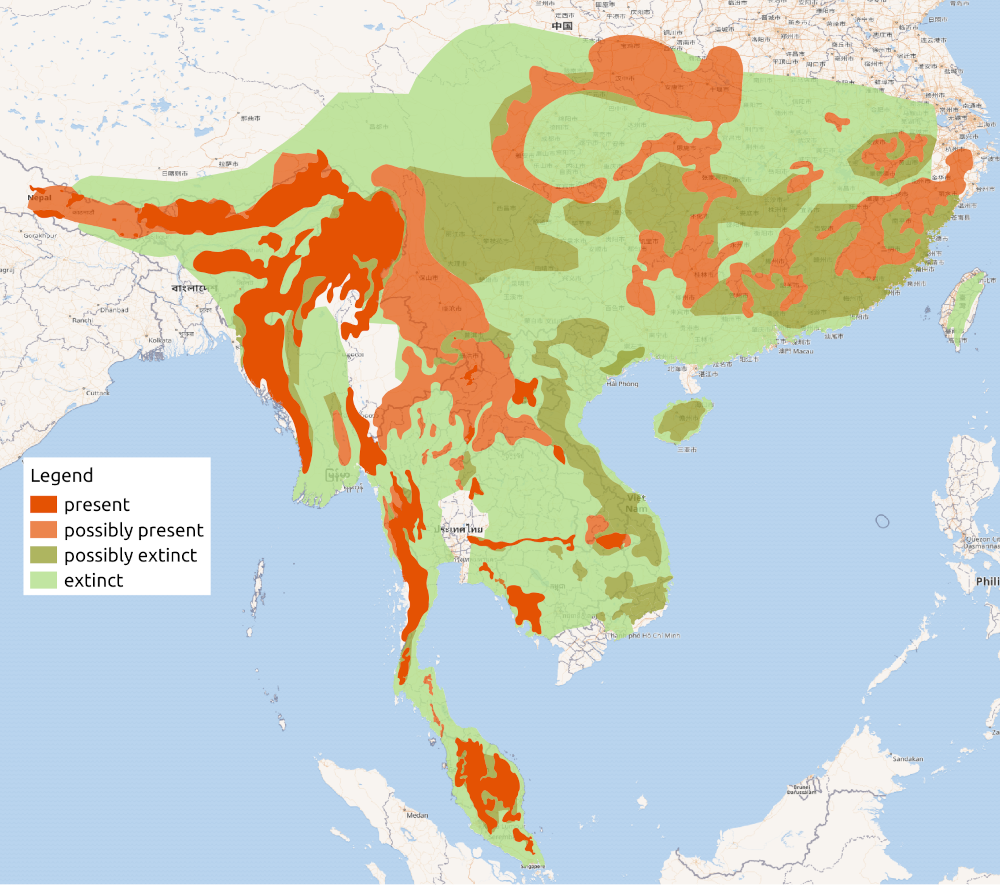
Clouded leopards are found in the forests of South East Asia. Both Poaching and habitat loss threaten their future survival is not easy to see, it makes it is hard for it to be clear what its current range is. However, if you simply compare extinct to all possible remaining habitat, you can see the best possibiltiy is that range has reduced by around 50%


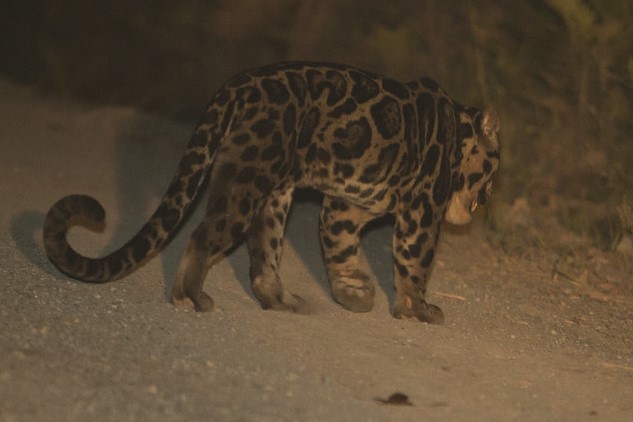
The clouded leopard has been split into two species – the Clouded leopard found on mainland Asia (big picture at the top), and the Sunda clouded leopard (picture above) found on Borneo and Sumatra (these Sunda Clouded leopards have not interbred for a very long time so are considered 2 subspecies). 


This is a further image of a clouded leopard though taken in a US zoo, which allows an easier time of getting a good view of the head.

The map above shows the former and current range for these two species. As we start to link with places on the ground, we are likely to create separate pages for each of these clouded leopard species. Below is a video of each species of clouded leopard.

We look to work with people on the ground. Do get in touch if you live or work in the area, and can help people see these incredible animals click here

[TS_Video_Gallery id="5"]
[smart_post_show id="11511"]

African Savannah

African Savannah animals

The aim here is not to give you the number of every species that exists in each reserve. Rather, the aim is to give you a rough idea of the health and size of each reserve. In places where there are private reserves on the edge of a larger reserve, complete ecosystem numbers will be given. Please note that they will not be precise, as even straight after a thorough count numbers are only estimates – furthermore, some reserves do not publicize their numbers.

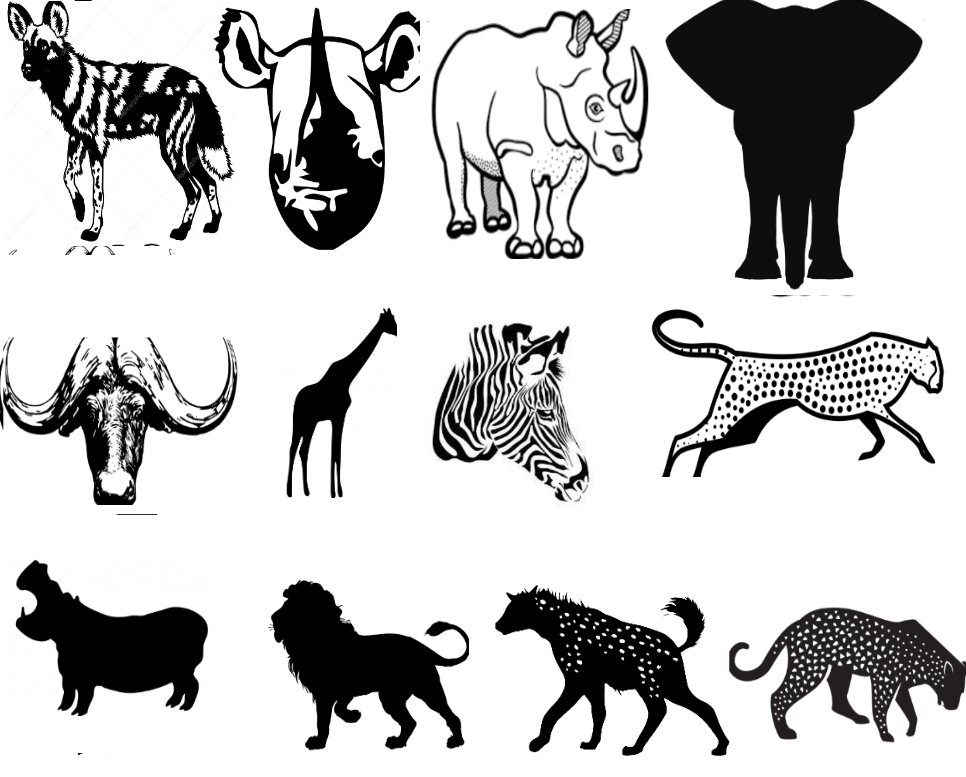
The grid of animals that I have included above are as follows (below):

African wild dog Black rhino White rhino(Really wide rhino) Elephant Buffalo Giraffe Zebra Cheetah Hippopotamus Lion Hyena Leopard

This is going to be the standard animals for Savannah ecosystems within Africa, however each different Biome will have different species so there will be a variety of these pages. I will give you brief information on each. In the long-run we hope to have animal pages for each and these will be linked from the Bold animal names. Those not bold not not yet have a link page. At the bottom of each animals page is a list of places which you can book to see the animal in question; each currently have at least a few choices, but I hope to be able to direct to many more as time moves forwards.

African wild dog (or sometimes known as Cape hunting dog or painted dog). This animal is an incredible sighting if you get lucky. Now, they live at low densities, so are generally found in the largest reserves. If a reserve still has African wild dog, it is clear that the reserve is in pretty good health (usually). Furthermore, as they are very susceptible to various diseases that domestic dogs can carry (such as canine distemper) – this wiped out the population in the Serengeti in 1995. Thankfully, wild dogs have returned to the Serengeti, though currently only 100 or so are in the ecosystem – meaning it is unlikely that you will see them here. Any sighting is a wonderful thing. Member of ecotourism big 7

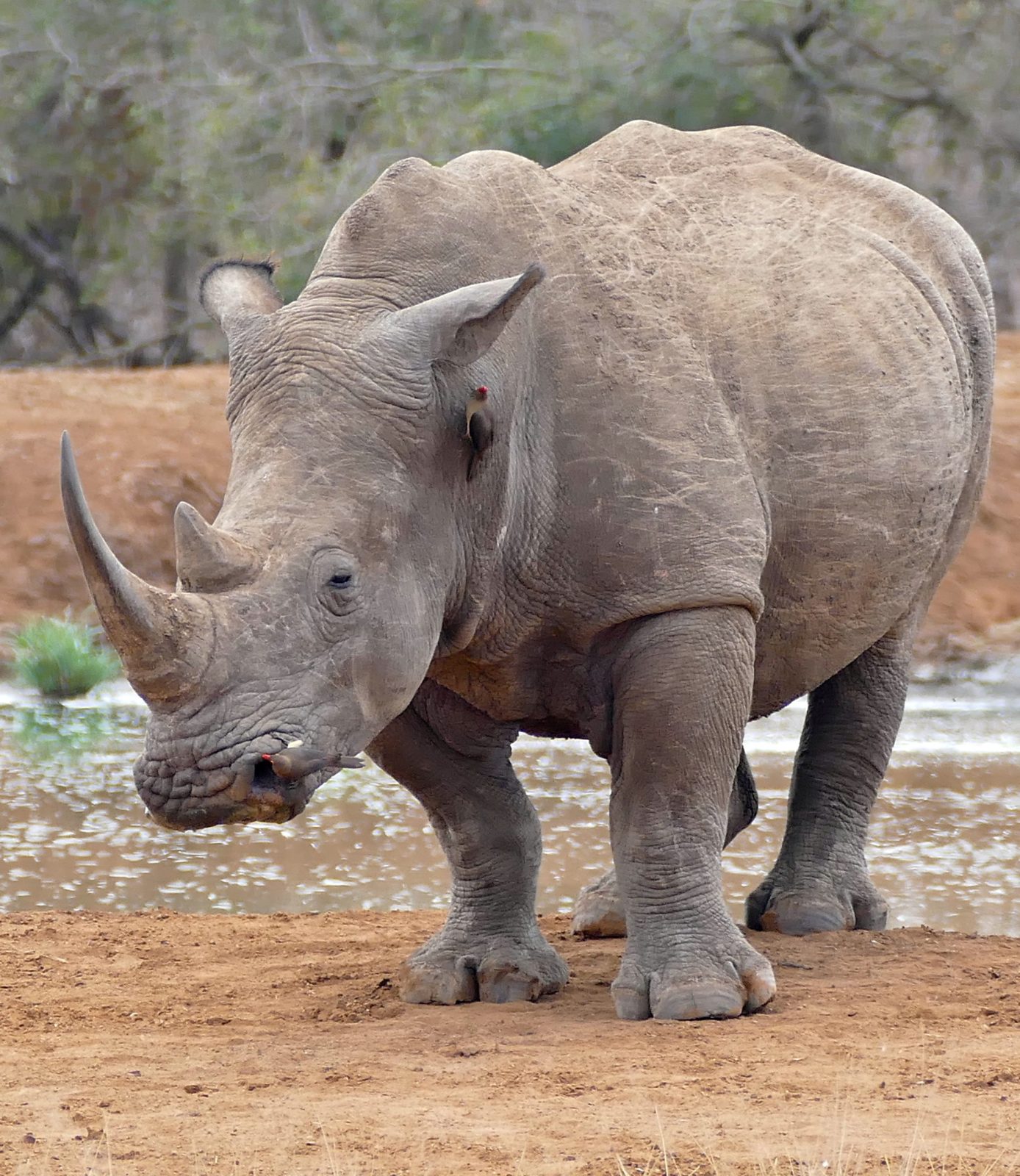
Black and White Rhino Two different species, Black rhino had a far larger range, unfortunately they are highly endangered across most of their range. White rhino, once found in central Africa (there are now only 2 of these animals left, held at Ol Pejeta conservancy in Kenya) are now only found in Southern Africa – South Africa, Namibia and Zimbabwe. The Kruger, once hosted as much as 10,000 or more white rhino, but now only have about 3000. Note: white rhino appears to be a mistranslation from the Africaans Weit, meaning wide, these rhino are not white. Pictures are Black then white rhino. Member of big 5 and ecotourism big 7

Elephant One of the species that so many people visit Africa for, the Savannah African elephant is doing okay, though the populations is far below historical levels. Places like the Selous (now much of this reserve is Nyerere National park) lost perhaps 80% of there historical elephant population. Encouragingly, if the poaching stops the population often rapidly recovers. The African forest elephant has seen horrific poaching over the last few decades, and without a rapid change this species might be heading for extinction (the African forest elephant is closer related to the Mammoth than the African Savannah elephant. Member of the big 5 and ecotourism big7.

Buffalo: A member of the big 5, the buffalo is essentially a wild cattle species. They are a member of the big 5 and ecotourism big 7. The big 5 is so named because these were the most dangerous animals to hunt on foot. Buffalo are often the species which you are likely to have encounters with if you go walking on foot.

Lion Often referred to as the King of the Jungle (despite not being found in jungles), is generally considered the apex predator. Certainly a wonderful thing to see, never-the-less they do not get their own way all the time. The population of Lions in Africa has seen precipice falls in the last century, and this has not stopped. Tourism is one tool we have to give them financial value to those who share their space with them. Member of the big 5 and ecotourism big 7

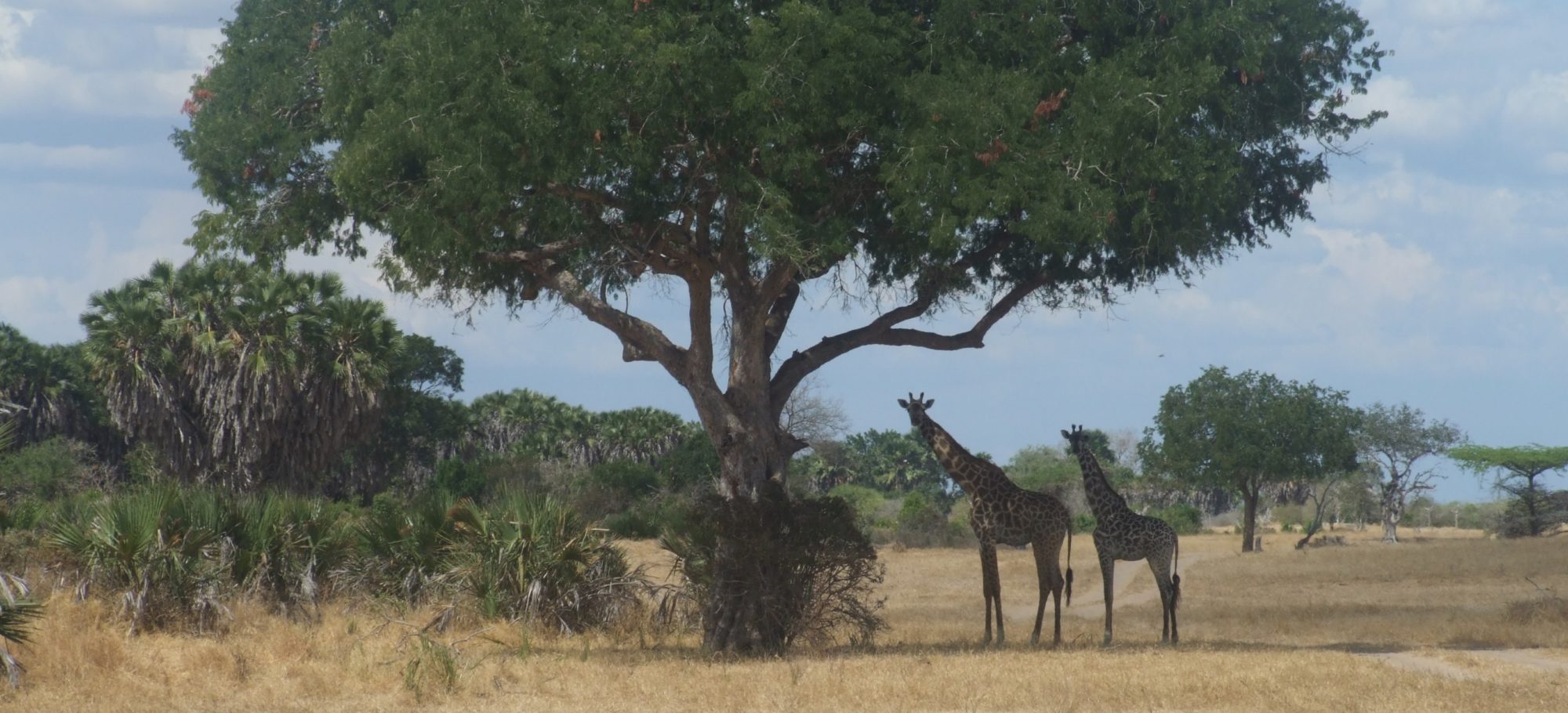
Giraffe: While this is a species that is found in the majority of Southern and Eastern African reserves, they are officially classed as endangered, as their population is currently falling so fast. The selous in Tanzania is nicknamed the Griraffe park as there are so many of them.

Zebra are also found in most reserves in Africa, though the number of them is still of interest.

Cheetah Like African Wild dog are a key indicator of the health of the ecosystem. Living at low densities in most reserves (except in places like the Serengeti plains). These are rare sightings, and most reserves do not have many cheetah. Indeed of all the big species, the cheetah is one of the few predators who do better outside reserves.

Hippopotamus: This is another species that does reasonably well outside protected reserves, but their population has fallen fast over the last few years.

Lion Lions are a very clear indication of the health of each ecosystem. If there is a significant population of Lion, then it is a large reserve and therefore there is plenty of space for other species. Check our links at the bottom of the lion page for some of the best place to see them.

Hyena There are thought to be more than 100,000 spotted hyena in Africa, making them the most numerous predator on the continent. They are exciting animals to see, and their call is often one of the species that you hear from your campsite – the weird rising whoop which is the contact call they use between them. Watch the video below to see what I mean. The advantage of the population size is that you are likely to find them in most wilderness areas. Brown hyenas are also widely found, never the less, as they do not do well in close proximity to spotted hyenas which means they are more often found on the edge of reserves and outside them.

Leopard The last member of the big 5 and Ecotourism big 7, the Leopard is a fascinating species. A solitary animal (except mothers with their young) they are the only big cat, or indeed member of the big 5 that is reguarly found outside protected reserves, though this is decreasing over time. A fantastic sighting, they can be very hard to find, and sightings in big reserves are usually very crowded. Generally found near river courses, as these are the places where large trees are found, allowing the Leopard to rest out of danger.

UK makes a respected decision to ban ivory sales, but not other body parts

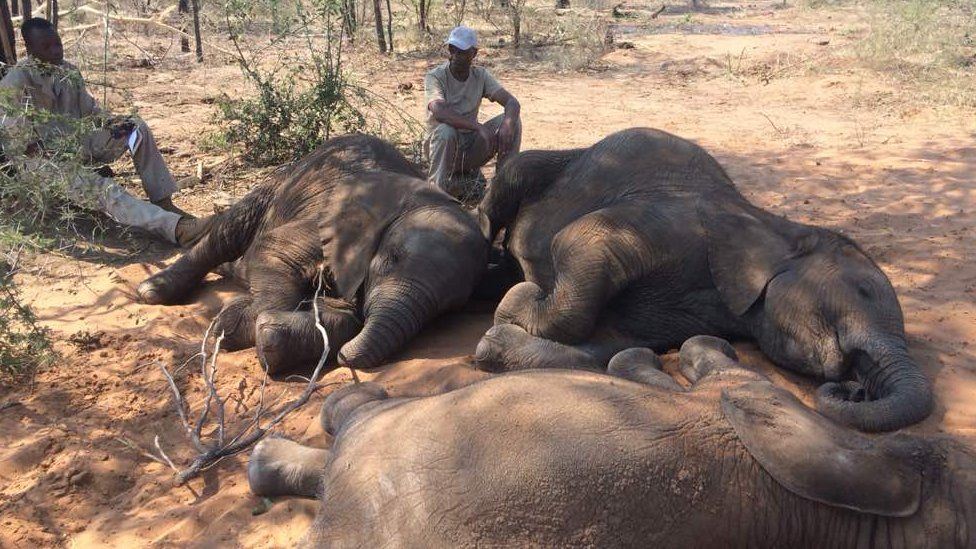
At various times over the last century, the elephant population has been decimated. Between 1979 and 1989 the elephant population halved. Even recently, between 2007 -2014 30% of Africa elephants were lost.

Yet this is only the top of the iceberg. In 1930 there were an estimated 10,000,000 African elephants roaming the continent -today just 415,000 remain 96% decline. That means a sustained loss of almost 1%a year for almost a century.

Bbc photo of a group of elephants killed by Poachers

Now, there is another problem with this. These elephants belong to 2 species, the African forest elephant and the African Bush (or Savannah elephant). It is estimated just 40,000-50,000 African forest elephants remain; and it has to be remembered that the differences between the African forest and Savannah elephants are not small – they are not sub species, they are separate species.

The African forest elephant, overlooked by poachers for a long time, had had precipitous collapse in numbers, from over 700,000 to likely under 100,000. More than half of the remaining population lives in Gabon – which makes them susceptable to any change in policy in this small African country.

All this, is a rather long winded way to say that African elephants have suffered over the last century.

The British government has banned the import of ivory. Now they are closing the loophole, by banning other body parts from elephants – why stop ivory import, if the elephant will be driven to extinction for is ears or feet anyway.

Now, it is true that there is some legal hunting. In some places this does make sense, and I would suggest rules to allow import from these places – however these are few and far between, and many are not currently healthy enough to allow hunting. I am thinking of places like the Selous – 20,000 square miles. At one point housing more than 110,000 elephants, successive round of devestating poaching has reduced that to 10,000 or less.

While a take of 50-100 (even 500) from 110,000 is a founding error, this big a take from 10,000 is quite different. In a healthy ecosystem, this take of 1% or less would be fine, but it is likely that animals are still being lost to the poachers. Furthermore, given such a precipitous decline much of the population knowledge will have been lost – making survival through tough times far harder already.

My feeling, is that hunting should only happen if there is no other option. Sure, a hunted elephant brings in a lot of money, however, the Selous could support a vast photographic Safari destination, if the tsetse fly could be eliminated. This would give well passing jobs to the many poor communities living around it’s fringes. Certainly, I would argue with Africa has no need to trophy hunting of elephants, or most other species – never mind the fact that someone going on a canned lion hunt does not risk his life, and is guaranteed to kill. Essentially a canned lion hunt, is killing an animal in a large zoo.

White Rhino

White rhino

In Africa there has been horrible decline of rhinos. The northern white rhino was as recent as 1960 still living in numbers over 2000. Found through  Chad, the Central African Republic, South-western Sudan, the Democratic Republic of Congo (DRC), and North-western Uganda. Unfortunately this population has since crashed, and while they are not yet extinct there are so few left it is unlikely to recover. Embryos have been frozen in the hope that in the near future Southern white rhinos could host these.

Unfortunately, while the southern white rhino is doing far better with 18,000 (only a 12% decline in the last decade) it is not healthy and at the rate that poaching has occurred it’s not inconceivable that this population could be largely poached out of existence in a decade. In 2021, 457 rhinos were poached in South Africa with 77 lost from the Kruger. While this is horrific, it would suggest that Kruger is finally managing to protect its rhinos more effectively. Currently only 30% of Southern white rhino live in Kruger, which in the past this percentage was far higher (as high as 80-90%). Hopefully in the future rhino poaching will go back to being a thing of the past – while Kruger has the space, it cannot stop hundreds of determined poachers, while smaller reserves can do this more easily.

In the early 1900s, the Southern white rhino population fell to 50-100, thankfully this direction changed with (they are hoping) in August this year. The problem remains, that despite it having no medicinal benefit, if a rhino horn is valuable then people living near the breadline in the surrounding area will look on it with envy. Even if locals do not do it, it is worthwhile for criminal gangs. At the moment, white rhino horn can be sold for around $60,000 per pound, and an average white rhino horn weighs just short of 9 pounds. This means that each white rhino has half a million dollars attached to its nose. 

One important thing to note, is that the name white rhino does not come from the colour of its skin. Indeed, with a white and a black rhino standing next to each other it would be hard to notice a difference in the colour of the skin. Instead, it gets its name from the afrikaans word weit which means wide – the white rhino has a wide mouth for grazing, while the black rhino has a pointed mouth for browsing.

Either place gives you a good chance to see rhino in their home.

As time passes, we hope to add more destinations for each species. There is a list of all articles on this species below the destinations available.

Note:  to look at the rest of the rhino family click here

Limpopo Transfrontier park including Kruger sabi sands and other conservation areas
Greater Serengeti
[smart_post_show id="26287"]

African Savannah Elephant

African Savannah Elephant

There are three species of elephant, the African savanna elephant, African forest elephant and the Asian elephant. 

With the African species, Forest elephants have declined 86% between 1986 and 2015, African Bush elephants declined 60% 1965 and 2015 leaving just over 400,000. 

One of the other issues with poaching is that elephants are very intelligent, and can communicate over long distances. As a result if for instance an elephant is killed in the north of the Kruger, elephants hundreds of miles south will become far more aggressive towards humans and cars. This in turn reduces the number of tourists that are willing to visit the reserve.

Perhaps one encouraging fact, is that the African savannah elephant has enough space for a far larger population if only poaching can come to an end. It is also a simple fact, that any reserve with elephants (like lions) can attract visitors- provided it is well run.

Limpopo Transfrontier park including Kruger sabi sands and other conservation areas
Greater Serengeti
See Animals Wild

Read more news

Join as a wild member
to list your wild place & log in

Join as an ambassador supporter to
support this site, help save wildlife
and make friends & log in

Join as an Associate member
to assist as a writer, creator, lister etc & to log in

List a wild destination

List a destination in
the shadow of man

List a hide for animals more easily seen this way

Highlight some news
missed, or submit a
one-off article

Browse destinations for fun or future travel

Temporary membership
start here if in a hurry

Casual readers and watchers