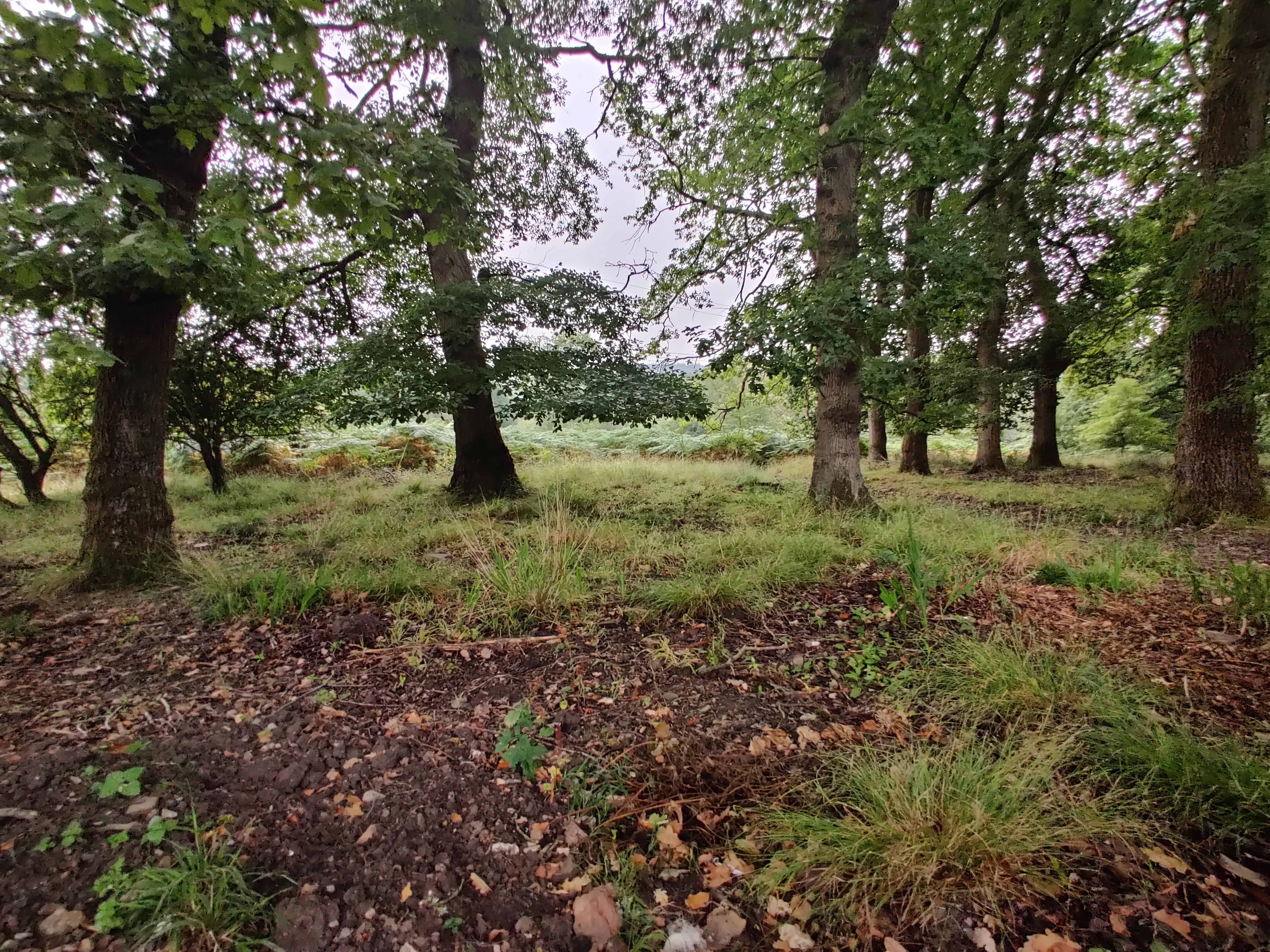
This reserve covers a complex to trevane covered in ravines deep canyons and has a mild climate with abundant rainfall. As a result much of the area is covered by rainforest and there is a great deal of wildlife. It is a total of 1,400 square miles or 3,600 square kilometres.
Animals of particular interest include the leopard, the clouded leopard, the pygmy slow loris, the yellow belly pheasant, and long-tailed pheasant, the giant salamander, five step snake and many more. Others include the stump tailed macaque, the suman sheep, the pangolin, the black bear, the lynx, the otter, the forest musk deer, the samba deer, the jackal, the mandarin duck, the sparrow hawk and a few more.
Rare species include the bison, the wild goat, the wild boar, the wildcat, the civit cat, the flying squirrel and several more.
A wild mountain range of high areas the carve through the Iberian peninsula is being slowly rewilded. Still housing forests of oak pine and Juniper, the area still feels ancient.
Many species were lost from this area but are being reintroduced. Wild bears and wolves yet to return the Iberian lynx is back along with both Egyptian and Griffin vultures.
The area covered is large, consisting of over 850,000 hectares (more than half of this is officially protected). There are a variety of other interesting birds in the area, as well as deer, wild boar and mouflon. As a result of a reducing human population since the 1960s, nature tourism is increasingly important for the local economy. A network of 14 old growth forest reserves have also been created totaling about 2000 hectares, which are fascinating to explore and incredibly important for carbon sequestration.
Visit to help ensure that this project continues and the locals benefit from its wok
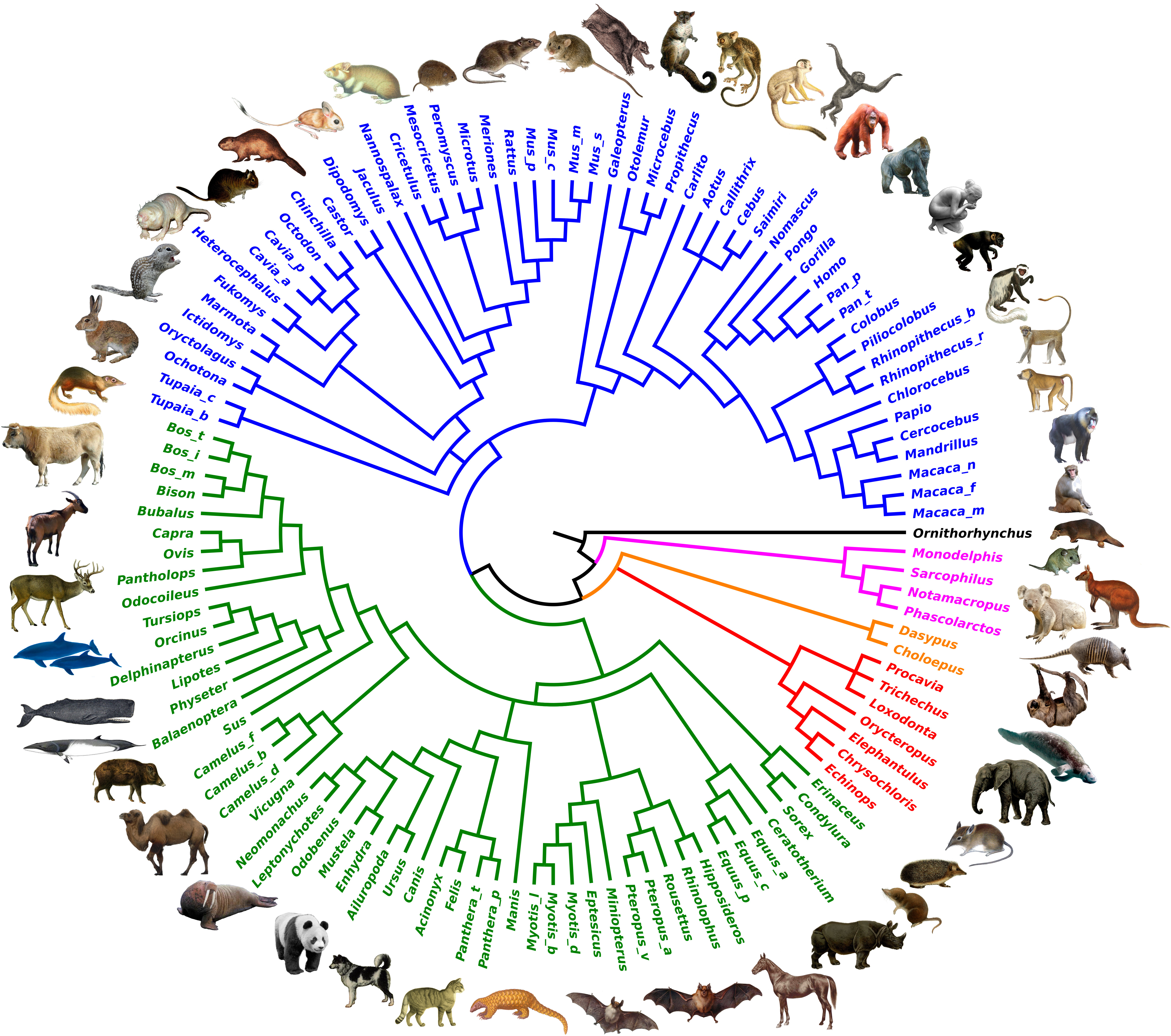
All species are important, often reintroductions have failed because a small unnoticed animal was missed. Over time, we will amass pages for as many species as possible. However, just as important is seeing how species are closely related. As such as well as looking at species from a specific ecosystem or family, we will also include family trees of many of the families on earth. It should be noted, that this is to help you find wildlife you wish to see, so will never link to every species. In either way, these links to these will be placed at the top.
Original paper - OrthoMaM: A database of orthologous genomic markers for placental mammal phylogenetics. Ranwez V., Delsuc F., Ranwez S., Belkhir K., Tilak M. & Douzery E. J. P. BMC Evolutionary Biology, 2007, 7 : 241.
Over the last half a century, the number of deer that live in the UK has climbed pretty much continually.
Red and roe deer numbers are increasing rapidly, as well as the many non-native species that now call the uk their home
In many parts of the country, the number of deer are controlled by regular culls. However, during the pandemic these have not happened, and that now means that 2 culls in a row have been missed.
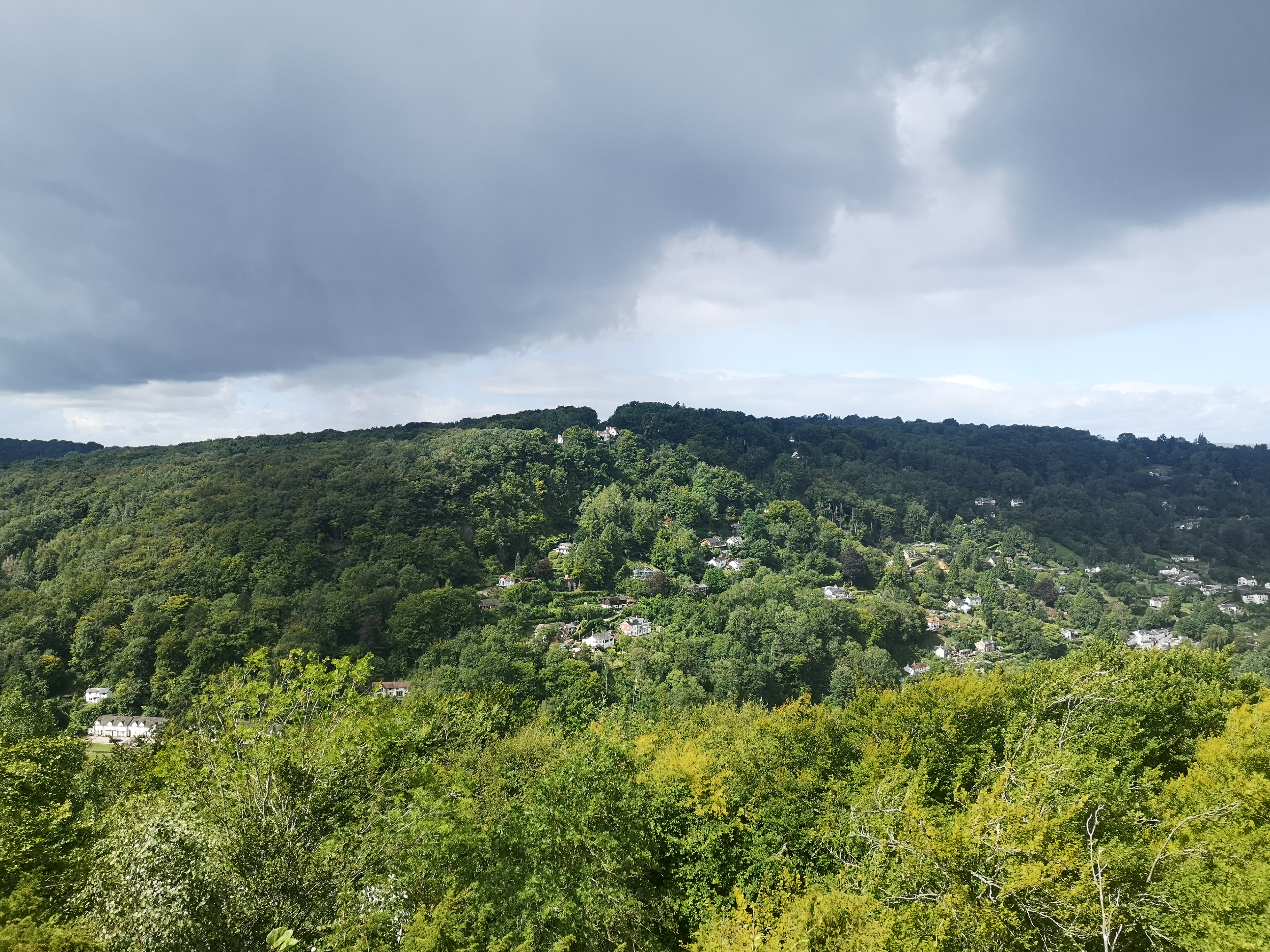
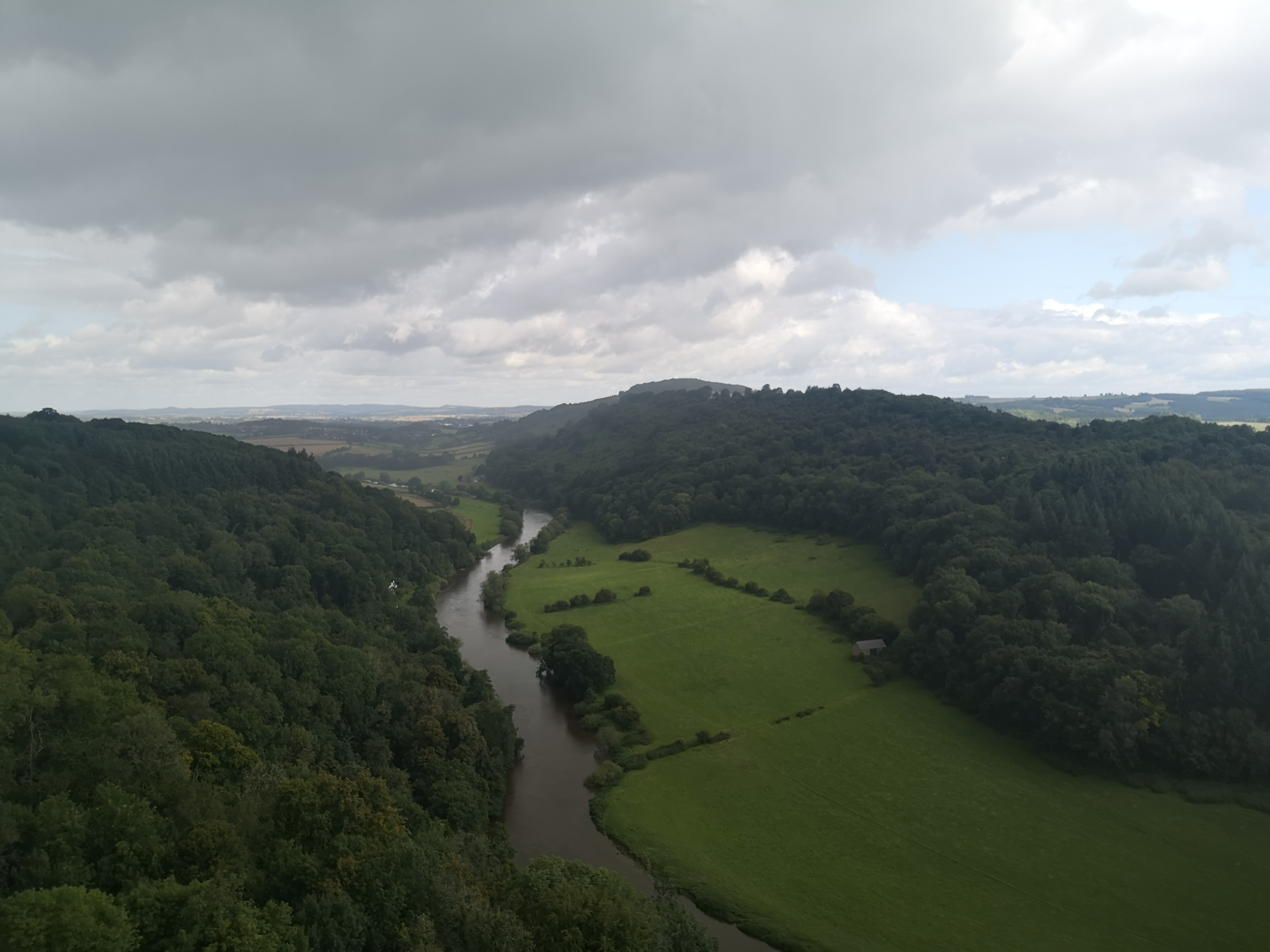
The Forest of Dean is perhaps one of the biggest and healthiest woodlands within the UK.
Part of this is down to its significant population of wild boar.
Before humans hunted wild boar to extinction, they were a highly important part of our ecosystem, and generally woodlands in the UK show their absence.
What do I mean? One of the benefits of wild boar is that their rooting behavior. While humans often do not like this, as this rooting behavior can destroy gardens or picturesque roundabouts, areas that have had this treatment are perfect for trees to germinate and start to grow.
Indeed we were astounded walking around the forest to see so many small copses of new tree nurseries. In this sense wild boar fulfill a similar niche of being ecosystem engineers as beavers in rivers.
Apart from the boar, there is a healthy population of deer. Roe deer exist here naturally. Fallow deer were introduced by the Normans and this is the most common species to see. In recent years Muntjac deer have also recently become established and are fascinating. There are a small number of red deer that still exist though seeing these is a lucky day.
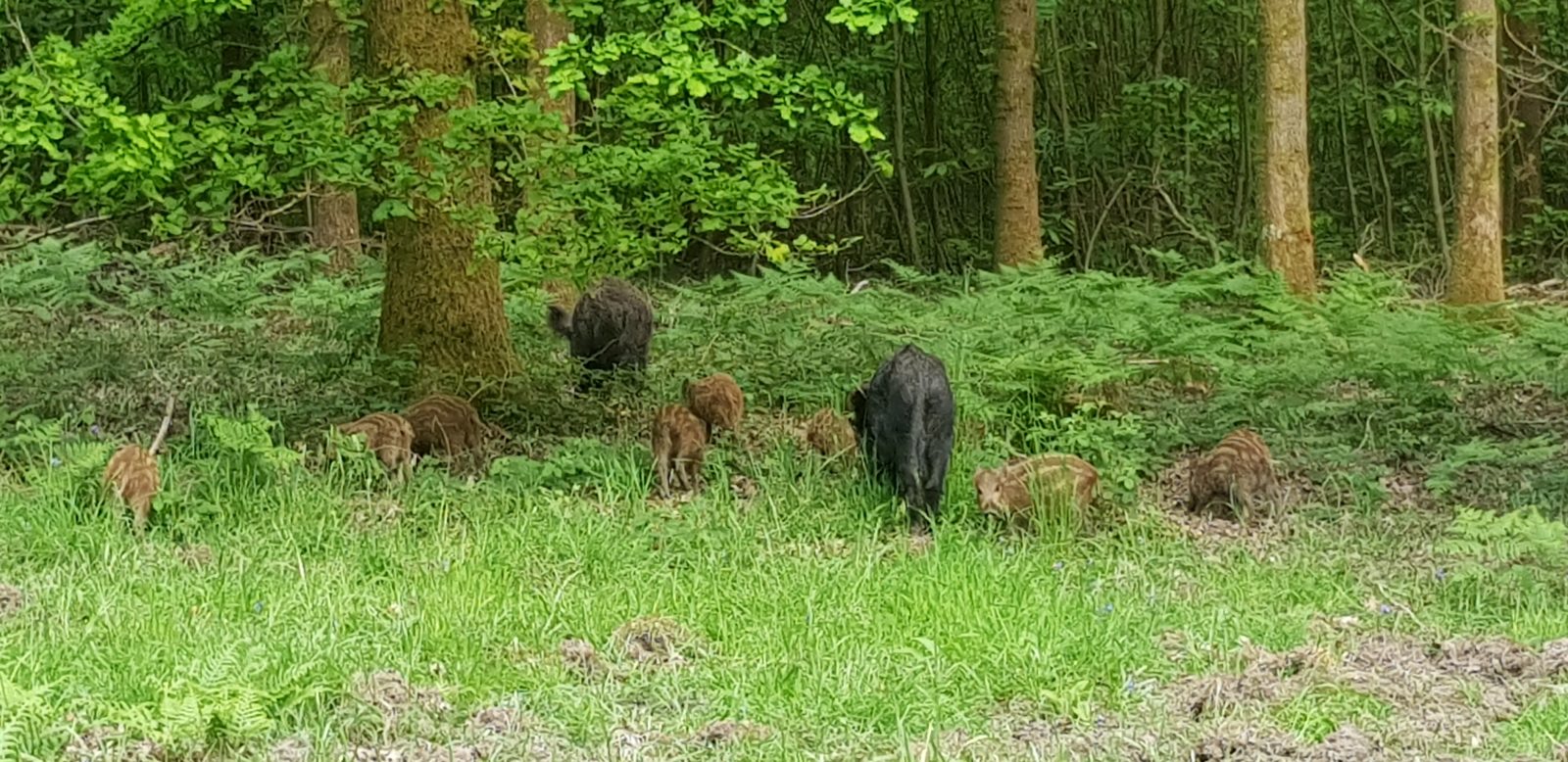
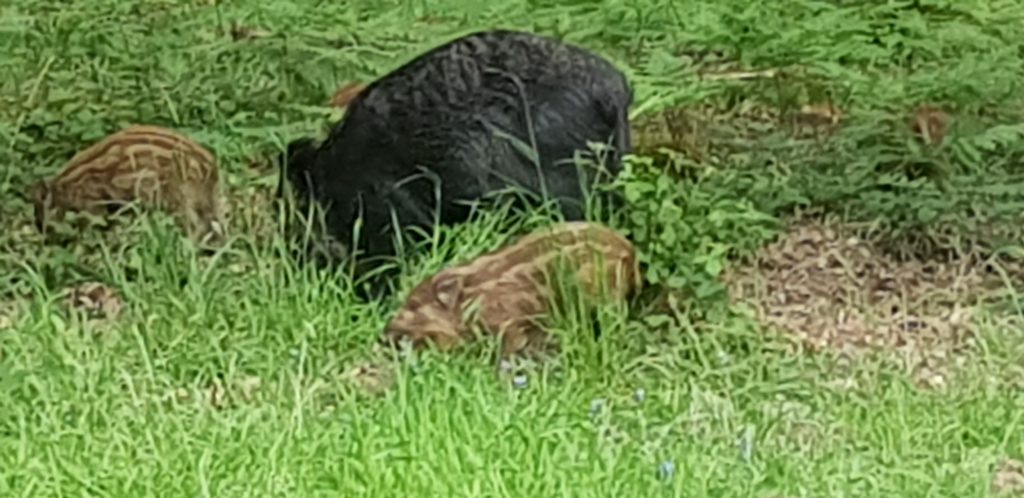
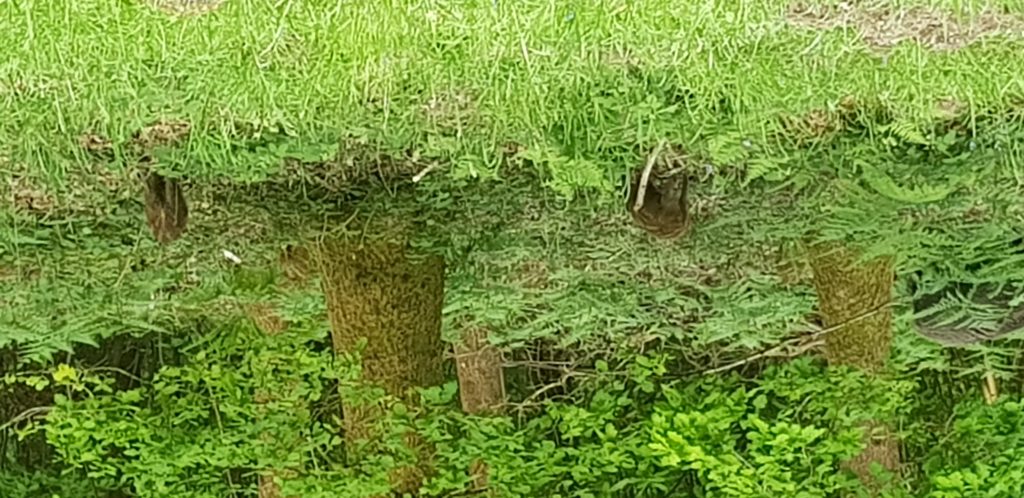
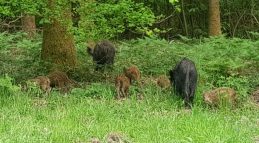
Adult rooting with boarlets (or as some call them Humbugs)
One of the big advantages of boar presence is a reduction of ground cover
Wild boar are surprisingly large animals and we have had a couple of encounters with them on our visits.
The best way to spot them is by driving some of the back roads in the early evening.
I have once spotted a family from the car, and this year two boar ran past while we were walking a forest path.
Both were in a similar location. I will put together a page of information that will be sent with any booking made from the accommodation further down the page, or I can provide just this information for £10 if you have found a place to stay elsewhere.
The Forest of Dean is a truly wild woodland. While it is scattered with villages and towns, this is the only place I have seen beetles actually behaving as dung beetles, in the UK.
The government has also started a process of translocating pine martens to the area, and while the animal is shy, signs of its presence will increase over the next few years. If the translocation is successful, then it will also slowly remove the grey squirrels from this wood, which apart from being good for the health of the trees, will allow red squirrels to recolonize.
Visiting a place like this allows you to hunt for signs of the animals such as tracks, as well as spotting the actual animal itself.
Boar are highly intelligent, and fascinating to see. Care should be taken as they can be dangerous, particularly when they have young.
Places to stay
Below is a variety of lodgings which are close to wild parts of the forest. There is also a link to search all accommodation available within the forest of dean. Any bookings support the work of the site. The places we have listed are close to where we have had our sightings, however boar are found throughout the forest so do not feel restricted to just the places we listed.
Campsites will be listed below the hotels.
Link to search all available lodgings listed on booking.com throughout the Forest of Dean
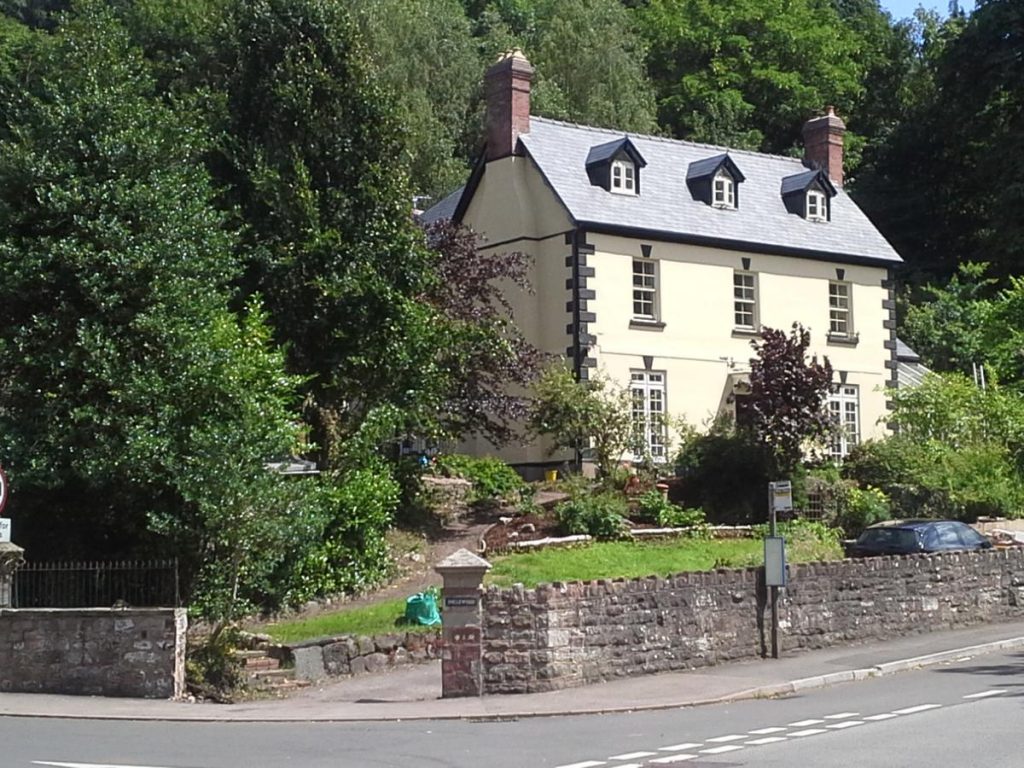
Inglewood House Monmouth, prices from £90
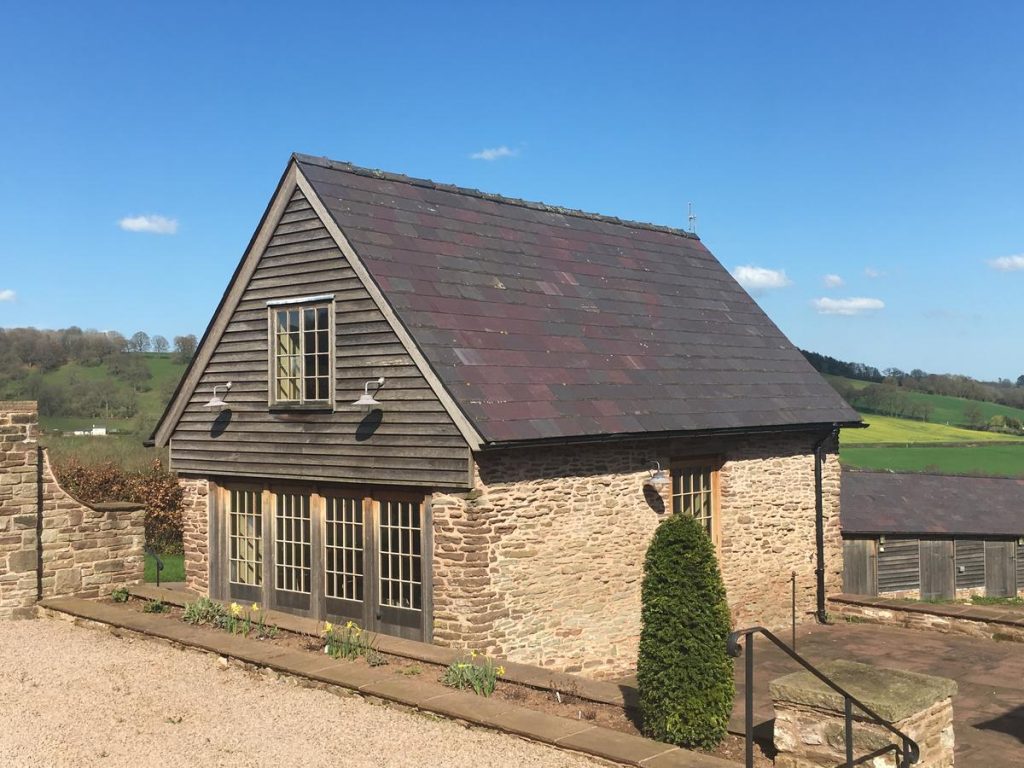
Demense Farm Guesthouse, monmouth, prices from £122
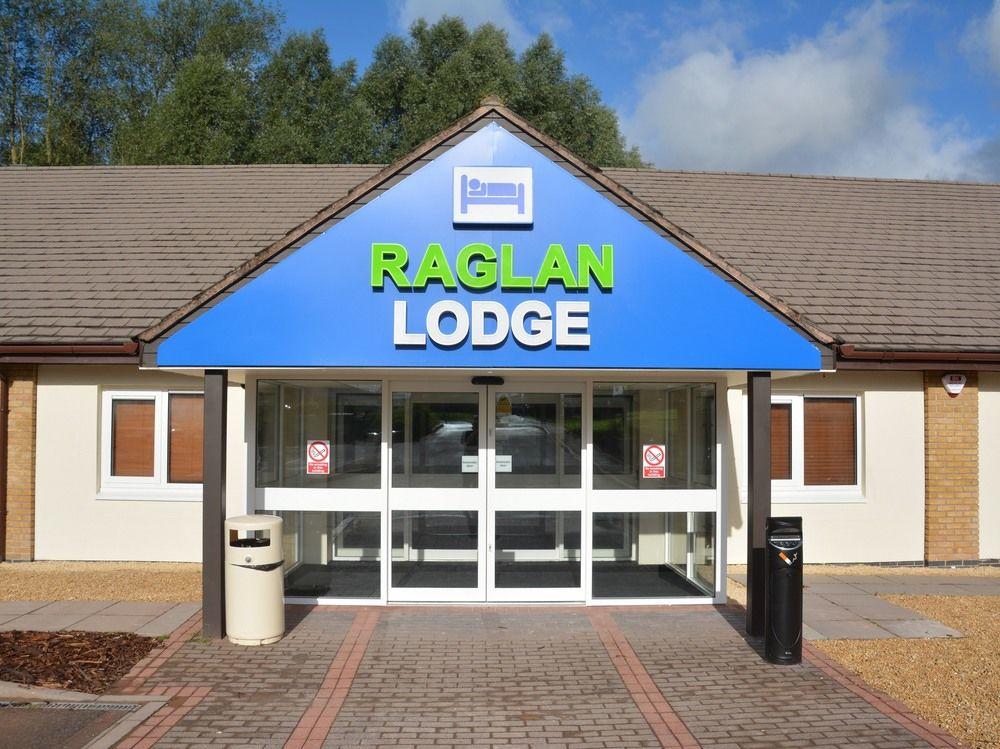
Raglan Lodge, Monmouth, prices from £40
[booking_product_helper shortname=”forest of dean”]
The safari club International a group who lived to support the Hunting of various animals not minding how endangered they are, has recently Auctioned the chance to go hunting with Donald Trump Jr and his son in the Nevada wilderness.
donald trump jr, keen hunter
You will not be hunting big game but will be hunting the local deer.
All the lots in the auction are being sold with the aim to raise 5 million to support the work of the safari Club. While some of this money raised will go to conservation, A significant portion of it will also go to supporting the Hunting of wild animals.
One of the major arguments given for the supporting of hunting is that the money it brings in can be used for conservation. Generally the goods that hunting does is vastly overstated. While the Photographic safari of the same animals may have a bigger impact on the local environment, It has been shown that in all but a very small number of places this impact is positive giving the locals a reason to protect the flora and fauna in the area and an income that allows the standard of living around the wild area to improve. Hunting is rarely run by locals, the tourist and the guides coming from far away shooting animal often without a penny going to the local population and then go away again. The only places where hunting is better, Is in places that for one reason or another few people can enter; one example is the Selous Game Reserve in Tanzania. Because the area has a number of endemic illnesses few people are prepared to run the risk to visit- because of the size of the Game Reserve it is capable of coping with low levels of hunting, and therefore the area can make money even though few people visit.
It should be noted though that poaching undercuts this argument are therefore even in places like the Selous hunting of animals such as elephants should have been stopped due to the horrific poaching that has occurred over the last decade or two.
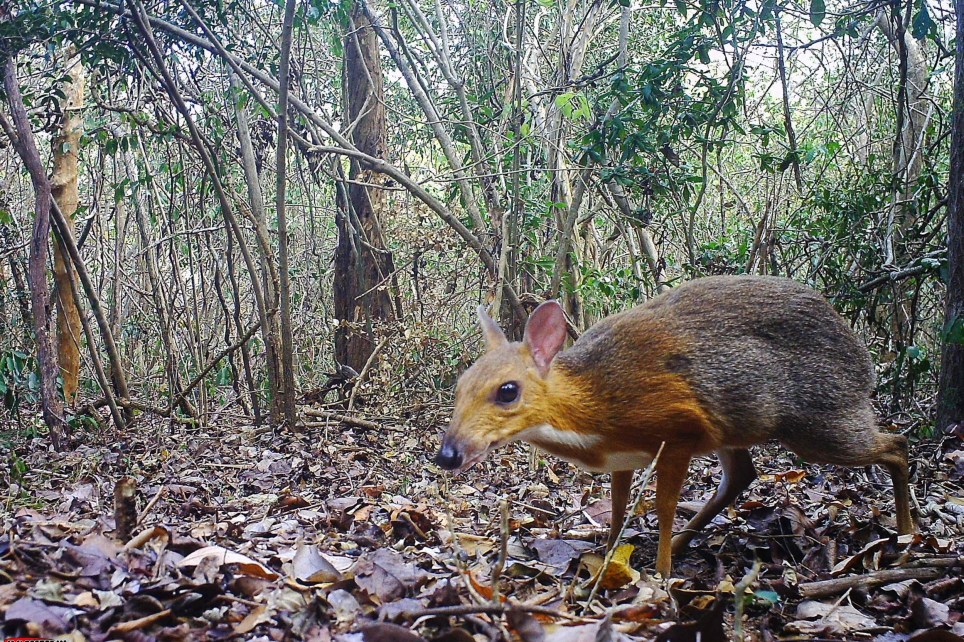
The mouse deer, a small antelope last seen 30 years ago in Vietnam, has been caught on camera trap again. Also known as the Silver-backed Chevrotain, having been seen on the camera trap, more were set up in the same region and they had many separate encounters with the mouse deer.
The local knowledge was used extensively in making this discovery and there is much effort to engage the local Village in the protection of this species. They are also excited to see what other species might have survived in this part of Vietnam, unknown to science.