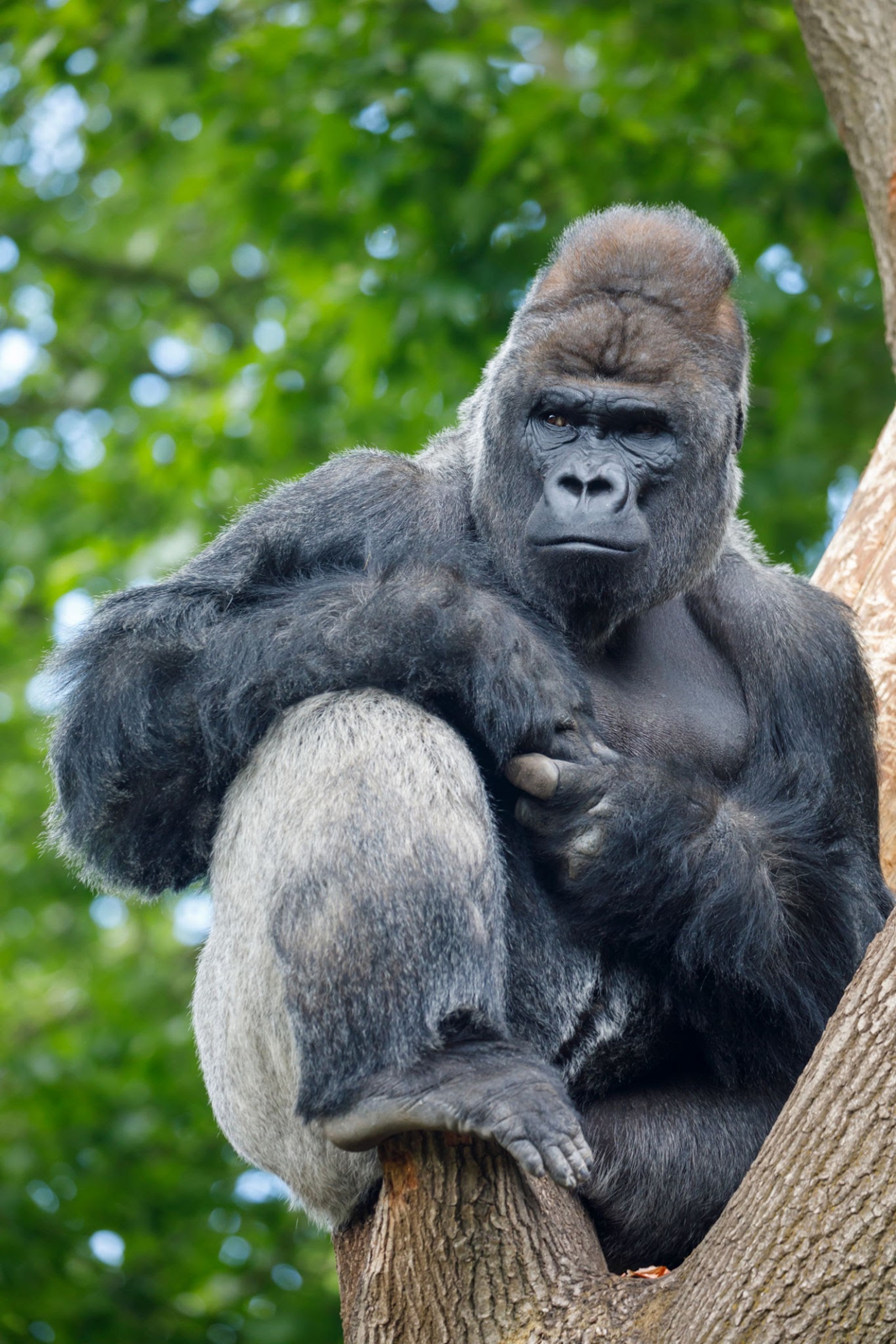
Western Gorillas

Western lowland gorilla

The western gorilla is thought to number around 316,000 in the wild. However, this species is actually made up of two subspecies.

Most are simply known as the western lowland gorilla.
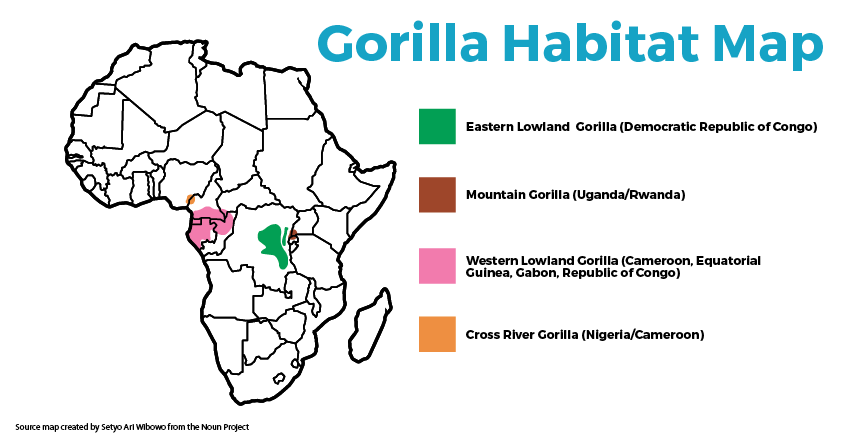
The other subspecies is the cross river gorilla, this only has around 200-300 members remaining in the wild. Click here to view the cross river gorilla page. You can see that their population only inhabits a small area.

Any links we get that will allow you to watch lowland gorillas will appear below the news section.

[smart_post_show id=”12541″]

Human beings

Human beings

Human beings are part of this family tree. Whatever your position on creation/evolution it is undeniable that our genetics are closely related to the great apes. I am a Christina, however the genetics are clear – This should not cause a problem with a belief in creationism, but it is a fact, either way.

We are a fascinating species, but it is beyond the scope of this website.

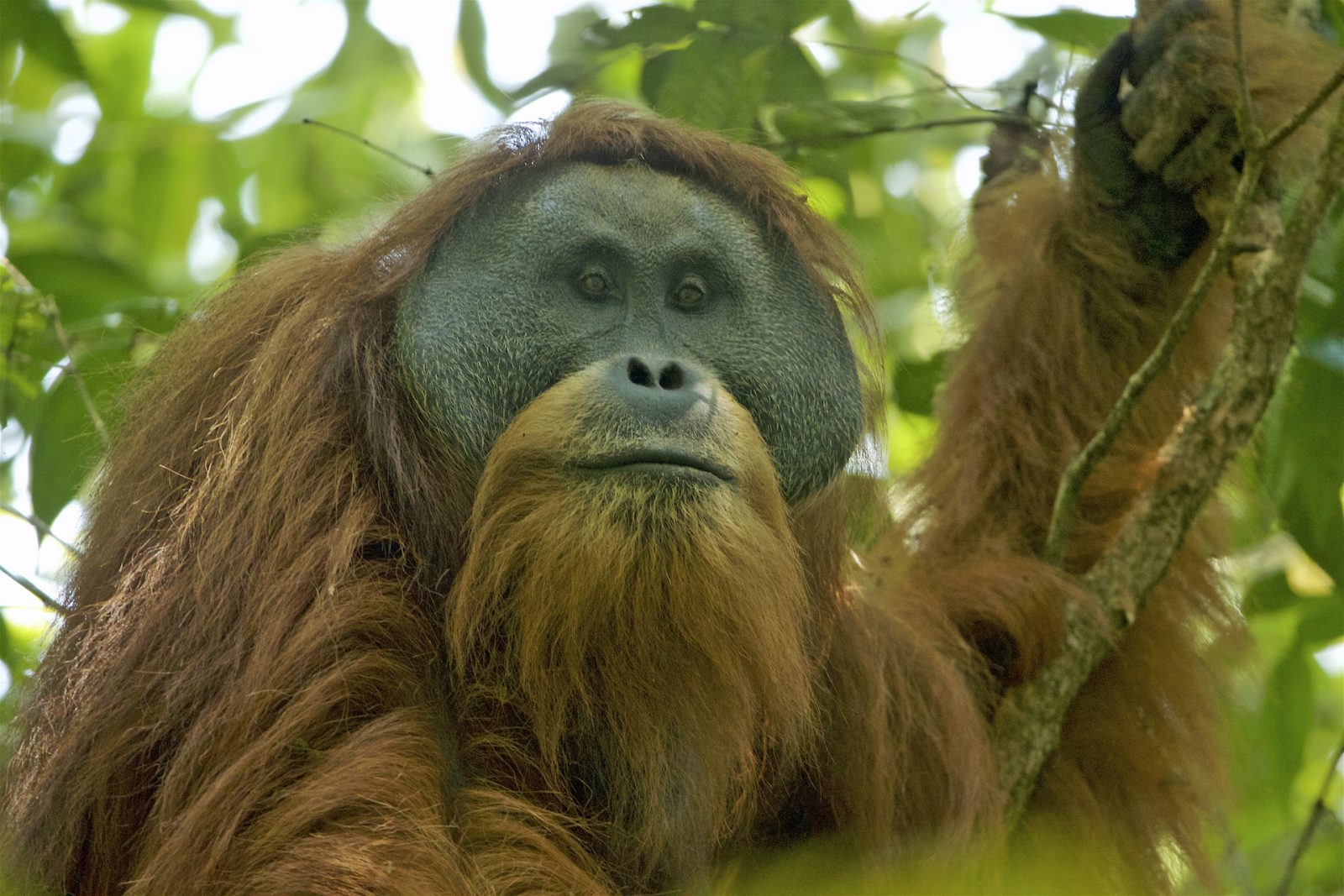
Tapunali Orangutan

Tapanuli Orangutan

Tapanuli orangutan

Orangutans are often animals high on the list that people wish to see one day. Orangutans are the only great ape that lives outside Africa. While fossils show that at one time, it was found on the mainland of Asia, the Orangutan is now restricted to the islands of Borneo and Sumatra. There are 3 species of Orangutan and their conservation status varies dramatically. The Orangutan was first scientifically described in 1779 by Dutch anatomist Petrus Camper. 

The Tapanuli orangutan, was discovered in 2017, It lives in the Tapanuli forest in Sumatra, but is thought to be more closely related to the Borneo Orangutan. It is thought that just 800 remain, in an area covering around 1000 square miles. This is around 9.75% less than the area they would have historically roamed. It is scary when we are only discovering species of this importance when they are this close to extinction. One would think that they Indonesian government would be working as hard as possible to save what habitat remains, but there is a dam being built, which will split this population into 3, and it is quite plausible that they will not survive.

You will find all the articles we have written on the Tapanuli Orangutans below (there will be a video between)

As always, we hope to add many destinations for Orangutans in the near future, do get in touch if you wish to list somewhere in their range. These links will be added below the news sections as we make links.

[smart_post_show id="12478"]

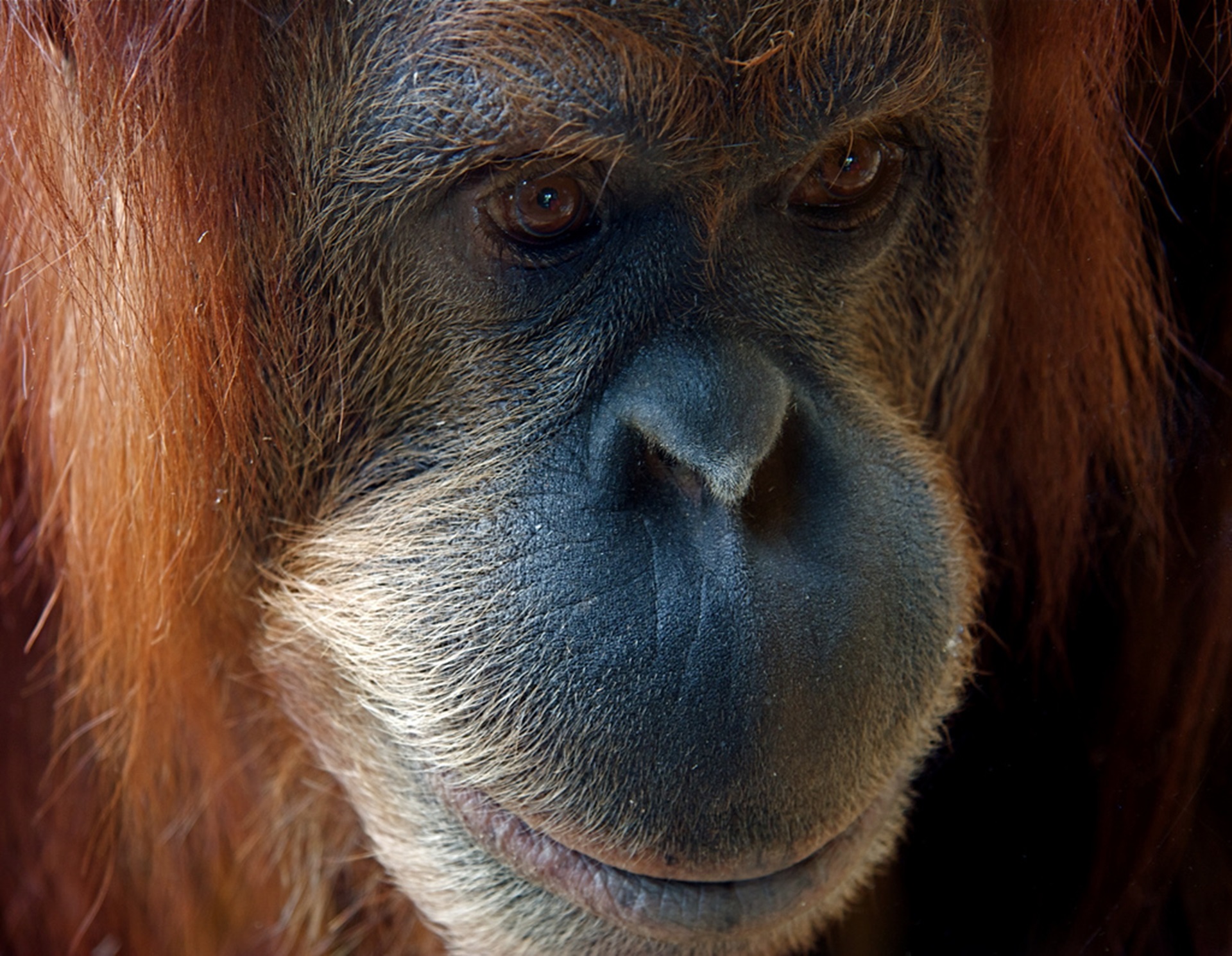
Sumatran Orangutan

Sumatran Orangutan

Sumatran Orangutan

 Orangutans are often animals high on the list that people wish to see one day. Orangutans are the only great ape that lives outside Africa.


While fossils show that at one time, it was found on the mainland of Asia, the Orangutan is now restricted to the islands of Borneo and Sumatra. The Orangutan was first scientifically described in 1779 by Dutch anatomist Petrus Camper. This page is devoted to the Orangutans of Sumatra.

As with all great apes, the Orangutan is a keystone species and by saving its habitat, we save many thousands more as a by-product. The greatest threat has been palm oil plantations – while in theory these are created to reduce carbon emissions, it is questionable as to whether these plantations could ever be carbon negative. Building it on land that has to be cleared of rainforest, means that these palm oil plantations will have huge carbon footprints, which are likely to take over a century to pay off. As such it is not useful for climate change mitigation.
The orangutans of Sumatra are classed as critically endangered. 

They are currently thought to number around 14,000. As always, we hope to add many destinations for Orangutans in the near future, do get in touch if you wish to list somewhere in their range. Below, any listings that might get added in the future, you will find all the articles we have written on Orangutans. 

The Borneo and Sumatran Orangutans were only recognized as separate species in 1996


[smart_post_show id="12470"]

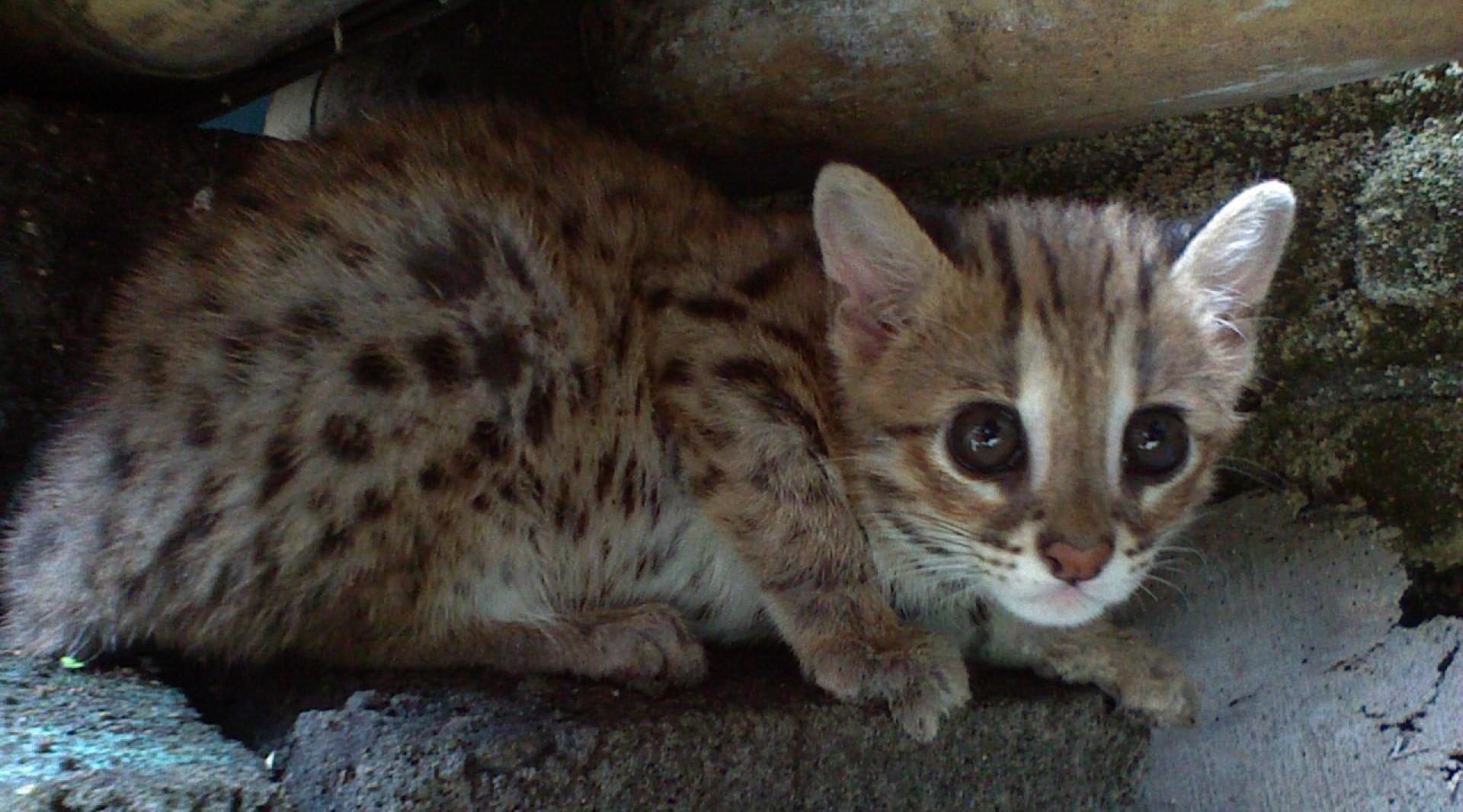
Asian Leopard cat and Sunda leapard cat

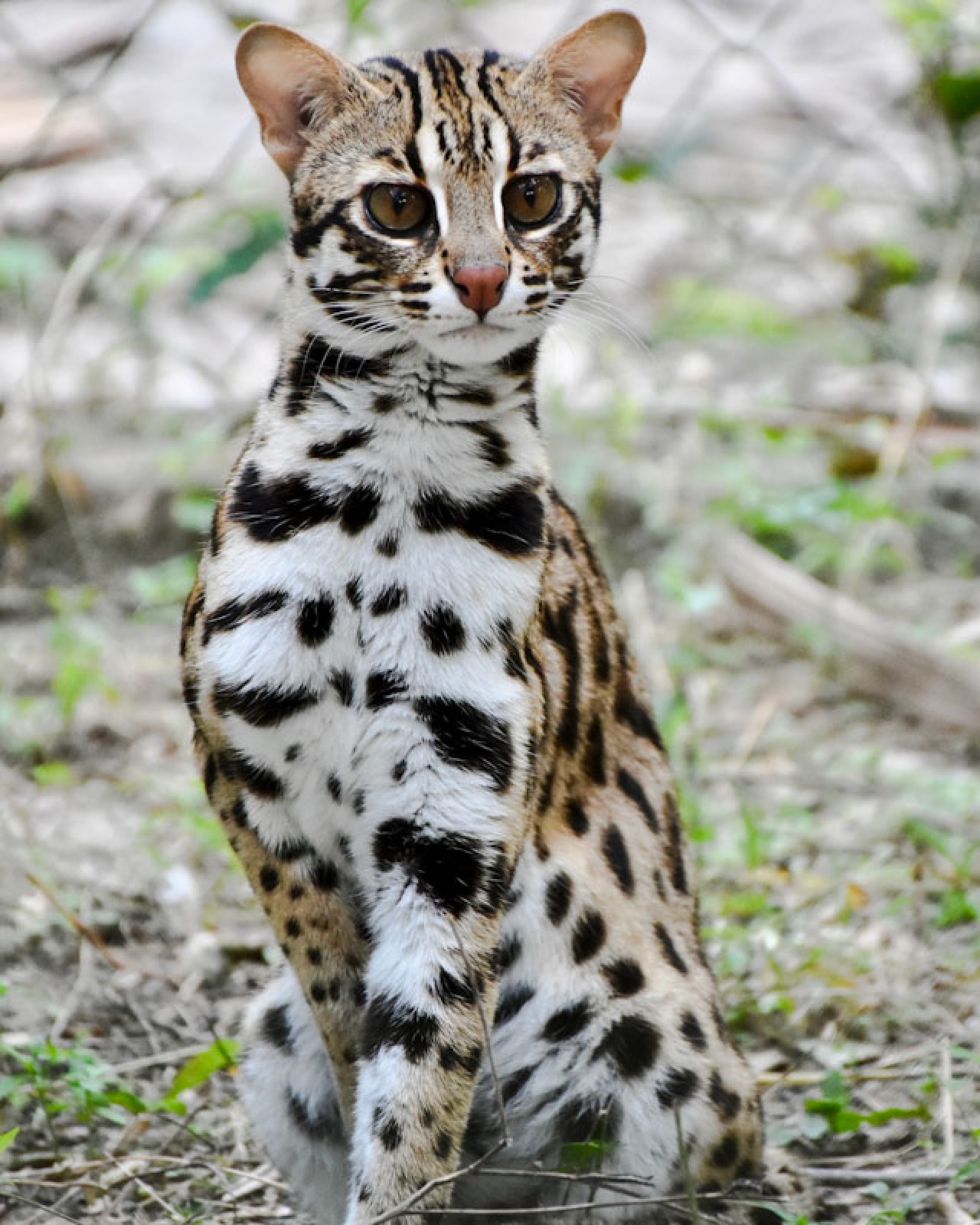
An Asian Leopard cat

Asian Leopard cat


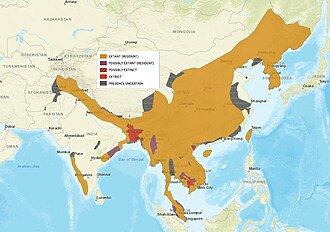
As you can see quite an impressive range. They Asian leopard cat, was once thought to be the same species as the Sunda leopard cat, with the difference only recognized in 2017. It is roughly twice the size of a domestic cat.

There are 2 subspecies currently agreed, one being the  mainland and the other being the Island Sunda leopard cat (I have included an image of the Sunda Leopard cat below).

Below that is a list of any article which mentions the leopard cat, as well as a video of this species. Beneath all of this, we will also add any links that we can to help you see this species in the wild. Do get in touch if you work in ecotourism and ever see this species. We would love to help people find you.

The majority of videos are of this species in captivity, as they are hard to see in the wild. Having said this, we are eager to list any people who work in ecotourism in the this animals range and occasionally see it in the course of their work (we are also keen to list people working in this field who see other species, but they will not appear on this species page but others).

[smart_post_show id="24962"]

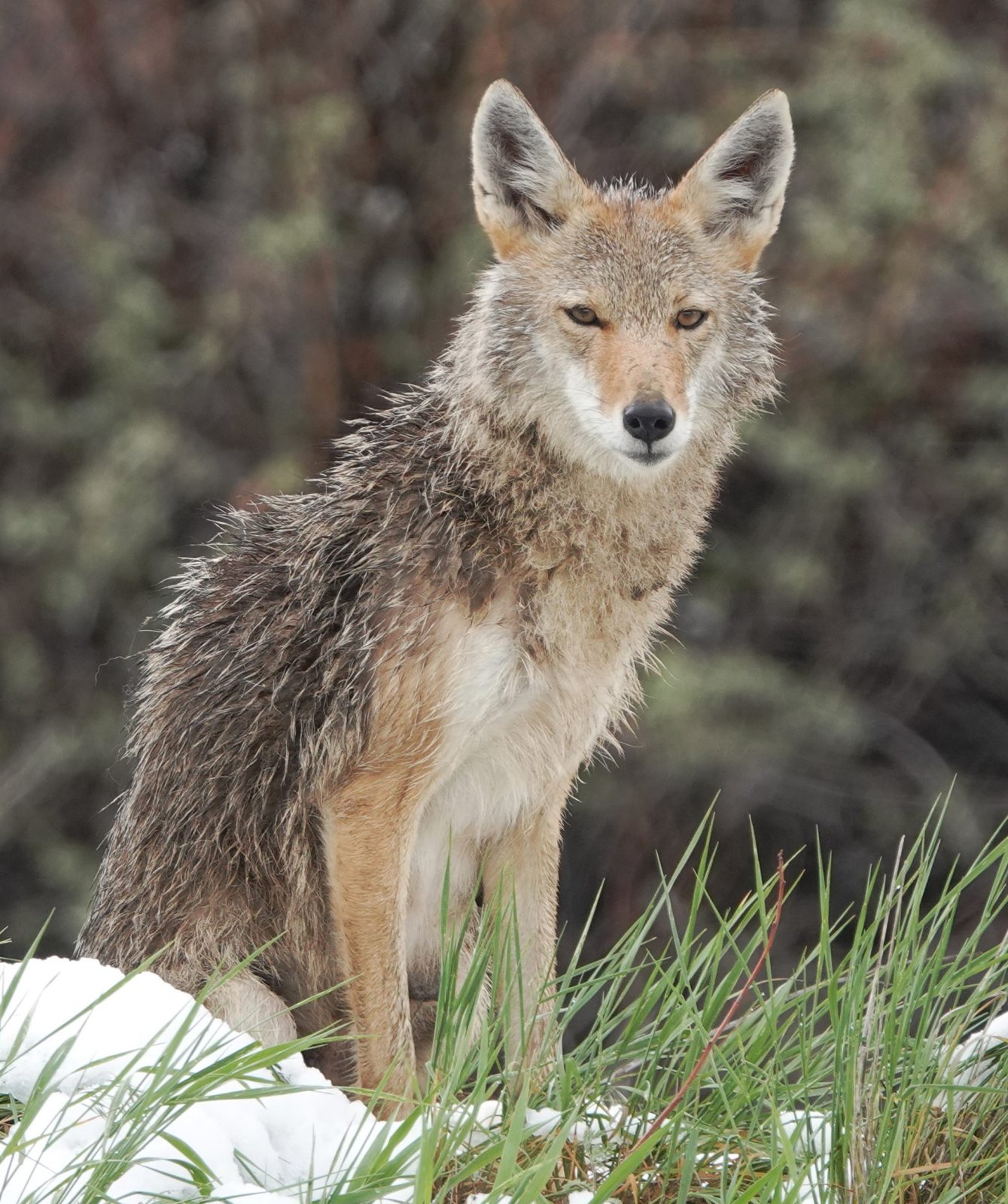
Coyote

Coyote

Coyotes are mid sized canids, and lie between the wolf and the fox in size. It is also smaller than red wolves or Algonquin wolf. It is closely related to the wolf.

It is a species which is listed as least concern, with a wide distribution across North America.

It is odd to think that this species is a closer relation of the wolf than any other dog (except the domestic dog, which is genetically essentially a wild wolf)

[smart_post_show id="12232"]

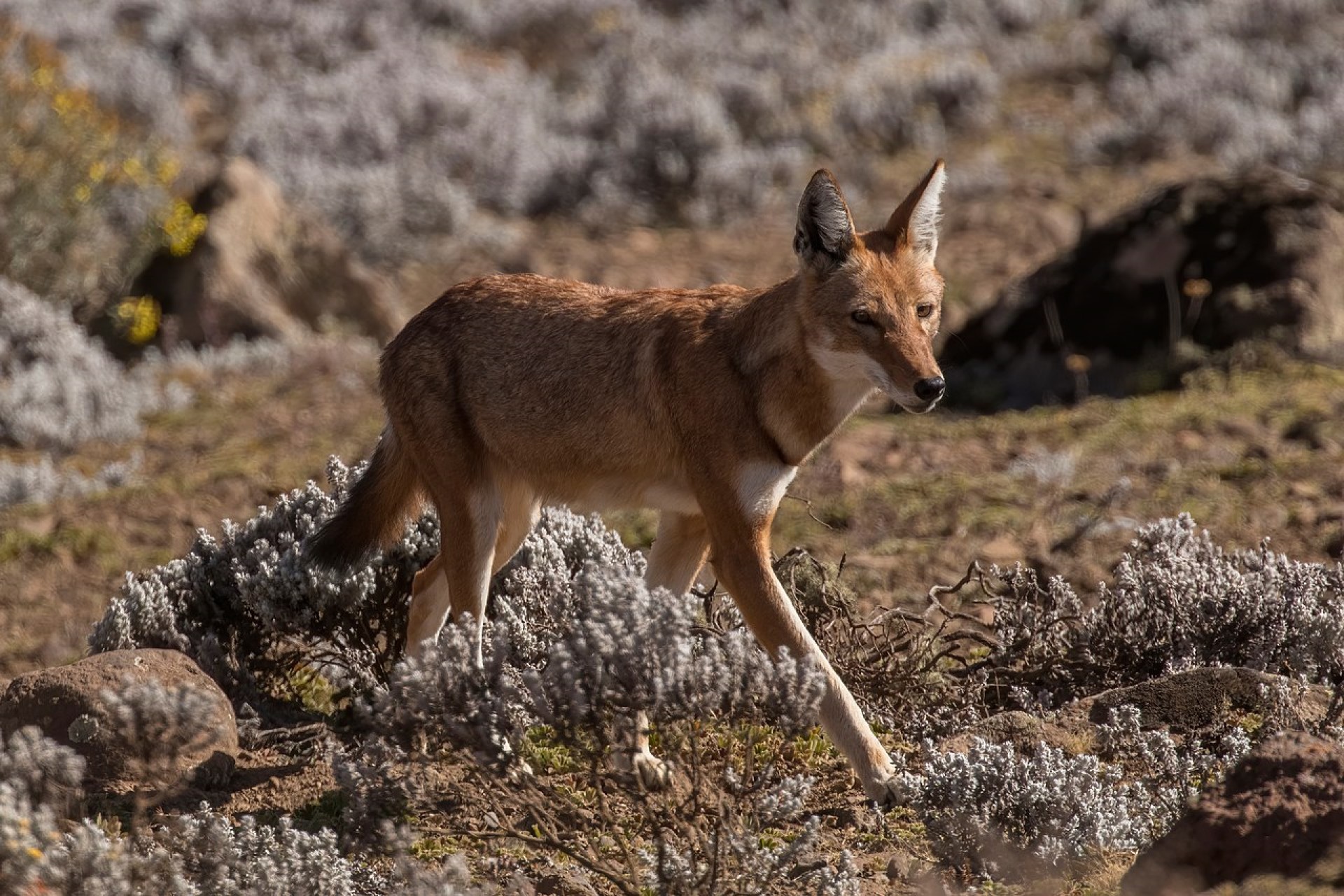
Ethiopian wolf

The Ethiopian wolf is restricted to the highlands of Ethiopia, and the current count is only 366 ,

Ethiopian wolf

The Ethiopian wolf is a highly endangered canid that is restricted to the highlands of Ethiopia. Other names include the Ethiopian fox, or the Simien wolf.

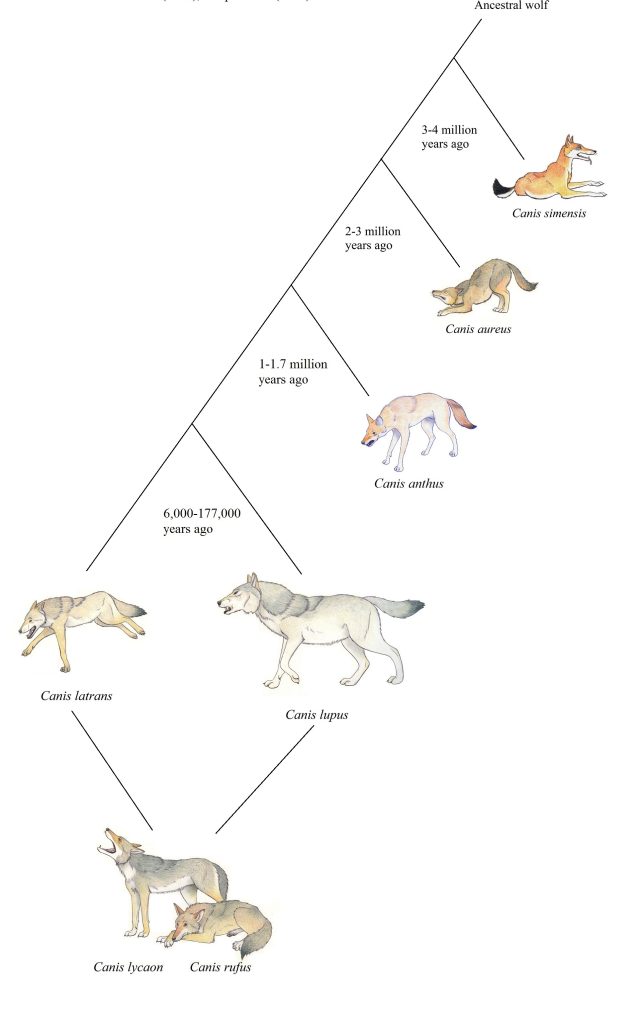
In terms of size, it is about the same size as the Coyote, Genetically, they are more similar to wolves than all jackals (except the Golden jackal). Here, below you can see how closely related each of the wolves are. While they look rather like jackals, their behaviour is far more like wolves – though due to the prey in the area, they do not hunt in packs (though there are regions of earth where grey wolves do not hunt as a pack either.

[smart_post_show id="12227"]

Golden Jackal

Golden Jackal

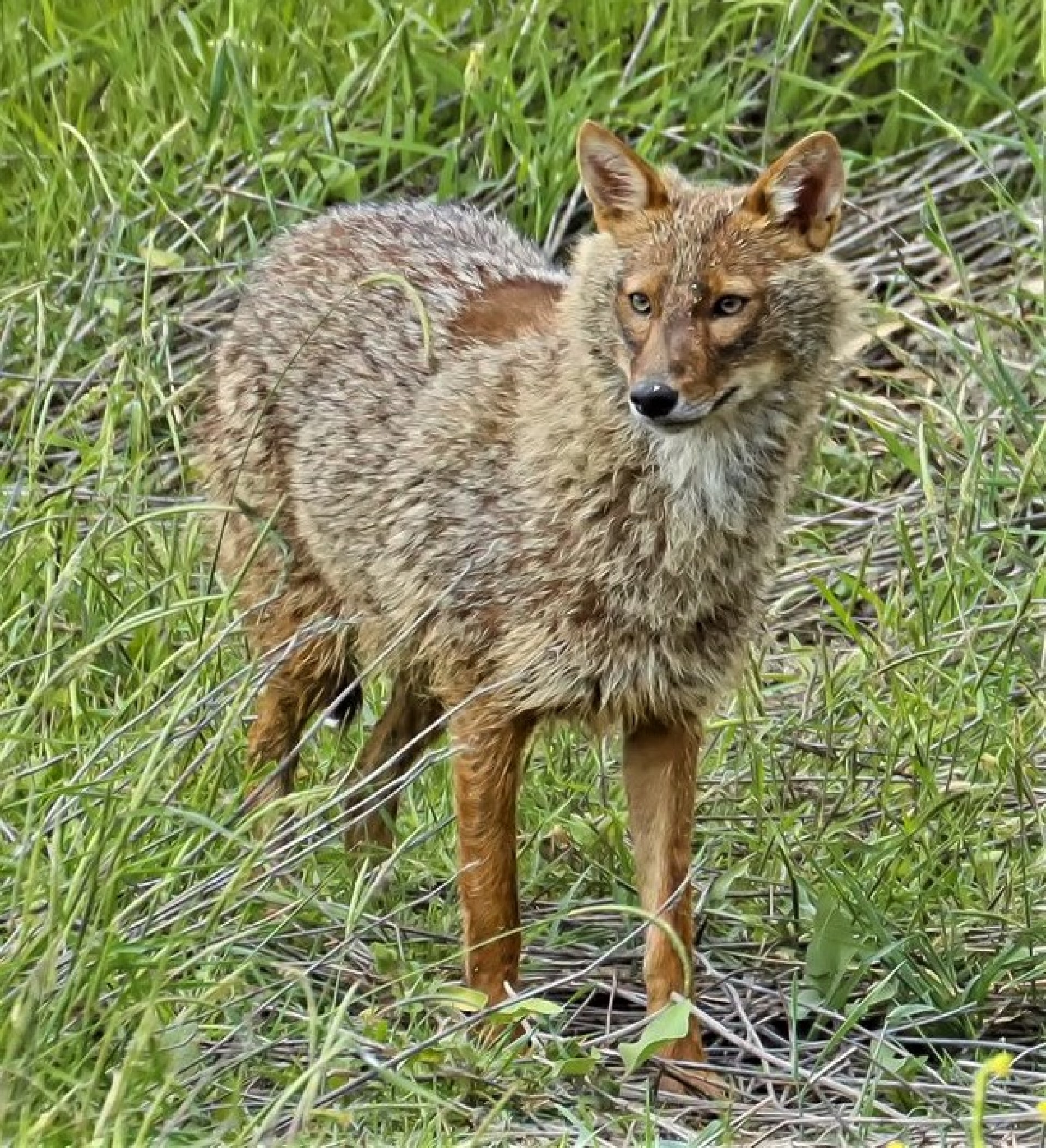
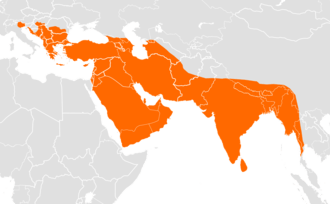
The Golden jackal is a species found across the south eastern part of Europe as well as throughout much of southern Asia. It is the animal which the African wolf was confused with, and the reason that it was described as a species so recently.


Despite its name, the Golden jackal is not closely related to the African Black-backed jackal or Side-striped jackal, which are part of the genus Lupulella, being instead closer to wolves and coyotes. The ancestor of the Golden jackal is believed to be the extinct Arno river dog that lived in southern Europe 1.9 million years ago. It is described as having been a small, jackal-like canine. Genetic studies indicate that the Golden jackal expanded from India around 20,000 years ago, towards the end of the last Last Glacial Maximum. The oldest Golden jackal fossil, found at the Ksar Akil rock shelter near Beirut, Lebanon, is 7,600 years old. The oldest golden jackal fossils in Europe were found in Greece and are 7,000 years old.

Golden jackals live eight to nine years in the wild and up to 16 in captivity.

Living nearby human settlements, Golden jackals are strictly nocturnal. However, those living in other areas can be partly diurnal. They generally live in pairs or as a family unit. Living in pairs, the jackals share most of their activity with their partners. By hunting together they are three times more successful, than hunting alone. Jackal families hunt on a territory of about 2-3 sq. km. all year round. Looking for shelter, they frequently use caverns, dug by other animals. Golden jackals can also dig caverns themselves as well as use crevices in rocks. They are very friendly to their partners. Scratching one another all over their bodies is a common activity between mates. Nevertheless, once strange jackals encounter each other, their behaviour shows subordination, domination, and even readiness to attack.

[smart_post_show id="12214"]

African wolf

African Wolf

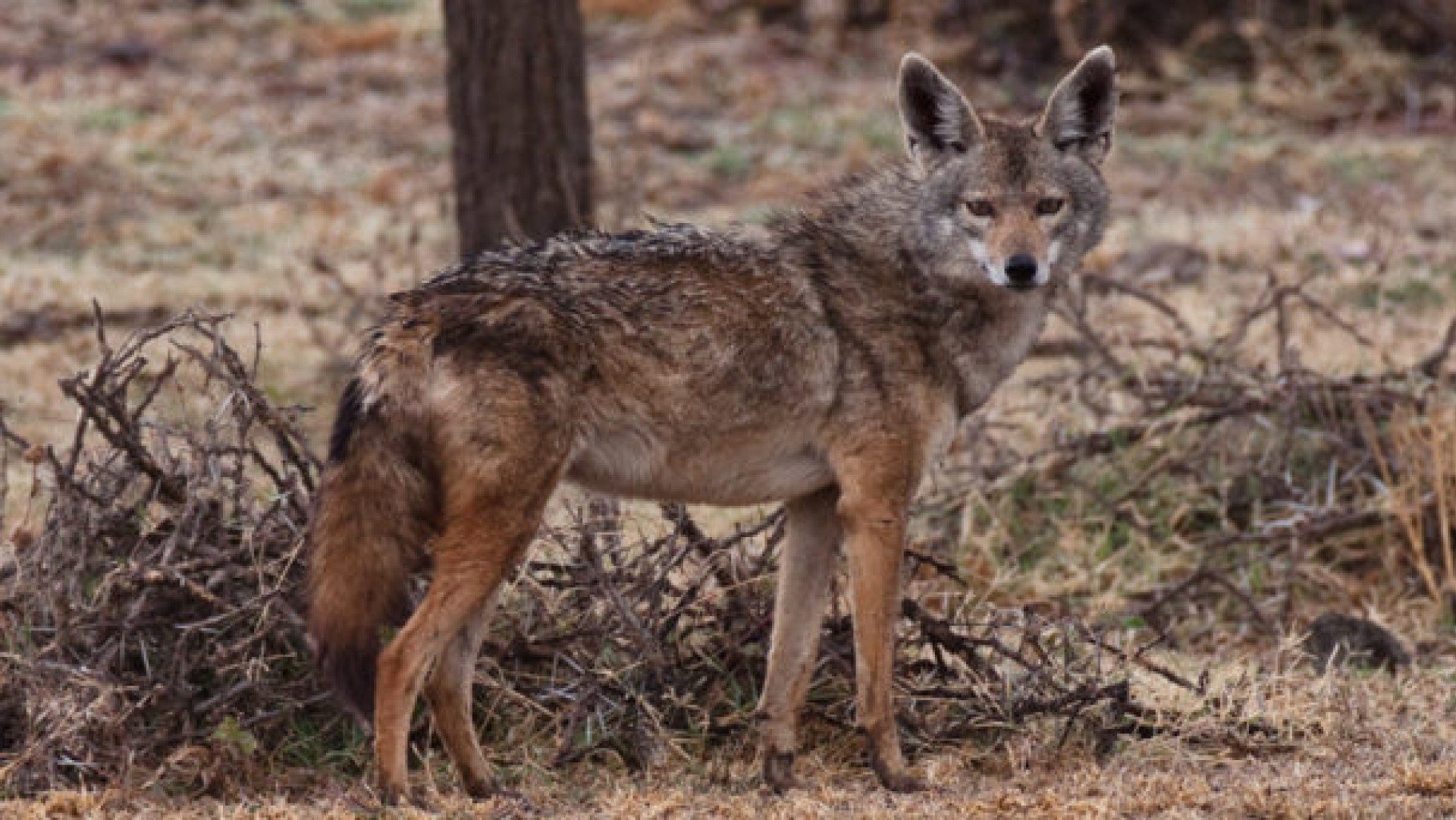
Perhaps one of the more interesting announcements from wildlife study in the last decade was the discovery of a wolf living under everyones nose in Africa. It is a little understandable, as it does look quite like a jackal, and certainly different to a European wolf. Having said this, it is still a significant oversight

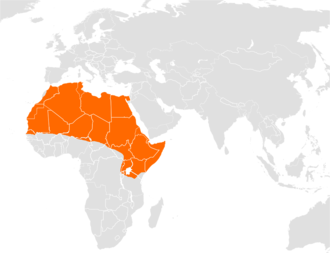
It was initially described as the African Wolf back in 1832. Indeed, Aristotle talked of wolves living in Egypt in his time, however, it was not until 2017 when a second modern study was done on it, and it was definitively recognized as a species. The problem is that, despite this huge range there is no idea how many African wolves there are in the wild. Obviously with this huge range, it is not unreasonable to suggest that they are locally extinct in areas – there are a number of subspecies that have been tentatively suggested, however until true assessments are made, this seems more than we need.

It should be noted, that it is not surprising that the African wolf was overlooked for so long, as it has got smaller over its time in Africa, to the extent that it is very hard to tell the difference between tha African golden wolf, and the golden jackal.

There has been little study of this species, and it is unclear exactly how much range that it has. Hopefully, this will happen in time, but it is clear that the big problem is telling the difference between golden jackals and golden wolves. 

African wolf range

There are a number of subspecies of the African wolf (quite quick, given it was not redeclared as a species 6 years ago. They are classed as a least concern. While not all sub-species have a clear estimate of the current population, genetic analysis suggests that the historic population was not smaller than 80,000 females.

  • Algerian wolf – range Algeria, Morocco and Tunisia -A dark-coloured subspecies, with a tail marked with three dusky rings. It is similar in size to the red fox
  • Senegalese wolf – Senegal – Similar to the Egyptian wolf, but smaller and more lightly built, with paler fur and a sharper muzzle.
  • Serengeti wolf – Kenya, northern Tanzania – Smaller and lighter-coloured than the northern forms. The wild population is 1500-2000
  • Egyptian wolf – Egypt, Algeria, Mali, Ethiopian Highlands, and Senegal – A large, stoutly built subspecies with proportionately short ears and presenting a very gray wolf-like phenotype, standing 40.6 cm in shoulder height and 127 cm in body length. The upper parts are yellowish-gray tinged with black, while the muzzle, the ears and the outer surfaces of the limbs are reddish-yellow. The fur around the mouth is white.
  • Somali wolf – Somalia and the coast of Ethiopia and Eritrea – A dwarf subspecies measuring only 12 inches in shoulder height, it is generally of a grayish-yellow color, mingled with only a small proportion of black. The muzzle and legs are more decidedly yellow, and the underparts are white.
  • Variegated wolf – Sudan and Somalia – A small subspecies standing 38 cm (15 in) at the shoulder, and measuring 102 cm (40 in) in length. The fur is generally pale stone-buff, with blotches of black.
[smart_post_show id="12198"]

We are incredibly eager to work with any guides who encounter the African wolf in their work, and list your services here. Please get in touch through the list your wild place option at the top of the page.

Red wolf

Red wolves

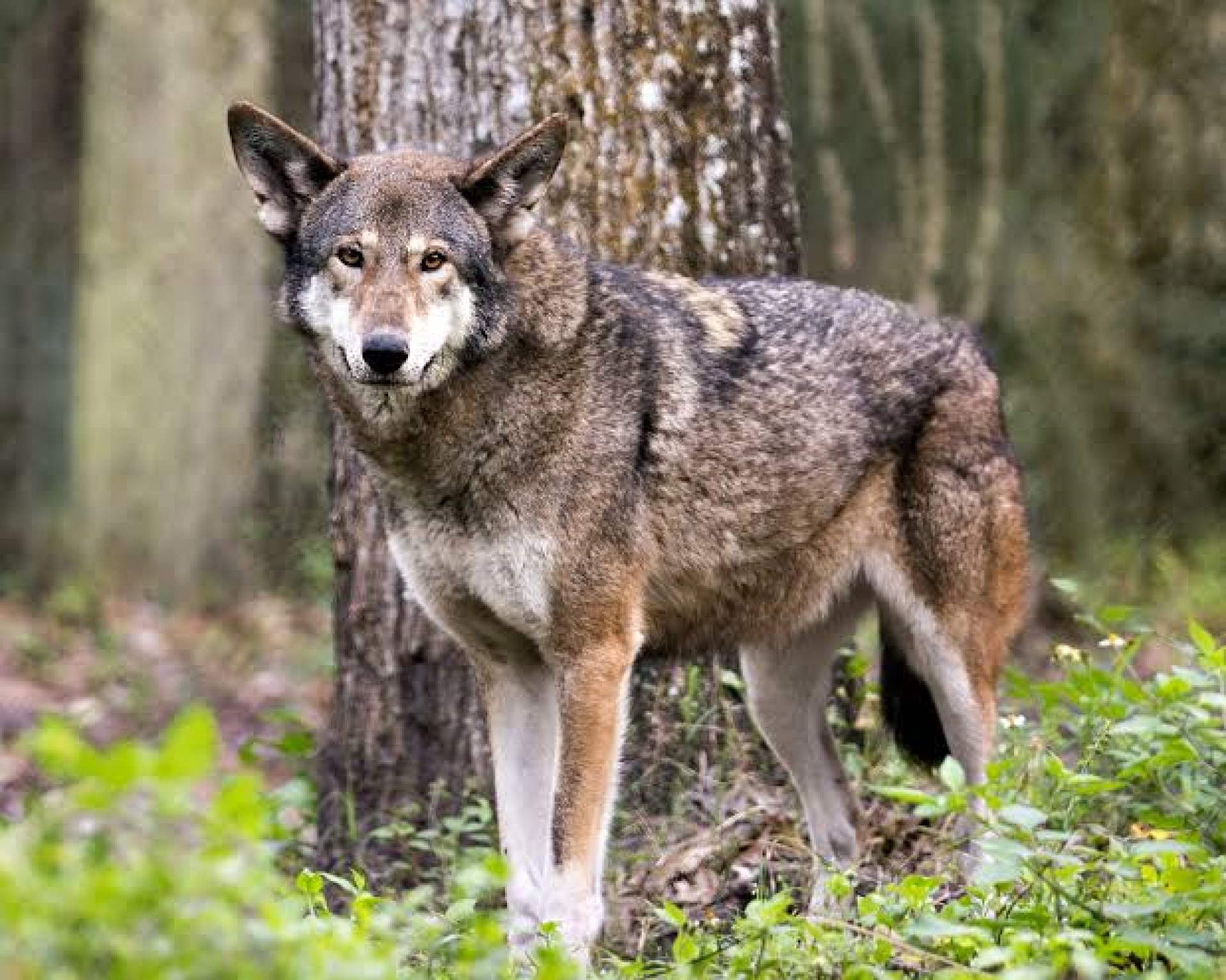
Red wolves have varied a bit about whether they should be classed as their own species or a subspecies of the grey wolf, however it has now been settled that they are separate for quite some time.

Size-wise it lies midway between a grey wolf and a coyote. Indeed, despite its serious danger of extinction, it is often missing from the endangered list. It has at various times been suggested to be a cross between the wolf and the coyote, or been a subspecies of the wolf.

It has been listed as critically endangered since 1996 by the IUCN, yet the same species is not listed in the CITES appendices of endangered species.

If or when we write any articles on this subject, they will appear below

To return to the canine family, click here

[smart_post_show id="12175"]
See Animals Wild

Read more news

Join as a wild member
to list your wild place & log in

Join as an ambassador supporter to
support this site, help save wildlife
and make friends & log in

Join as an Associate member
to assist as a writer, creator, lister etc & to log in

List a wild destination

List a destination in
the shadow of man

List a hide for animals more easily seen this way

Highlight some news
missed, or submit a
one-off article

Browse destinations for fun or future travel

Temporary membership
start here if in a hurry

Casual readers and watchers