After a great deal of negotiating, back in 2015 more than 200 countries signed up to targets that aim to restrict world warming to an average of 1.5°. Despite the decades between scientists positing that humans are warming the planet and this point, this is the easy part.
“Get the countries of the world to agree what is happening, and agree that we do not want to allow it to continue, so we had better do something about it”.
After this, we need the countries of the world to not only meet the targets that they set, but to exceed them and be willing to rachet up these targets until the reductions will be enough to keep warming to 1.5°.
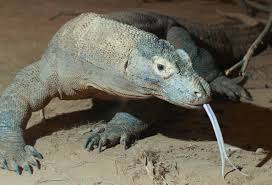
As the largest lizard in the world the Komodo dragons hold a fascination for humans, as it is the only place where lizards still rule
The concern by those who work in tourism with the Komodo dragons seems quite justified. They fear that this enormous increase in price will put off people from visiting, and therefore completely destroy the tourism industry.
It should be noted that this is merely the fee to visit the islands, anything the guides charge is on top of that.
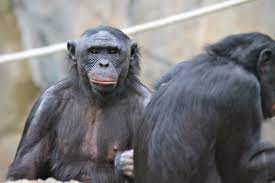
I have written about Bonobos in the past, I hope that readers are aware of this species. In brief, Bonobos (often known as Pygmy chimpanzees) are a separate great ape species. These two species split about 1 million years ago as the Congo river formed and became an impenetrable boundary between them intermixing again.
Looking very like Chimpanzees, these animals behave in a very different way
Found only in the DRC and the last of the great ape species to be discovered, Bonobos should be of great interest to humans.
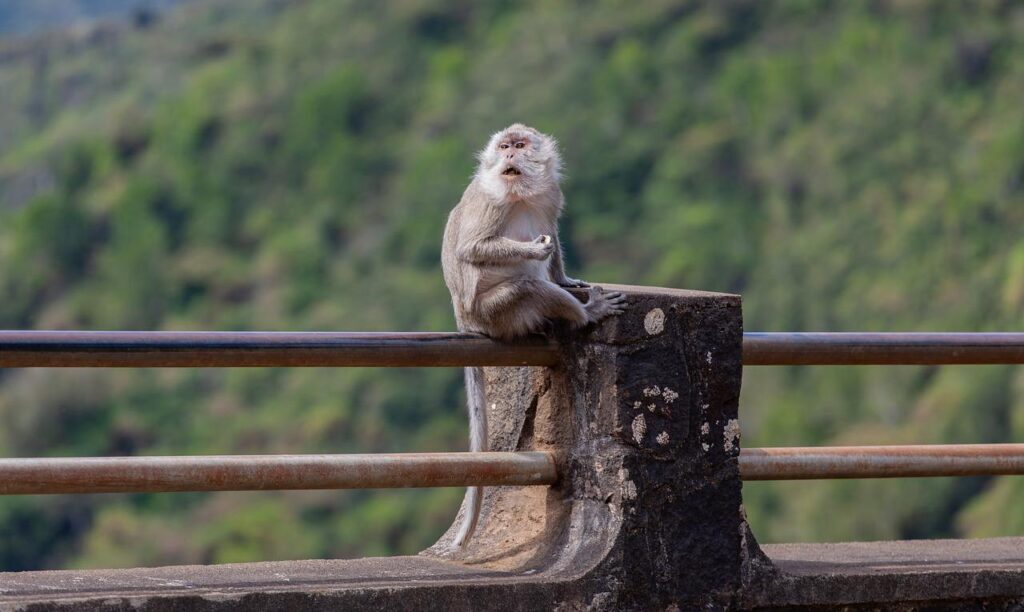
The long-tailed macaque is naturally found throughout southeast Asia. Often seen as pests, these generalists are highly intelligent and can survive on almost any food. As a result they have been considered commodities and therefore have been slaughtered for the bushmeat trade and captured as pets throughout many of the places where they are found.
While still seemingly numerous where they are found, the long-tailed macaque is now an endangered species. Is anything safe?
Even rapidly breeding primates are not going to be able to cope with this sort of pressure for long.
It is perhaps the pet trade that is the greatest danger. As with many other complicated pets long-tailed macaques are hard to look after in captivity and often develop behaviours that are difficult to handle. As a result the demand for their capture continues.
Perhaps of greater concern (for humanity, at least) is the fact that illnesses leak between macaques and humans surprisingly easily. Therefore having large numbers of these animals in captivity, in bad conditions, may well be breeding the next epidemic.
It is clear that the place for long-tailed macaques is in the wild in remaining rainforests, not as pets in wealthy people’s homes.
Can this species be saved? If it can’t there seems little chance for us to save many others, nevertheless as with many other species we must rapidly stop over exploiting this animal before it is gone forever.
Most of the historical oil and gas has been used by North America and Europe.
As a result, Europe and America have to take a large amount of blame for the current carbon dioxide crisis that is pushing global warming. While it is true that the majority of the world’s pollution will increasingly moved towards Asia, almost all of the historical emissions come from just these two continents. Having depleted many of the largest Isle and gas reserves around Europe, many European countries are not pushing into Africa. Africa is incredibly rich in oil and gas, and quite reasonably politicians in these countries argue ‘why shouldn’t we extract them and help our country grow’.
Around the globe,first world countries have been accused of demanding that emerging economies put aside large areas of land. This is in order (it is thought) to look after wildlife – for the benefit of wealthy tourists, with no regard to the population that lives nearby.
Yet, not only is this not true, it is often the basis that destructive industries use to fight against reserves of any kind.
“How dare you try to protect the lion, Tiger, chimpanzee, orangutan over the local people” is a idea regularly thrown about by vested interests. Yet, in actual fact these same businesses often totally destroy the locals way of life.
Consider the many thousands of villages in Sumatra which 50 years ago would have been deep in the rainforest – surrounded by thousands of miles of rainforest full of everything they could ever need. There are now many villages hemmed in my palm oil plantation – not only usually on stolen land, but often with owners who prosecute villagers for trespass even though it is in their own land.
This is similar in the Congo basin and the Amazon basin, as well as habitats as diverse as mountainous, forested, oceans and deserts to name just a few.
This is the purpose of our “in the shadow of mankind” listings. Our aim is to allow people the world over to profit in a way that doesn’t destroy wilderness that is left, but beings in a bit of money for the local population.
This websites existence came about after a frustrating experience trying to book wild travel.
Like it or hate it, the human race have not yet found a more effective way of funding conservation, than through tourism. Now this does have a black mark against it, as it usually requires flying, and the huge carbon cost of this activity.
There is much being done in this area, and in a few decades it is likely to be greatly reduced. Perhaps the most exciting, is the EasyJet electric plane is aimed to enter use in 2030. Anyway, it is important to continue to go to these places – we are likely to loose them far quicker if locals have no reason to protect them (or indeed need the space to grow food that they no longer have the money to buy).
This year my family visited the Kruger national park in South Africa. This is one of the largest well protected Savannah ecosystems that remain in the world. We had a wonderful time, seeing a variety of animals (some of which we did not see in 3 months while training as wildlife guides).
I am likely to talk about some of these encounters over the next few years, however suffice to say we saw the big 5 and the ecotourism big 7.
This site aims to be a quick and simple way for places who wish to sell wilderness experiences to list them. Whether you work in a wilderness (Wild Places), near one or merely share your vicinity with wildlife (in the shadow of mankind) or nocturnal animals use your land (hide) we want to help you benefit financially from the presence of wildlife.
We have page builders for these areas, so you can start building your page whenever you want.
We are also hoping to create our community- this will allow users to communicate and join our mission, as well as financially helping us secure the longterm viability of this project.
Around much of the world, as the various European countries expanded their empires, one of the first things that Europeans did, was to create reserves to protect the wildlife, and required the local people to move out.
Many tribes have incredibly small footprints on the ground, ad look after their environment far better than many conservationists would succeed
In many of these places, the local tribes were forcefully thrown of their land, and begrudgingly given small areas often with little value compared to where they lived before.
Now there is a difficult issue: those people who are living their lives in the same way that they have lived for thousands of years, are often fantastic for the reserve. However, in many places these people will turn to harvesting the wildlife in a totally different way, leading to many local extinctions.
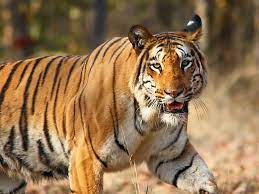
The Caspian tiger once lived in 12 countries, from the west in Turkey, to the east in central Asia. Seemingly, across this range, they did not have consistent populations but the tigers lived on the shores of lakes in the region, with 15-20 valleys being their strongholds.
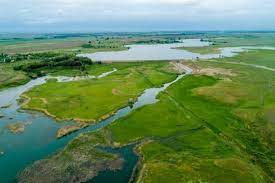
The Kazakhstan delta is mostly ready for a return of the Tiger, with just the missing prey base needing addressing, this is well in hand
On the whole, the Caspian tiger lived in relative harmony with humans up until the Russian invasion. The Russians brought with them, the custom of keeping livestock, which brought the humans into direct competition with the tigers. As a result, Russia started paying a bounty for every tiger killed. This was incredibly successful, such that by the 1940 they were exterminated. The hunting was banned in the 1940s but too late to save these tigers.
After this, the tigers former home was taken over and converted into farmland, so the few that survived the hunting, soon lost what home was left.
In the 1990s as Russia fell, WWF started working to help the ecosystem recover. As a result in the late 2000s a satellite analysis was carried out on the area, and one area stood out – a delta of the Lli river in Kazakhstan. It was found that if the prey base was first helped to recover (animals such as boar and deer) then this area could easily support tigers.
Now, it is true that the Caspian tiger went extinct 70 years ago. However, recent genetic analysis has shown that the Caspian and Amur tigers are not distinct enough to be classed separately – they are essentially one subspecies, with a large range. It is true that Caspian tigers tend to have had shorter fur, but tigers are able to adjust in this way, so tigers that are moved to warmer climates will grow less fur and be able to thrive.
Given Kazakhstan being the most advanced of the countries in the area, with relatively high living standards, they should be able to carry out the plan. The delay until 2026 is to allow time for the prey base to build up to sensible levels.