Species watch

I am intending to make this into a new set of articles that will appear on this website. Obviously, these species will not be the only ones that are covered – for those who read this website regularly, you will know that I talk about a wide range of species.

The species that I am going to look at are those which often attract visitors to see just them. With the majority of the species we will follow they are found across a surprisingly large number of countries – some however are as interesting but are found in only one country. In each instance we will look at an entire group of species that look similar. However, due to the differences in these many different countries, these species can be thriving in one country and threatened with local extinction in another. As a result it is important to give this more focus.

These articles will be marked by SW

Those species that I will initially focus on include:

Continue reading “Species watch”

Visit to local zoo, one that I know very well – Marwell zoo

If you live in the UK, there is relatively little wildlife to watch (when compared to somewhere like South Africa), which is why zoos are often such popular places.


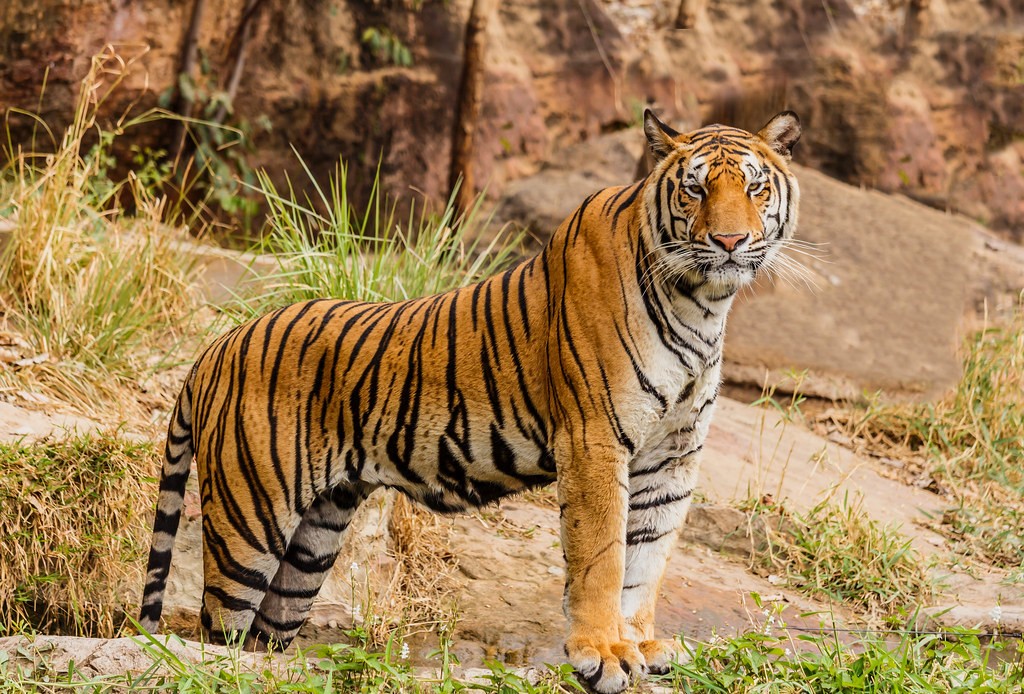
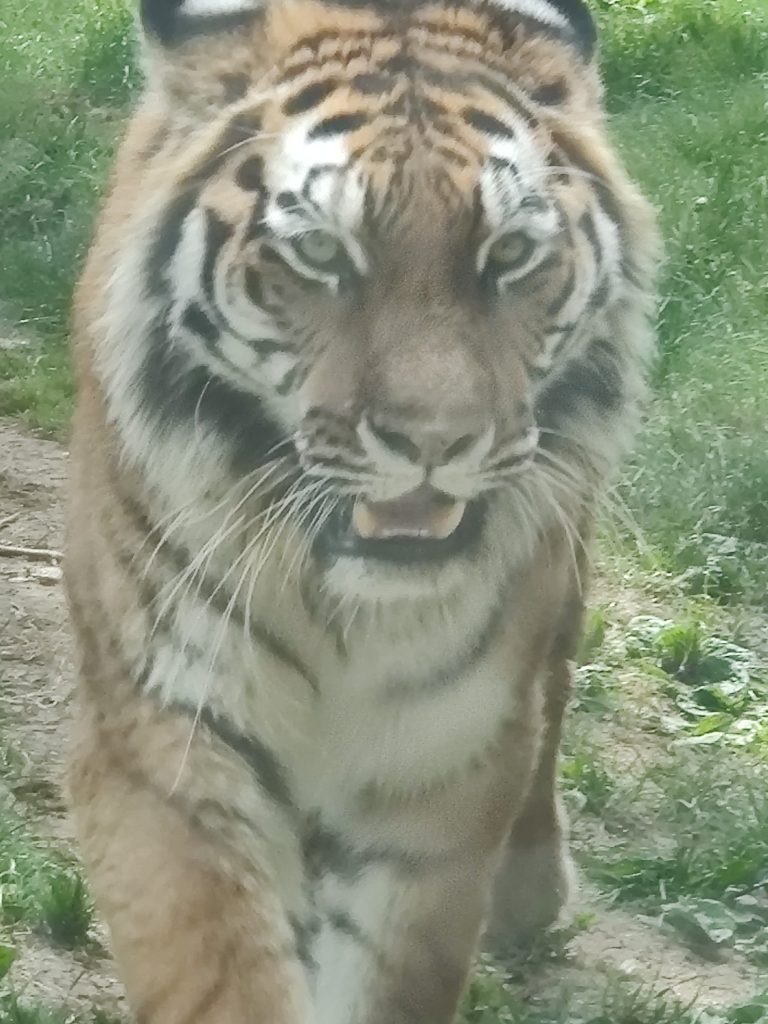
An Amur tiger on the prowl

As people have come to have better thoughts about keeping animals in zoos, these places have greatly improved. Long gone is enclosures such as “bear pits”. Now zoos give the animal relatively large enclosures with (as much as possible) plants and other items that make the area similar to the animals wild habitat. Also a great deal of progress has been made in understanding the various conditions that are required in order to make the animals happy enough to breed.

I have, in the past, been a wildlife educator at the zoo. This has consisted of me visiting the zoo a few times each month, and spending a few hours beside specific animals. I am there to engage visitors – in some cases help them see the animal, as well as talking about its wild habitat and the threats that the animal faces to its ongoing survival. Due to covid, this has been impossible in the last few years.


Marwell zoo has been particularly good on its big cats. Unfortunately since our last visit, they have lost their Amur leopards and their cheetah – however, as with both of these, the animals were old, and the zoo is perfectly set up for breeding of these species, therefore if new cheetah or Amur leopards arrive this can continue. One of the main ways that these zoos can work in this way, is to have two enclosures next to each other, this allows the connecting gate to be opened or closed depending on circumstances, allowing male and female to spend times apart and together – as close to mirroring how they would behave in the wild as possible.


The Amur leopard is a stunning animal and with its wild population being so threatened (a superb decade has allowed the population to grow back above 100 (WWF estimates that there are now about 100 wild adult Amur leopards) from a population of as few as 20 adults at the turn of the century. As such breeding is essential, and I hope that in the long run, the zoo can have similar success with another pair. Cheetah, while less endangered overall (though the Saharan cheetah and the Iranian cheetah are both this endangered) is famously hard to breed, so we can only hope that in the future cheetah will once again live in this place.


When visiting a zoo, I like to go on a very quiet day, as the animals tend to behave more naturally so I like to go outside weekends. However with children that is not currently possible due to school. Nevertheless we had a lovely day, and despite the missing wildlife saw many lovely things.


Whether you believe that animals should ever be caged or not, it should be clear to everyone that at the current time, without zoos many species might well be lost from the world. It is also true that many zoos do essential work in the wild to conserve remaining wilderness.

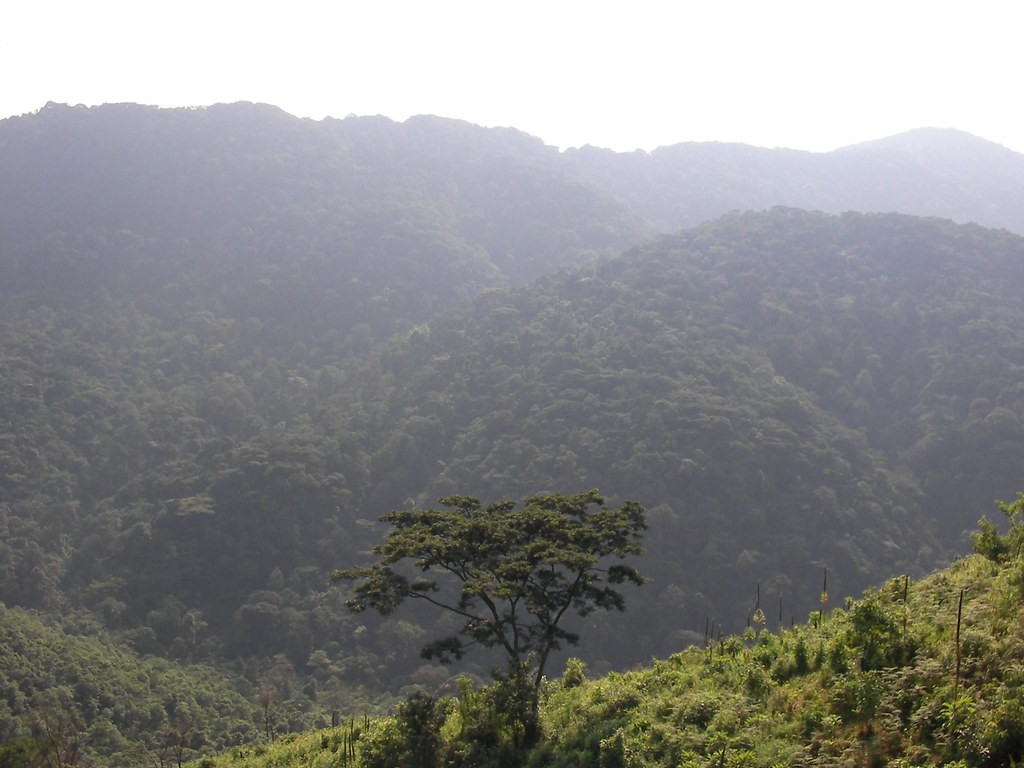
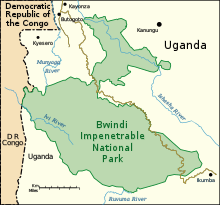
Bwindi impenetrable forest threatened by road plans

Ugandan authorities are considering two roads that will pass through Bwindi. These roads are likely to have two devastating impacts.

Currently this forest consists of unbroken forest – but will it?

Firstly, these roads are likely to splinter the park from the connected park across the border in the DCR. As with the proposed Serengeti road, neither side of the road is big enough for large ecosystems to survive long term, therefore you are threatening one of the biggest draws of tourists to the country – these tourists if well managed bring the means to pull millions out of poverty.

If these roads go ahead, then much damage will be done. Of greatest concern is a road that would run north to south in the far west of park, cutting the park off from its sister reserves across the border in the DRC. This could well lead the the rapid loss of the mountain gorilla population

The other problem is that roads ease the progress of poachers deep into the park. It has regularly been shown that a road is often the easiest way to remove the wildlife that lives in an area.

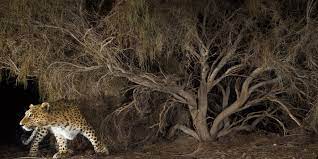
Saving the Persian leopard

Leopards once roamed through Africa and Asia and even up into parts of Europe. Now their range is diminished and many of the subspecies are either endangered or critically so.

The Persian Leopard (also referred to as the Anatolian leopard and the Cascina Leopard)  Iranian Plateau and surrounding areas encompassing Turkey, the Caucasus (Armenia Azerbaijan and other parts of southern Russia), Iran, IsraelTurkmenistan, Afghanistan and possibly Pakistan.

These ancient Iraqi forests are under threat, and with it the last stronghold of the Persian Leopard

Today it is thought that the population only consists of 1000 adults, though their population is highly fragmented. One of its strongholds is the Iraqi Kurdistan forests, unfortunately as much as half of these forests has been lost to illegal deforestation.

Unfortunately if the Persian Leopard cannot hang on here there is little hope elsewhere. Numbers have roughly halved (as habitat has similarly halved).

Tigers are still moving between reserves, we must make it easier

Tigers once numbered 100,000 in India. My great great grandfather spent time in India, and I grew up hearing my great grandmother talking about the time that she went with her father on her pet elephant (as you do) to find a tiger that had been maimed during a failed hunt. This was essential, as a maimed tiger (or indeed lion leopard or jaguar) is of great danger to those living nearby. A maimed tiger cannot hunt as it normally would, and humans are far easier prey.

We have never learnt to live alongside tigers. As a result, as the human population has grown, the tiger population has been squashed into less and less land. If a healthy population can survive for the next century the human population may fall again and allow the tiger to thrive once more

These days the situation is very different. Currently there is a little over 3000 tigers living in the wilds of India, a number that has doubled in a surprisingly short period of time.

Continue reading “Tigers are still moving between reserves, we must make it easier”

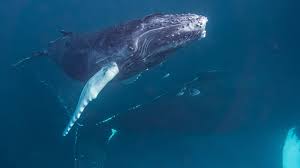
Whales are at 95% lower population than historical. This means they no longer fertilize the oceans

Whaling caused all sorts of issues. Many whale populations were decimated, and while some have recovered to some degree, few are anywhere near their population before humans started hunting them.

While we expect the human population to allow the whales to return to their former glory, this experiment may allow humans to fill their niche in the food chain for the time being

One of the things that has been missed is the incredible impact that they have on the ocean environment.

A new experiment aims to put these nutrients into the water and see if it restores dwindling fish populations. Although the nutrients that they release are usually found in the depths, the pressure means that they have to come to the surface to release their waste. This waste creates food for phytoplankton, which then is eaten by fish.

This experiment will happen off the coast of Goa, and will consist of taking rice husk waste from local factories and putting it out at sea, mixed with other nutrients. While this first experiment will be small in size, if it works it can be repeated. This will provide large amounts of food for fish, as well as absorbing carbon dioxide

Only 12 Asiatic cheetah are left in the wild!

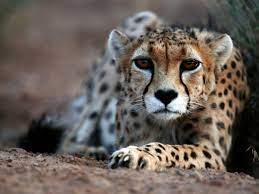
At the minimum, the Amur leopard population fell to as low as 30 individuals. The Asiatic cheetah is therefore far closer to extinction. At the current time there are thought to be 9 males and 3 females left in the wild. Given that in 2010 there were around 100, while this is still a highly threatened species clearly the threats to their continued existence have not gone away.

There is some debate about how genetically distinct Asiatic cheetah are. However, if fully lost, it may be able to import African cheetah to refill the ecological niche. Saving the last few would always be preferable however
Continue reading “Only 12 Asiatic cheetah are left in the wild!”

I am disgusted to be British after the latest move in parliament – hunting trophy import ban to be axed, but if we are ending the ban the British government must take responsibility

The British government promised to ban the imports of trophies in to the UK, yet they have given up after “wealthy peers” lobbied against the move and so it was dropped.

I have written on this issue many times over the last few years, as it was raised as an issue over and over again.

Should wealthy individuals be allowed to go and shoot members of an endangered species? I would argue no, never. However, we do not live in a perfect world. There are places where few tourists will go. If these incredible places can be protected by sustainably harvesting a small number of endangered animals I would argue that this is the lesser of two evils.

Continue reading “I am disgusted to be British after the latest move in parliament – hunting trophy import ban to be axed, but if we are ending the ban the British government must take responsibility”

What will the Ukraine war have on wildlife?

I do not know how many of my readers follow current affairs closely, though I follow them.

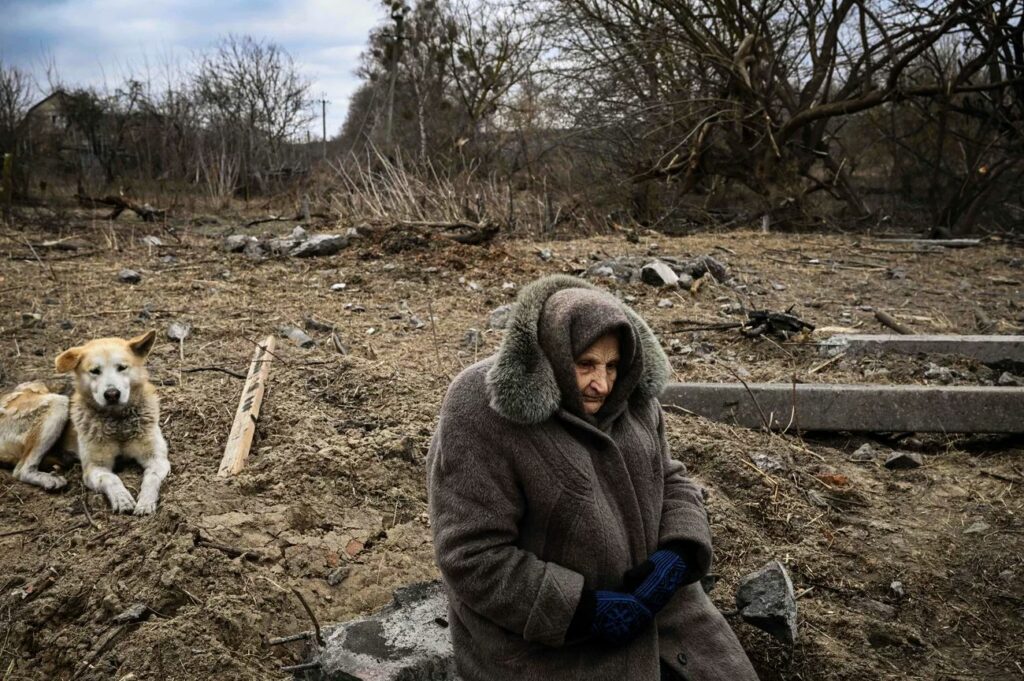
Whether the Ukraine invasion is to have a long lasting effect on the environment in Ukraine, this picture shows that at least in places the damage is significant

Are wars good for wildlife, or are they bad?

Unfortunately, it completely depends.

I suspect that on the whole, it depends on the wildlife in question. Several times during wars, it was thought that the European bison had been lost – due to soldiers having to camp in remote forests that they still survived. It is not surprising that soldiers with little to eat will take Bison that they encounter (one bison could feed a large number of soldiers). Indeed, it is certainly the case that many herbivores have been lost in this way.

Other species are different.

Mountain gorillas multiplied greatly during the period of the civil war. In similar ways, the Iron curtain that crossed Europe – along the edge of the Soviet Union, had a no mans land on either side of the barrier. This Green belt which ran for thousands of km across Europe, while not wide was never-the-less wide enough for animals to use. Indeed, it is thought that wolves and bears used this route as a highway – allowing them to recolonise land they had been exterminated from.

So, what do we think? Well, partly it depends on how long the war goes on. At the current time, it does not look like Russia will be able to last for long enough for this to have any big effect. If instead this was to go on for years, it might be a very different thing. This is because Ukraine lies between the Eastern Europe and the Carpathians, and the west. Should hunting in Ukraine cease for a few years, it is likely to accelerate the movement of wolves and bears and lynx from east to west. This process is likely to happen over time anyway, but a protracted war could accelerate it.

As I said above, though, it is highly likely that this conflict will not last long.

Return of the bear wolf and lynx to France and western Europe

The recovery of wolves bears and lynx over the last several generations in western Europe has been nothing short of astounding.

In the 1960s the population of the iberian wolf did not number more than a few hundred, yet now there are 2500. Similarly, bears got very low but now more than 300 roam – though this still has some way to go. The Iberian lynx was not heavily hunted, yet was still almost wiped out due to human introduced diseases wiping out most of the rabbits in Spain.

France destroyed its wolf population completely, though they are back, having crossed from Italy about 20-30 years ago. Bears were similarly almost wiped out, except a tiny relict population in the Pyrenes. Unfortunately, this population has not done well and is essentially only there because of bear translocations from further east. Similarly, Lynx were eradicated by 1900 though this has been reversed by reintroduction projects. There are a couple of zones where lynx are found (a reintroduction project in Switzerland returned them to part of france), However, there is not going to be more than 130 lynx in the whole country and the population does not seem to be growing.

Italy retained a wolf population, though in the 1970s there was only 70-100 left. Nowadays, 1000-2000 wolves roam the country, and it is roaming members of this population that seeded the population in France. 80-90 bears remain in Italy (the Marsican bear), and while this is a more healthy population than that in France, it is still not enough to be secure. Lynx were eradicated but have been reintroduced, though they are not thought to have established a population that would be secure longterm without continued translocations.

Scandinavia could in some ways be thought of as a strong-point for all three animals in western-Europe, though there are still views that are not helpful. The encouraging thing here, is that the wolf is able to return from Russia. There are no more than 500 wolves in this area, and Norway has a relatively strange view of the wolf, with human hunting elk very popular, wolves are seen as a nuisance and kept at a minimum. Norway has a similar view of the bear, with them being far more common in Sweden. Lynx are widespread in this part of the world.

Why should we champion the return of these animals? They have the capacity to rebalance environments, as well as allowing forests to operate properly – in the UK, as we are missing these predators, replanting forests are often hindered by deer grazing them to much. There are other reasons though. These animals can be a big tourist draw, allowing people to make a good income, often in places where there is little other economic potential. In the UK, return of wolves and lynx would save hundreds of human lives each year by reducing deer collisions on our roads.

Will their recovery continue? I hope so, though it seems to very much be an area where progress is two steps forwards and one step back.
See Animals Wild

Read more news

Join as a wild member
to list your wild place & log in

Join as an ambassador supporter to
support this site, help save wildlife
and make friends & log in

Join as an Associate member
to assist as a writer, creator, lister etc & to log in

List a wild destination

List a destination in
the shadow of man

List a hide for animals more easily seen this way

Highlight some news
missed, or submit a
one-off article

Browse destinations for fun or future travel

Temporary membership
start here if in a hurry

Casual readers and watchers