It appears that blue whales have been mating with fin whales far more frequently than previously thought. One of the things that is both exciting and alarming, is that it suggests that whales can interbreed more easily.
While they are currently listed as endangered, and are starting to recover, of the 4 subspecies, the one found in the north Atlantic and the north Pacific is the most at risk. In otherwards, this subspecies could become extinct as a result of hybridisation.
On average around 3.5% of the blue whale DNA, comes from the fin whale.
It is perhaps odd that these species would interbreed, as blue whales weigh around 85 tonnes more than fin whales.
It had been assumed that these occasional hybrids could not go on to produce fertile offspring, but this has been shown to not be the case. What appears interesting though, is that there does not appear to be any blue whale DNA in the fin whale population, suggesting that they offspring will only ever be able to breed with blue whales.
There is much work around the world, which is going into measuring temperatures as accurately as possible and watching for change. While the British empire routinely took temperature readings on certain trips, and there are various other long records, there is no human record which goes back more than a few centuries. While this is irrelevant for human caused climate change, as we only started releasing large quantities of warmth trapping carbon dioxide in the last few centuries (largely started by the industrial revolution in the UK), we want to be able to both have more records from the last few centuries, and records that go far further back.
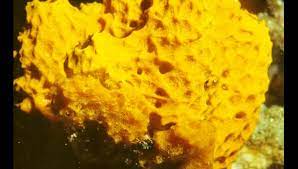
At just 10-15cm this sponge is likely to be close to full size on a laptop or computer
A variety of natural methods have been found, but this new ancient sea sponge method is interesting. This is because, lying 30-90m below the surface of the Mediterranean. In the Mediterranean even in the shallows with the water only changing by around 10 degrees, however, below 12-40 feet (depending on churn etc) the temperature is incredibly constant year round. That is not to say that there is no change in temperature, but it is very small.
So in this instance, these sponges have been recording changing temperature over the years, and according to their tempearture records, the planet has alread warmed by 1.7° C, which is half a degree more than the United Nations climate panel has seen elsewhere.
A number of climate scientists have questioned how wide-ranging a conclusion, you can draw from readings taken from one sponge species in just one location in the world. However, the lead researcher stated “Taking a precautionary principle, our findings show taht global warming is more advanced than we thought and therefore it’s a wake-up call that we have to get on with reducing CO2. He went on to add “We will experience more serious impacts from global warming sooner than we had anticipated”.
6 different speciamins of this sponge species were collected. The sponge can take hundreds of years to grow (to a size only 10cm-15cm). As it grows, it stores strontium and calcium in a ratio which relates directly to the temperature of the water around them. The team reconstructed global water temperatures going back 300 years through this method, and then combined them with land-based temperatures, in order to arrive at global temperatures. Because of the depth, the water temperature changes little from winter to summer, which means that the water tends to match the global average with surprising accuracy.
Incidence like the volcanic eruption in Indonesia in 1815 show up clearly in the record. However, unfortunately, it also confirms that manmade warming started in 1860, and given that global temperature changes are benchmarked against averages of the temperature between 1850 and 1900, it shows that this cannot be considered pre impact by humans.
However, responses are rather more encouraging. Essentially, the point is, that regardless of the sense in taking readings from a moving point, given that both our current position and the warming that we have targeted are against the same wrong number, it is irrelevant – if the start temperature was higher, but all our readings are out by the same quantity, it does not mean we will hit dangerous levels any sooner – these were worked out using the same incorrect measurements.
However, whatever is true, what is clear is that we still need to cut emissions alarmingly fast if we want to escape changes that are likely to kill many people, and displace hundreds of millions more – if not billions.
These kelp forests have an essential little helper for its survival. It has become clear that sea otters are essential members of communities of the kelp forests off the coast of California. Sea weed, which includes Kelp, locks away around 200 million tonnes of carbon each year and so are an essential part of the fight against global warming.
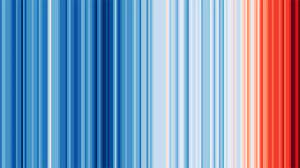
Climate stripes – a clear way to see global warming over time
This image is a fantastic way to be able to see climate change. Created by Professor Ed Hawkins in 2018, it shows the changing in temperature over the last 2 centuries.
Blue lines show years where the yearly average temperature is lower than the overall average (and the darker the further below the average). The red is the opposite.
While it does not need pointing out, can you see how dark it has got in the last few years.
Below is a short video about the stripes with their creator explaining them.
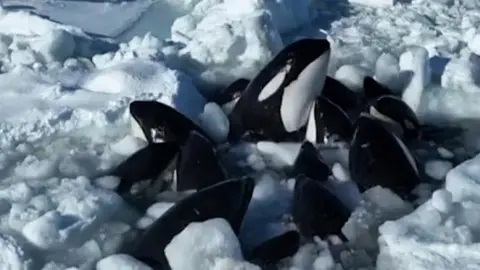
This pod of Orca have been trapped, with only this small opening to breathe from. Unlike other marine mammals, orca generally stay close to the surface, and breathe regularly, which can make this a death trap.
While Orca have been timed, holding their breathe for 15 minutes, they usually take shallow dives of up to a minute, or deeper dives lasting 3-4 minutes. While Orca can hit speeds of almost 30 miles per hour, this is usually only over short distances, and they could not sustain this for long under water – especially without being able to take a breathe.
Thankfully, in the last few hours, these animals have managed to get free.
This could be great! Current rhino numbers are estimated to be in the low 2000, down 79% since 2011. Releasing the whole herd back into the Kruger could allow numbers a sizable boost, and rapidly move the kruger back towards its former stronghold of the white rhino. However, in the first half of 2023 over 200 rhino were poached from the Kruger, suggesting that this is not going to be easy.
Unfortunately, the Kruger is already one of the best preserved large reserves in the world. Thankfully, rhino horn has dropped in value from its peak in 2012 of $65,000 per kg, down to a current $8000 per kg. It would be good to depress this further, however the risks for the poacher are very high: not only are many poachers killed by the rhino, they are also often killed by other wildlife such as lions – and the Kruger has a sizable number of man-eating specialists.
I suspect the organization will spread the rhino around, across many of their reserves. Hopefully the recognition that farms like this make no sense, will allow them to thrive back in the wild.
Education is still needed in China, Vietnam and elsewhere. Rhino horn is the same substance as your finger-nails, Keratin. Consuming it will make no difference to any medical condition, science has tried to show any positive health benefit, and can see nothing scientific – at best a placebo effect.
Below, is a video about this farm, 6 years ago back in its heyday. Hopefully, all these rhino can recover white rhino populations far and wide.
Mink are an invasive species, which have arrived in the UK for fur farms and then either escaped, or been released by so called ‘animal lovers’.
While I do not approve of mink farms, this is a very foolish behaviour. The American mink, not surprisingly, is not a native of the UK, and while there is a European mink, it has never been present in the UK.
So, why are they problematic? Well, like any invasive species, they tend to hunt in different ways to native species, and can rapidly eradicate species that have always lived here,
In the UK, the species that is most at risk is the water vole! Since the arrival of the mink, it has been lost from most of the UK. They are essential for healthy rivers and as such mink cause damage (they also take many water birds).
The wildlife recovery trust, set up a defensive wall of traps, around this county, and used scent from the minks own glands to tempt in the species. This has been incredibly successful, and they have been declared extinct in the county (once caught they are shot).
Conservationists are now planning to extend this method to the rest of the UK. Thankfully, a second line of defence is reappearing – the otter. Reduced to near extinction by pollutants in the waterways, they have recovered over the last 20 years, and generally push mink out, fast, when they return to a waterway.
For the first time, there is hope that we might eradicate this animal that has done so much damage to the UK waterways environment.
Looking at who is eating the majority of beef in the USA is alarming for the future of the industry. This is because older generations are eating the vast majority. Beef was at its strongest in the 1970s, with the average amount of beef eaten per person in 1975 being around 90 pounds or 40kg, but having dropped to just 57 pounds or 25kg.
While this might be bad for the beef industry, it is good for the climate. Beef produces around 10 times the greenhouse gases that poultry does, and 20-60 times the amount that is released getting the same nutrition from plants.
According to this study, just 12% of people were responsible for eating half of the beef consumed in the country.
Currently, land given over to growing animal feed accounts for 40 million square kg (15.4 million square miles). Given the worlds land mass accounts for almost 60 million square miles (160 million square km( this is a significant increase). This amount of land, freed up, could potentially allow a huge improvement in the amount of space given over to wilderness on the earth.
So where would we get protein for livestock feed?
Chinese scientists have created a method which allows the conversion of coal into protein – far more effectively than with plants. 0.1% of this land is required in this new system. It is true that this still accounts for 60,000 square miles,
So the process has a number of steps.
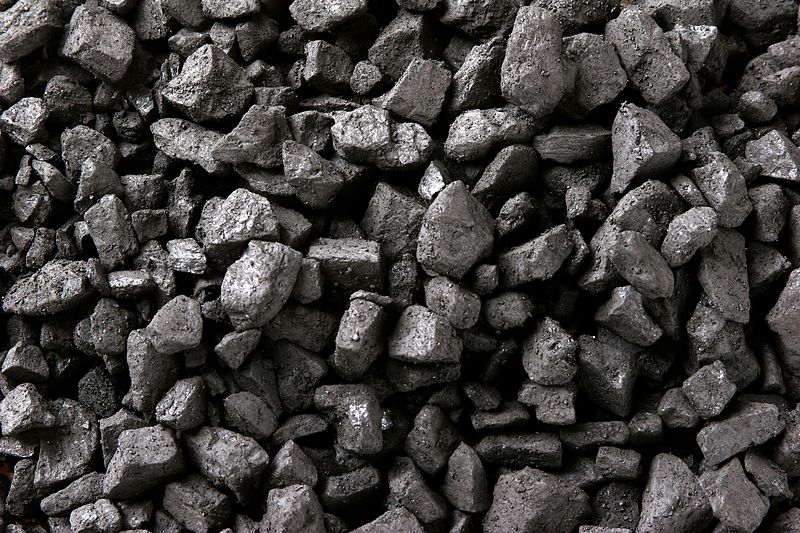
The coal is transfored into methanol via gasification (this can now be done with a near zero carbon emissions)
The methane is then fed to a special strain of Pichia pastoris yeast, which ferments the methanol, in order to produce a single-cell protein complete with a range of amino acids, vitamins, inorganic salts, fats and carbohydrates. There is far more protein in this than in plants and it can be used to partially replace the protein currently used
The conversion efficiency is at a remarkable 92%. This means that it is a cost effective replacement. Now, how much of the protein can be replaced, however a trial facility has already produced thousands of tonnes of this protein.
So if we assume that it cannot replace all of the protein, it seems reasonable to be able to replace 50% or 80% of the protein.
Even countries like the USA could free up thousands of square miles.
The idea that we could free up 30 -48 millions square kilometres (7.5 to 12 million square miles) to be returned to wilderness and carbon sinks among other purposes. If just half of this land was rewilded, it would allow large amounts of the land around the world to return to a wild state, which would help us cut emissions.
Now, it is true that this coal will be emitted as carbon at the end of the line, but if enough of the freed land is used for forest and similar, the net carbon gain can be huge.