Finally some pushback from leading conservation experts on the outright ban on hunting

I have written on the situation with the British governments attempt to put in an outright ban on trophies from hunting being imported into the UK (though bizarrely they continue to support hunting in the UK).

I strongly disagree with this situation.

While the idea of hunting is relatively repugnant, and I far prefer the excitement of walking in the presence of these animals, but then leaving with them continuing to get on with their lives. I should add in this vein, that during my families trip to the Kruger later this year, I will be going on a 3 day 2 night wilderness trail. This will mean my going to a very small remote camp, and then walking for the 3 days – the likelihood of close encounters with many animals is relatively high.

Anyway, this group of conservationists have just written to the government to get them to reconsider their position.

There are many activities that should be banned outright. Canned lion (or any other animal) hunts should cease to exist. Going into a relatively small area, to kill an animal that in many cases has not been living wild for more than 6 months is not what I call brave, but I would say its disgusting. Another behaviour I dislike, is where a hunting outfit buys a small area on the side of a reserve, then as animals walk out of the reserve onto this hunting area they can be shot. Hunting outfits, should only be able to hunt animals which can fit on their land.

One prime example is the Selous: the largest hunting reserve in the world. Here, they protect an area of land large enough to have a lion population of 5000 or so Lions. From this they kill perhaps 50 out of the estimated population (about 1%) of course this relies on their estimate being accurate. Brink et all (2012) estimated the lion population was about 4300, with the range from 1900 up to 6900. though they admit this was extrapolated from a survey of only 1%. Other surveys have put the number between475 (absolute lower bound) up to 4953. This means that even with hunters wanting to kill the big adult males (deaths of pride leading males almost always lead to deaths as a new male tries to take over, firstly all young cubs are likely to be killed so the new male can sire his own offspring, and then often several mothers who try to defend their cub – 1 male killed might lead to 5-10 deaths as a result).

Never-the-less the Selous does not look like its lions are in danger of extinction. A different place to look at is the WAP complex. This includes 10200 square miles spread out across an area of Burkina Faso, Niger, and Benin. It includes 5 national parks and 14 hunting reserves. Given the lion population is 400 here, and the west lion (recently found to be the same subspecies as the indian lion) is so endangered, having a healthy take here is far harder. It is hard to find sensible numbers on hinting here, but a take of more than 4 per year would be very foolish.

In conclusion, while I would prefer that no one in the world ever went hunting animals for sport (generally all the meat is given to local communities, though this is not the reason for the hunt) there are some places which are so hard to reach or infested with unpleasant parasites (the Selous has an insect that carries something called sleeping sickness), I will accept it with clear documentation from places that can support it. This is because often a hunt will bring in so much money for local communities. However (and this is a big proviso) I believe that there are very few places where this is truly the case: The Selous is one, there are probably areas within the KAZA park that are similarly alright. Similarly in Europe, while I would never wish to hunt a wolf myself, the Sierra de culebra has provided a refuge where the wolf would not be exterminated – specifically because a handful of wolves were killed each year. This new rule that the government is bringing in is too simple, it does not take into account the unique situation in each country. My suggestion would be that each hunting organiser needs to get their hunt approved- perhaps some sort of hunting body, but for now in the UK the government would have to employ someone. That person would have to analyse the whole hunt plan, check that the area has a viable population of the animal in question and any other details. This would enforce far higher standards, so that we could be sure when the wealthy go to hunt that they arent going to create the extinction of a species.
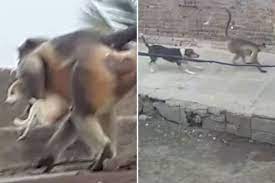
Monkey revenge? dogs attack at their peril

Two monkeys have been blamed for hundreds of puppy deaths and have now been captured. There was an incident where a group of dogs caught and killed a monkey, last year so it is thought that these monkeys have been on a revenge trip.

Langur monkey carrying a dog, likely to its death

Now, firstly, this should permanently do away with any idea that humans are the only group who grieve, or scheme or carry out plans over a few months. The two Langurs were reported after they were watched targeting dogs, carrying them to significant height and then dropping them. It is thought that 250 dogs have been killed in this way, over the last few months. Other puppies were abandoned at height to start or die of thirst.

Two monkeys, thought to be the culprits, have been caught and translocated, and this appears to have worked

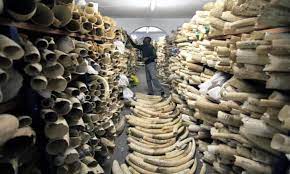
UK has once again delayed its ban on Ivory sales

To much fanfare, the British government decided to ban the sale of Ivory 3 years ago. This is certainly a good thing. Unfortunately, they have just delayed its introduction again – and we are already 3 years after this law was supposed to come into effect. Admittedly, this time the delay is only supposed to be for 2 months, but it sends the wrong message.

Forest and Savannah elephant populations across west and east Africa have been decimated over the last decade or two.

Ivory trade is (most of us will be surprised to hear) is still going in the UK, Will lord Goldsmith keep to his promise this year? And how many elephants will die before he does – in the hope of adding ivory to our trade?

Ministers claim that background work has not been carried out, but given they have had 3 years this is inexcusable. Someone should be fired for this.

At the moment elephants are being killed at the rate of one every 15-25 minutes or 50-100 a day. The UK is the largest exporter of Ivory. Also much ivory from recently poached animals is passed off as antique – avoiding the rules.

The EU is now considering acting on this pressing issue. Our original advance has been destroyed, and we now look like we are incompetent.

It is currently down to issues creating the technical standards for exempting legal ivory.

My proposal would be to ban all ivory sale until this system was in place. This would put pressure on people to finish it quickly (and I would be surprised if it wasn’t solved very fast).

Lord Goldsmith wrote in a letter that he committed to enacting the bill by the end of 2022, though similar things were said 3 years ago.

Australia is risking several of the most pristine marine environments

Australia has an incredible range of wildlife. Indeed, a great number of people visit Australia because of this. From their fascinating land mammals -kangaroos and koalas, as well as many more, to the great barrier reef and the wide array of other sea life.

They also have areas of Australia which are already almost unusable, because the temperature is too high. You would think therefore, that conservation would be a high priority. Unfortunately under the current government that is very much not the case.

Rowley Shoals is one of the most intact reefs in the world

From mining projects and farming, wildlife is shown to have low priority. In recent times, a firm was given permission to dump material from dredging inside a marine park (and submerging parts of a coral reef – something that will kill it.

Continue reading “Australia is risking several of the most pristine marine environments”

Lockdown has shown the perils of overreliance on tourism: what to do

Uganda has suffered during lockdown. As much as 7% of the countries population works in tourism, a sector which has been either totally shut down, or greatly reduced over the last few years. Several other countries like Tanzania have suffered in a similar way.

To protect some of the most special wildernesses in the world we need a better system

How can we expect countries to protect huge ecosystems if the income to protect them can dry up with no warning?

Continue reading “Lockdown has shown the perils of overreliance on tourism: what to do”

Bears and wolves are not good friends seen recently as bear steals a kill from wolves in Yellowstone

Most scavengers are relatively small. Animals like jackals are unable to make large kills. Furthermore, the amount left behind by lion and leopard is usually more than enough for a jackal to survive on.

In the northern hemisphere though, bears get a great deal of their calories from scavenging. They have an incredibly keen sense of smell, allowing them to find dead animals,

However unlike the jackal, they are very capable of hunting. They can be seen from time to time, mixing the two.

A bear runs along with a wolf pack, and then steal the price

Bears, particularly Grizzly bears, are very strong. In peak health, a large bear is more than capable of taking on a pack of wolves. They also require huge quantities of calories, and before going into hibernation, this will often push them to take bigger and bigger risks.

This is not hugely rare behaviour, but it is far rarer that it be filmed.

It would seem that human mothers are not the only ones to take a keen interest in their offspring’s partners

From arranged marriages to informal dates, for millennia parents have often been involved in arranging their offsprings spouses.

It would appear that in the Bonobo world, things work in a similar way. Bonobos are a female dominated world. In Chimpanzees and Gorillas, generally it is the male who decides to mate, and forces himself on the female. It is certainly more complicated than this, partly because the males with the strength to do this are often the largest and therefore the most wanted anyway. Yet in Bonobos it works differently.

As Bonobos live in relative harmony, they are able to have a great deal more impact on their sons mating success

A significant amount of time is spent by Bonobo mothers, shepherding their male offspring to groups of suitable females and then standing guard to avoid there being any interruptions. Quite rightly, if this sort of behaviour was to be seen in humans, it would often be considered tantamount to rape. What you must remember, is that in Bonobos society mating is as casual as shaking hands is to humans. Far from the females disliking this behaviour it is accepted.

As a result of this, male bonobos who live with their mother tend to have far more offspring. While in bonobo society, the group is dominated by females, the lower ranks appear to be more fairly balanced. As a result, many mothers are high in the ranking, allowing them to give their sons a leg up.

To check this hypothesis, a group of chimpanzees in Tanzania was also watched, along with a group in Uganda and the Ivory coast. mothers in both species help their sons in fights, but only the bonobos had an increased chance to mate. Given the male dominance in Chimpanzees, mothers can have less impact.

It is becoming more and more clear, that Trumps move to delist wolves was too soon and completely uncontrolled -perhaps by design?

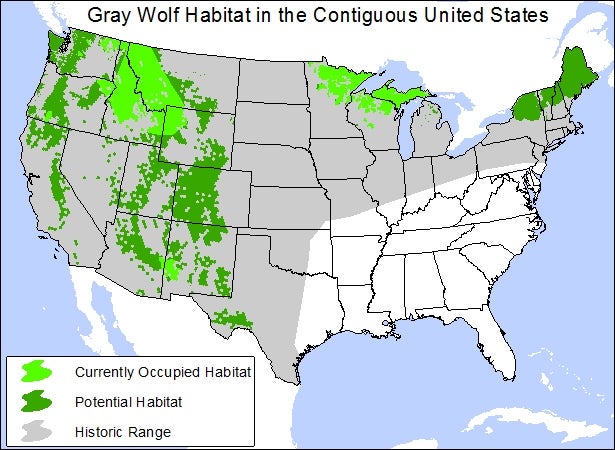
I have written about issues that have arisen from the delisting of wolves in America. Given their absence from a large portion of the USA, the suggestion that they have recovered is insane. Unfortunately, putting states in charge takes the decisions of what a sensible ‘harvest’ is, away from scientists and puts it in the hands of local governors.

Wisconsin has already killed 1/3 of the wolf population based in the state. The fact is, that Wisconsin stated that their aim was to have a stable wolf population, something clearly not successful.

As you can see wolves have not been allowed to spread into currently available territory, let alone return to their historic ranges.
Continue reading “It is becoming more and more clear, that Trumps move to delist wolves was too soon and completely uncontrolled -perhaps by design?”

As the gradual but increasingly inexorable recovery of Beavers in the UK gets going, in the Alaskan Arctic beavers are being seen for the first time

Beavers are a native part of British fauna. I have written many times on different advantages that their return is likely to generate. These run from reduced flooding of rivers, created wetland areas which keep flow of water constant, increased biodiversity helping water mammals recover (and the advantage that comes with this is the likely eradication of American mink which cannot compete with otters), filtering out pollutants as well as many more.

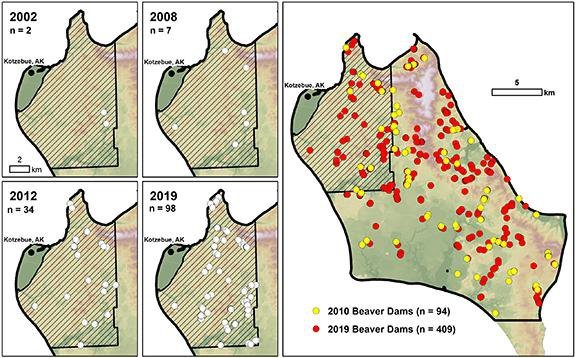
Unfortunately, in America, beavers are causing problems that they would not have been able to (in the past). Up until recently, much of places like Alaska were permanently locked in permafrost. Indeed, there are now areas, where, 50 years ago no beavers live – now the land has as many beavers as it can support. Using satellite images, scientists counted 12,000 beaver ponds, a number twice that of 20 years ago.

These images clearly show the huge increase in Beaver dams in the last 20 years

The first concern, is that indigenous people are loosing roads and places that they need to grow enough food to survive.

However, a bigger issue is that it is thought that these beavers could accelerate climate change. As beavers do not hibernate, they store food in their ponds, keeping it fresh for longer meaning that they can continue to have enough food to stay awake through the heart of winter.

The beaver pools that are created when beavers dam rivers, create localized unfrozen hotspots which in turn melts the permafrost in the area. This is the dangerous bit, as the permafrost, that is found throughout all the arctic nations, stores vast amounts of carbon. If the permafrost melts, this will be released and there is enough quantity to pass all problem points that scientists are worried about.

If all the permafrost carbon is released, the world is likely to suffer temperature rises, that may well dwarf the current estimates. This in turn is likely to require billions of people to move as their home country falls below sea level.

Is travel back on hold?

Just a few days I put up an article talking about how tourism could start up again particularly in places like Africa.

It would appear that the omicron variant of Covid is going to make that sound very premature.

Pfizer is predicting boosters will protect populations from this new variant within 100 days. 

Assuming that it doesn’t start spreading Europe out of control, this would allow any traveller to be vaccinated before they leave. 

My family are booked to go to the Kruger national park in South Africa next August. I am confident that we will still go -assuming restrictions lift as things improve. Unfortunate comments from health representatives in South Africa about premature banning of travel do seem rather foolish, however in terms of wealth South Africa is on different category to pretty much all of the countries in Africa and are likely to be able to get a grip on this relatively rapidly. While it is true that South Africa has had more cases of covid than anywhere else on the continent, their numbers of dramatically lower than the UK’s (and virtually all other European Nations).

In short, well this is an unfortunate second blow on the travel industry in southern Africa my hope is that it will be short enough lived that it will do far less damage to the natural world in this part of Africa than the first one did.

See Animals Wild

Read more news

Join as a wild member
to list your wild place & log in

Join as an ambassador supporter to
support this site, help save wildlife
and make friends & log in

Join as an Associate member
to assist as a writer, creator, lister etc & to log in

List a wild destination

List a destination in
the shadow of man

List a hide for animals more easily seen this way

Highlight some news
missed, or submit a
one-off article

Browse destinations for fun or future travel

Temporary membership
start here if in a hurry

Casual readers and watchers