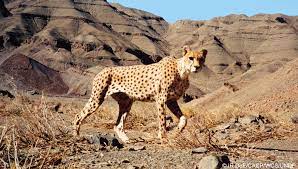
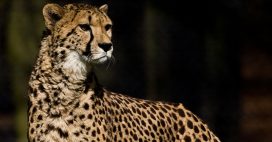
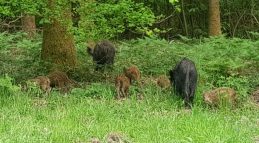
11 years ago a DNA assessment was done on the Iranian cheetah. This cheetah population is the last Asian cheetah population remaining.
It was thought that all cheetah went through a bottleneck 10,000 years ago, meaning that all cheetah were closely related. However this is not as all encompassing as we thought.
Despite to much fanfare, announcing that in 2019 during a queens speech their plan to ban trophy hunting, the government has once again delayed this law coming into effect.
Clearly endangered animals such as lions tigers elephants and many more are shot for sport around the world in numbers above 10,000 per year. While some of the meat is often given to local communities, the reason for the hunt was to provide a trophy for the hunter.
I find it disgusting that British politicians announced this policy 3 years ago but have not brought the rule into force. They are attempting to get the global clap on the back without actually having the bring in the law.
There are few to no predators that live in large enough numbers to be able to afford hunting. For me (as well as I suspect many of my readers) hunting is a rather distasteful experience. There are a few areas on the planet where hunting is temporarily justified such as the Selous – but these should be short lived. In the long run making money from wildlife should be done with a camera and not with a gun
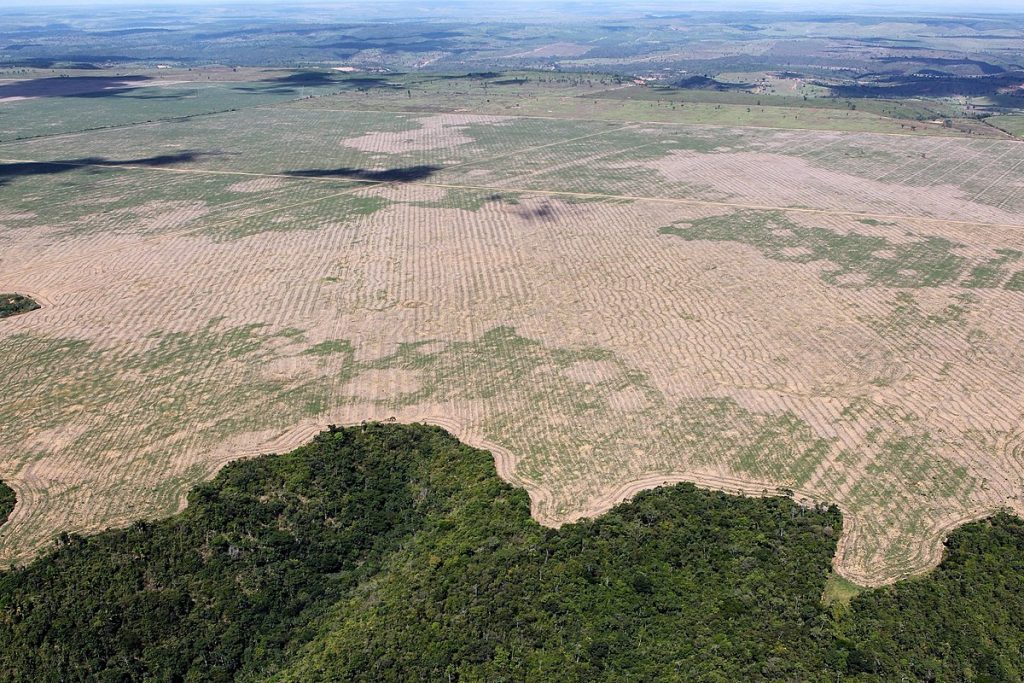
The signs of collapse are getting more and more clear. Fires droughts and land clearances are all pushing the Amazon towards collapse. Yet Jair Bolsonaro is not interested having put his head in the sand. Instead he is busy placating powerful agribusiness lobby and trying to get the global economy to reward his bad behaviour.
Could this become increasingly what Brazil looks like? If it does, how will it feed its growing population?
The blows to forest protection have come fast in the last year. It is unclear how much of the Brazilian population understands how big the threat is that Bolsonaro is ignoring.
Deforestation has leapt 37% over the last 5 years. Large numbers of people have been moving into this park in the hope that Bolsonaro will loosen its protection, and then their land claims will become legal.
Deforestation in this reserve has accelerated dramatically
This is unfortunately the effect that often occurs when a new administration doesn’t care about conservation.
In various moves, the current Brazilian government has encouraged these land seizures by not punishing or indeed legalizing the seizure.
It is often suggested that bears are merely opportunistic when it comes to meat eating. The suggestion is that bears are vegetarians who are capable of scavenging from dead animals.
Now, of course we need to be careful as bears have a wide range of intelligences. Brown bears have an intelligence on par with chimpanzees, where as black bears are far less bright (though they are still one of the brightest animals).
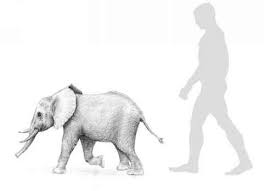
While Sicily is the largest island lying in the Mediterranean, it is less than 10,000 square miles, and as such it is quite amazing to find that Sicily played host to two different species of elephant in the last few hundred thousand years.
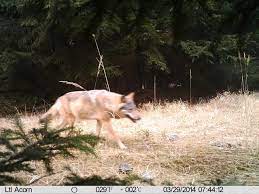
Wolves returned to the Czech republic after a centuries absence in 2014. Why is this of interest? Well, there are areas across the USA which have been missing the wolf for one hundred years, so it is worth watching to see how they adjust. The Czech republic does still have forest cover of around 34% meaning that there is plenty of territory.
First camera trap photo of a wolf returning to czech republic back in 2014
In the 7 years since, wolves have done well with the population currently estimated at 50-80.
They are currently generally accepted back, as they bring in significant money from tourism.
Now the Czech republic is not a small country, but wolves were pushed to extinction and this despite large areas of forest.
In a similar way, bears were wiped out. Sightings have become more common, and if hunting pressure is reduced they are likely to recolonize. There is a stable population of 600-800 in Slovakia.
I hope to add places to stay, as tourism with greatly help in encouraging this country that it is financially worth it, to have these animals close by.
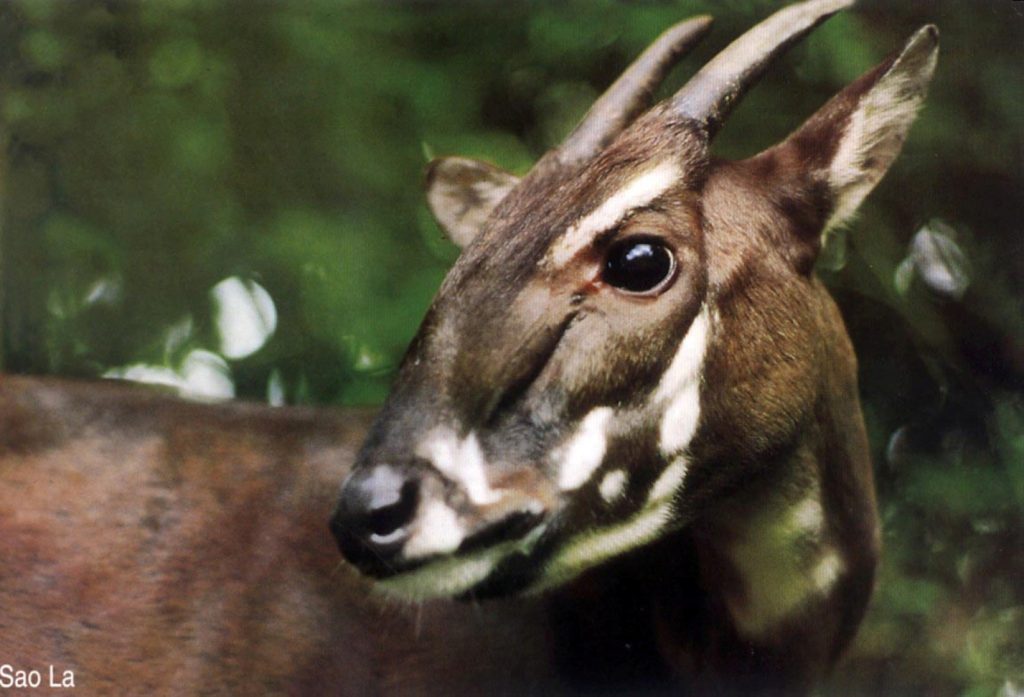
No biologist has ever seen one in the wild, and they were only confirmed to exist in 1992 becoming one of a very rare group of mammals only discovered in the last few decades.
image of a Saola
Camera traps have photographed them a handful of times, and possibly even local villages have tried to keep them in captivity. Unfortunately, they have never survived -presumably because they were not given suitable food.
In 1992 2 skills and a pair of trophy horns were discovered. Over the next few years about 20 more specimens including a full skin were collected, and in 1993 DNA evidence revealed it was not only a species unknown to science, but exists in a new genus of the Bovid family (which include cattle antelope goats and sheep).
The name means spindle horns.
Although not directly hunted, poaching has exploded in its range – likely reducing its population further. While efforts to mount more patrols have been undertaken, there are thousands of people setting up snares, with millions in the forest.
Other species like the Large-antlered Muntjac have also become critically endangered.
In 2001 the Saola population was estimated to number 70 to 200 individuals. More recently, this has been reduced to ‘no more than 100’. It was last camera trapped in 2013 with villagers continuing to report its presence.
The problem with species like this is simple. If you imagine looking for a small antelope with a small population in a large forest, it is clear how rarely you would stumble upon it; if you add that it is shy and good at hiding, it makes it particularly hard to protect.
Its thought that the Saola has lived on earth for 8 million years, as it is present in the fossil record. At the moment, there is an effort underway to find and catch enough to create a captive breeding program; though we must hope that if they succeed, the scientists will be more successful than the villagers in keeping them alive.
Extraction of peat, generally means that it dries up and then releases its huge store of carbon back into the air.
There are vast areas of peat in places like Indonesia, and the DRC, however there are also large areas of peat in Scotland. Peat is full of nutrients and so it is valued by gardeners. Peat will be used by professional gardeners until 2028.
In the UK Peat is our largest carbon store, trapping as much as a tropical rainforest per hectare. They are also important habitats and protect those further down stream from flooding.
This has been known as an issue that the british government has needed to address for some time. In the end, it seems that they failed to address this with the urgency that it requires.
Most of the peat in the UK is imported from Ireland. However, they have banned it so this is soon to dry up. A ban is thought likely to cut emissions over the next 2 decades by at least 4 million tonnes.
It is a good start, but we also need to restore those peats that have already been part extracted. This could keep much of the carbon in the ground if we act fast.
Fin whales were driven near to extinction in these waters a century ago, yet they have returned. A huge gathering of 1000 whales is not a regular site.