Czech Carpathians

Czech Carpathian

Only a small portion of the Carpathians lie within Czech republic. Furthermore, Czech republic is part of a block of countries in Europe with small populations of the big predators, which combined with their fondness for hunting is one of the reason that wildlife has had such a problem repopulating western Europe. However they are slowly returning.

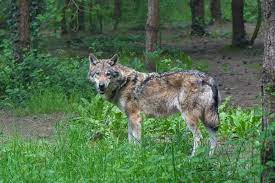
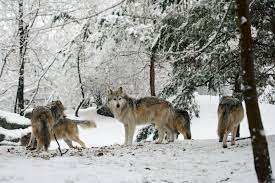
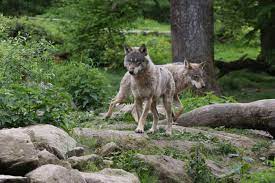
Wolves were first spotted after their return in 1990, however, it was not until around 2010 when they started making progress. and currently have a population of around 100 within the countries borders. 

There are not thought to be any bears living permanently in the country, but as there is a healthy population in Slovakia, they wonder across the border regularly – as such, it is entirely possible that eventually bears will settle full time.

Lynx are thought to have a population of around 80 Lynx within the borders of the country

As with other countries on the list, tourists visiting with the hope of seeing these animals can make a big difference to their future prospects.

Most of the Czech Republic is covered by low hills and plains, though much of the border of the country consists of mountains. Being part of this block of countries in Europe, the residents of the Czech republic have enjoyed hunting, as a result its only in recent years that they have been allowed to return. Whether these populations will be allowed to continue to exist we will wait to see, never-the-less if the population is allowed to return in central Europe, it will allow the Eastern and Western European populations of wolves bears and lynx to reconnect and allow a healthier genetic population.
Click here to return to the Carpathians page

Albania

Albania

Albania is  relatively small country in Southern Europe – bordering Greece. Despite lying behind the iron curtain, like other countries in this area although predators survived, they are greatly depleted. There are 250 wolves within the borders, 1800-200 bears. Unfortunately, the Lynx in Albania is a subspecies called the Balkan Lynx, and there are only30-45 spread between Albania and North Macedonia.

Unfortunately, when you look at the size of the country, and the fact that 70% of it is covered by the Albanian Alps, you realize that here to the wildlife numbers are greatly depleted. The Dinirac Alps continue on from the Julian Alps which continue from the main alps range. Only the most northern part of Albania contains these mountains.

Albania does pay compensation for livestock killed, which should make this a country which is more open to ecotourism. Should an ecotourism industry grow bigger in this country, it would hopefully reduce both legal and illegal killing of these animals, and therefore allow the populations to rebound.

Filter by
to to

Add your own marker

Marker Title
Marker Address or GPS Location

Or right-click on the map and drag to add a marker

Marker Description
Image
Marker Category
Date
Time
Please tick this box to prove you are human

Look below the news section to see any further links

AlbaniaNews

[smart_post_show id="10157"]

What is clear, is that interest in the wolves and bears amongst tourists is likely to encourage ecotourism to become an industry in Albania. This country has suffered greatly over the last half a century or more, however, as a result many animals have survived alongside them – tourism will show them what this is worth.

Bison have not yet got any presence in the country.

Links to areas to visit will appear on this page

aaa The Highlands, Scotland

The Highlands, Scotland, UK

The highlands of Scotland is an odd place. It has one of the lowest densities of humans, but at the same time the UK has eradicated the majority of predators, and despite being required by European law, has ruled out reintroducing any predators that once lived here.

I would love to see a small number of wolf packs roaming the highlands, to keep the prey on the move.

There is still a wide range of wildlife to spot in the highlands, and it is a beautiful place to visit. The problem is that at the current time, it is mostly not in a natural state. Furthermore, it is unfortunately very hard to regrow the Caledonian forests, as there are so many red deer.

 A wide variety of other animals and birds can be spotted in the area. For instance, black grouse, golden eagles, osprey and ptarmigan. Also, you can spot capercaillie, pine martens, squirrels (red ones, of course!) and otters, to name but a few. There have been a small number of reindeer reintroduced (native but locally extinct).

The eastern highlands are largely included in a range of mountains called the Cairngorms which are also a fascinating area to explore

aaa The black forest, Germany

The black forest, Germany

This is a large forested mountain range in southwest Germany boarded by the Rhine valley to the west and close to the borders with France and Switzerland. Both the source of the Danube and Nekar river is in this mountain range. With a length of around 100 miles at an area of over 2,300 square miles it is a significant patch of wilderness.


With wolves just returning to the country, their migration into the black forest is only just beginning. Indeed, while in recent years it was known that there were a couple of lone males in the reserve, a lone female has recently been seen – suggesting that it is highly likely young wolf cubs will arrive in the next few years. Other than the wolves there are boar, lynx, otters, foxes, red and roe deer and a variety of other animals.

Does the wolf belong in Germany? Not according to the CSU

The Christian Social Democrats believe that there is no place for wolves in Germany, and members of the party have called for their intentional extinction. Taking around 10% of the vote they are a small but relatively influential party – and given the way that elections work in Germany, coalitions are common. Unfortunately, coalitions will often give small parties an outsized voice, so this foolish position has the potential to become government policy faster than one would expect.

Having returned to Germany in 2000, there are now as much as 1500 wolves living within its borders

Continue reading “Does the wolf belong in Germany? Not according to the CSU”

Wolves have returned to Belgium after 100 years

Estimates vary, but it is thought that 15-20 wolves are in the country. This is made up of 1 pack in Flanders, and another in Southern Wallonia as well as a newly settled pair (this pair is likely to become a pack if allowed to survive).

Wolves have returned to Belgium. While only numbering about 20, if allowed to, it is likely to grow

Across the border in France and Germany, numbers are far higher. As a result, should these wolves be left alone, the numbers are likely to grow and spread.

Experts can be very good at spotting signs and clues of their presence, these skills are important to track the wolves however, these skills can also become very useful in ecotourism.

Linking bear and wolf populations across Europe is the best way to preserve them longterm – is this possible?

The Pyrennes in the south west of France, and the corresponding area across the border, are a wonderful area of wilderness. There are currently about 64 bears living in this area. So where are we on the road to recovery?

Were the the entire Pyrennes mountains wild, it is thought that these mountains could support 600 bears. However, this area is not an area that is set aside for wilderness – there is a whole population of humans living in these mountains (almost 700,000 people live here).

It is thought that the bear population of the Pyrennes could potentially get to 250 in its current form.

Continue reading “Linking bear and wolf populations across Europe is the best way to preserve them longterm – is this possible?”

15 wolves have now settled in Netherlands with another 11 visitors

While many people suggested that countries like Holland are far to built up to ever have a population of wolves, this is becoming increasingly clear to be wrong. 15 wolves have not only settled in Holland, but have established territory. This includes 4 pairs, which are likely to have cubs later in this year.

Wild wolf pair living in Netherlands
Continue reading “15 wolves have now settled in Netherlands with another 11 visitors”
See Animals Wild

Read more news

Join as a wild member
to list your wild place & log in

Join as an ambassador supporter to
support this site, help save wildlife
and make friends & log in

Join as an Associate member
to assist as a writer, creator, lister etc & to log in

List a wild destination

List a destination in
the shadow of man

List a hide for animals more easily seen this way

Highlight some news
missed, or submit a
one-off article

Browse destinations for fun or future travel

Temporary membership
start here if in a hurry

Casual readers and watchers