Carbon footprint of ghost flights during the lockdown

One would think that during the height of lockdown. that no planes would fly. After all, few people wanted to travel, and many destinations were banned.

Unfortunately no such luck. Why do I say this? Well currently 2.1% of emissions come from aviation (in wealthy countries this is far higher as many poor countries have little or no aviation – in the USA aviation accounts for 3-4%).

So what happened in lockdown?

Continue reading “Carbon footprint of ghost flights during the lockdown”

Pine martens are back in the new forest! for sure. How will they fare?

Pine martens are an important part of the UK ecosystem. Indeed, it is only through their absence that the grey squirrel was able to get a foothold. Might this pine marten group return to save the red squirrel and remove the grey?

This video was filmed a few months ago

Pine martens are very good for the UK. It is the reason that red squirrels are so acrobatic – it is the only way to avoid this arboreal predator.

It is not thought that this population can be large, but its size is being studied.

If they are given the space to survive and thrive (it is probably necessary to translocate a few more) they could be really good for the forest.

Grey squirrels only arrived in the new forest in 1940s, and if this arboreal predator gets fully re-established, it is likely that the grey squirrel will disappear once again. This would then allow the return of the red squirrel. There is a red squirrel colony on Brownsea island, which is likely to benefit from the pine martens return, as they will greatly reduce grey squirrels in the area.

There are more than 10,000 tigers living in the USA, with under 4000 in the wild

Back in 2010, the 12 tiger countries in the world came together with an aim to double their tiger population by 2022 the next year of the tiger. This has failed and I will write about it in an article coming out tomorrow.

However, perhaps more alarming, there is currently almost 3 times as many tigers living in private collections in the USA than there are in the wild. Even with 12 years of hard work and much money spent the wild tiger population has increased to 3,900, yet in back yards across the USA there are estimated to be 10,000. Now some estimates are lower with the WWF estimating 5000 -though even this low estimate is still lower than the total in the wild. Importantly only 6% of these tigers are kept in facilities that are accredited as zoos, and the rest usually have no one who knows how to work with them. One of the problem with this, is that much of the USA tiger trade is there to provide tiger bones for traditional Chinese medicine.

While some of these are carefully looked after and are only bred amongst their own sub-species, others are are treated essentially as a large pussy cat. Why is keeping their sub-species pure? If captive tigers are to form a protective net against wild extinction, they must be capable of returning to the wild. For this we need each subspecies to remain genetically pure, so that they are able to retain their adaptions for each environment. If for instance, a Bengal tiger from India was released into the Siberian tiger range it would be unlikely to survive as it would not be able to cope with the cold. On the other hand, if the Bengal tiger was released in Sumatra, it could do great damage to the ecosystem as it is so much larger than the native tiger.

Although tigers are listed as endangered under the federal Endangered Species Act, the law still allows private possession of captive-bred tigers as long as they are used for conservation. Precisely how the US authorities can enforce this is anyone’s guess. Clearly, the majority of US tigers have nothing to do with conservation.

The fact that there are so many tigers in the USA can therefore be a threat to the long-term survival of wild tigers. However, it would seem that it is also a big threat to the survival of the Jaguar. Jaguar canines sell for $200-$300 in south America. However, sold in china as tiger teeth, they can go for $5000-$10,000. As a result, this tiger pet industry in the USA can lead to the destruction of not only tigers, but also Jaguars.

What is clear, is that the USA needs to get a grip in its domestic exotic pet trade and fast. There is no place for a big cat in someone’s home. If things continue to go as they are, USA will not only be responsible for much game hunting around the world, but could also lead to the extinction of other species to supply the pet trade.

Almost 1/3 of the wild koala population has been lost in the last 3 years.

Koalas are often listed as one of the most popular animals worldwide. Living only in Australia, most of us are not going to see them in their natural setting.

Increasingly it is looking like, no one will see them in their natural setting unless you are travelling to Australia soon.

A mix of droughts, heatwaves and bushfires have all contributed to deal this huge blow to this unique species.

There are now estimated to be just 58,000 wild koalas, down for 80,000 in 2018. Another problem occurs when developers clear land to build a property – which is continuing to occur in Koala habitat.

Earlier this year, Australia announced that it was considering listing the East coast koala as endangered. With a precipitous fall in population like this, it seems odd that there is any decision to be made – of course the Koala is endangered, and if the government is considering listing a particular subspecies as endangered it must be very bad.

Estimates as high as 1 billion are quoted for the number of animals killed in the fires.

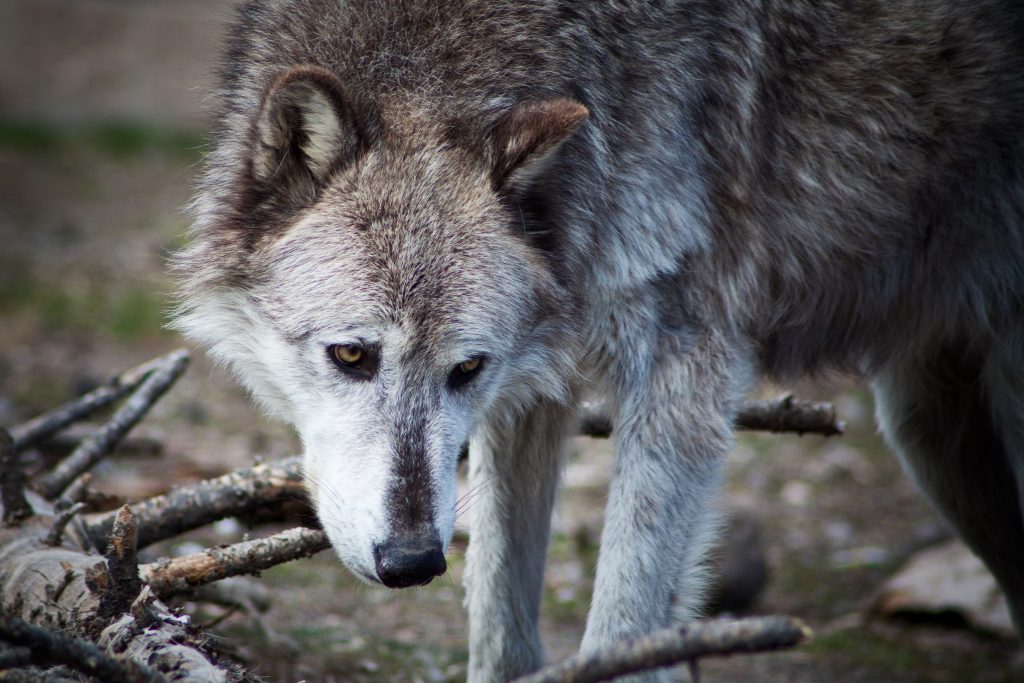
Montana has moved to limit wolf hunts after more than intended, but commissioners won’t reinstate quota ended by Republicans

The rules about hunting around Yellowstone, are like elsewhere quite absurd. When the animals roam across an arbitrary line, they can be shot. One side is fully protected land, the other side open season.

Now it is encouraging that the wolf hunt has ended early. The commission vote (passed unanimously) made a rule that hunting and trapping would end when 82 animals had been killed (76 had died at the time).

Montana wolf

23 wolves from park packs have been killed this year – more than in any season since wolves were reintroduced 25 years ago.

Continue reading “Montana has moved to limit wolf hunts after more than intended, but commissioners won’t reinstate quota ended by Republicans”

20 meat and dairy firms emit more greenhouse gas than Germany Britain or France

We know that meat eating is one of the activities that has a detrimental effect on the environment. Not only that, but we know that much of the meat is created in factory settings the pollution can be particularly high.

Livestock rearing is responsible for around 14.5% of human warming emissions. in 2020 almost half a trillion dollars was invested into global meat and dairy companies. Unfortunately with this much financial investment, an increase of about 40 million tonnes of meat is expected.

75% of agricultural land is used to raise livestock (or grow crops purely for their food. Brazil alone has as much land given over to raising cattle, as the whole of the EU has agricultural land including everything. Unfortunately there is an increasing level of big companies buying small ones – while this might sound like business as normal, small meat producers often worry more about their carbon footprint than big ones. This means that increasingly, sustainable meat creation gets pushed out of the market.

These sorts of practices must end if we are to meet our climate goals. Could meat grown in a lab meet take over? I suspect so, and probably sooner than one would think.

Wildcats have returned to the Netherlands on their own after centuries of absence

Many of the environmental issues that the UK faces continue to be worse because we are an island off the coast of Europe. Unlike France, we have to make the conscience choice to reintroduce wolves, where as in France they have returned naturally.

Recent rewilding efforts in Germany and Belgium, saturated the local wildcat population leading to them spreading to Holland next door.

Wildcats disappeared from Holland in the middle ages. With flatter heads and longer legs than its domestic cousin, the wildcats reappearance is hugely encouraging for environmentalists.

The wildcat started to return in 2013. Pine marten have also returned since 2015.

Long may this move continue

An area twice the size of London is set aside for driven grouse moors in our national parks, why?

One of the most nature deprived parts of the UK is the driven grouse moors. While grouse are native to the UK these grouse moors are definitely not.

While national parks can be important places for conservation, and in Africa are the home of many of the big animals, in the UK that is not the case at all.

Driven grouse moors are regularly burnt of all their natural vegetation. In addition birds of prey in the area suffer pretty blanket illegal persecution.

Alarmingly, these areas makeup 44% of the Cairngorms national park,28% of north moors national park and 28% of the peak district.

If this huge area of land was given over to rewilding, far more of the British population could enjoy these areas. Furthermore, this land would hold vastly more carbon in its natural state, never mind the fact that with a proper balance, we could see many highly endangered animals return to thrive in the UK.

Boris Johnson pledged to preserve 30% of the UK for nature, and importantly included national parks in that total. If these driven grouse moors are not eliminated that is a claim that cannot stand. We are the only country in the world that undertakes this dangerous practice.

It really should not be the case, that large parts of public land are set aside for the extremely wealthy, who could afford to do this on their own private lands.

In the last year, the government has listened to the anger, stopping burning of moorland where peat is more than 40cm thick. While this is a good move from the environmental side of things it is not the sole thing that bothers the average person in the UK.

Grouse shooting interests point out that the industry supports 1500 full time jobs. This is good, but the 23 large scale rewilding sites in the UK have increased employment by 47% in the areas that they operate, which suggests that 1500 is probably a very low number of jobs to what could be supported.
See Animals Wild

Read more news

Join as a wild member
to list your wild place & log in

Join as an ambassador supporter to
support this site, help save wildlife
and make friends & log in

Join as an Associate member
to assist as a writer, creator, lister etc & to log in

List a wild destination

List a destination in
the shadow of man

List a hide for animals more easily seen this way

Highlight some news
missed, or submit a
one-off article

Browse destinations for fun or future travel

Temporary membership
start here if in a hurry

Casual readers and watchers