Can the red sea teach us how to save the worlds corals?

The coral itself is actually usually quite a dull colour, the brilliant colours of coral reefs come from the algae that lives within its coral tissue. These algae’s are called Zooxanthellae and in return for their home, the algae supply most of the corals nutrients.

The problem, is that these algae are very sensitive to temperature changes, and so if the sea remains unusually warm or cold for more than a few days, the algae leaves the corals and this is called a bleaching. This bleaching has occurred more and more recently in the last few years.

As a result of this, it is feared, that up to 90% of the corals worldwide will be lost by 2050.

This is where the red sea corals become so interesting.
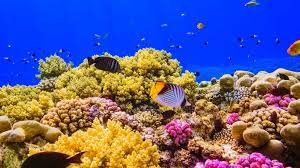
The red sea coral reef looks the same as any other reef, but it appears that there is a difference, that might be the key to saving reefs around the world

Just 2 years ago, researchers found some corals in the Gulf of Aqaba, a trench between Israel, Jordan and Egypt which could withstand higher temperatures for longer. Just 1 degree above normal, sustained for a week can be enough to cause bleaching. If the temperature does not fall quickly, the corals will die. Yet here, corals have been seen to survive temperature rises above 7 degrees. It is thought that these corals have developed these abilities because they regularly suffer large temperature changes.

If they can identify corals that have this ability, and translocate them into new reefs, they will cross-breed. As the heat resistant corals are heat resistant, they are likely to survive far longer and therefore be able to pass on their heat resistant trait into the whole reef.

Given the rapidly warming planet, we only have about 30 years to act. Apart from their own intrinsic value, coral reefs are also worth roughly $600,000 per square kilometre each year, through protecting coastlines, increased tourism, medication and a whole lot more effects.

This is a fantastic possible save for the worlds reefs, time will tell if it works.
Orca have been documented killing and eating blue whales

Orca are generally regarded as the apex predator in the sea. There are obviously others that are good contenders, such as the great white shark – but when orca are nearby, great white sharks go very quiet in an attempt to not draw attention.

It would seem that nothing is too big to be food. Coordinated female lead pods of orca have been documented ramming the whale, and then eating its tongue before it dies.

It is, I suppose, not something that should be remotely surprising. Orca have developed ways of feeding on all sorts of food that would at first glance be out of reach. From rushing in towards a beach, allowing them to aquaplane up onto the beach to grab sea lions, to stunning fish with their tale – stopping them darting away, there is a fascinating range of hunting techniques that they employ.

Continue reading “Orca have been documented killing and eating blue whales”

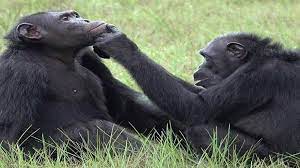
Chimpanzees observed treating wounds of fellow chimpanzees with crushed insects

In the coastal National park of Loango – Gabon, over the course of a study of a group of chimpanzees, 19 times chimpanzees were seen catching a spefic insect out of the air, chewing it, and then inserting it into injuries on wounded fellow members of the group.

Given the relative simplicity of the treatment, any chimpanzee can apply it, but this looks like the beginning of medical treatments

A number of insects seem to have a positive impacts when applied to skin, and it is thought that these insects have an anti inflammatory effect, allowing the injury to heal faster.

The injuries are almost always as a result of fights between different groups of chimpanzees.

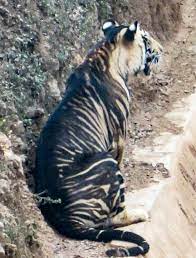
Rare black tiger photographed in the wild

Big cats have a range of colours that they can be found in. It is certainly true that their standard colour is more common, but in different parts of their range other colourings might be more helpful. For instance, an Amur tiger that was white may find it easier to creep up on its prey.

A black tiger photographed in the wild

On the Malay peninsular, as much as half of the leopards are black, as this gives them an advantage.

In this case, a black tiger was photographed. The animals was not entirely black, but having far wider stripes, its back looks more black with yellow stripes rather than the other way round. Fewer animals are taken out of the wild than in the past, when an animal like this would likely have been caught and sold to a zoo for many times the price that tigers normally fetch – as this tiger will increase visitor numbers.

Huge icefish colony discovered near Antarctica

Researchers looking at the Antarctic sea floor, have discovered a vast and completely unprecedented colony of ice fish. Consisting of as much as 60 million individual nests, they were spread out over an area of the floor similar to the size of London.

Before this discovery, the biggest colony contained just 60 nests. This area was first looked at, because a natural upwelling of water from the depths, means that the temperature here is usually about 2 degrees above the surrounding area. It is thought that the Wendell sea (where this colony was discovered) is likely to have an ecosystem that relies in some way on these fish.

It is astounding to find such a large thriving species in the wild, and shows that there is still we know very little about.

What now, for the northern white rhino?

Late last year, the oldest of the two remaining northern white rhino was retired from the breeding programme. This just leaves her daughter as the only egg donor in the embryo implantation scheme.

There are now no remaining male northern white rhino and only 2 females. As a result, the idea has been for some time, to get embryos from the few remaining members and implant them into similar rhino species.

Roaming in reasonable numbers just 40 years ago, they suffered due to poaching for their horn.

Currently there are 12 healthy embryos ready for implantation, so there is still hope that the northern white rhino could rise from the ashes and go back to filling its important niche. Unfortunately there is still much work to do before we can reach that stage.

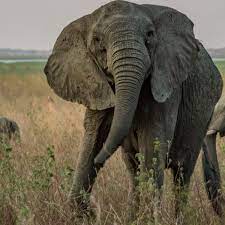
Killing for ivory is increasing the numbers of tusk-less females

Do elephants need tusks? It is a big question. Given the fact that they have them would suggest that they do have a purpose and therefore that life without them may be harder.

In Gorogosa national park in Mozambique, tuskless females became more common after ivory poaching become common during their 15 year civil war.

A natural evolution -due to our habit of hunting elephants with the biggest tusks increasing numbers are being born without

Being born tuskless, is not an unnatural affair. Indeed, some females have always been missing tusks. However, during the war 90% of the parks elephants were poached. If an elephant is chosen for its tusks over a period of 15 years, this gives elephants born tuskless a significant advantage. Importantly, with a death rate of 90% even if the tusks make life easier in some way, they are still going to loose them.

Elephants are dangerous animals that need to be treated with respect at the best of times. They can do much damage with their trunks and likewise throwing their weight around can easily overturn a car, As a result, while loss of tusks may be an impediment (and would appear to be so, as post poaching periods tusks usually return) it is clearly not a death sentence – and as in these periods, having tusks IS, it is not surprising that the few born without rapidly come to dominate the population.

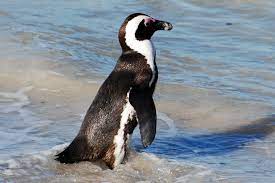
Bees killed 63 endangered penguins in south Africa

Around the planet, humans kill vast numbers of wildlife and we have pushed many to extinction.

Something we need to remember, is that we are not the only dangerous thing on earth. We need to allow each species to be able to cope with natural deaths that occur from elsewhere.

This event from a few months ago is a case in point. African penguins and African bees are both native species. It is unclear as to what caused this mass stinging event, but it is thought to be a fluke and not likely to be repeated.

While not thought of as an African species, penguins to still live in South Africa,

There are only thought to be a little more than 10,000 penguins left in South Africa, so we must watch that this does not become common, as it could push an already stressed population out of existence.

6000 years ago the Sahara was a thriving grassland, as recently as 11,000 there was forest in parts of it

The Sahara desert looks about a desolate a place as it is possible to find. Indeed, it is so unpleasant a place to live, that few forms of wildlife can live anywhere but around the perimeter. However, it would appear that this was not the case.

There are various wind currents which carry moisture around the planet. It is unknown why these shift from time to time, but it would appear that one such current used to bring plentiful rain to the Sahara.

Looking at it now, it is hard to believe that this area so harsh to life, might once have been a rainforest. The climate is so incredibly predictable here, it is hard to believe that it was not always like this.

Indeed, there have been cave paintings found in the area, depicting savannah animals including water loving animals such as crocodiles and hippos.

At the moment, it is unclear what caused these ‘rivers in the sky’ to shift so much, but we must recognize that should it happen again, humanity may well have little ability to do anything about it.

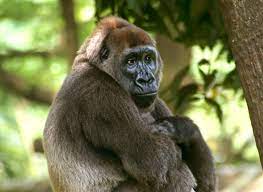
Are the days of the Nigerian gorilla numbered?

Nigeria was once a wildlife rich country. Unfortunately as a country whose population has soared over the last few decades much of the wilderness has been lost.

Afi River forest reserve in the eastern Nigeria cross river state is an forest corridor which connects small fragments of remaining gorilla habitat. However, this may well cease to be the case in the near future, as satellite data has shown significant deforestation in this area. The problem with forest corridors, is that they do not tend to be particularly wide – which means relatively small levels of deforestation can disconnect one end from the other.

These animals are important for the functioning of the local ecosystem, as well as having the ability to attract enough tourists to greatly benefit the local population – if habitat loss can be halted
Continue reading “Are the days of the Nigerian gorilla numbered?”
See Animals Wild

Read more news

Join as a wild member
to list your wild place & log in

Join as an ambassador supporter to
support this site, help save wildlife
and make friends & log in

Join as an Associate member
to assist as a writer, creator, lister etc & to log in

List a wild destination

List a destination in
the shadow of man

List a hide for animals more easily seen this way

Highlight some news
missed, or submit a
one-off article

Browse destinations for fun or future travel

Temporary membership
start here if in a hurry

Casual readers and watchers