UK: talking the talk, but not walking the walk on net zero, the ban on onshore wind turbines stays in place

58% of Conservative voters want more solar and onshore wind turbines. Despite this, the current Chancellor in the UK has just decided to leave this ban in place. They have to be called out on this. On shore wind turbines are the cheapest way to make electricity bar none.

This is completely in contradiction to what they are saying. Jeremy Hunt has just released his budget, which includes £20 billion, which will include small nuclear reactor. The energy security minister, Grant Shapps stated

“Already a leader in offshore wind power, we now want to do the same for the UK’s nuclear and carbon capture industries, which in turn will help cut the wholesale electricity prices to among the lowest in Europe”.

This is true, but how much further would we be, if the leading government stopped listening to a small minority of voters, and bought back onshore wind power. This would be good for our emissions, price of power as well as being fantastic for farmers, who can host wind turbines, and be paid for it
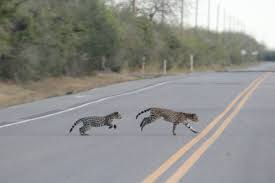
Could road crossings threaten the survival of the Texas Ocelot?

Ocelots are often thought of as relatively exotic animal. Looking like a small leopard or Jaguar, this is not particularly surprising. Never-the-less, like their bigger cousin, the jaguar, they are a native cat of the USA.

Unfortunately, as it is dangerous, this Ocelot crossing is not rare

Road deaths are a significant problem, as with a total population not thought to number more than 60-80, 8 were lost in under a year (2015-2016). Texas has created 27 wildlife crossings, with many in Ocelot areas, but clearly more are needed, along with driver education.

Perhaps more unhelpful, as Ocelots are largely nocturnal, they are usually crossing the road when hardest to see. Once relatively common in the southern USA, just 1% of its optimal habitat remains, and this is criss-crossed by road.

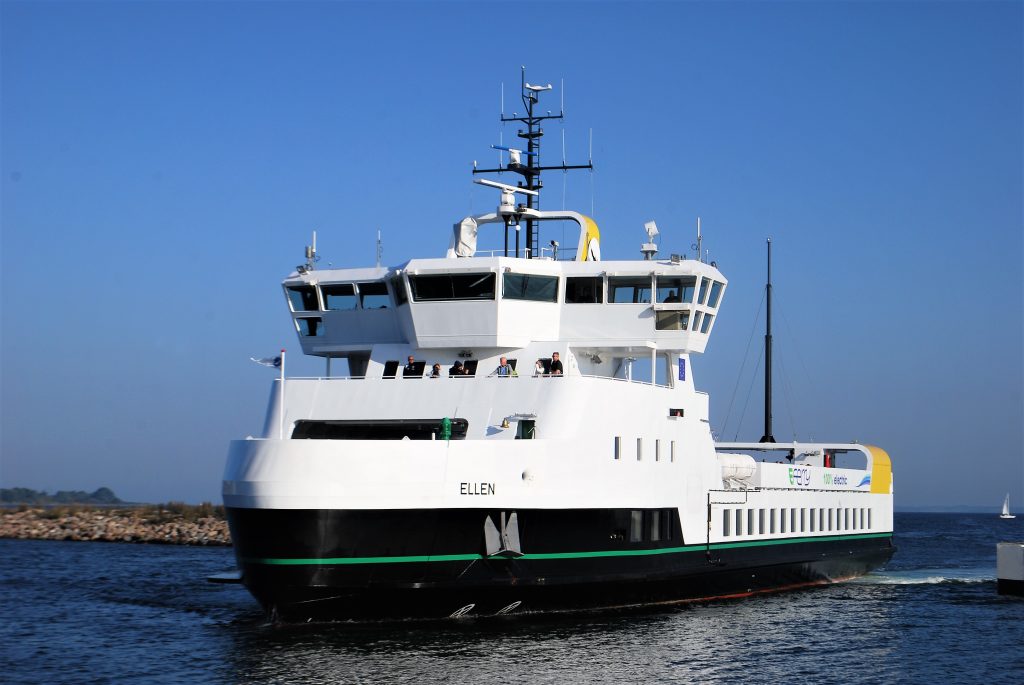
Could English channel ferries be electric within 5 years?

COP26 called for 6 green shipping corridors, and Dover Calais is an obvious place for this. The crossing is just 22 miles, but with over 400 ships crossing a day, it could make a big difference. Thankfully rival operators have signed up – both covering freight and passenger travel. Of course, it is a big risk to be left out as should this work any company still having to buy fuel will quickly go out of business.

This is obviously small compared to the size of P&O channel crossing ferries, but they are coming in fast

Industrial sized electric charging would be required to be installed, so that while the ships unload and then reload, the batteries can be recharged. it would require a large battery, likely using several megawatt hours per trip. Of course, while this is a great deal, it is far less than the fuel that is currently used.

Continue reading “Could English channel ferries be electric within 5 years?”

Returning Jaguars to the USA

While few animals have been completely exterminated from north America in the last 300 years there are a few on the brink.

One such animal is the Jaguar.

Could Southern Arizona become a place for ecotourism in the future?

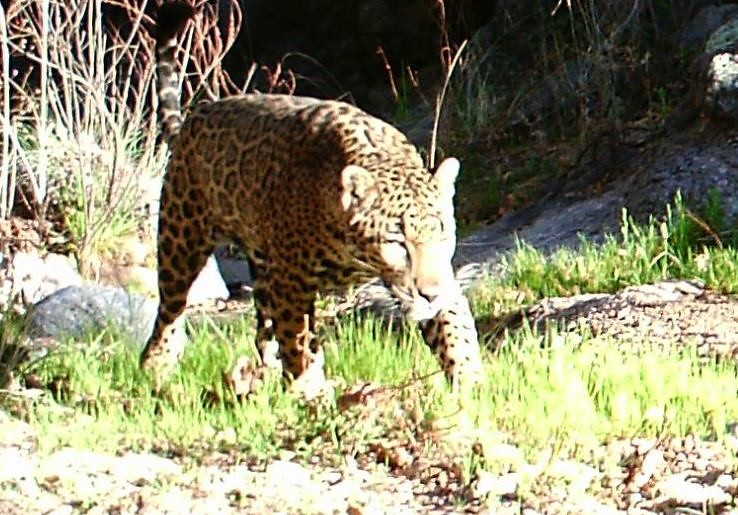
The last known Jaguar roams the Rocky lands of Southern Arizona and is called Sombra. The last known female was shot 60 years ago this year. Conservationists are calling for Jaguars to be reintroduced into the Gila national forest, a 3 million acre wilderness in New Mexico, along with protection for millions more acres which Sombra currently roams.

Continue reading “Returning Jaguars to the USA”

Currently Meat, Dairy and rice production will push the earth past 1.5°C on their own, are we doomed?

The human race has set itself the target of keep temperature rises to under 1.5°C. It is therefore an issue if just 3 of the food products could push us past this target.

Why are these 3 foods such a problem? Methane!

While it breaks down in the atmosphere over a matter of a few decades, until it does, it has a warming impact many times greater than carbon dioxide. A study has found, that if current food emissions continue to the end of the century, they will result in another 0.7°C of emissions, on top of the estimated 1°C that food production has already caused.

However, the same study found that this rise could be cut by 55% by cutting meat consumption in rich countries – to what is medically recommended, by reducing emissions from livestock and their manure (I have spoken in the past about an additive from seaweed which could be added to cattle diets, which would greatly reduce their methane production.) and by using renewable energy in the food system (this last one should be guaranteed, though unfortunately it isn’t, because the whole earth should be converting to 100% renewable.

If Europe wants to cut emissions faster, does this require a carbon tariff?

At the moment, there is a serious problem facing the world in global warming. The developed countries in the world are making moves to cut their emissions faster than the rest of the world.

If we are not careful, carbon tax can simply mean things need to be made on the other side of the world and shipped here

While this is only right, given the historical emissions that developed countries have already released, carbon tariffs are still going to be necessary.

You might ask why?

Continue reading “If Europe wants to cut emissions faster, does this require a carbon tariff?”

Wolves have returned to Belgium after 100 years

Estimates vary, but it is thought that 15-20 wolves are in the country. This is made up of 1 pack in Flanders, and another in Southern Wallonia as well as a newly settled pair (this pair is likely to become a pack if allowed to survive).

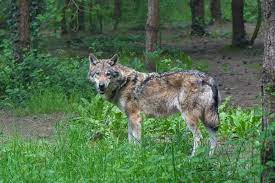
Wolves have returned to Belgium. While only numbering about 20, if allowed to, it is likely to grow

Across the border in France and Germany, numbers are far higher. As a result, should these wolves be left alone, the numbers are likely to grow and spread.

Experts can be very good at spotting signs and clues of their presence, these skills are important to track the wolves however, these skills can also become very useful in ecotourism.

Bringing back the Amur tiger to the western part of its range! (The Caspian tiger)

Across the world many species have huge ranges – look at the leopard, found across Africa and much of Asia. It is not a surprise that these animals have a great deal of genetic variability.

The Caspian tiger went extinct in 1970, many pictures are far older

However, until recently, far to much of the decisions about subspecies status went on the look of the animal.

Continue reading “Bringing back the Amur tiger to the western part of its range! (The Caspian tiger)”
See Animals Wild

Read more news

Join as a wild member
to list your wild place & log in

Join as an ambassador supporter to
support this site, help save wildlife
and make friends & log in

Join as an Associate member
to assist as a writer, creator, lister etc & to log in

List a wild destination

List a destination in
the shadow of man

List a hide for animals more easily seen this way

Highlight some news
missed, or submit a
one-off article

Browse destinations for fun or future travel

Temporary membership
start here if in a hurry

Casual readers and watchers