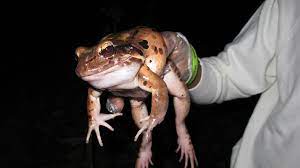
Dominica’s mountain chicken frog is heading to extinction faster than anything recorded before

Once so common that they were cooked as a national food on the island. Yet in just two decades, the animal is one of the rarest in the world, with an estimated population of just 21.

Growing to 20cm long and weighing over 1kg, it was one of Dominica’s apex predators. eating small mammals, snakes and other frogs.

It’s decline is notable, as its calls were formerly something that you heard across the island.

Now, silence from this frog has fallen across most of the island.

Initially, its decline was caused by a fungus, which impacted amphibians skin – important, as many amphibians breathe through there skin, and all breathe through their skin.

The breakout of this fugni led to a decline of 80% in just one year. Known to only occur on one other island (Montserrat), scientists urged strict quarantine measures to stop it arriving, but these warnings failed to have any effect.

A number of these frogs were removed in 2009 as the illness began to spread, and they are housed around the world in various zoos, such as London zoo.

In recent times, a few surviving individuals have been discovered. These appear to be naturally resistant to the chytrid fungus that is at fault.

Unfortunately, shortly after, hurricane Maria hit, and the population declined a further 80%, back into double digits.

Due to the lack of immunity to this fungus, it would appear that zoo individuals that were rescued back in 2009 are all irrelevant. Whether with such a small wild population, it is worth capturing more (it is possible that these new individuals could be bred with already captive individuals, bit this may not retain the immunity).

The remaining wild frogs are found in 2 populations, and neither are found on protected land. As such, the situation could change fast if land use changes would occur.

The conservationists in the wild are still working, but it is thought that there is only 2 years left to save the species from extinction.
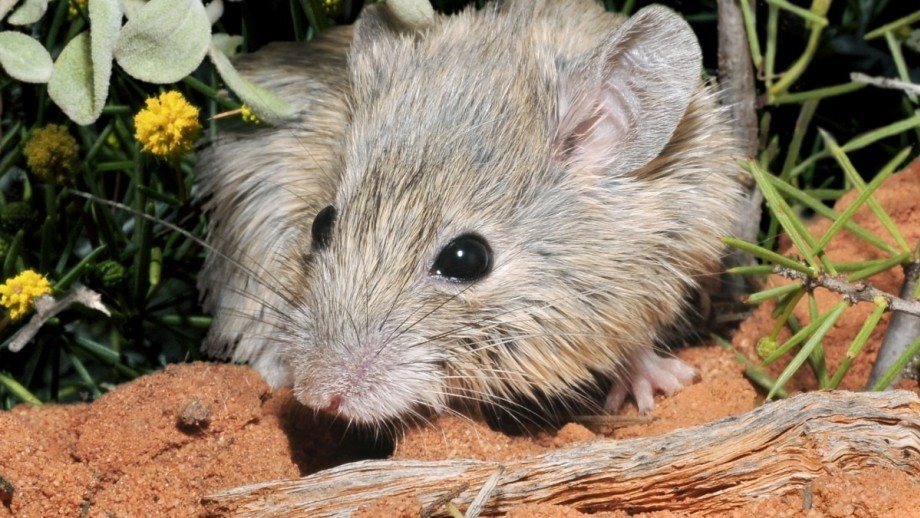

Goulds mouse, thought extinct for 125 years, lives on

The mouse was considered to be stuck on the mainland, which means that if true it would have been lost for good.

Thankfully this was not the case. 

This mouse was living under the identity of the Djoongari mouse, or the Shark bay mouse, on an island in shark bay.

Furthermore, by looking at the genetic diversity of these mice (from specimens taken at the time) was high, which makes it clear that right before extinction, there were large numbers of these animals. This means that their extinction was not a natural process as had been assumed, but is instead an issue with human arrival. 

Instead, extinct is likely due to a mixture of

  • Introduction of predators in the form of domestic cats and foxes
  • changes to fire management (carried out effectively before European arrival)
  • Introduction of new diseases
  • Habitat destruction due to industrialisation and land clearing for agriculture.

While these mice are unlikely to be possible to return to the mainland for some time (until feral cats and other species are eliminated) they can perhaps be introduced to other small islands to guarantee their survival.


“EU must cut carbon emissions 3 times faster to meet targets”

A new report has calculated that the EU is only cutting carbon emissions at 1/3 of the rate which is required in order to meet the 55% cut – from buildings, transport and agriculture by 2030

While emissions are falling, they are not falling anywhere near fast enough

Over the last 30 years, carbon emissions have dropped by 32% . while this is an impressive amount, it is far short of the promise.

The best predictions for the future, are that by 2050 the EU will have cut emissions by around 43%. While this is an important step, it is far short of what has been promised.

More importantly, at the current rate, we will have only met a further 1/3 by 2050.

The job is not done – much of the carbon emissions from the last 3 decades have been easy to achieve. They have been achieved through efficiency gains, and moving production offshore. Very little change in the EU behaviour has been required.  

An easy gain, both for individual cost, and emissions is electric cars. A faster transition is likely to save countries much money too (though it is true that at the current time, there is an issue with the tax revenue coming from fossil fuel sales.

It is far cheaper to run clean alternatives, so we must make that show in the figures.

Some governments are making efforts to help, but not in every way. For instance, in the UK, you can get money towards an electric car, but not a used one (which given the reduction in price, is likely to go further and help more. On heat pump the government is doing better – with the increase in the air-source heat pump grant, the cost to individuals has reduced to around 3500 (on average buying a heat-pump as well as installing and changing radiators to work with the lower temperature (bigger) the cost is around £11,000. However, many people have missed the advertising, and are unaware. It is true that new build homes will not be allowed to install boilers after 2025. 

However, older houses with gas boilers will be unaffected by the change until 2035. But the average cost for a new boiler, plus installation is thought to be around £4000, in 2023, meaning that for many homes, it will be cheaper to replace now.

Furthermore, while an air-source heat pump is thought to be around £50 more to run each year, should something like a thermal solar panel be added, the cost is far lower.

With carefully designed rules for builders, the switch to low cost private transport, and low cost private house heating can be cheap and obvious. At the current rate, though, this is not being met.

In the UK, clearly better understanding and education is essential, and builders need to see that adding things like thermal solar panels is a must.

Will it happen? will the EU meet our 55% target? at current speed, it is clear that this will be hard work. However, if this money is not found, we are likely to need far more in the future to adapt to the world we are creating.

Albino panda spotted in the wild

Rare albino panda seen again

If anyone has been reading this blog for some time, you may remember me writing about an albino panda that was photographed in wulong nature reserve in China (click here to read it)

This bear has been caught on camera (see above) and appears to be doing well. It has started to display mating behaviour and appears to be extremely healthy. It has all the features generally associated with albinism, with white fur and red eyes.. It is now around 5-6 years old, and has been seen playing with other pandas, suggesting that its unusual colouring is not leading to it being shunned from other pandas.

It was filmed approaching a mother with a 2 year-old cub. As the mother was ready to mate again, and yet did not show aggression to this male bear getting close, it is likely that this female is the mother of the white cub.

Currently thought to be numbered 1800 in the wild, the panda is currently listed as threatened – having been delisted from being endangered in 2016. It is also an integral part of the Giant panda national park which is being created, and links 67 panda reserves, allowing the bears to travel between the former islands of habitat, giving them the ability to breed in a more natural way. This is important, as inbreeding would make panda conservation even harder.

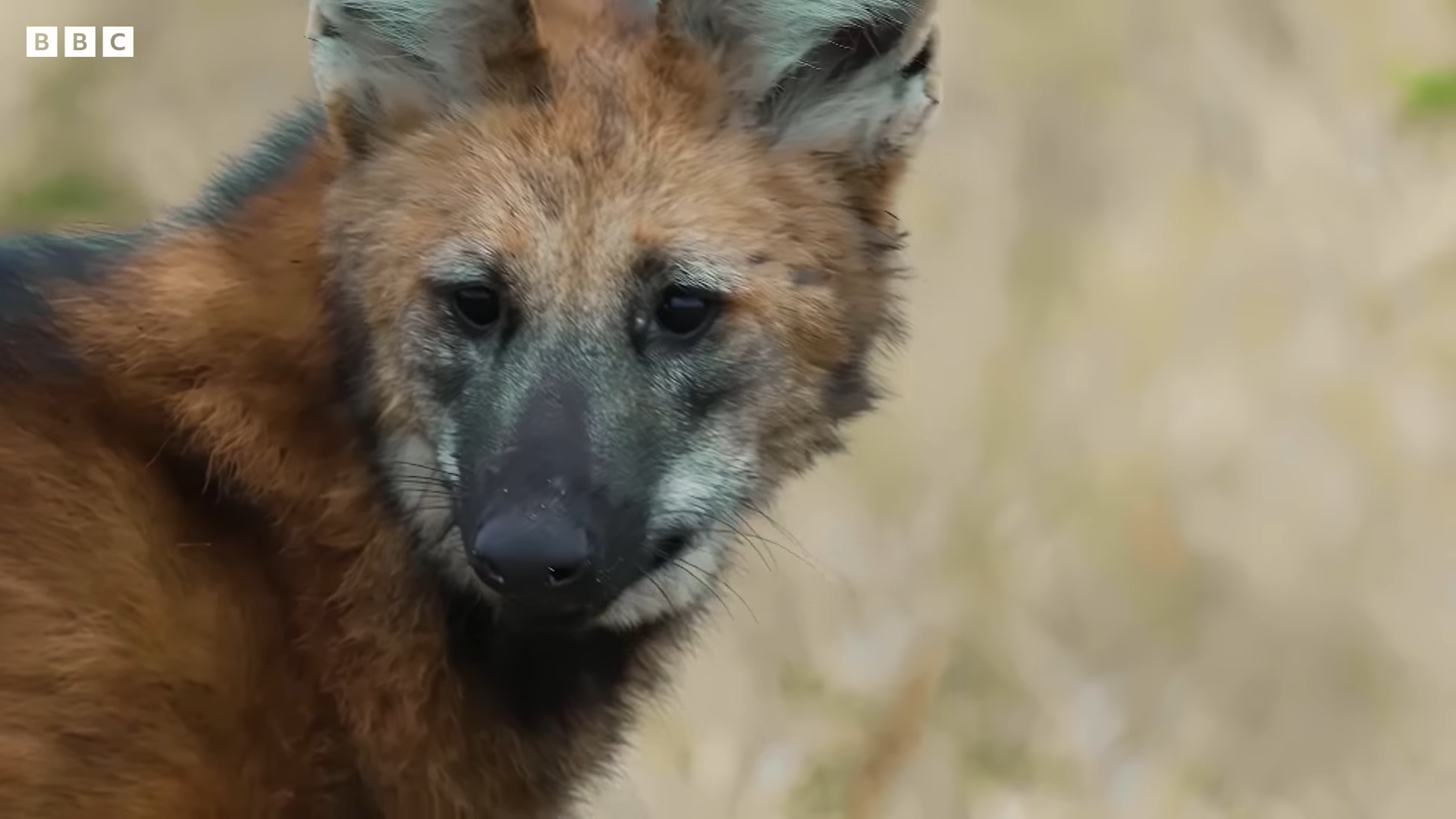
Maned wolf shown on planet earth 3

For those watching this amazing series, you will have see the beautiful animal – looking rather like a fox on stilts, the maned wolf is a species that lives on the plains of the cerrado in South America. It is unfortunately greatly under threat. Time will tell what will happen in the future.

These animals are heavily under threat, and as such, it is essential that locals see them as a benefit. This means that tourism to this region will help their long-term future. 

It is a particularly difficult issue for those who are concerned, because while we want to cut our carbon emissions, we must also find a way for enough people to visit, to warrant their long term protection.

We have a page for the maned wolf, and we have embeded a video from a bbc wildlife documentary on this species from a few years ago (though you can also watch a good clip of it from planet earth 3 episode 3)

Click here to visit the page.

Algonquin wolves -origin different than we thought?

The Algonquin wolf, also known as the Eastern wolf is a species which has been discovered in the eastern USA and Canada (click on the bold name above, to visit the species page). 

Perhaps, understandably, it is hard to find a new species in the USA unless it is already pretty rare. This species is only thought to have around 500 individuals, throughout its range (eastern USA and north into Canada).

South-eastern Canada has been known for a race of wolves and coyotes, that do not appear quite right for some time. This study suggested that this group of wolves split from the rest of wolves around 67,000 years ago. This appears to recent to give rise to the significant genetic differences, but it appears that this population also bred with coyotes around 37,000 years ago, and has continued to have genetic exchange between both species (on occasion) since.

As such, it is suggested that the Eastern wolf largely owes its appearance to hybridization between all three.

Has this lead to a more successful species? Well, one may well suggest not, given the small number of these wolves that survive at this time.

However, this is a well settled part of North America, suggesting that in fact it could be down to human hunting rather than natural forces.

Is the COP conferences a waste of time, if climate change deniers are able to lead it?

At the current time, countries in the region in which the COP is held will chose a president. In theory, that is fine, however, in practice if this is going to continue then the middle east should be banned from hosting the conference.

So, what precisely did Sultan Al Jaber say, which was so troubling?

Firstly, he claimed that a ‘phase-out of fossil fuels would not allow sustainable development “unless you want to take the world back into caves'”.

He then claimed that there is ‘no science’ to suggest phasing out fossil fuels is the only way to achieve 1.5C.

After being laughed at, over this utterly insane statment, he suggested that the comment had been misinterpreted. It should be noted, that this was in response to a question from a woman, which he was relatively rude about.

Do you think this woman misunderstood?

He even had the gall to suggest that the misrepresentation was undermining his desire to reduce carbon emissions (perhaps if this is true, it can start with his huge fossil fuel company can show this?). More than 100 countries are already supportive of this.

The worlds uptake of electric cars must accelerate. This is partly underway – last year around 67 million cars were sold, but 14% of these were electric, up from just 9% the previous year. The uptake is accelerating.

It should also be noted that apart from extreme heat in the UAE, continued global warming will also damage the UAE in extreme ways. The UAE economy is 0.5% of the global economy, in the end, places like this may refuse to accept the end of oil, and will have to be bankrupted, as cars move to 100% and many other industries clean up their act.


Panda bear behaving like a meat eater/scavenger?

This bear was filmed, gnawing on a bone from a takin, a species of wild cattle.

For a species which is thought to survive exclusively on bamboo, this would be strange behaviour.

However, pandas do not survive exclusively on bamboo as roughly 1% of their diet comes from other foods. In fact, their digestive system is typical of a carnivore, so the remaining 1% of their diet can include eggs, small animals and carrion – like this bone. Pandas are also known to forage in farmland for pumpkin, kidney beans, wheat and domestic pig food.

The thing is, pandas eat up to 38kg a day, which means that during the week, they eat around 3kg of food that is not bamboo. This is significant, and while much of this may well be other vegetation, if the time spent on other food sources was around 1% of the time, it would suggest at least 1 hour a week spent eating other things.

One must remember that their intelligence is on a par with Chimpanzee and gorilla -like other bears, so they are capable of working things out.

Is global warming true – YES, and expert shows

As if it is needed, here is a list of evidence that global warming is true, laid out by someone with a doctorate in the subject material. Do share with friends who have suggested that there is not. 

It is simple, the world is warming and we are causing it by burning fossil fuels. We are responsible and so we can do something about this.

At a time, when there is a high probability that someone who denies all obvious facts on this subject, is leading the race to return to the white house, we need to stop debating facts and fix the problem.

USA, you are currently a pariah around the world, because you cannot pass meaningful climate action. You have 4.23% of world population, emit around 16 tonnes per head on average – which amounts to 14% of global emissions or around 1/7. It is true that China  (29.18% of global emissions), however India emits just 7.09% of global emission. Yet the per capita emissions of these countries are 7.44 in China and just 1.89 tonnes in India.

The UK, a similarly developed country, only has emissions of 5.6 tonnes per head

We’re hoping to return to a more normal amount of blogposts in the near future. Time is currently going into building a database of species of the world.

Many species pages are going live

For those who visit this website regularly, there will be periods where it looks like I am not active. While there are periods where I am away from the computer, more often than not it is because I am concentrating on other aspects of the website. In recent times, I have been working hard on the list of species that the website lists.

The long-term aim of the website, is still for it to become a one-stop shop for wild travel. We continue to work towards this. Do look at the Species watch page.

See Animals Wild

Read more news

Join as a wild member
to list your wild place & log in

Join as an ambassador supporter to
support this site, help save wildlife
and make friends & log in

Join as an Associate member
to assist as a writer, creator, lister etc & to log in

List a wild destination

List a destination in
the shadow of man

List a hide for animals more easily seen this way

Highlight some news
missed, or submit a
one-off article

Browse destinations for fun or future travel

Temporary membership
start here if in a hurry

Casual readers and watchers