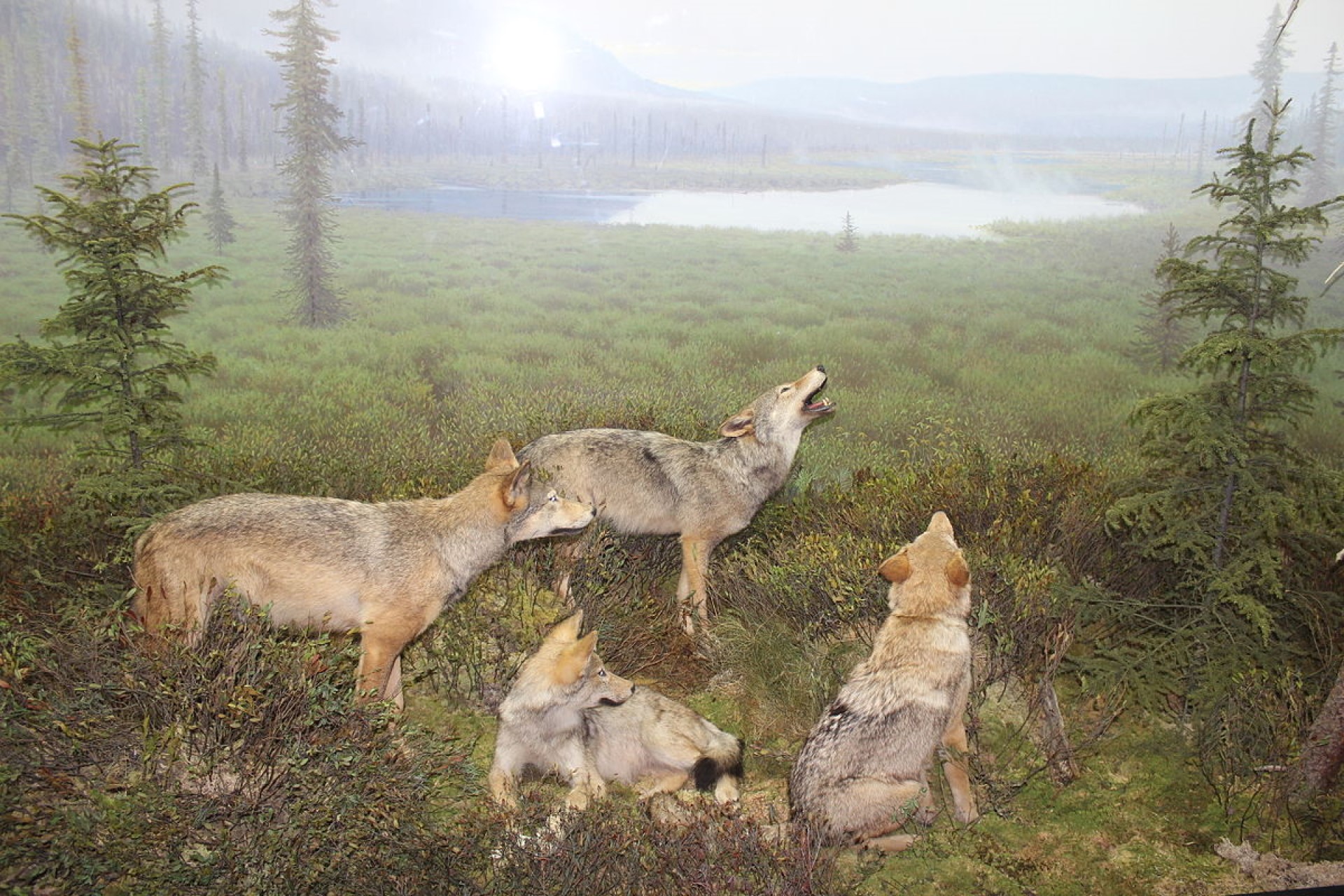
This wolf was formerly called the Eastern Timber wolf, and was considered a subspecies of the grey wolf. There are only around 500 of this species that live in the wild. They are classified as vulnerable, presumably as there was never a large population of these wolves in the wild. They are thought to have split from grey wolves 67,000 years ago (for reference, this is more than twice the minimum distance back to when red and grey wolves split).
Found in the area of the great lakes and eastern Canada.
At the point at which it was decided that this wolf is a separate species, it already has a relatively low population, though it is considered to be mid-way between secure and extinct.
Any articles that we write in the future will appear below. We hope in the future to link to people who can help you see them in the wild, this will lie below the news. Do get in touch if you live or work in the area, we are really keen to connect you with those people visiting the area, so that they can see this newly split species and to bring you income from this species on your doorstep.
Both of the below videos are from Algonquin park, the first is a natural howl of a wolf in the stillness of the morning, while the second, is a howl prompted by a human howling into the wilderness – while this should not be done too often, as it can make the wolves nervous (they howl to spread themselves out, so hearing howls can make them think that they have to fight – though howling in North America is far more common, likely as a result of centuries of persecution in Europe.
As we make links in the field to see this species, they will appear below the videos and the list of articles.
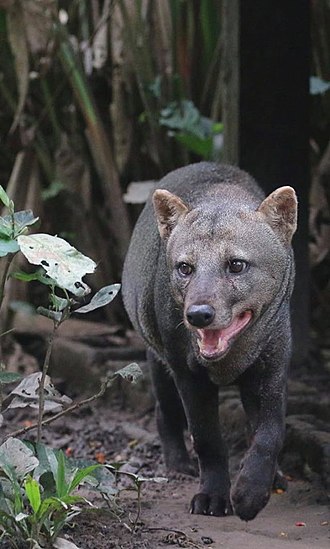
The short-eared dog (Atelocynus microtis), also known as the short-eared zorro or small-eared dog, is a unique and shy canid species endemic to the Amazonian basin. It is the only species assigned to the genus Atelocynus.
short-ear fox, blue-eyed fox, savannah fox and black fox are all other names that it is known by, often from Portuguese or Spanish.
Two subspecies are recognized.
They are found throughout much of the Amazon, and seems to prefer areas with little human disturbance.
Its diet consists of fish insects and small mammals.
Feral dogs are one of the biggest threats, both through direct attacks, but also for the illnesses that they carry. It is not currently threatened.
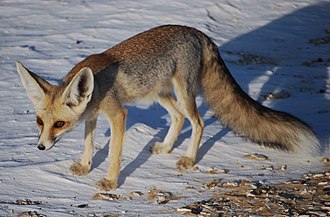
Rüppell’s fox (Vulpes rueppellii), also called Rüppell’s sand fox, is a species living in desert and semi-desert regions of North Africa, the Middle East, and southwestern Asia. It has been assessed as Least Concern on the IUCN Red List since 2008.[2] It is named after the German naturalist Eduard Rüppell.
This fox is a close relation of the Red fox (this is something that can be suspected, looking at the animal.
It is found throughout all of North Africa, and the middle east, and stretches into Iraq and Iran, alongside Pakistan and Afghanistan. It is not known, but it is suspected to be one of a relatively few number of mammals benefitting from climate change, as it is causing the worlds deserts to grow, which expands areas that this fox can out-compete the red fox.
There is some debate as to how many of these subspecies are valid, but currently 5 are recognized.
It is a similar size to other foxes, although generally more rounded, so as to loose as little weight as possible.
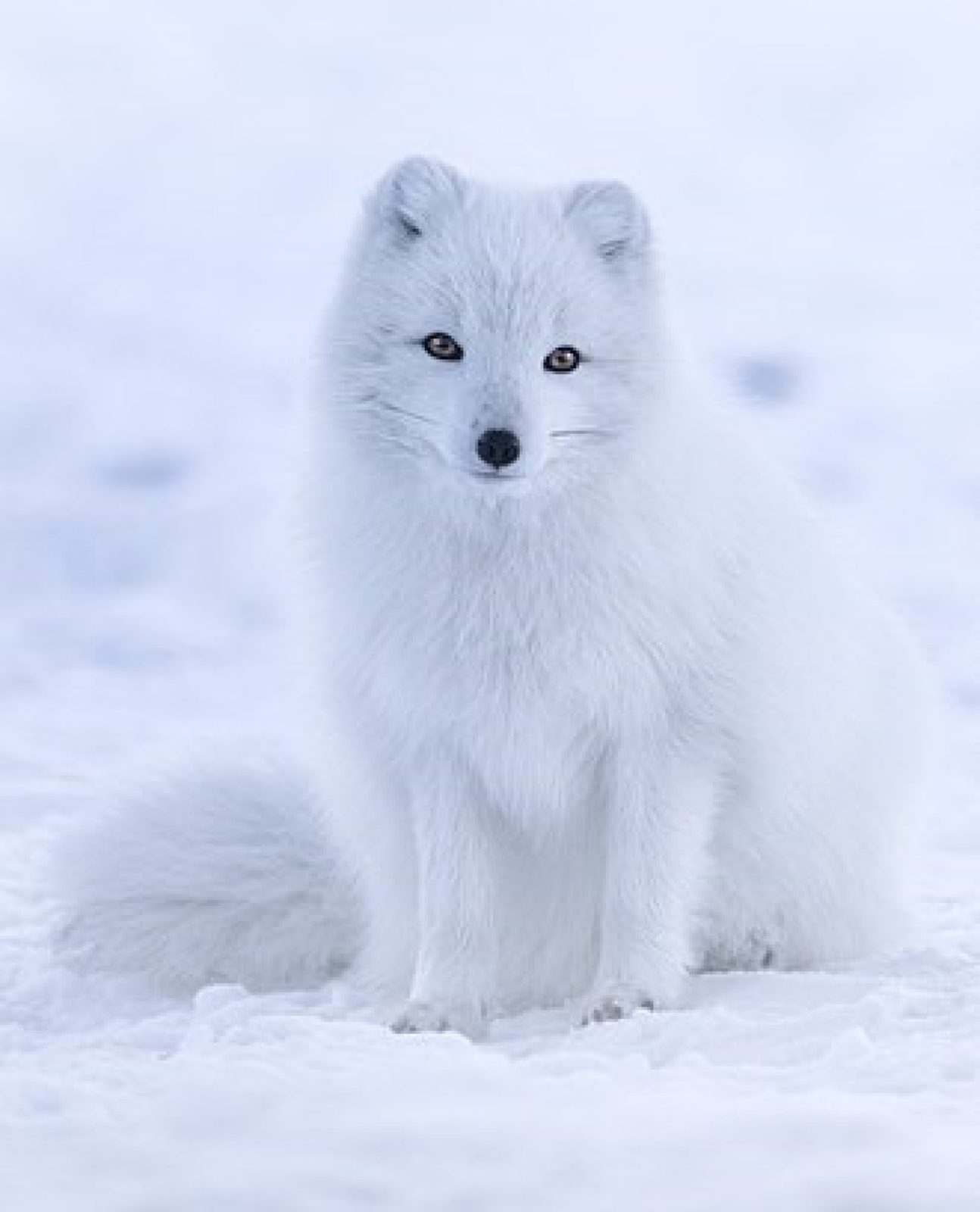
The Arctic fox preys on many small creatures such as lemmings, voles, ringed seal pups, fish, waterfowl, and seabirds. It also eats carrion, berries, seaweed, and insects and other small invertebrates.
Natural predators of the Arctic fox are golden eagles, Arctic wolves, polar bears, wolverines, red foxes, and grizzly bears. Having said this, they are also keen scavengers and seem to get alarmingly close to these animals on relatively regular occasions. in places where they occur, rodents such as lemmings can form a large part of an arctic fox families diet. In areas where their range overlaps with red foxes, they often build bigger dens with more exits, so as to be able to escape. One of the issues with reduced snow cover, is the fact that red foxes can seize range formerly used by Arctic foxes.
During much of the year, there is as much as a 90-100 degree difference between the internal temperature of the fox and the air temperature. When inactive, they will curl up into a ball, tucking in all extremities to preserve heat as much as possible.
Primarily monogamous, a pair of arctic foxes are required in order to raise their cubs. In areas where predation is higher, arctic foxes change their behaviour. Here they are often far more promiscuous, possibly so that there are more adults who think the young is theirs and therefore more help for protection, should one of the true parents get killed.
They are the only fox with fur on their feet, so as to avoid even more heat loss. It appears to have originated out of foxes from the Tibetan Plateau.
There are 4 recognized subspecies (beyond the common one)
The domestic dog, like the domestic cat is still very similar to the wild wolf in terms of genetics. It is true that our choices have meant that there is a huge range of domestic dog breeds.
So how has the domestic dog changed? Well the domestic dog has been bred to be easier to control, and this almost always comes with a reduction in intelligence. Having said that, wolves are incredibly intelligent, which means that even with less brains domestic dogs are capable of incredible featss of thinking.
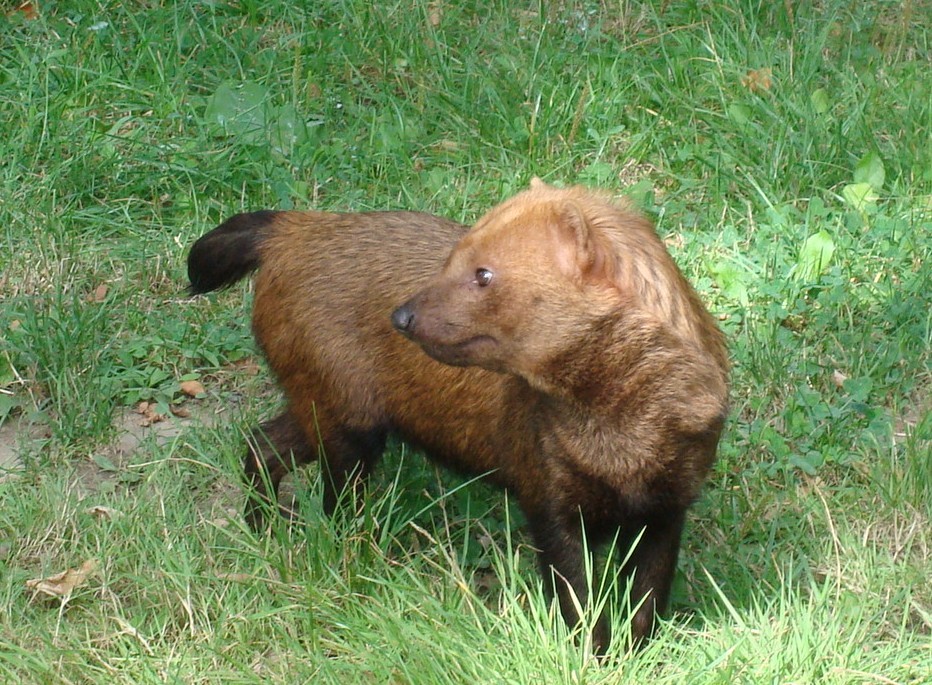
The Bush dog is a south American Canid, and the only member of the genus Speothos (there was another species in this group but it is already extinct.
The bush dog is a small canid that lives in South America
Bush dogs are active during the day, and live in packs of up to 12 animals. There is only an alpha pair which breeds, but all will guard the pups, and the males will bring food for the female who stays with the pups.
It is classed as near threatened, but are found across the northern half of the Southern American continent.
They are effective hunters. Their small size allows them to move across the forest floor rapidly, and they have webbed feet, which means that they are good swimmers when they need to cross water (many rainforest flood from time to time.
They are so rarely seen, even in their native habitat, that they were first discovered in the fossil record.
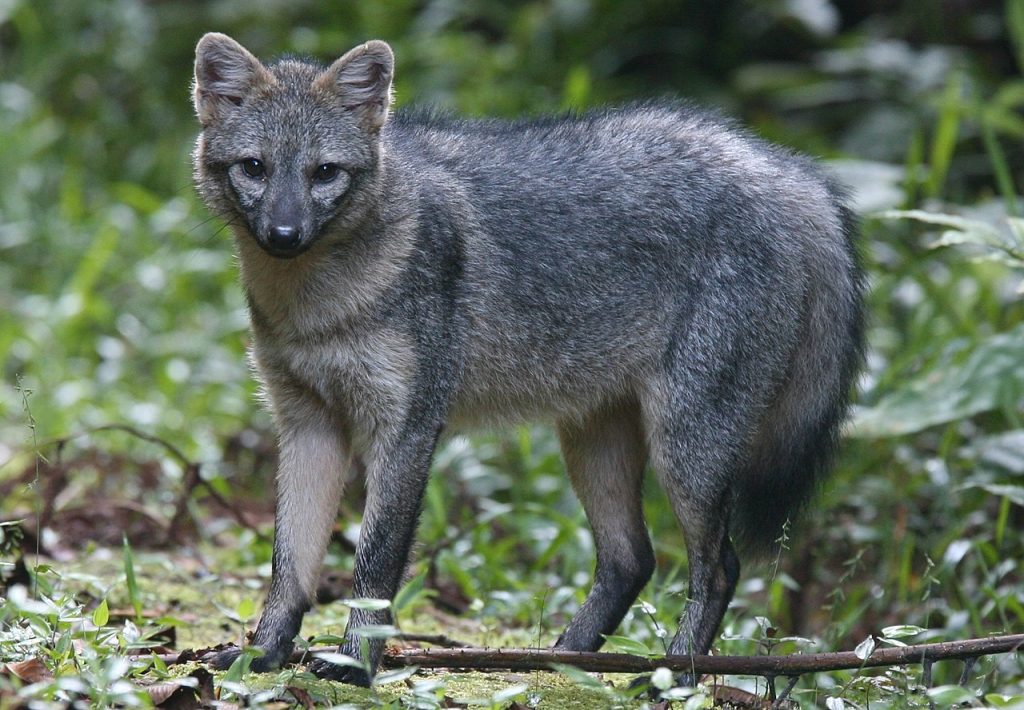
This fox is a also known as the forest fox, wood fox, and bushdog (as apposed to the Bush dog which we have encountered already).
Crab-eating fox
Like other foxes in south America it is not a true fox. It lives in anges in savannas; woodlands; subtropical forests; prickly, shrubby thickets; and tropical savannas such as the caatinga, plains, and campo, from Colombia and southern Venezuela in the north to Paraguay, Uruguay and northern Argentina at the southernmost reaches of its range. Its habitat also includes wooded riverbanks such as riparian forest. In the rainy season, their range moves uphill, whilst in drier times they move to lower ground.[13] Their habitat covers all environments except rainforests, high mountains, and open grassy savannas. In some regions of their range, they are threatened with extirpation.
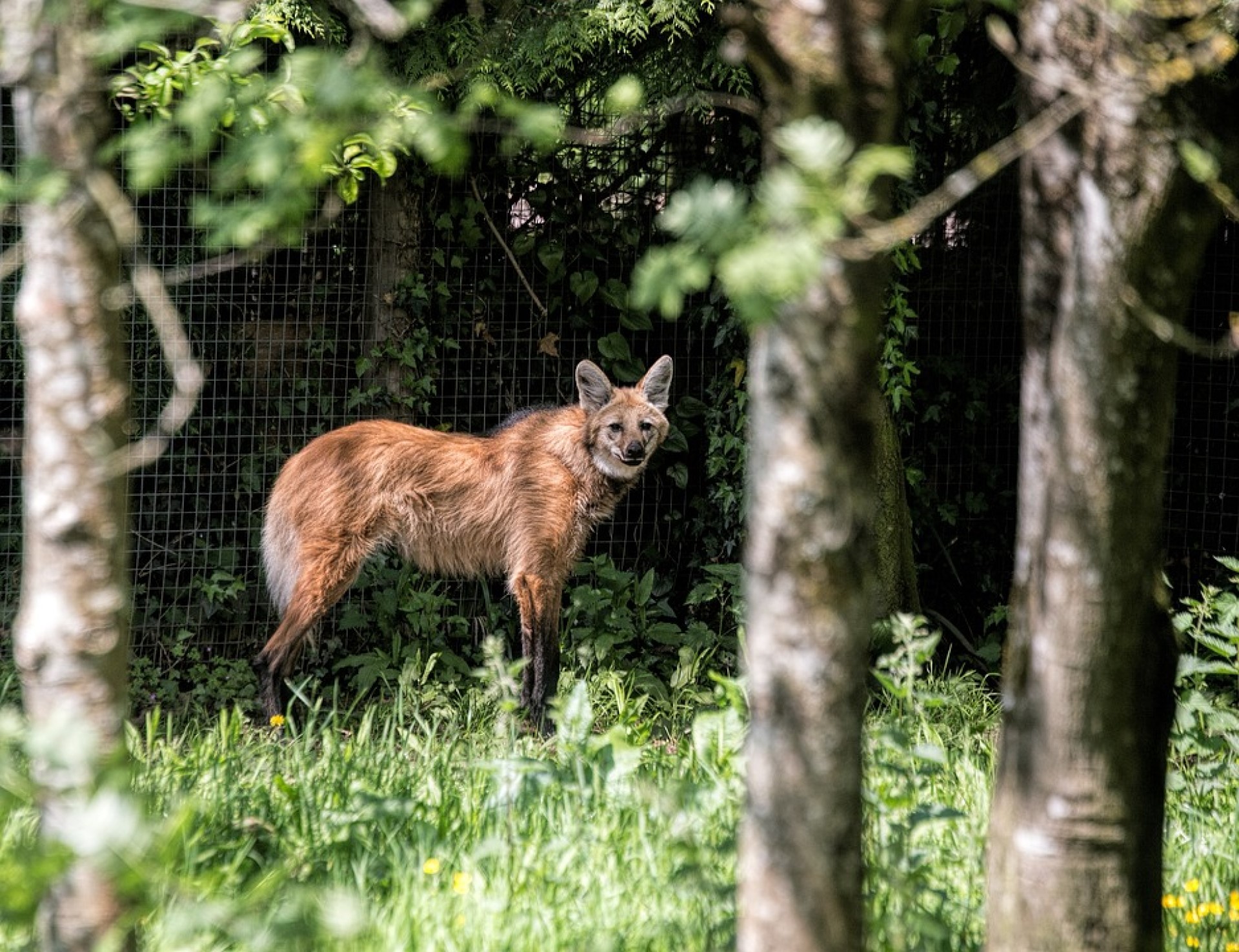
Looking, at first glance, like a fox on stilts, it is found in Argentina, Brazil, Bolivia, Peru, and Paraguay, and is almost extinct in Uruguay. It is actually not a wolf or a dog, but instead sits in its own genus Chrysocyon which means “golden dog”. It is crepuscular and omnivorous, and lives on the open habitat of the South America Savanna. The IUCN classes it as near threatened, while a Brazilian organisation with a similar role lists it as vulnerable.
Its name in a local language calls it a big fox. Indeed some studies have suggested that it should be in the same genus as pseudo-foxes.
A recent study suggested that its nearest relative was the Falkland islands wolf, and its mainland relatives – but you have to go back 7 million years to find a common ancestor with this group.
It only hunts solitarily, and its preferred habitat is grasslands, scrub prairies, and forests.
It is not currently considered endangered, given its wide area in which it inhabits, never-the-less it is recognized as a near threatened species due to its reducing numbers. In Brazil, Argentina and Uruguay it is forbidden to hunt them. It has been used to publicize the fight to protect the Brazilian cerrado, by placing it on one of the Brazilian notes.
This animal was shown in great detail in planet earth 3 episode 3, however, this clip is from a bbc series a few years ago.
As we make contacts which you can use to plan your travel to see this animal for yourself.
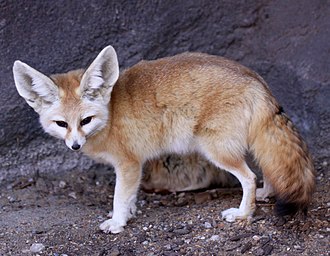
The fennec fox (Vulpes zerda) is a small crepuscular fox native to the deserts of North Africa, ranging from Western Sahara and Mauritania to the Sinai Peninsula.
While its huge ears are incredibly useful for hearing insects below ground, they also fulfil an essential need, of being an easy way for the fox to radiate heat.
The fennec is the smallest fox species. Its coat, ears, and kidney functions have adapted to the desert environment with high temperatures and little water. It mainly eats insects, small mammals and birds. The fennec has a life span of up to 14 years in captivity and about 10 years in the wild. Its main predators are the Verreaux’s eagle-owl, jackals and other large mammals.
Fennec families dig out burrows in the sand for habitation and protection, which can be as large as 120 m2 (1,300 sq ft) and adjoin the burrows of other families. Precise population figures are not known but are estimated from the frequency of sightings; these indicate that the fennec is currently not threatened by extinction. Knowledge of social interactions is limited to information gathered from captive animals. The fennec’s fur is prized by the indigenous peoples of North Africa, and it is considered an exotic pet in some parts of the world.
Its name comes from the species’ Arabic name: fanak
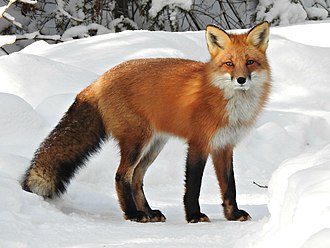
The red fox (Vulpes vulpes) is the largest of the true foxes and one of the most widely distributed members of the order Carnivora, being present across the entire Northern Hemisphere, plus parts of North Africa. It is listed as least concern by the IUCN. Its range has increased alongside human expansion, having been introduced to Australia, where it is considered harmful to native mammals and bird populations. Due to its presence in Australia, it is included on the list of the “world’s 100 worst invasive species”. It should be noted, that humans have usually been either the direct cause of red foxes invading a new country, or have allowed them to migrate as a result of climate change.
The red fox originated from smaller-sized ancestors from Eurasia during the Middle Villafranchian period, and colonised North America shortly after the Wisconsin glaciation. Among the true foxes, the red fox represents a more progressive form in the direction of carnivory. Apart from its large size, the red fox is distinguished from other fox species by its ability to adapt quickly to new environments. Despite its name, the species often produces individuals with other colourings, including leucistic and melanistic individuals. Forty-five subspecies are currently recognised, which are divided into two categories: the large northern foxes and the small, basal southern grey desert foxes of Asia and North Africa.