As much as half the particulate emissions from a car, come from they tyres. While electric cars are far cleaner, this particulate emissions is particularly dangerous, to health so this move to do something about it is very good.
The idea is that a device is placed behind each wheel, and is statically charged, allowing it to collect most of the waste. The waste can then be recycled into tyres of into other things. Tyre wear accounts for about 28% of oceanic micro plastics, so it is an area we need to deal with – particularly because with their heavy battery electric vehicles wear down tyres much faster.
Most drivers on petrol engine cars, wouldn’t dream of driving without a catalytic converter – hopefully in the future the same will be said for tyre dust collectors. They should be on the market in the next few years.
I don’t know what your feelings towards cheetah, for many of not most people they have vague idea of the cheetah because it’s the fastest animal on earth. My family have a model cheetah, full size, something I’ve always loved – and it built a deep love for these animals. I was lucky enough to see one whole in the Kruger – not many at the time, so very lucky. I hope this time we will see more
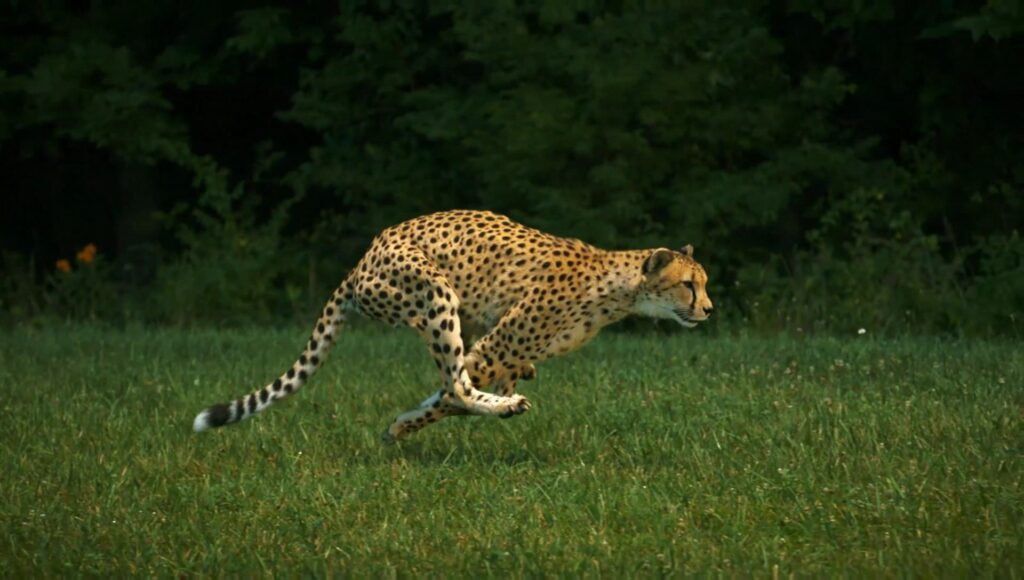
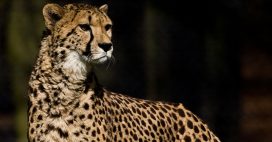
Cheetah running at speed
However, for perhaps most they know little else. I have written on them many times, I believe they are an essential tool for conservation. Given their size, they don’t generally attack humans, and kill livestock far less. Having a historic range that encompasses most of Africa and much of Asia, there are many places they could be, but instead they face extinction once again.
At various times over the last century, the elephant population has been decimated. Between 1979 and 1989 the elephant population halved. Even recently, between 2007 -2014 30% of Africa elephants were lost.
Yet this is only the top of the iceberg. In 1930 there were an estimated 10,000,000 African elephants roaming the continent -today just 415,000 remain 96% decline. That means a sustained loss of almost 1%a year for almost a century.
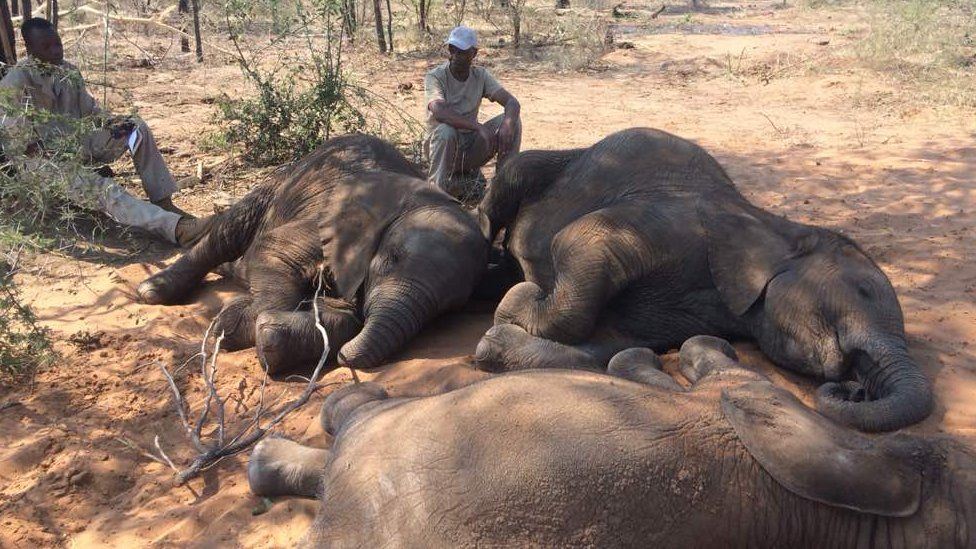
Bbc photo of a group of elephants killed by Poachers
Now, there is another problem with this. These elephants belong to 2 species, the African forest elephant and the African Bush (or Savannah elephant). It is estimated just 40,000-50,000 African forest elephants remain; and it has to be remembered that the differences between the African forest and Savannah elephants are not small – they are not sub species, they are separate species.
The African forest elephant, overlooked by poachers for a long time, had had precipitous collapse in numbers, from over 700,000 to likely under 100,000. More than half of the remaining population lives in Gabon – which makes them susceptable to any change in policy in this small African country.
All this, is a rather long winded way to say that African elephants have suffered over the last century.
The British government has banned the import of ivory. Now they are closing the loophole, by banning other body parts from elephants – why stop ivory import, if the elephant will be driven to extinction for is ears or feet anyway.
Now, it is true that there is some legal hunting. In some places this does make sense, and I would suggest rules to allow import from these places – however these are few and far between, and many are not currently healthy enough to allow hunting. I am thinking of places like the Selous – 20,000 square miles. At one point housing more than 110,000 elephants, successive round of devestating poaching has reduced that to 10,000 or less.
While a take of 50-100 (even 500) from 110,000 is a founding error, this big a take from 10,000 is quite different. In a healthy ecosystem, this take of 1% or less would be fine, but it is likely that animals are still being lost to the poachers. Furthermore, given such a precipitous decline much of the population knowledge will have been lost – making survival through tough times far harder already.
My feeling, is that hunting should only happen if there is no other option. Sure, a hunted elephant brings in a lot of money, however, the Selous could support a vast photographic Safari destination, if the tsetse fly could be eliminated. This would give well passing jobs to the many poor communities living around it’s fringes. Certainly, I would argue with Africa has no need to trophy hunting of elephants, or most other species – never mind the fact that someone going on a canned lion hunt does not risk his life, and is guaranteed to kill. Essentially a canned lion hunt, is killing an animal in a large zoo.
In liwonde national park, 4 species of vulture; all considered critically endangered have returned. What has prompted this? Well the reintroduction of lion and cheetah has retires some meat two be put out and this has attached the vultures.
The park is a little over 2000 square miles (5500 square km) and the cheetah population has reached 42.
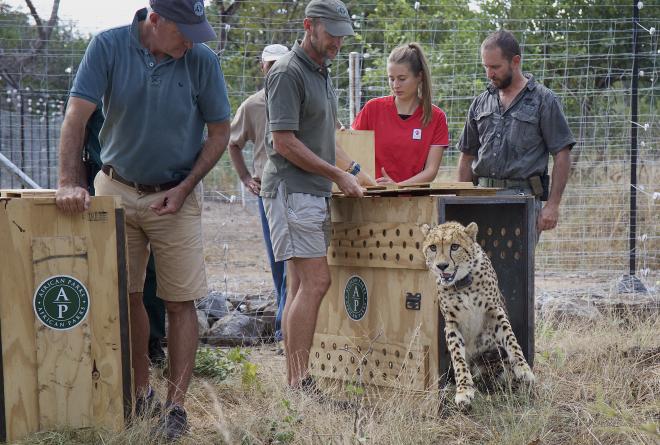
One of the first cheetah to be released
Lion and cheetah were lost around 2000, and as a result the vultures left.
The problem is that was vultures are the main group cleaning up bodies, without them the bodies started and rotted. This was a perfect breeding ground for various illnesses that threaten the lives of both humans and livestock.
Farmers will often take revenge on livestock killings by poisoning the body. This usually like the lions, along with any scavengers that come along such as jackals and hennas.
However, it can have a decorating impact on vultures. Due to their way of finding near to scavenge, there can often be 20-30 vultures waiting while the lion eats – if a kill is poisened, it can kill every vulture for miles around.
Both lions and cheetah are missing from dozens of countries across Africa and Asia, places they historically roamed. While lions can cause more issues, cheetah cannot generally kill much livestock. As a result, there will be dozens of reserves where cheetah could return, allowing the reserve to start to operate more as it once did. Once this happens, tourists will start visiting and this leads to money which can help the rest of the reserves rejunivatiom. This in turn makes return of lions far easier, as assist from bringing in the funds to compensate livestock losses, it also brings in lots of money – allowing poor farmers to make more money and raise the standard of living for their family.
I enjoy eating meat. Where possible, I greatly enjoy ribs. I have regular twinges about eating meat, both because of its environmental impact and because it requires killing animals – I am not on the verge of ceasing to eat meat, but my family and I have been trying to reduce the carbon footprint of our diet.
So what did I think?
I was impressed. While I could just about tell that it was not meat, I am not sure it would have been as obvious in a blind taste test.
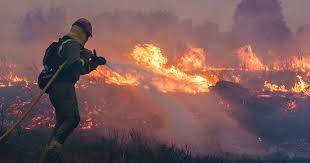
The Sierra de Culebra is a hunting reserve on the North East corner of Portugal, and across the border in Spain.
This hunting reserve was essential in saving the Iberian wolf when it was at its smallest 70 years ago (or so).
Currently roughly 10 packs live within the reserves boundaries – so around 80 wolves. Given that the reserve only covers 80-100 square miles, this is easily the highest density of wolves in the world.
While it is thought that the adults will have mostly survived, this years young are likely to have been too small and weak.
Thankfully, the wolf in Spain is now doing quite well. The Iberian peninsula is thought to contain about 2500 wolves, as such the loss of the Sierra de Culebra is not likely to threaten their further survival.
Speaking from experience, I hope that this reserve recovers as it is a special place.
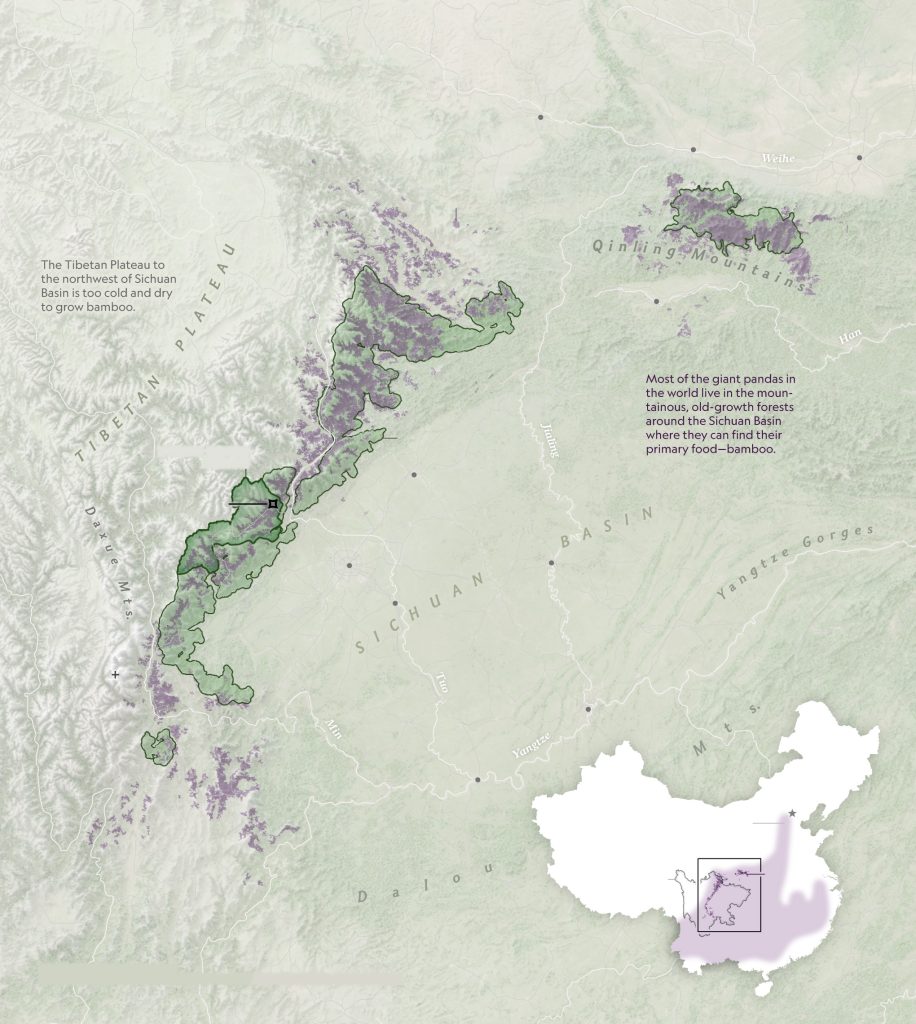
Over the last couple of years, snow leopards have been sighted in Pingwu county – Sichuan province. This confirms that the range of the snow leopard has expanded eastward as this reserve takes shape.
Pingwu supports around 335 Pandas, or around 20% of the Chinese total.
this is a map showing the reserve, and how it compares to the whole of China.
This Giant Panda national park will include 70.25% of known Panda habitat 87.5% of the Pandas currently living in the wild.
I wrote back in November about plans to move African cheetah from South Africa to India. Should you wish to read this original article, I have linked it below.
There has been an update. The first batch of cheetah will be moved to Kuno reserve, in August, 5-6 Cheetah will be moved to Kuno reserve in the first batch.
Kuno reserve was supposed to be the place that Asiatic lions were due to be moved to before Gujarat claimed exclusive ownership – and therefore refused to translocate the lions. The fact that cheetah are being introduced to Kuno should not rule out lions following, though Gujurat is still behaving badly on this front.
What should we make of this? Well in theory, Iranian cheetah would be far better. Unfortunately the cheetah is doing so badly, that it would be impossible to translocate cheetah to India, without risking eliminating the cheetah in Iran. African cheetah are very similar, and I would argue that a similar animal is better than none filling this ecological niche.
There is a scheme which gives companies ratings based on their environmental, social and governance positions in order to allow investors to know that they are investing in companies that are thinking about the future.
This is good! Of course we should know.
However, this has (intentionally or not) been set up to fail on its own. It seems that the rating does not look at whether a company emits small amounts of carbon, or makes low carbon products but on the Dollar value of the risk/return.
Tesla’s ESG score is 28.5, giving it a ranking of 41 out of 85 USA car companies or 8,192 out of 14,666 in the world.
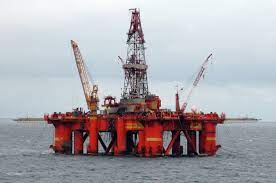
The companies below are all oil companies with lower esg scores are as follows:
Royal Dutch Shell ESG Score: 35.1 with a high exposure risk and strong management rating.
TotalEnergies SE ESG Score: 29.2 with a medium exposure risk and strong management.
Repsol SA ESG Score: 26.7 with a medium risk and strong management.
Equinor ASA ESG Score: 32.0 with a high risk and strong management.
It is entirely possible that the esg score is being misused by companies like this, however what is clear is it is misleading consumers and so must be changed (as whatever the current aim, this score was set up to inform not to mislead).
A quote from Bloomberg business on this scheme stated “the most striking feature of the esg rating system is how rarely a company’s record on climate change seems to get in the way of it climbing up the esg ladder or even to factor at all”.
In the 1990s the bear population of this mountain range consisted of about 50-65 in the western population, and 14-20 in the east. No more than 30 years later, that population numbers 300-400 (as much as a 6 fold increase).
How did they do this, and can the success be replicated. It is thought that just two stems were responsible for their recovery.
Firstly, efforts to protect the environment have been successful. With a healthier ecosystem, the country is more capable of sustaining a bear population.
Secondly, education of both locals and visiting tourists has lead to a greater acceptance of the bears. Furthermore, with the success of tourism, locals increasingly seeing the bears as an asset rather than a threat.
These bears are almost entirely vegetarian, and while efficient hunters whatever meat the consume, here it is usually carrion – animals that have naturally died, or been killed by other animals.
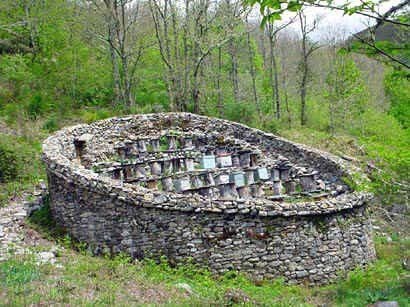
As a result, the bears are far less of a threat than wolves (though even wolves can cause little threat if farming is set up correctly). Bee keepers are threatened to a greater degree by the bears, however by returning to ancient bee keeping habits, this can be reduced to a minimum.
With a Bee keeping structure like this, if built properly then bears are incapable of breaking in
Back in the 1950s there is thought to have been as many as 1000 bears in the wilds of Spain, so the population still has some recovery to go through.
Never-the-less this is a good news story that is extremely encouraging that large carnivores and omnivores are still capable of surviving in the modern landscape of a western European country.
This is well worth a visit. A link will hopefully be added to this page in the next week or so