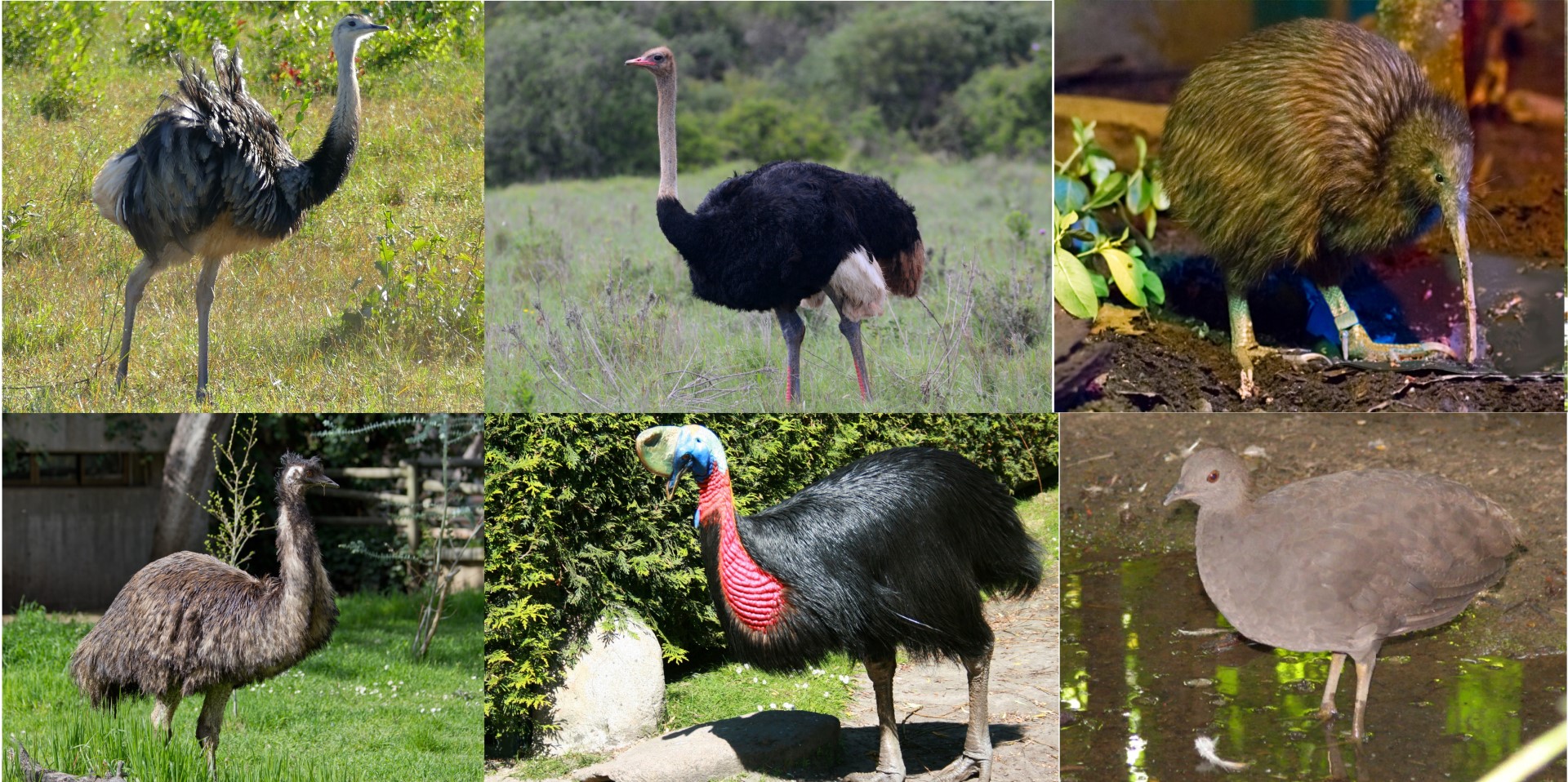
Rhea species

Rhea

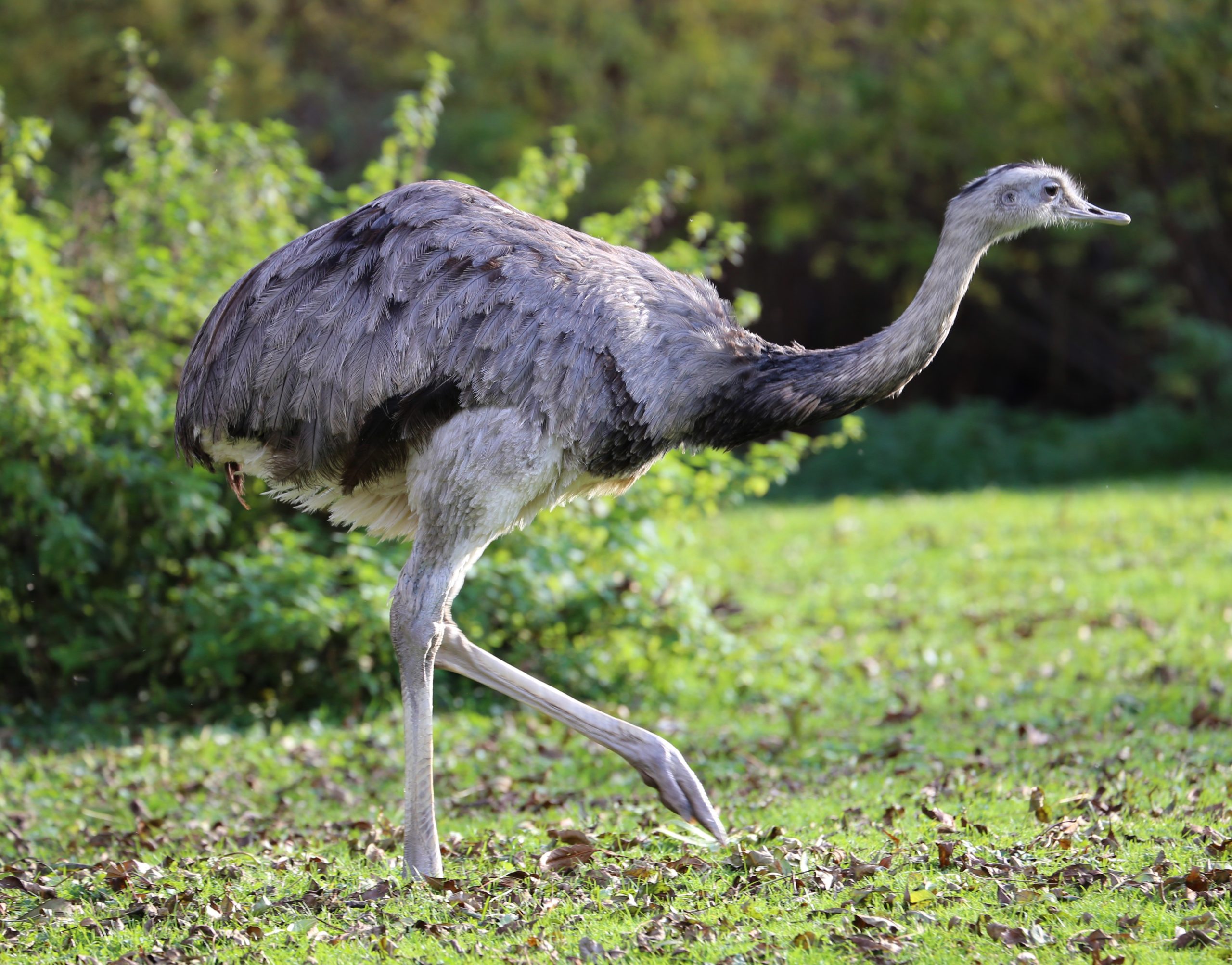
Greater Rhea

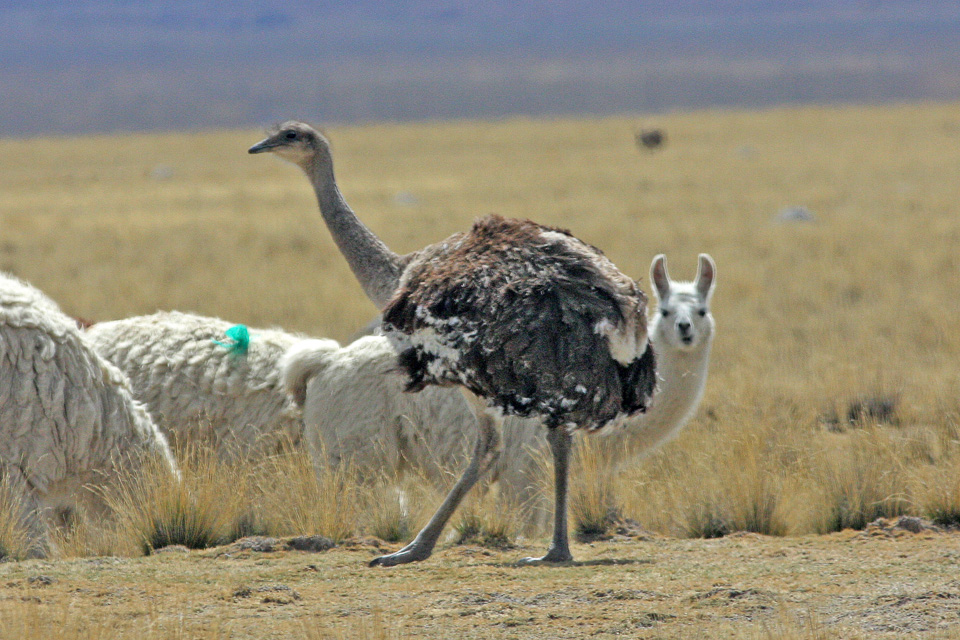
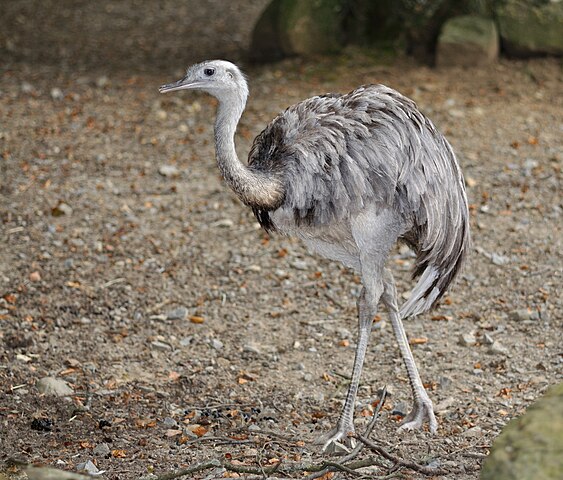
Lesser Rhea

This map shows the range of a number of different subspecies

Found in Eastern South America, it is also known as the America, Common or Grey Rhea. In Portugese it is known as Ema. It is found in grasslands, Savanna or wet grasslands. When fully grown it weighs 20-27kg, and can live to around 10.5 years. It is listed as near threatened with a population of unknown size. Its range in South America is large, covering 6.5 million square km (2.5 million square miles).

Back in the  90s 6-8 individuals escaped from a private zoo in Germany, and this population has grown to around 550 birds.

Also known as the  Darwins rhea. Its found on the Andean plateau as well as Patagonia.

Mostly a herbivore, it will take lizards and animals such as grasshoppers when the opportunity arises. They are listed as least concern and there are two subspecies (see the map to the right). While the main subspecies still has a range of 850,000 square km, and a population that is healthy, both other subspecies (found further north) have populations of only several hundred.

Should either of these species get mentioned in the blog, they will appear below (though it is possible with a short name, the letters may appear in other articles).

As we make contacts which will allow you to see these species in the wild, they will be added below the news carrousel – do get in touch with the form at the top of the home page, we would love to help people fiind you

[smart_post_show id="26516"]

Ratites

Ratites

You will find images of each of these species below, linking to a page about each, similar or closely related species will be grouped together initially, until links require their splitting. 

It should be noted that there are a few other species, which have been lost over time. These include 3 species of elephant bird from Madagascar and 9 species of Moa, all of which was found in New Zealand and all of which were lost. Thankfully at the current time, the Kiwi has not followed its bigger cousin, but we must not be laid back

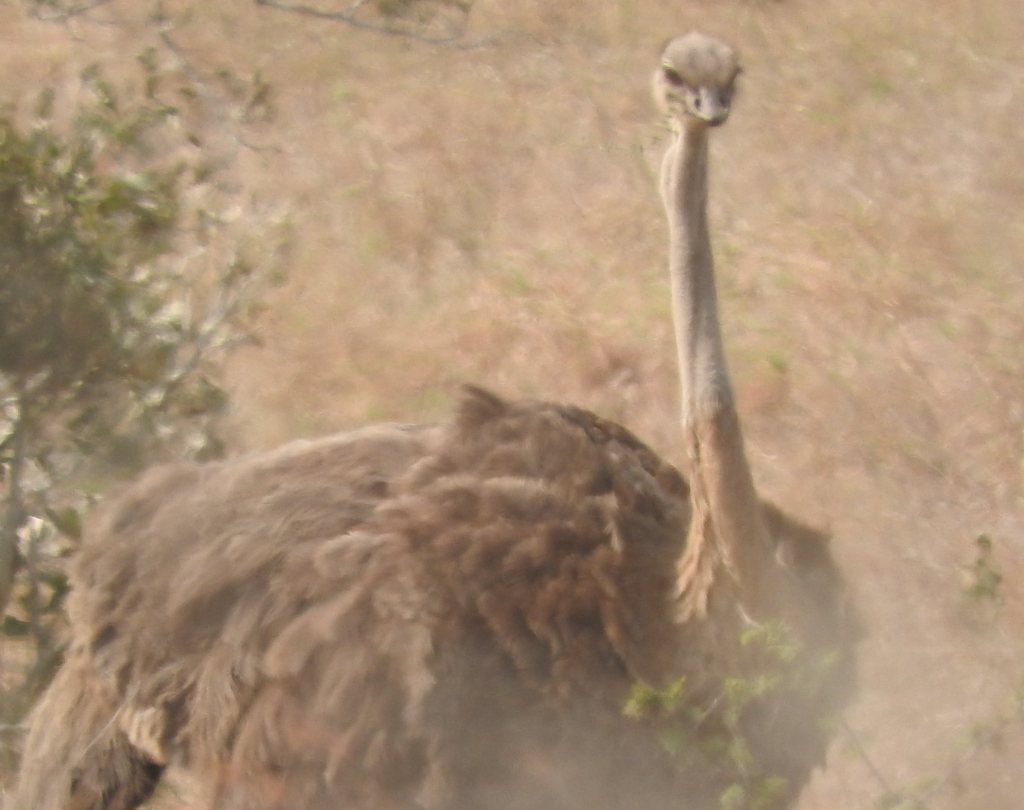
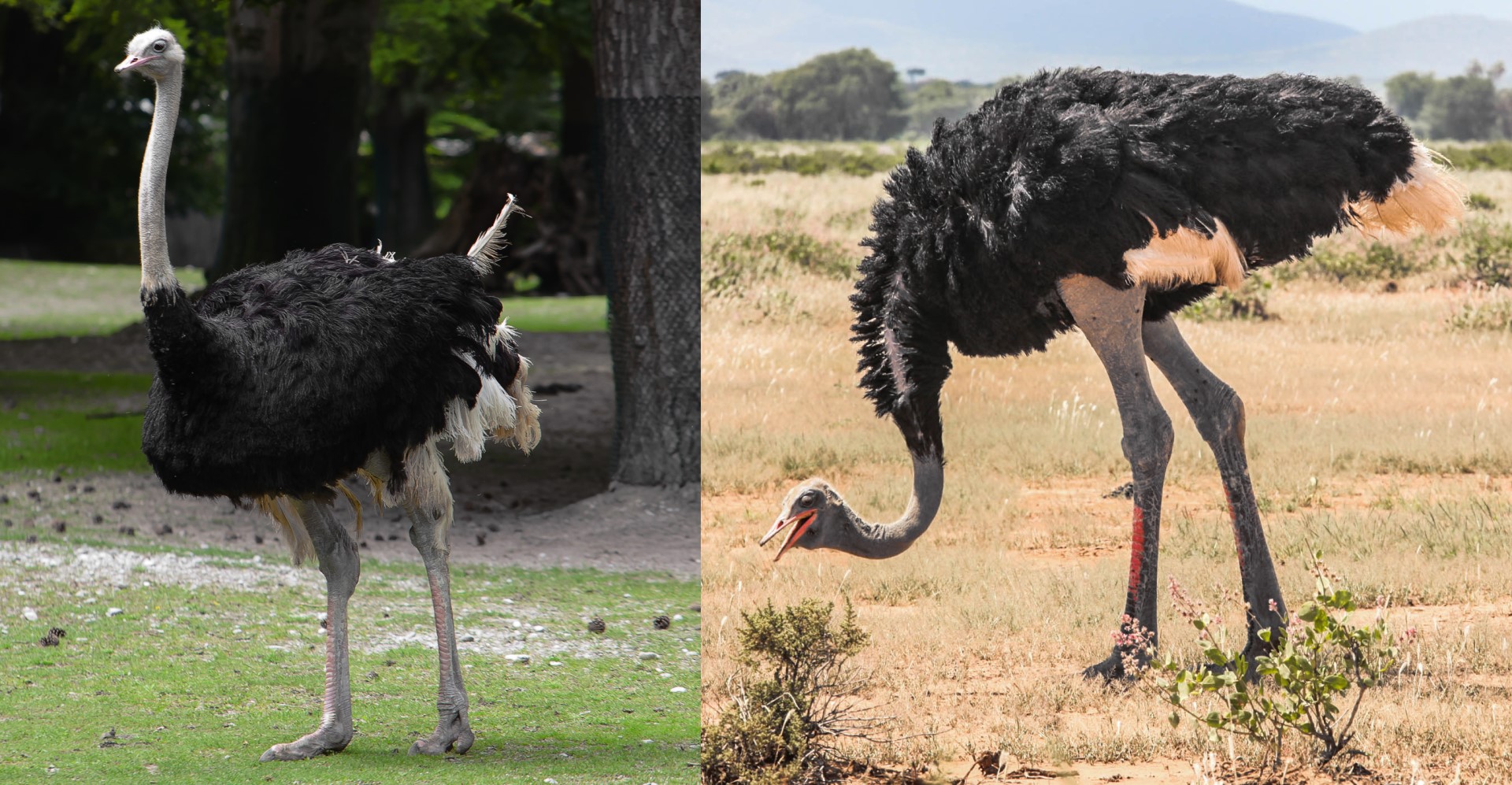
Common ostrich (female)
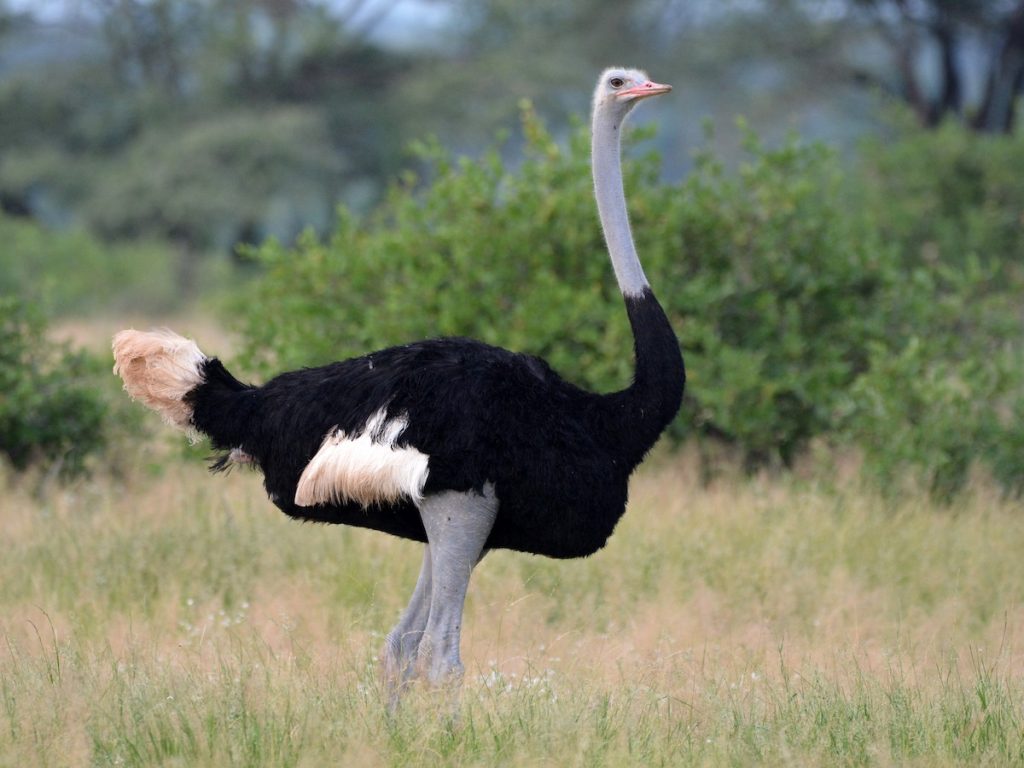
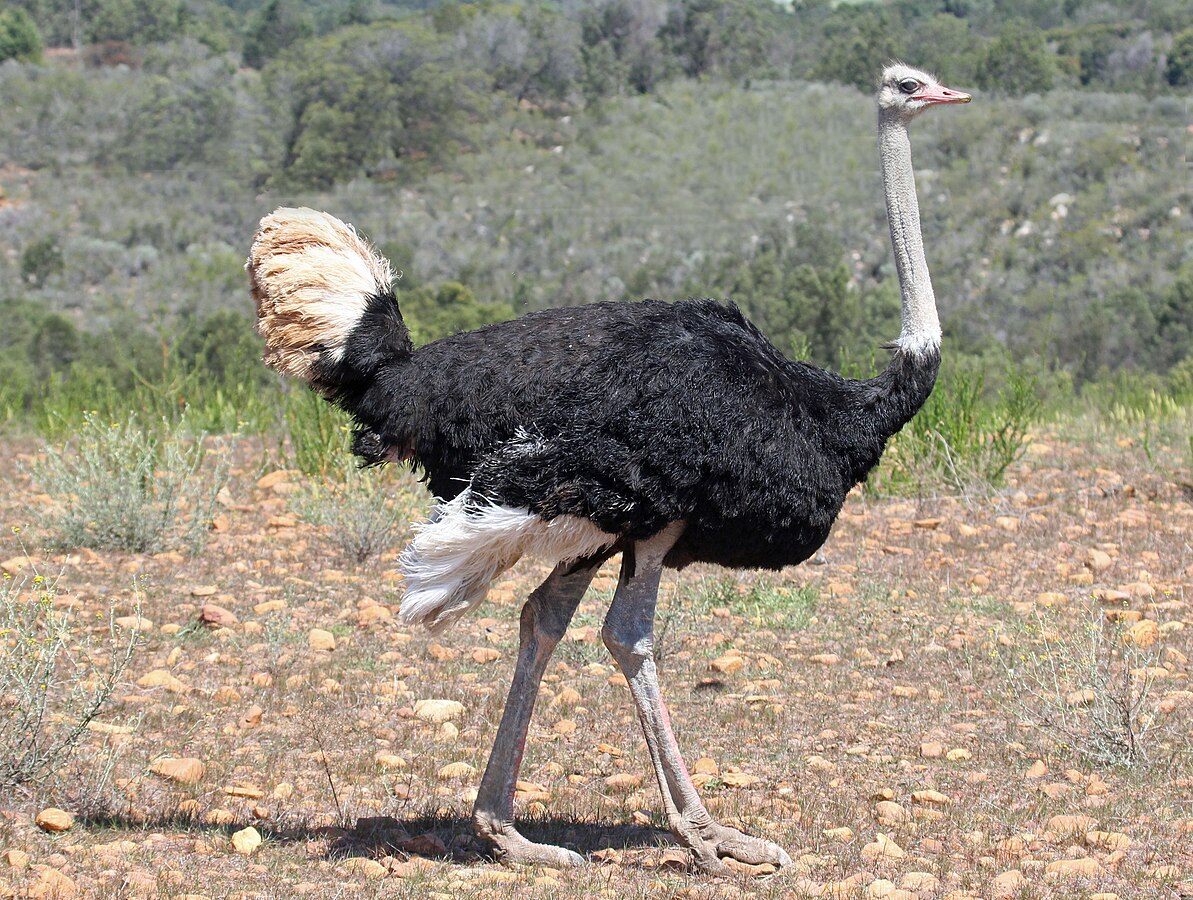
Somali ostrich male
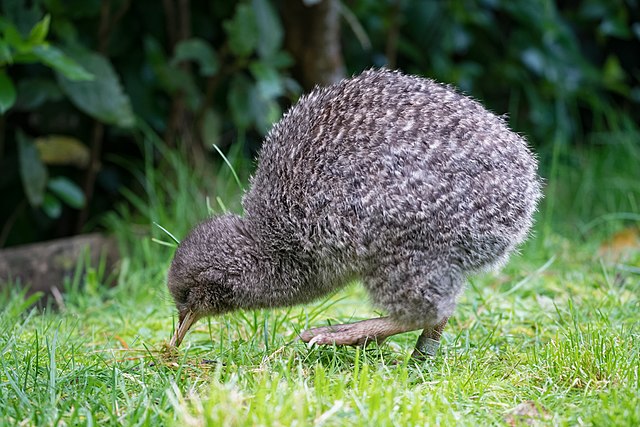
Kiwi species

Found across much of Africa, the common ostrich is a relatively common site in the right places. Capable of defending itself, it is usually only found in larger reserves. There are a number of subspecies click here to read more and visit our ostrich page

Recently shown to be a separate species (though looking very similar to the common ostrich), this is found in Somalia, most of Kenya, and north-east Ethiopia. Click here for the Ostrich page

Restricted to the islands of New Zealand, the kiwi is not one species but 5. Having arrived on these islands when there were no land predators, they lost the ability to fly. Unfortunately the arrival of Europeans quickly changed this. Click here for the Kiwi page

Rhea species
Cassowaries
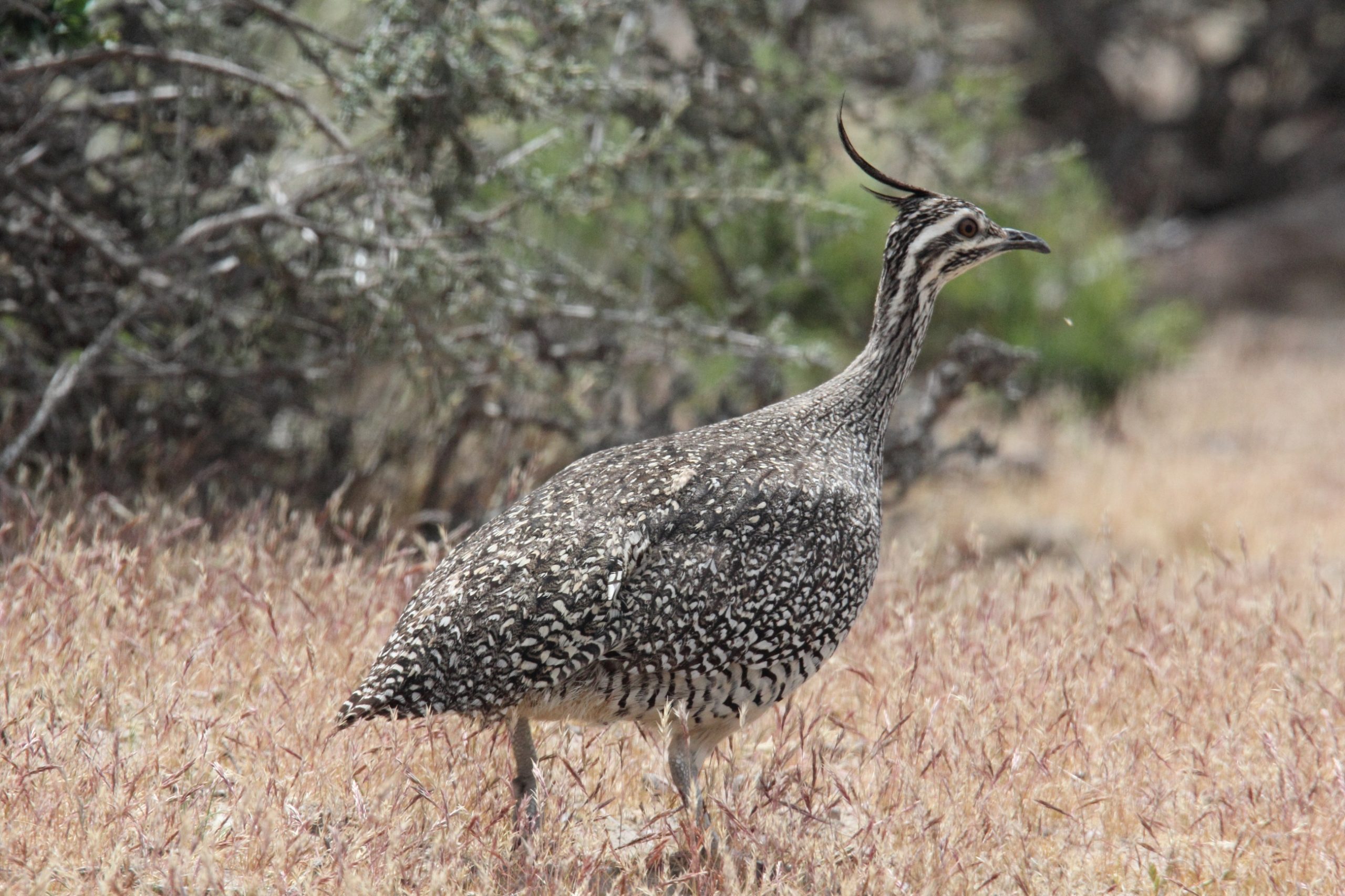
Tinamou - a group of 46 species

The Rhea consists of two species, named the greater and lesser Rhea. They are found on the plains of eastern and southern South America. To visit their page, click here

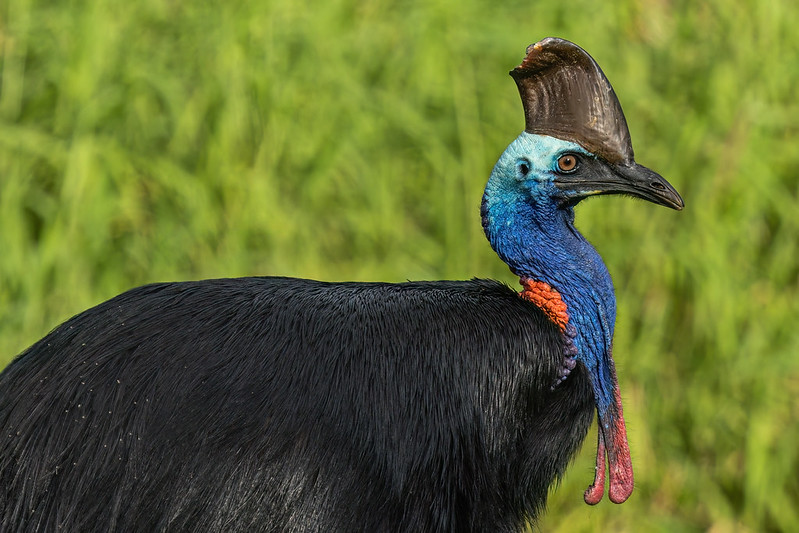
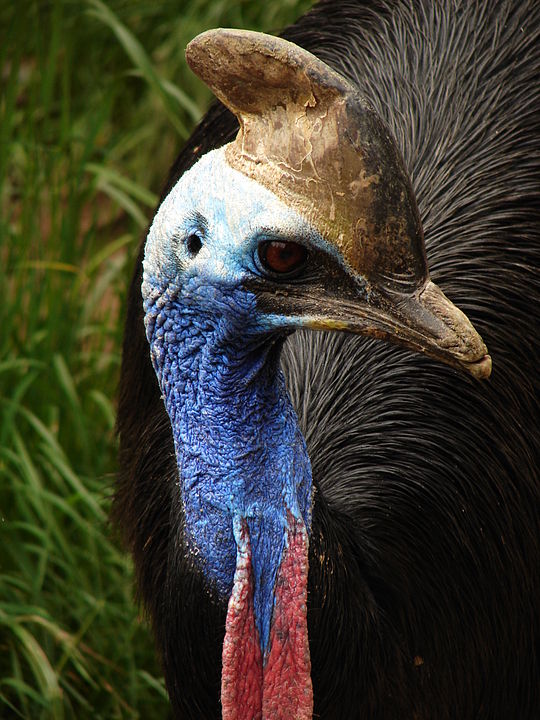
Cassowaries are found in Australia, Indonesian islands, and the island of New Guinea. Perhaps not surprisingly, given their distribution over a large area, and the fact that they are flightless, so cannot mix, there are 3 species. To visit their page click here

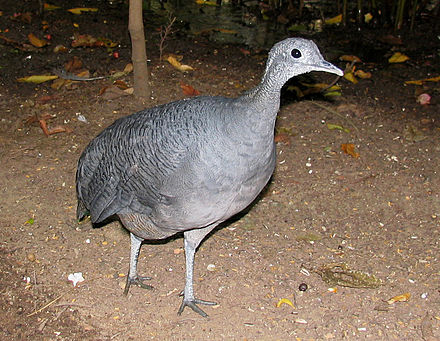
Finally the Tinamous family, a group of 46 species. It is likely to be a while before I get round to building pages for all these species, but should you work in conservation or tourism with these species, you can help fill in the gaps. Although initially thought to be a sister clade, recent analysis has shown that these birds are part of the Ratite family –  Tinamou birds can fly

Those I have put in pictures for (29) are here  but we will hpe to add the rest over time, as well as building species pages

Ostrich

Both ostrich species Combined PaleoNeolithic photo credit Diego Delso&Ninara

Both ostrich species Combined PaleoNeolithic photo credit Diego Delso&Ninara

Ostrich

Common Ostrich 

Somali Ostrich

The common ostrich is found across a large part of the African Continent. Until 1919 there was a fourth subspecies of the common ostrich which was found across much of the Arabian Peninsular. It was completely extinct in the wild by 1972. They have now been reintroduced to Israel, Oman, Saudi Arabia, Jordan and United Arab Emirates – though it is hard to find accurate figures for how many are found there now. (Do get in touch if you operate a reserve with these birds present, we would love to help people find you).

As you can see, the other African subspecies  are still going.

The Somali Ostrich was only recognized as a separate species back in 2014, having been thought to be a subspecies until them.

A report to the IUCN in 2006 believed that this ostrich was common in central and southern Somalia until 1970-80. However, following the breakdown in the country, it is not surprising that conservation took back-stage, and it is questionable as to whether any remain (in the horn of africa).

In Kenya it is farmed for meat, feathers and eggs.

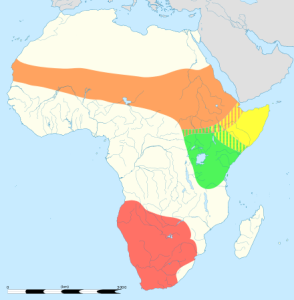
This is a map of the different Ostrich species and subspecies range

  • The yellow area, shows the range of the Somali Ostrich – Now recognized as a separate species.
  • The green area shows the range of the Massai Ostrich – while this population is listed as least concern, its numbers are in decline
  • The red is the South African Ostrich, this is generally secure, though only found within reserves.
  • The Orange is the range of the North African Ostrich: classed as critically endangered, it is only found in 6 of the 18 countries it originally roamed. It is the largest and heaviest subspecies. The countries it is still found in include fragmented pockets of Cameroon, Chad, Central African Republic and Senegal. They have also been reintroduced into Chad, Morocco and in 2014 (127 years after being lost) Tunisia. They were reintroduced to Saudi Arabia in the Mahazat as-Sayd Protected Area in 1994 and this population has done well with around 90-100 now living within this reserve

There is thought to be approximately 150,000 ostrich left in the wild. Having said this, like other large species, they are prone to local extinction. The best way to see these in the wild are to head to reserves where they still exist. 

Unfortunately, they are not easy to look after – in smaller reserves with large predators, they can be hunted and face local extinction. As such, while there are other reserves where they hang on, the majority of their remaining population are split between big reserves like the Kruger and the Serengeti, and small reserves like the Cape point national park in South Africa (this reserve is only 77.5 square km, or around 30 square miles and was in the past a big 5 nature reserve. Now, only the cape leopard is present and this is very rarely seen.

If you wish to see the Ostrich look in our list of wild places. Kruger, Okavango  and the Serengeti all have ostrich (in Kruger you need to look in the more sparsely area in the north of the park).

[smart_post_show id="26457"]

Birds

Birds

Birds are defined as warm-blooded vertebrates. They have feathers, toothless beaked jaws, a high metabolic rate, a 4 chamber heart, a strong and lightweight skeleton and the laying of hard-shelled eggs.

Now, within these constraints, the birds vary a great deal.

The smallest bird is the bee hummingbird, which has a wingspan of 6.8cm. The largest bird has a wingspan of 3.5m (40 times large). In terms of weight, the bee hummingbird is also the lightest at just 1.95 grams, the Kori bustard weighs as much as 19kg, which is almost 10000 times heavier (heaviest flying bird). The heaviest bird is the Ostrich, which can weigh over 100kg, though these can not fly.

Looking at it in a different way, there are roughly 10,000 species of birds in the world. Now, while this may change as this website grows (both with other authors, and assistance from readers) at the current time, it would be absurd to think that I could build a page for each of these many species. What this page will try to do, is to build a page for each group of birds. Of course, the other point of this website, is that this is to assist in people travelling to see these species in the wild. As such, while I am fully of the opinion that every bird matters, we will concentrate- to begin with, on birds which are popular and/or are interesting to see.

To start, below you will see the initial 2 clades (it should be noted that there was at one time 7 clades, which include clades like Diosaruia), and each clade has two families. 

                                   Palaeognathae (ratites and Tinamou)                                                                                                               Neognathae

Struthionimorphae

This contains just 1 species the Osterich (alongside many extinct species). The male is black, the female is brown

 As this is all of the Struthionimorphae family, you will be able to visit the Osterich page by clicking on either image.

Notopalaeognathae

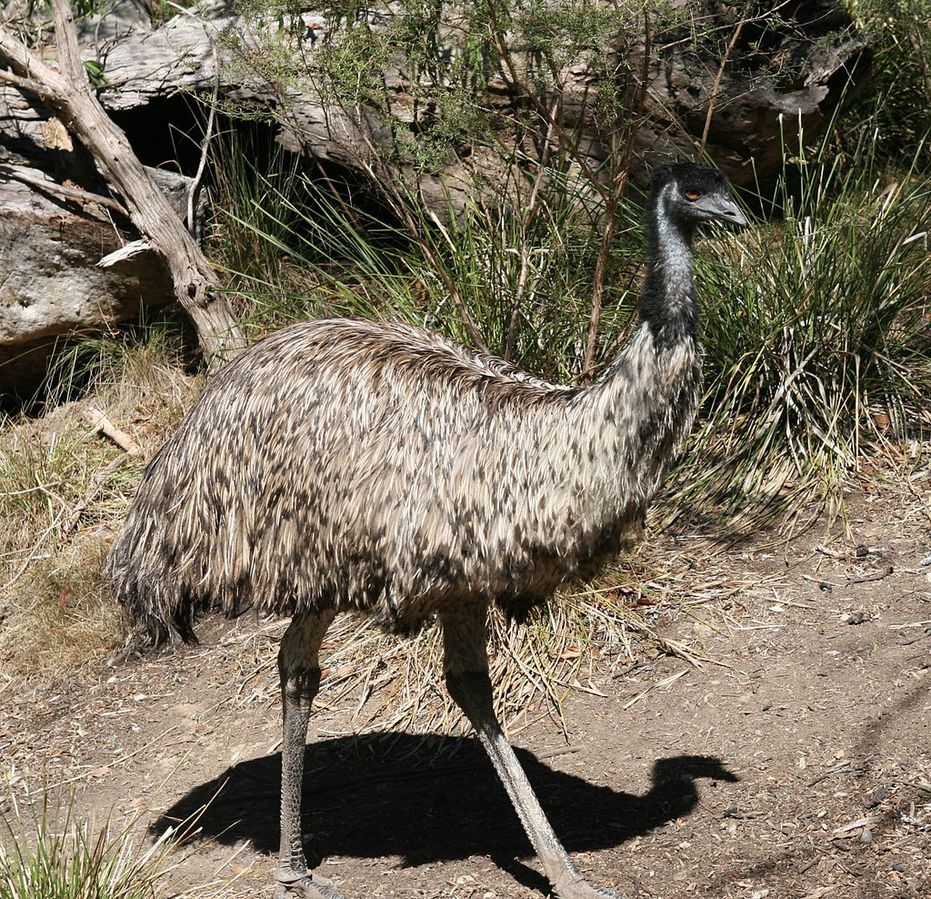
This contains Rheas, Cassowaries, Emus, Kiwis and Tinamous (as well as the extinct Moas and Elephant bird)

This family includes a number of species so as we build pages, they will be linked to images below (the pictures for these species in directly below here)

Pangalloanserae

There are two subgroups in this group, though Asterionis is extinct. The only other group is Galloanserae or fowl – containing 

180  water-fowl (Anseriformes) species

  290 Land-fowl (Galliformes) Species.


Neoaves

This contains the rest of the birds not already included in another group. This is roughly 95% of birds.

Now, Understandably, this group covering 95% of birds, we will not be listing every species. However, we will endeavour to list groups of interest down to a lower level- I know that there is a great deal of interest in birds, and I will rely on this website taking off to a greater degree in order to push this further

This family is large and varied. We are going to start with currently agreed “magnificent seven” supraordinal clades, as well as the three orphaned orders. 

Notopalaeognathae

Neoaves

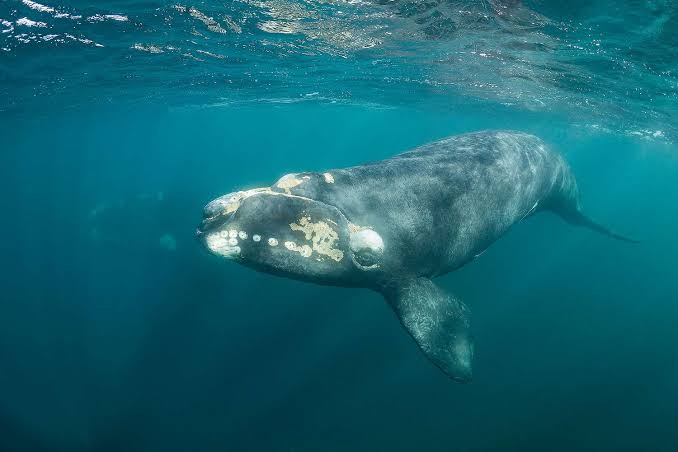
North Atlantic right whale population appears to be stabilizing!

The population of the north Atlantic right whales appears to have stabilized at around 350, having fallen from a peak of 483 in just 2010. In 2022 there were 356, down from 364 in just 2021.

Never a highly numerous species (it would appear) around 5500 were taken in the 3 centuries of whaling. The problem now, is that the population is so small that any looses imperil the whole species. Further, given the large amount of boating in the area, many of the remaining individuals have propeller scaring, and collisions are common and occasionally fatal.

Time will tell if this species can recover, though tourism interest is likely to give them a higher value to the local community and may help save the species.

Below is a short 5 minute video from the NOAA  (National Oceanic and Atmospheric Administration)

To visit our North atlantic right whale page click here   Should you operate in tourism for this species, do get in touch, we would love to help people find you- it costs nothing to be linked, we only take a small cut of any income we find for you. Click on List your wild place at the top of the page, or here


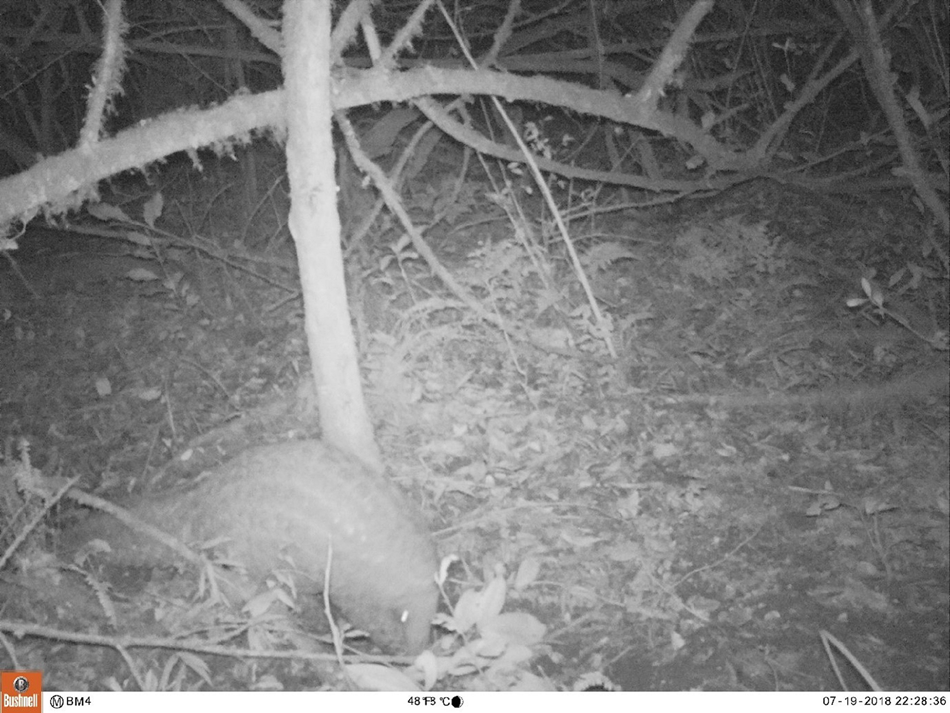
Pangolins are returning to Kenya

Long thought to be extinct in the country, one was caught, back in 2018. As a result, effort is being put into protecting this species. Farmland around the Serengeti erected electric fences in order to stop elephants from stealing their crops, however, unfortunately, they have been having an unintended consequence.

Pangolins need to be able to roam large distances, and they have been regularly being electrocuted. Unfortunately, they roll up in a ball, as a natural reaction to threat, and this has lead to many rolling up around the wire, thereby being electrocuted.

This discovery in 2018 was of a dead pangolin, and as a result, many farmers have changed how their electric fence works to help protect this creature.

There are only thought to be 30-80 pangolins left in the country, but by making these small changes, the few pangolins that remain will be able to thrive, and the population is likely to grow.

This is a pangolin sighting that was filmed on the Massai mara

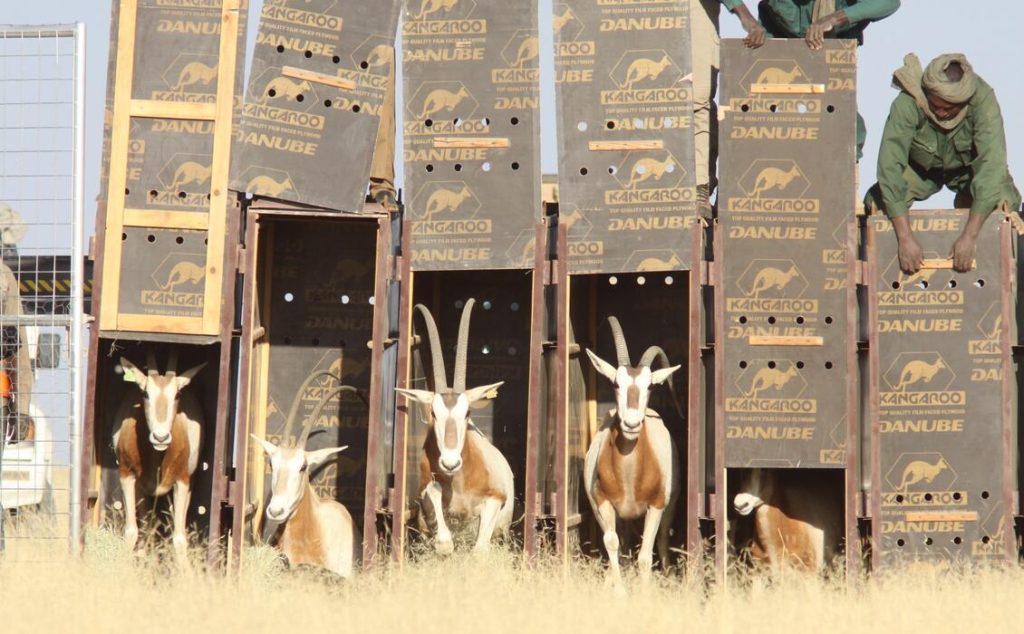
Reversing extinction: Marwell zoo and the scimitar-horned oryx

Declared extinct in the wild back in 2000, this species is now not only re-established in the wild, but has a big enough population to now only be listed as endangered (down from critically endangered).

Apart from supplying individuals for the reintroduction, Marwell zoo also helped with strategy.

The video below is just 2 minutes long. While it talks about Marwells other work as well, it shows a number of these animals living wild back in Africa.

This has got to become the reason for zoos. What ever else they do, there are many species at risk of extinction in the wild, these need to have enough captive individuals to re-establish wild populations, should the current conservation fail.

Of course, zoos have many other roles, from education, to fostering a love of wildlife in the next generation.

One thing that they should not be, is a curio house- many zoos are far to worried about displaying albino or melanistic individuals. Now while these individuals are fascinating and can be used as ambassadors for the species, their genetic health should be looked after (all white tigers are descended from one female, and closely related individuals are regularly bred togerther to ensure this trait is passed down. Indeed, as a result of this, white tigers are often not of good health.

The majority of zoos are now like Marwell – while like many, it started as the private zoo of wealthy owners it has turned into an important place of conservation and science. Another of their successes, is the cooperative breeding that occurs as standard in current times, across Europe. Regular loaning of animals is essential, so that we can treat all of the zoo animals in Europe as one single population, thereby  making sure that all animals in the system are healthy.

There are many hundreds of zoos across Europe (some claim as many as 2000, though around 1500 is the estimated worldwide number suggesting that this is a rather large exaggeration. It is likely that around half of the worlds zoos are in Europe, and by cooperative breeding, we can make sure that healthy populations remain in captivity, so that should a population be lost from the wild, it can be returned, when the wild situation improves.

Almost all predictions about human population are expected to peak in the coming decades, and then decline after that. If this pattern is followed, it should be expected that we will need to re-establish wilderness in the future. 

Scimitar-horned oryx have been returned to the wild in Tunisia, and Chad and there are plans to return them to the wild in Niger, in the near future.

Extinction was caused by a variety of features, but the primary one was over-hunting. This has virtually been eliminated, after a ban on hunting of this species was put into effect in 2013. Should this species be allowed to fully recover. In 1985, there was a population of at least 500 of this species living in the wild, so it took only 15 years for it to disappear, as such what is clearly essential is a regular assessment on how this species is faring, allowing earlier interventions.

Saving the natural world, may require this kind of success to be a regular feature.
Dominica’s mountain chicken frog is heading to extinction faster than anything recorded before

Once so common that they were cooked as a national food on the island. Yet in just two decades, the animal is one of the rarest in the world, with an estimated population of just 21.

Growing to 20cm long and weighing over 1kg, it was one of Dominica’s apex predators. eating small mammals, snakes and other frogs.

It’s decline is notable, as its calls were formerly something that you heard across the island.

Now, silence from this frog has fallen across most of the island.

Initially, its decline was caused by a fungus, which impacted amphibians skin – important, as many amphibians breathe through there skin, and all breathe through their skin.

The breakout of this fugni led to a decline of 80% in just one year. Known to only occur on one other island (Montserrat), scientists urged strict quarantine measures to stop it arriving, but these warnings failed to have any effect.

A number of these frogs were removed in 2009 as the illness began to spread, and they are housed around the world in various zoos, such as London zoo.

In recent times, a few surviving individuals have been discovered. These appear to be naturally resistant to the chytrid fungus that is at fault.

Unfortunately, shortly after, hurricane Maria hit, and the population declined a further 80%, back into double digits.

Due to the lack of immunity to this fungus, it would appear that zoo individuals that were rescued back in 2009 are all irrelevant. Whether with such a small wild population, it is worth capturing more (it is possible that these new individuals could be bred with already captive individuals, bit this may not retain the immunity).

The remaining wild frogs are found in 2 populations, and neither are found on protected land. As such, the situation could change fast if land use changes would occur.

The conservationists in the wild are still working, but it is thought that there is only 2 years left to save the species from extinction.

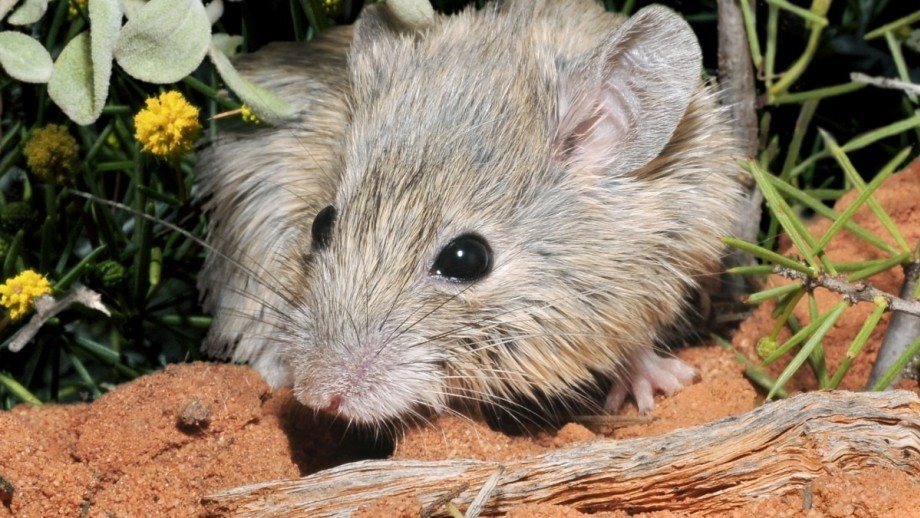
Goulds mouse, thought extinct for 125 years, lives on

The mouse was considered to be stuck on the mainland, which means that if true it would have been lost for good.

Thankfully this was not the case. 

This mouse was living under the identity of the Djoongari mouse, or the Shark bay mouse, on an island in shark bay.

Furthermore, by looking at the genetic diversity of these mice (from specimens taken at the time) was high, which makes it clear that right before extinction, there were large numbers of these animals. This means that their extinction was not a natural process as had been assumed, but is instead an issue with human arrival. 

Instead, extinct is likely due to a mixture of

  • Introduction of predators in the form of domestic cats and foxes
  • changes to fire management (carried out effectively before European arrival)
  • Introduction of new diseases
  • Habitat destruction due to industrialisation and land clearing for agriculture.

While these mice are unlikely to be possible to return to the mainland for some time (until feral cats and other species are eliminated) they can perhaps be introduced to other small islands to guarantee their survival.


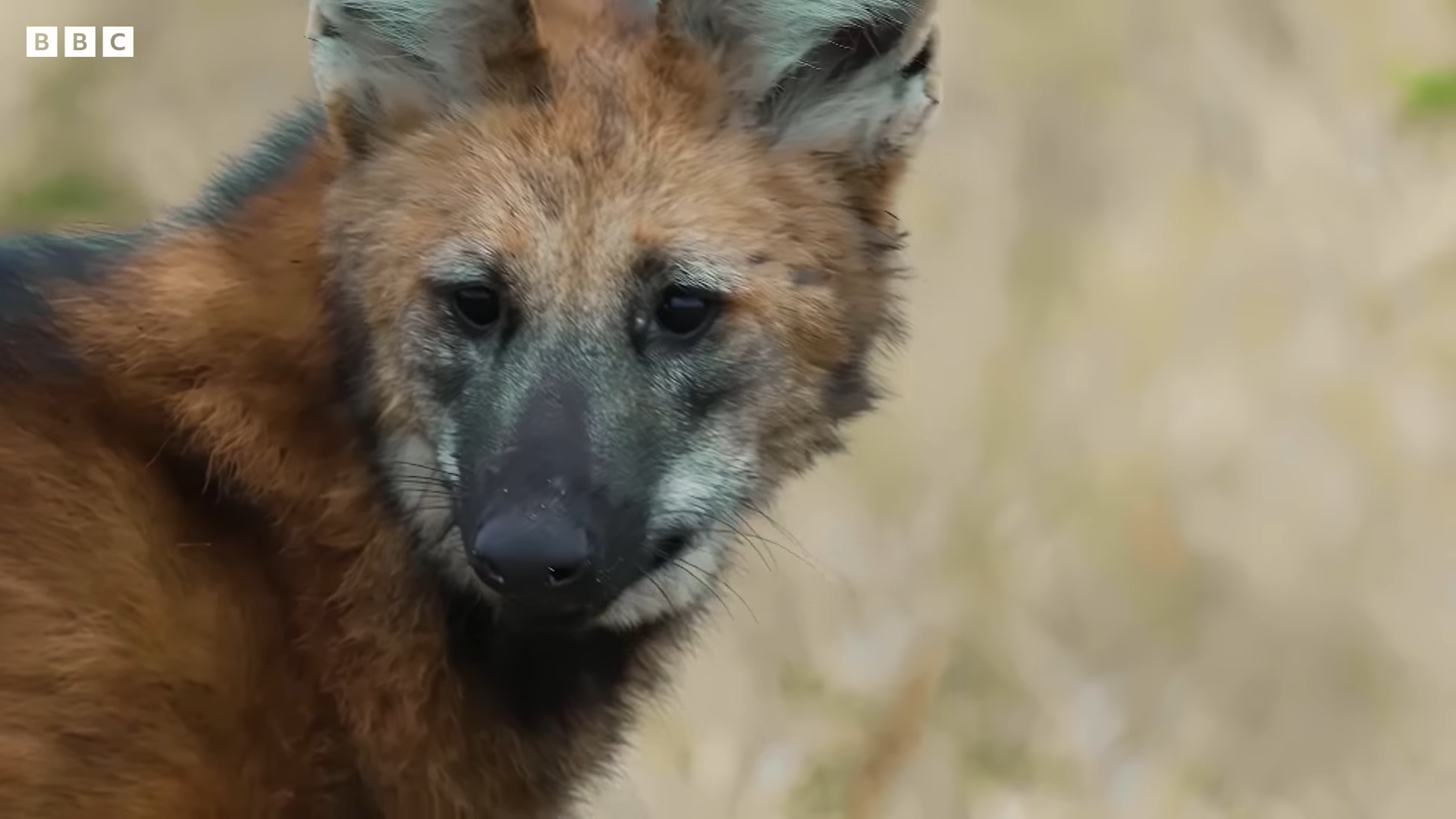
Maned wolf shown on planet earth 3

For those watching this amazing series, you will have see the beautiful animal – looking rather like a fox on stilts, the maned wolf is a species that lives on the plains of the cerrado in South America. It is unfortunately greatly under threat. Time will tell what will happen in the future.

These animals are heavily under threat, and as such, it is essential that locals see them as a benefit. This means that tourism to this region will help their long-term future. 

It is a particularly difficult issue for those who are concerned, because while we want to cut our carbon emissions, we must also find a way for enough people to visit, to warrant their long term protection.

We have a page for the maned wolf, and we have embeded a video from a bbc wildlife documentary on this species from a few years ago (though you can also watch a good clip of it from planet earth 3 episode 3)

Click here to visit the page.

See Animals Wild

Read more news

Join as a wild member
to list your wild place & log in

Join as an ambassador supporter to
support this site, help save wildlife
and make friends & log in

Join as an Associate member
to assist as a writer, creator, lister etc & to log in

List a wild destination

List a destination in
the shadow of man

List a hide for animals more easily seen this way

Highlight some news
missed, or submit a
one-off article

Browse destinations for fun or future travel

Temporary membership
start here if in a hurry

Casual readers and watchers