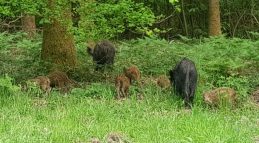
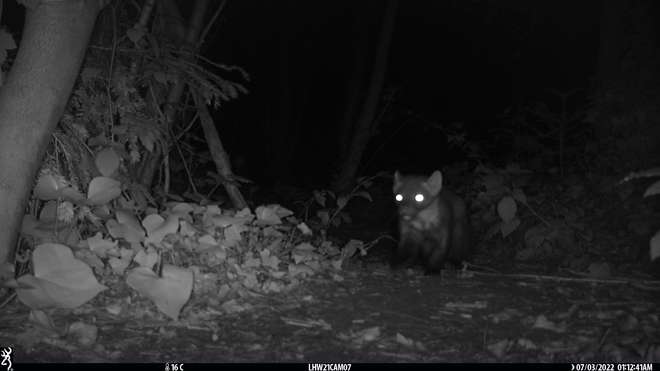
Pine martens are an arboreal hunter. It is native to Europe, stretching into Asia in areas such as Iran and Syria. It is also a native part of the UK ecosystem. Unfortunately, as an arboreal predator the pine marten was horrifically reduced in the UK by the destruction of our rainforests. What few animals continued to survive in fragments of forest left behind, have been persecuted by farmers for their habits of taking chickens and similar animals.
This is why this sighting of a pine marten on the edge of London is so exciting.
Rainforests are incredible places, with a huge amount of wildlife and plants all living closely together and fighting for survival.
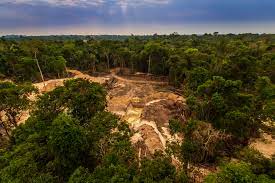
Now the problem in many parts of the world, rainforests are being cut down for space to be given over to all sorts of other land uses. I have no problem with some of the rainforests being cut down for other land uses. Unfortunately though in the Amazon, there is a significant issue.
If a tipping point is reached, cut down rainforest is not likely to be useful for growing crops, it is likely to transform into a dry savannah, incapable of supporting crops, it may turn into full desert.Continue reading “Amazon Rainforest tipping point approaching?”
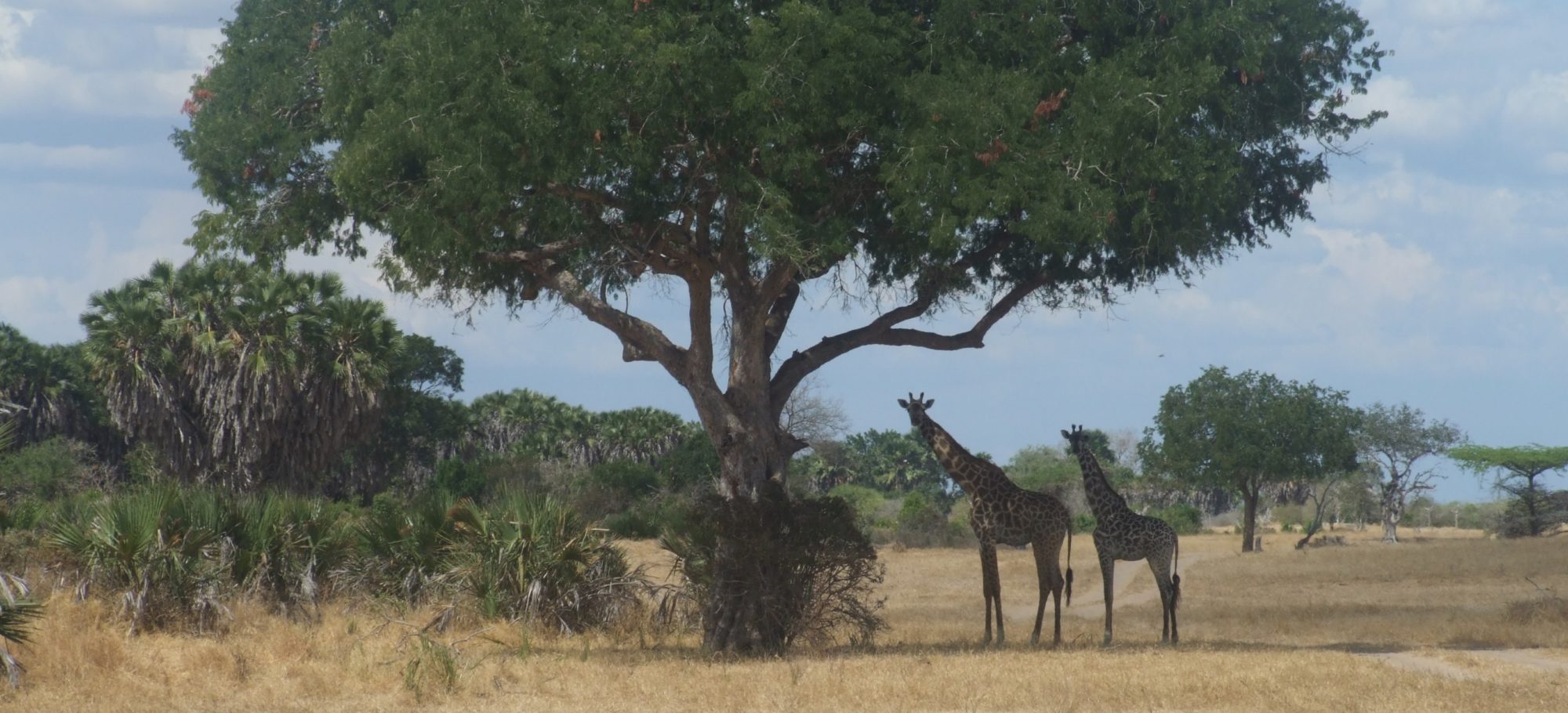
The big 5 is a tool that safari operators continue to use. It does not make much sense as this term is a hunting term. The big 5 are the five most dangerous animals to hunt on foot.It is not impossible to encounter the big 5 on a single drive in the bush. I have done this on a few occasions. However, when you are in the bush it is worth taking your time.
Given the big 5 is to do with hunting on foot, I have been more interested in encounters on foot. Before my recent trip, I had encountered Rhino Buffalo and Lion on foot (I do not consider it as an encounter unless I am within about 10m of the animal).
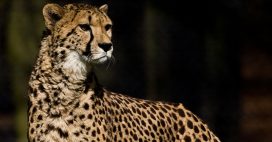
The cheetah have arrived in India, and have been introduced into enclosures within the Kuno national park. At the current time, the enclosures are just 15x30m so a similar size to a large zoo enclosure. They will stay in this enclosure for a month in order for the team to be sure that their health is good.
After this, they will be shifted into a 1 kilometre square enclosure for up to another 4 months before being released fully into the Kuno national park.
A further 12 cheetah will be transferred next month with roughly 50 agreed to be transferred over the next few years.
The simple question, though, is that cheetah do not do well in small reserves in Africa, as they cannot compete with large cats like lions or leopards (or in India, Tigers). With far less space, and a much greater density of people in India, is there going to be space for the returning cheetah? Furthermore, this situation is not likely to improve in the near future: predictions are that, without a significant break on fertility rates, India’s population could exceed 2 billion by the end of the century. In this senario, it is hard to see how there is space for much wildlife at all.
Rainforests are essential for many different things. At the moment, we (as the human race) are concerned about rainforests for their capacity to store carbon – thereby reducing the amount in the atmosphere and therefore the threat of carbon dioxide causing the greenhouse effect.
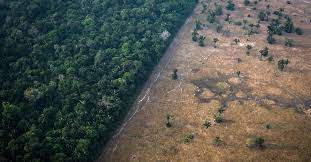
Here, you can see what happens to land that is deforested. It is not good for the rainforest that survives either
The problem is, that even without cutting any more rainforests down, we have already changed the weather dramatically. If rainforests are cut down there may then not be enough rain to sustain regrowth. One example is the Amazon, where it is predicted that half its rainfall is caused by the forest itself.
In the Amazon, Congo and even south-east Asia, there are already worrying signs in particularly highly deforested areas, that the rainforest weather is drying, turning the forest into a more savannah like area.
What is clear, is that a fragmented rainforest is deeply threatened. We need large blocks of unbroken rainforest if the planet is to survive in a form that we will continue be good for the human race to continue to thrive within. Of course, this is also essential for the many planet services that the human race requires to keep going.
Of course, this is not a reason to be allowed to cut down the fragments, it is a reason to not create the fragments in the first place. What is important to realize, is that many of the activities that the rainforest is being cut down for, will not work without the rain that the forest creates.
Argued back and forth for decades (since their local extinction in 1952), the idea of reintroducing cheetah has never gone away for India. For the government, it is clearly at least partly a matter of pride – as the only home of the Asiatic lion, claiming over 50% of remaining wild tigers living within its borders, more than 10,000 wild leopards and even 4-500 wild snow leopards, cheetah was the only big cat to be allowed to go missing.
In the initial translocation 8 cheetah are being flown from Namibia to India
Even Cheetah is derived from the Hindi word Chita which means spotted one.
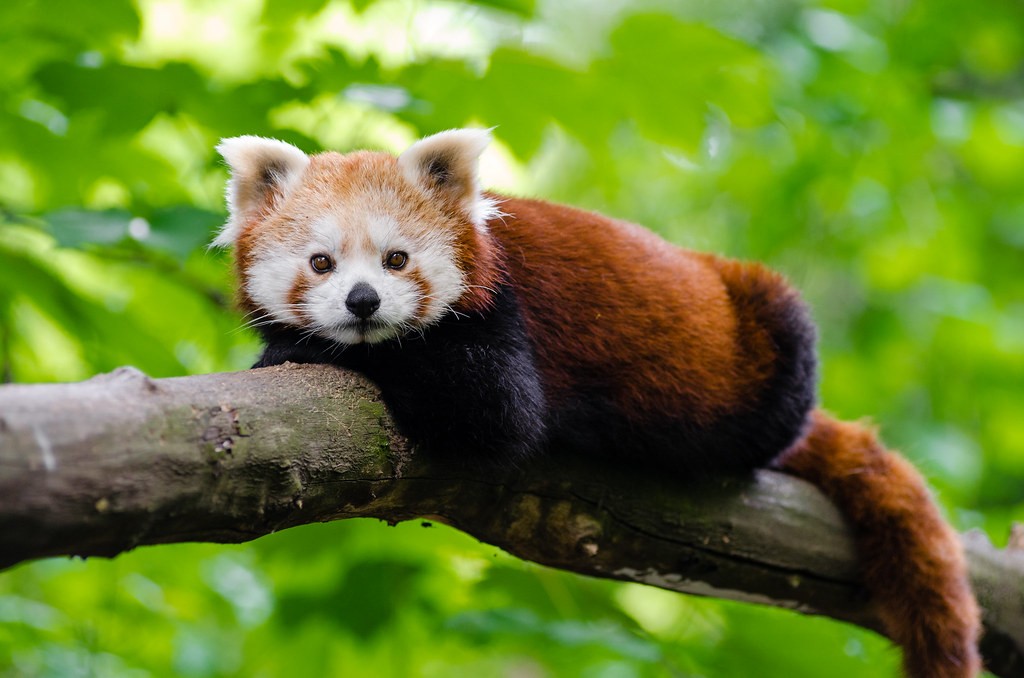
Today is red panda awareness day. Many people are not particularly sure what a red panda is. Indeed, when I volunteered in a local zoo, I often found myself standing by the red pandas as so many visitors walk past without giving this little animal a proper look.
It was once considered a member of the bear family, but recent analysis has shown that while it is in its own family Ailuridae, They are carnivores and have been found to be most closely related to the group that includes Skunks raccoons and weasels.
Although now considered the lesser panda, the Red panda was the original – indeed the giant panda was discovered later, and named because of similarities that they share. Panda is thought to come from the Nepalese words: “nigalya ponya” , which means bamboo eater.
When we trained in the Kruger, there were about 70 cheetah and about 350 wild dog. 15 years later there were over 400 cheetah, and nearer 500 wild dog.
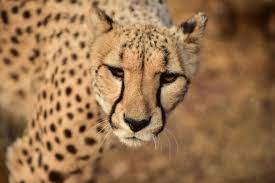
Cheetah are an exciting thing to see
What happened?
Well wild dog and cheetah are the most successful hunters, but they are also smaller than lion leopard or hyena.
Another change is far more hyena with a Kruger population of about 5000 up from around 2500 when we were here last time. There seems to be a similar number of Lion.
It would be a fascinating problem to try to create a computer model for a savannah population, while including Cheetah and Wild dog.
We are hoping to put some videos together over the next few weeks. Do like and subscribe to our youtube channel as well (seeanimalswild) though any new videos are likely to be copied here.
There have been many big announcements about bringing back recently lost animals. In theory I applaud the effort.
Places like the Russian steppe would be much more healthy with thousands of mammoths roaming around. They would likely make the great Russian Taiga forests more productive, and it is thought that they would greatly increase these forests ability to absorb carbon – something the planet needs in the face of global warming.
However, I believe that at the current time, with so many species close to extinction, we need to concentrate on protecting what is left, and only when there are excess habitats should we consider bringing back recently (or long) dead species.
Animals such as the Mammoth would make a huge difference in Russia and north America. However, another serious problem is the fact that the animals that would have to play surrogate for the Mammoths to be born are also endangered.
Whatever science can do, it is wrong to bring species back just for human entertainment. As a result, if any species is to be resurrected, it must be good for the world and the ecosystem – indeed it must have a good ecosystem into which it can be reintroduced.
In the run-up to the Brazilian election, we will be looking at what is happening in this country. While only the people of Brazil have a say, what they decide is likely to have a big effect on the rest of the world:
who will win? Will the Amazon and therefore the planet get a reprieve?
Re-election of Bolsonaro will likely mean the end of the Amazon functioning properly or they can go with a former politician – both have issues, but Lulu appears on the cusp of taking over, and if this happens it is predicted to have a fantastic impact on deforestation (though it would be hard for any change to not be dramatic).
Given the huge impact this election could have on the rest of the world, there seems to be little coverage, maybe this will change as the time draws near.
.jpg)