Otters not yet safe in Cumbria

The recovery of otters in the UK continues apace, but threats remain

Otters were once one of the most common predators in the UK. However, being apex predators, they are the first sign of contamination in the system. This is because, while each fish may have a low enough dose to not be impacted, when the otter has eaten many fish they are impacted.

The main threats have been chemical runoff from farms, though sewage is also a problem. 

By the 1980s, the British otter was virtually extinct from large parts of the country, only surviving in remote places, far from people and pollution. Oddly, otter hunting with special hounds was not banned until 1981, which will not have helped.

No more! Otters are now found within all counties of the UK. Now, it is true that otters are hard to see – they have always been. Generally they are species which require you to be out at strange times of the day, or just very lucky.

There are places to head where this is not the case, such as the Isle of Mull and similar islands around the UK, where the otters are dependent on the tide, so can be easier to find active in daylight.

On mainland Britain, it seems that Cumbria is an increasingly good place to look, with all suitable habitat now occupied.

Time will tell, but hopefully in the near future, this will be the case all over the UK.

Do not buy a hydrogen boiler!

The UK watchdog (amongst many other groups) have concluded that hydrogen boiler is a stupid idea. It is true that its only waste product is water and oxygen, but the cost of making the hydrogen is very high.

Should there be large quantities of hydrogen sitting around, then this might make sense – burning hydrogen is generally a very clean fuel. The problem is, that it is almost impossible to store or transport it without loosing much on route, and it is incredibly expensive to split water – the current form for the vast majority of the hydrogen on the planet. Fossil fuel companies are keen, because their old methods can extract and split hydrogen, but it will mean large carbon emissions as well, so is useless – there is a reason that it is called grey hydrogen. Green hydrogen is the only kind that will give us any profit as a world.

So why is the government supporting the switch (alongside gas focused industry). The department for energy security and net zero stated this week that the gas network ” will always be part of our energy system”. I am not sure why anyone would look at it, given an air-source heat pump is likely to be around price parity, and ground source heating even cheaper.

Installation, at the cheap end will be far cheaper than a heat-pump, but this will be more than made up for over the lifetime of the device. Furthermore, with the grants currently available, you are far better off going straight to a heat pump. This is a waste of time and money, and it would not be remotely surprising, if you had to remove it before the end of its life,as it would be costing too much

Half of plantations in Indonesia’s palm oil heartland are illegal

I wrote in February about how an assessment had found that 20% of palm oil plantations were illegal (to read click here). This latest assessment suggests that in its heartland, half are illegal. Riau province is this heartland. Illegal plantations within this area cover an area almost as large as Hawai, and hosts more than half of the illegal plantations in the whole of Indonesia.

These illegal plantations are also not all owned by small players, with some of the biggest names in palm oil on the list. The government is suggesting 3 years to get retrospective permission.

The problem with this, is that it is essentially permission by the back door. If companies know that they will eventually get permission, there is a high incentive to break the law.

Furthermore, if these areas were designated for coservation, we need to find areas of similar importance to replace them


Company Green Grazing from Vietnam is aiming to grow and sell red seaweed, as an additive to livestock feed

Why is this important?

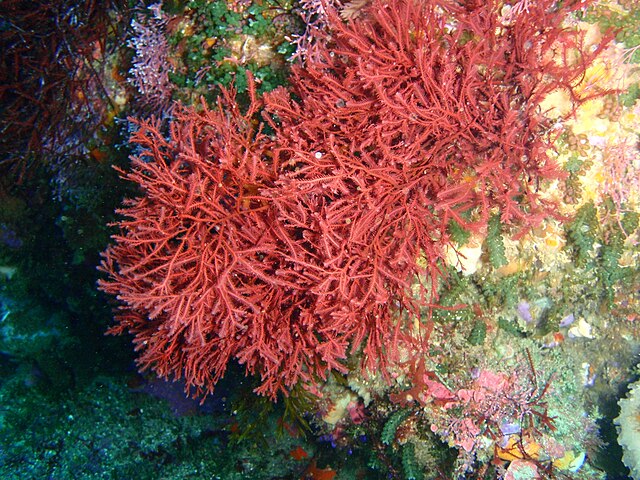
red seaweed photo credit Peter Southwood

Around the world there are around 3 billion cattle and sheep. These produce around 231 billion pounds of methane each year, which is around 10 billion metric tonnes of methane into the air. Remember that over the first 20 years (it reduces after this) methane traps roughly 80 times the same amount of carbon dioxide. So this is the equivalent of a huge amount of carbon.

To put this in perspective, if we shrink the worlds carbon emissions to zero, but are left with all this methane, we are likely to have runaway global warming anyway.

So what does this seaweed do? It essentially causes the cows and sheep to create less methane. How much? Well, while around 100 million tonnes of this seaweed would be needed, they could eliminate 98% of the methane emissions from these livestock!

In 2019 around 34.7million tonnes of seaweed was farmed, which is leading some sceptical researchers to suggest that it cannot be done. However, if we look logically, this is already enough seaweed to reduce methane emissions by 1 third – not to be sneezed at.

Another problem, is that currently Greener Grazing is restricted to only growing 1/3 of the year, as the water temperature kills the seaweed the rest of the time. However, this could be fantastic – if cross breeding can give this seaweed the ability to cope with warmer water, they might be able to meet the whole worlds demands.

More work is needed, and other tests have proved less successful in the reduction of methane, but still, this is a field, where we might be able to green peoples behaviour without requiring them to stop eating meat.

Now, of course, if meat grown in a lab could reach price parity, it may deal with this problem overnight, though it would also eliminate many peoples source of income.

Time will tell if this company is going to have a large effect or not. We need to have farmers wanting this additive, thereby creating a valuable market for coastal communities around the world.

The end of Whaling in Iceland, end of an era, or sensible financial move

Whaling went on for centuries, in many parts of the world. One of these was Iceland, where due to the latitude, it is often hard to grow much food. Iceland did not end whaling when it was banned by the international community, and since then have hunted and killed around 1800. They returned to hunting fin whales last year, but what is clear, is that not only do the Icelandic people not want to eat the whale meat, but there is little hunger for it elsewhere in the world. Indeed, whaling is incredibly expensive, and has only stayed afloat through government support.

Whales are essential to the worlds oceans, both through their fertilization through their waste, and the vast amounts of carbon that they sequester over their lives. For the foreseeable time we need every living whale we can have, in the fight against the damage which humans are doing to the planet.

Golden Jackal found in France for the first time

Golden jackals are not native to France, probably as a result of of the presence of wolves. Unfortunately, wolf populations have dropped so low, that their presence is not stopping the spread of animals like this.

In this instance, the female was too young to have arrived on its own, suggesting that not only are golden jackals present, but they are breeding.

We will have to watch this space, and see what is happening. Will the recovering wolf population stop the spread, or are golden jackals going to become a permanent part of west Europe’s fauna?

To read more about golden jackals visit our golden jackal page here

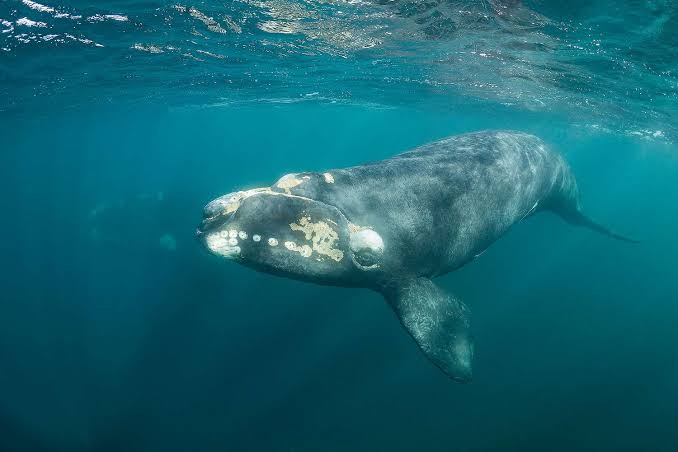
North Atlantic right whale population appears to be stabilizing!

The population of the north Atlantic right whales appears to have stabilized at around 350, having fallen from a peak of 483 in just 2010. In 2022 there were 356, down from 364 in just 2021.

Never a highly numerous species (it would appear) around 5500 were taken in the 3 centuries of whaling. The problem now, is that the population is so small that any looses imperil the whole species. Further, given the large amount of boating in the area, many of the remaining individuals have propeller scaring, and collisions are common and occasionally fatal.

Time will tell if this species can recover, though tourism interest is likely to give them a higher value to the local community and may help save the species.

Below is a short 5 minute video from the NOAA  (National Oceanic and Atmospheric Administration)

To visit our North atlantic right whale page click here   Should you operate in tourism for this species, do get in touch, we would love to help people find you- it costs nothing to be linked, we only take a small cut of any income we find for you. Click on List your wild place at the top of the page, or here


Pangolins are returning to Kenya

Long thought to be extinct in the country, one was caught, back in 2018. As a result, effort is being put into protecting this species. Farmland around the Serengeti erected electric fences in order to stop elephants from stealing their crops, however, unfortunately, they have been having an unintended consequence.

Pangolins need to be able to roam large distances, and they have been regularly being electrocuted. Unfortunately, they roll up in a ball, as a natural reaction to threat, and this has lead to many rolling up around the wire, thereby being electrocuted.

This discovery in 2018 was of a dead pangolin, and as a result, many farmers have changed how their electric fence works to help protect this creature.

There are only thought to be 30-80 pangolins left in the country, but by making these small changes, the few pangolins that remain will be able to thrive, and the population is likely to grow.

This is a pangolin sighting that was filmed on the Massai mara

Largest offshore windfarm just powered up, and its just off UK

This vast wind farm can produce around 3.6 gigawatts of power when turned on. To put that in perspective, peak demand in the UK is currently around 61 gigawatt hours, This means that even at peak demand, this wind turbine is capable of providing roughly 5% of the UK power demand. By contrast, the average house in the UK has a low-point in power demand, during the night, when around 0.2kwh is used an hour. This equates to around 5gigawatt hours. In other words, this single wind farm is likely to be able to deal with all baseload demands of the UK housing. Of course there is other demand, from shop lights being left on, to night shifts in factories.

However, what is clear, is that this is a significant amount of power, and is likely to greatly reduce the amount of gas required to be burnt for power production.

Given that this adds to the already installed stock, we now can create around 30gwh of electricity from wind – when it is at its peak.

Now, of course the wind does not blow at this required rate to produce the maximum amount of power 24 hours a day, so these numbers are not available all day.

To put these numbers in context, in 2022, wind delivered around 26% of UK electricity. Given all the large wind farms planned, this will grow.

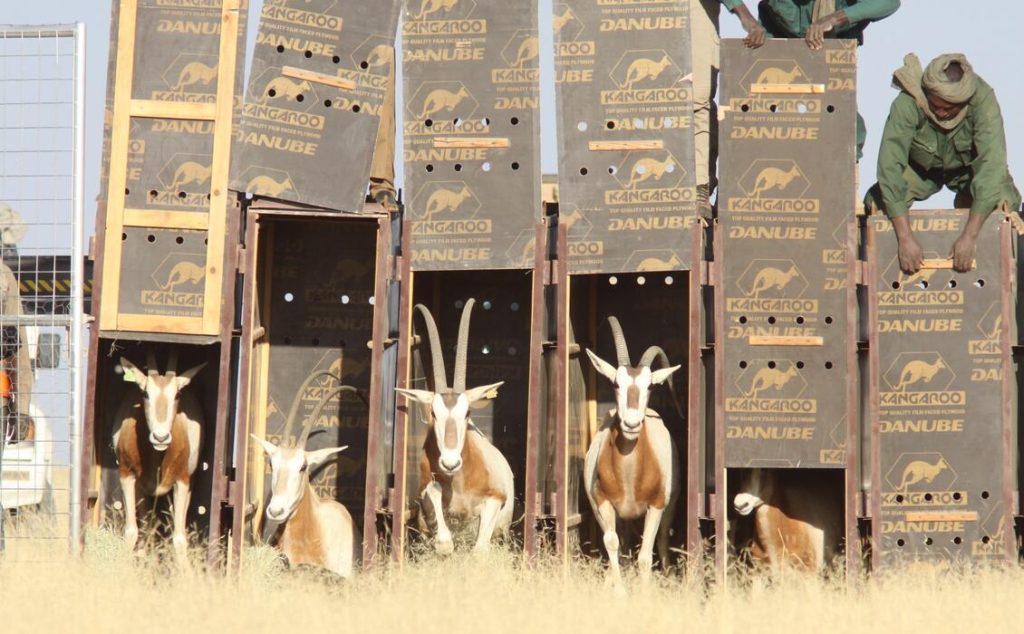
Reversing extinction: Marwell zoo and the scimitar-horned oryx

Declared extinct in the wild back in 2000, this species is now not only re-established in the wild, but has a big enough population to now only be listed as endangered (down from critically endangered).

Apart from supplying individuals for the reintroduction, Marwell zoo also helped with strategy.

The video below is just 2 minutes long. While it talks about Marwells other work as well, it shows a number of these animals living wild back in Africa.

This has got to become the reason for zoos. What ever else they do, there are many species at risk of extinction in the wild, these need to have enough captive individuals to re-establish wild populations, should the current conservation fail.

Of course, zoos have many other roles, from education, to fostering a love of wildlife in the next generation.

One thing that they should not be, is a curio house- many zoos are far to worried about displaying albino or melanistic individuals. Now while these individuals are fascinating and can be used as ambassadors for the species, their genetic health should be looked after (all white tigers are descended from one female, and closely related individuals are regularly bred togerther to ensure this trait is passed down. Indeed, as a result of this, white tigers are often not of good health.

The majority of zoos are now like Marwell – while like many, it started as the private zoo of wealthy owners it has turned into an important place of conservation and science. Another of their successes, is the cooperative breeding that occurs as standard in current times, across Europe. Regular loaning of animals is essential, so that we can treat all of the zoo animals in Europe as one single population, thereby  making sure that all animals in the system are healthy.

There are many hundreds of zoos across Europe (some claim as many as 2000, though around 1500 is the estimated worldwide number suggesting that this is a rather large exaggeration. It is likely that around half of the worlds zoos are in Europe, and by cooperative breeding, we can make sure that healthy populations remain in captivity, so that should a population be lost from the wild, it can be returned, when the wild situation improves.

Almost all predictions about human population are expected to peak in the coming decades, and then decline after that. If this pattern is followed, it should be expected that we will need to re-establish wilderness in the future. 

Scimitar-horned oryx have been returned to the wild in Tunisia, and Chad and there are plans to return them to the wild in Niger, in the near future.

Extinction was caused by a variety of features, but the primary one was over-hunting. This has virtually been eliminated, after a ban on hunting of this species was put into effect in 2013. Should this species be allowed to fully recover. In 1985, there was a population of at least 500 of this species living in the wild, so it took only 15 years for it to disappear, as such what is clearly essential is a regular assessment on how this species is faring, allowing earlier interventions.

Saving the natural world, may require this kind of success to be a regular feature.

See Animals Wild

Read more news

Join as a wild member
to list your wild place & log in

Join as an ambassador supporter to
support this site, help save wildlife
and make friends & log in

Join as an Associate member
to assist as a writer, creator, lister etc & to log in

List a wild destination

List a destination in
the shadow of man

List a hide for animals more easily seen this way

Highlight some news
missed, or submit a
one-off article

Browse destinations for fun or future travel

Temporary membership
start here if in a hurry

Casual readers and watchers