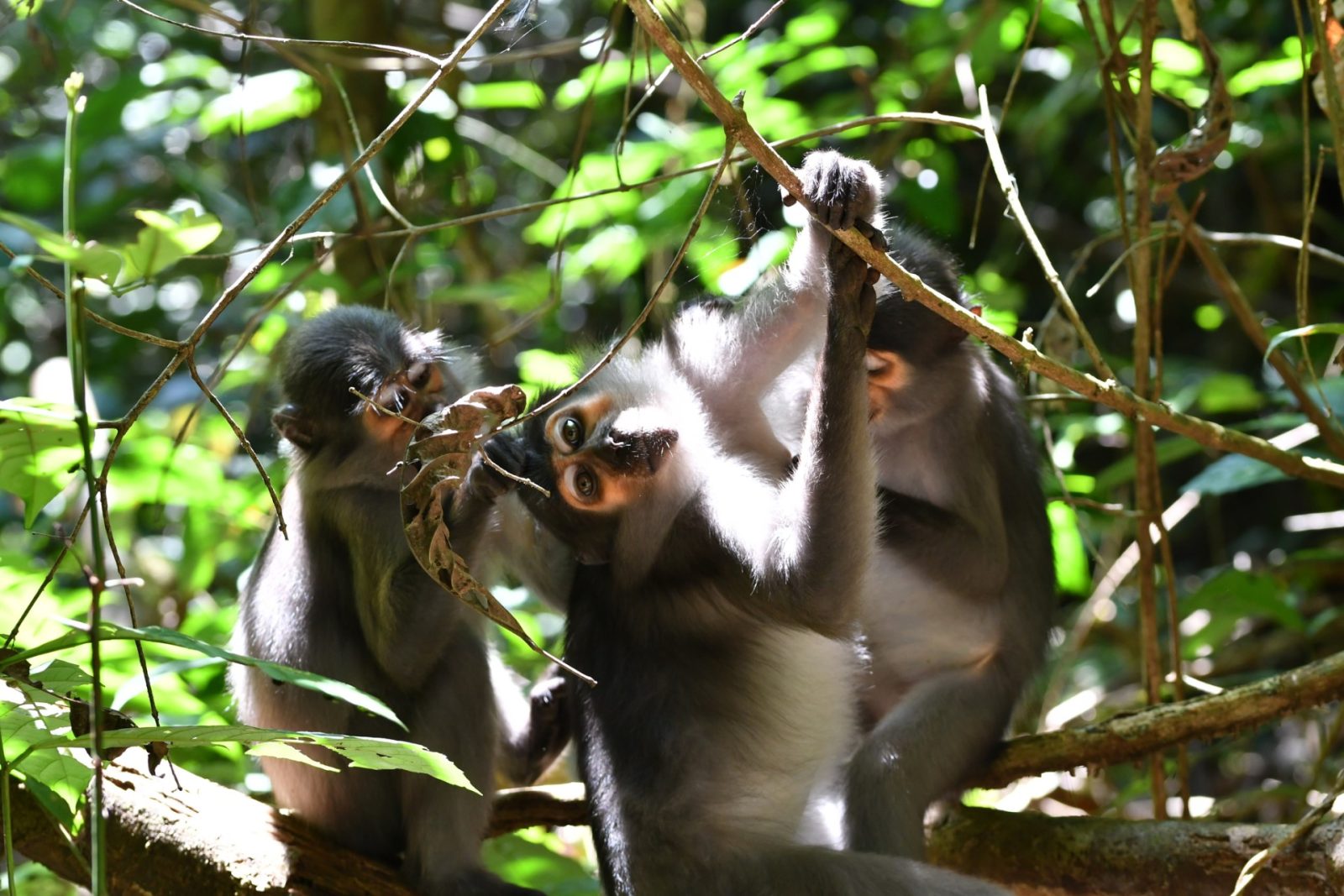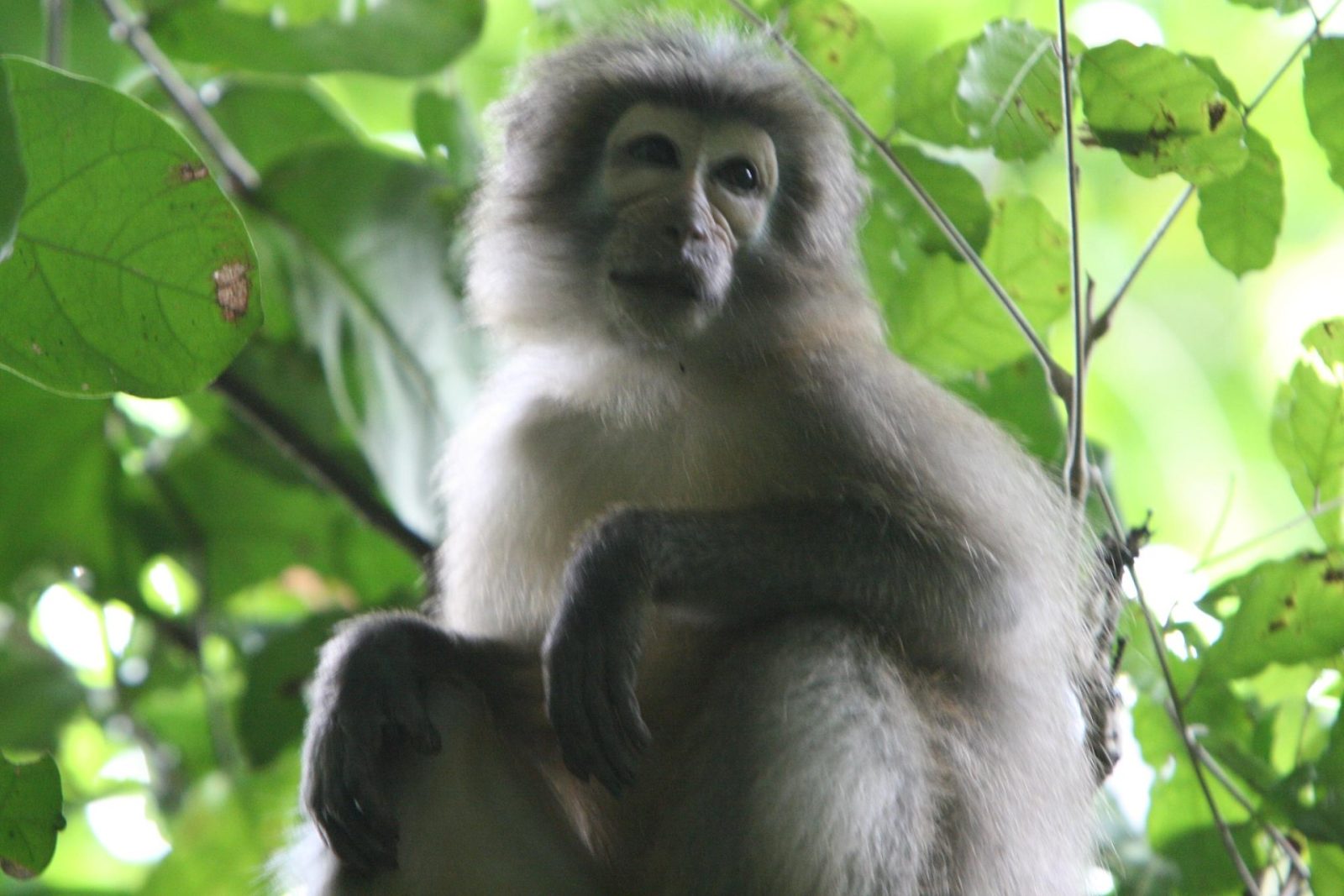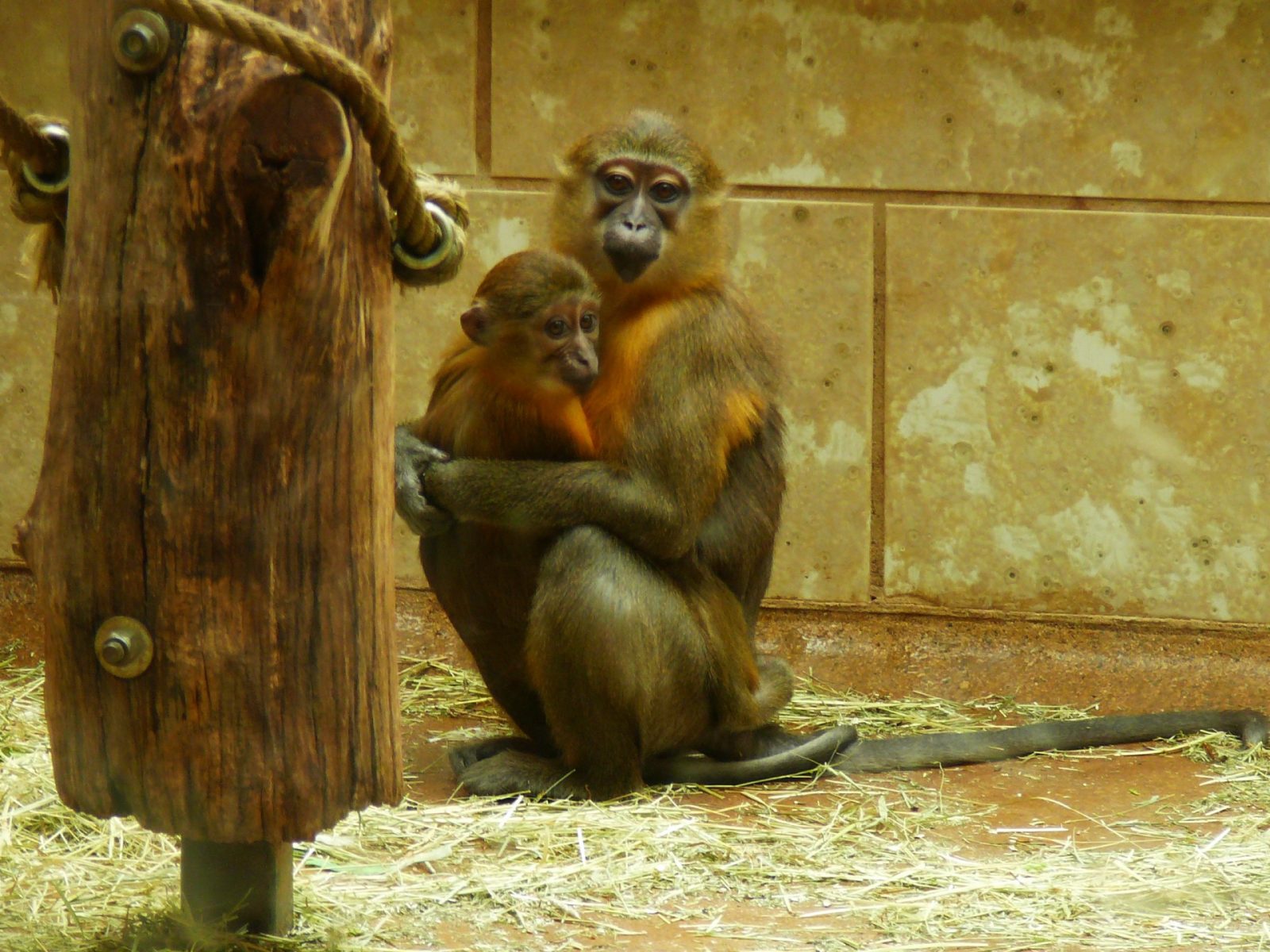
Mandrill

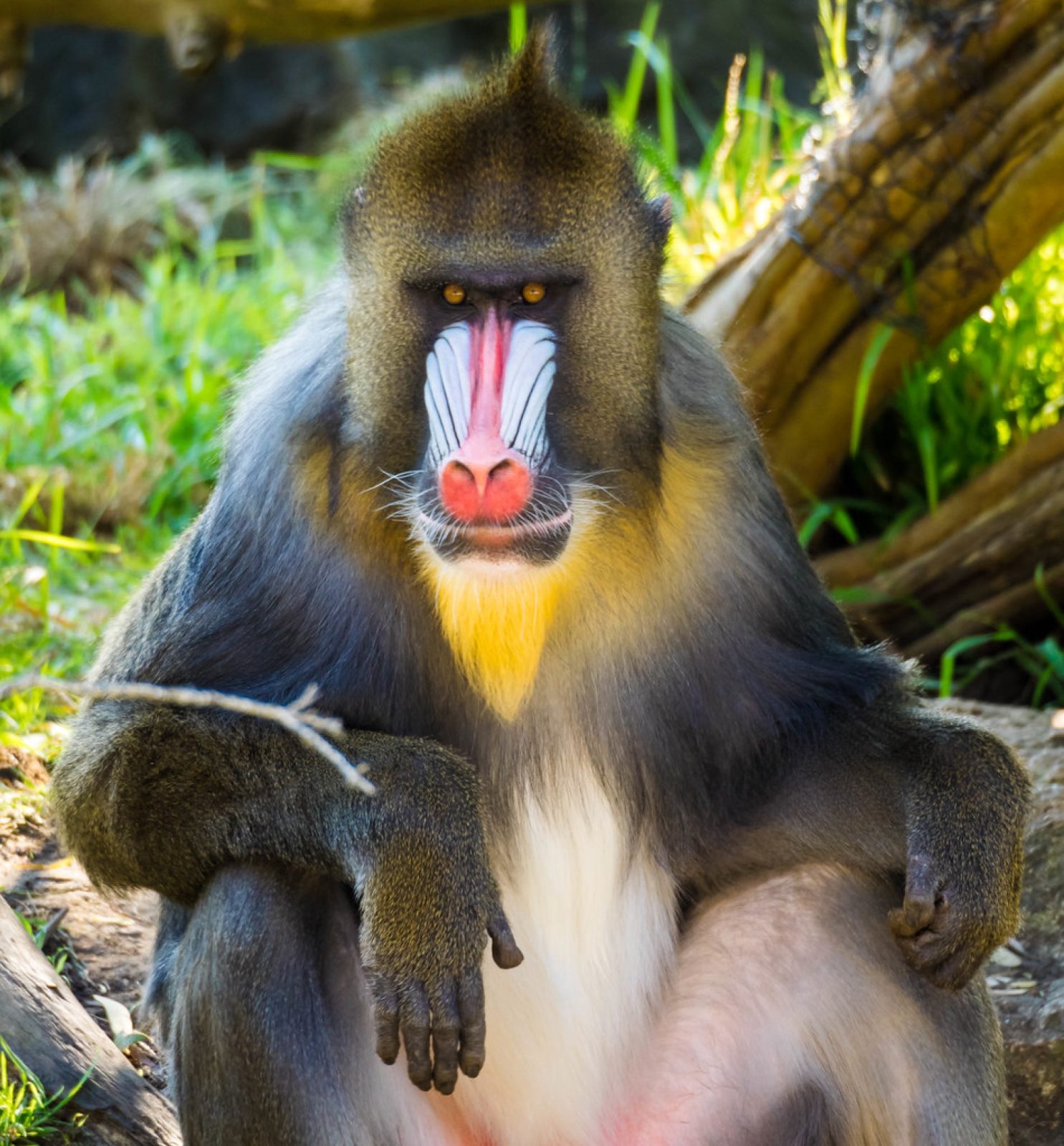
Mandrill photo by Amitp

Mandril

The mandrill (Mandrillus sphinx) is a large Old World monkey found in western central Africa. It is one of the most colourful mammals in the world, with red and blue skin on its face and bottom. Males are far larger than females, having a larger body, longer canine teeth and brighter colouring. It is the largest monkey in the world. The closest related monkey is the  drill with which it shares the genus Mandrillus. Both species were thought to be baboons, but it has recently become clear that they are more closely related to the white-eyelid mangabeys species.

Mandrills generally live in tropical rainforests but will also travel across savannas. They are active during the day and spend most of their time on the ground. Their preferred foods are fruit and seeds, but mandrills will consume leaves, piths, mushrooms, and animals from insects to juvenile antelope. Mandrills live in large, stable groups known as “hordes” which can number in the hundreds. Females form the core of these groups, while adult males are solitary and only reunite with the larger groups during the breeding season. Dominant males have the most vibrant colors and fattest flanks and rumps, as well as fathering the many of the young in the group

The mandrill is classified as vulnerable on the IUCN Red List. Its biggest threats are habitat destruction and hunting for bushmeat, as is the case for much of the endangered primates. Gabon is considered the stronghold for the species. Its habitat has declined in Cameroon and Equatorial Guinea, while its range in the Republic of the Congo is limited.

The core of its diet consists of plants, of which it eats over a hundred species. One study found the mandrill’s diet was composed of fruit (50.7%), seeds (26.0%), leaves (8.2%), pith (6.8%), flowers (2.7%), and animal matter (4.1%), with other foods making up the remaining 1.4%.
 During the wet season, mandrills forage in continuous forest, when fruit is most available, while during the dry season they feed in gallery forests and at the borders of savannas and forests.

The rest of a mandrill’s diet is largely made up of invertebrates, particularly ants, termites, crickets, spiders, snails, and scorpions. They also eat birds and their eggs, frogs and rodents. Mandrills have been recorded preying on larger vertebrates such as juvenile bay duikers. Such prey is killed with a bite to the head followed by pulling off the hind limbs and tearing open the belly. Individuals may cooperate during hunting and share kills.

Below is a documentary on this species. Below this, we will include a list of any articles written on this subject on the website (if or when these are written). Below this, I will add any places that it is worth going to, in order to see this species in the wild. To view the page on the closely related Drill click here
[smart_post_show id="19353"]

Kipunji

Kipunji

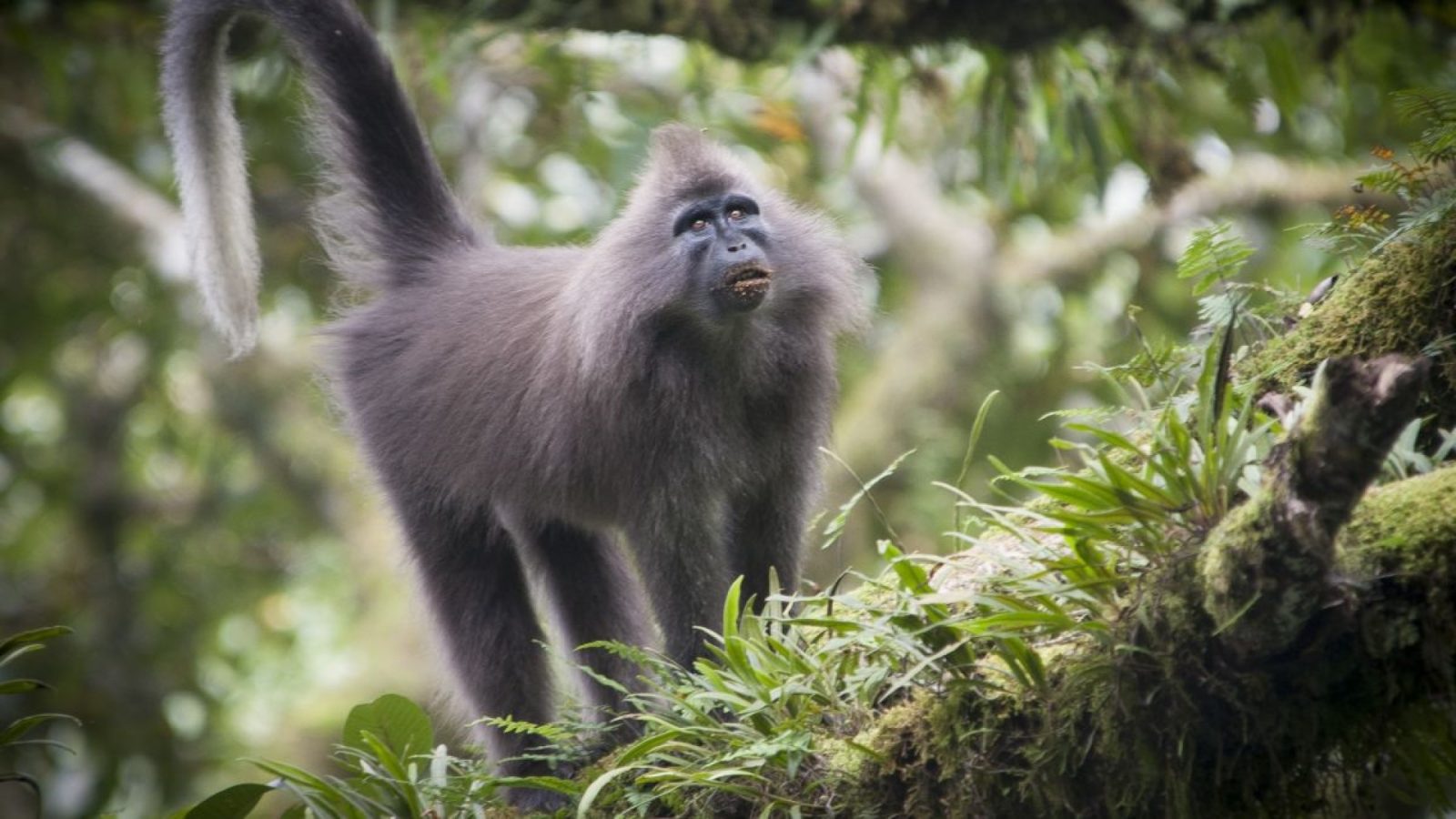
The Kipunji is a special species. Like many other, it is a species of old world monkey, sometimes known as the highland mangabey, and is found in the highland forests of Tanzania. Its call is quite different from its relatives -the grey-cheeked mangabey and the black crested mangabey. Their call is referred to as a whoop-gobbles while  the Kupunji sound is more like a honk-bark.

This species was independently discovered by researchers from the Wildlife Conservation Society, the University of Georgia and Conservation International atht eh end of 2003 and July 2004. It was the first new African monkey species since 1984 (this species was the sun-tailed Monkey).

It was originally placed in the genus Lophocebus, but more recent genetic data shows that it is more closely related to the baboons (Papio). As such, it was placed in its own genus Rungwecebus – taking its name from Mount Rungwe where it was first found. In terms of genus, it was the firs new one since 1923 and the Allen swamp monkey discovery. There was initial scepticism, as while local people knew about this new species, the traditional stories from the Nyakusa people mixed descriptions that suggested it was both real and mythological.

One of the places to try to see this species, is in the Unzungwa mountains of central Tanzania, and the national park which takes its name. I did visit this reserve back in 2010, though, I should note, that it was a 4 day stop, rather than the main purpose of the journey (we were visiting the Selous)

There are thought to be around 1,100 of this species living in the highland Ndundulu forest reserve, which is beside the Udzungwa mountains national park. This is currently a healthy reserve, with little deforestation, that has not been fragmented. There is a second (unlikely to have been connected for a very long time) population 250 miles away on Mount Rungwe and in Kitulo national park which is also next to it. Unfortunately, the forests of Rungwe is highly degraded and fragmented, which means that this population is split into 3 smaller populations.

It is classed as endangered by the IUCN and was listed as one of the worlds most endangered primates in 2006 and 2008. In 2008, teh WCS found that the monkeys range is restricted to just 6.82 square miles (17.7 square km) of forest in two isolated places -The Ndundulu and the Rungwe-livingstone forests, with the first having only around 75 individuals, but the second containing 1,042. While both of these areas are protected, there is no management plan for this species in particular. The main threats from this species are human activities, including charcoal making, illegal hunting, logging and resource extraction which is not carefully controlled. There are currently narrow corridors of forest which connect the fragments, but these are increasingly encroached by farmers; one of these, called Bujingilia corridor, which links the mount Rungwe and Livingstone forests is likely to be lost in the near future. They are also actively hunted by both dogs and traps (usually as revenge for crop damage.

We hope, eventually, to link with places like the Udzungwas to help your travel. We have included our usual new roundup, below the video (the video is a clip fro the BBC series the great rift: Africas wild heart), and this includes a review of the Udzungwas. Any useful links will be added below.

[smart_post_show id="19313"]

Gelada Baboon

Gelada Baboon

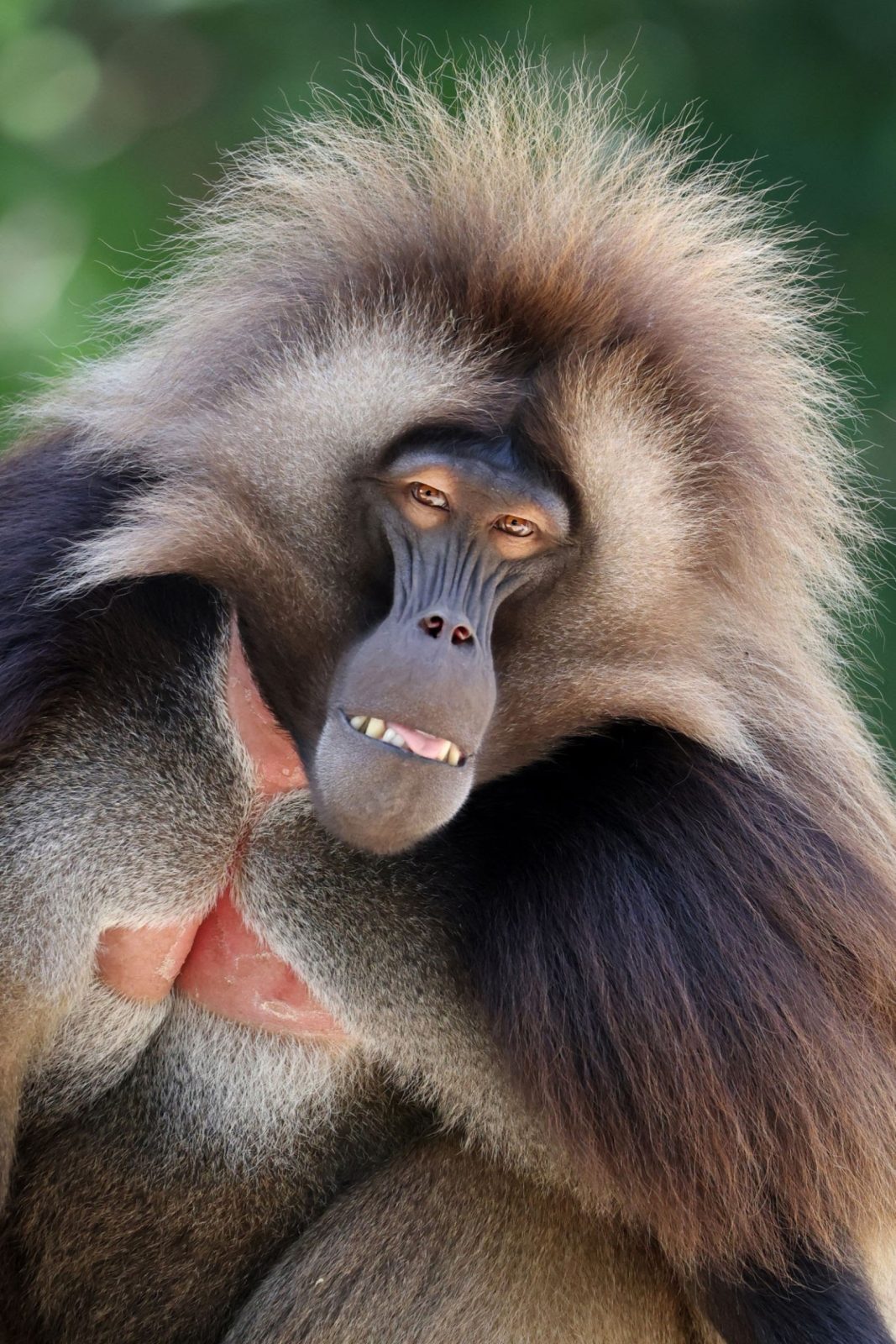
Despite being called a baboon, this is not a baboon species. This species is only found in Ethiopian highlands between 1800m and 4000m above sea level. The genus Theropithecus means beast-ape, which is a strange name, given the species behaviour. It is a close relation of the baboon genus, and like the baboon, spends the vast majority of its time on the ground.

This is essential for this species, as it gets 90% of its nutrients from grasses, which it spends the vast majority of its living time eating.

Males weigh an average of 18.5kg, with females weighing 11kg. Their head and body length is between 50 and 75cm, with a tail measuring 30-50cm.

There are 2 basic social groups, that of bachelor groups and female groups with their young. Males move back and forwards, for when they are in peak health and capable of becoming the dominant mode. The range of Gelada vocalisations are quite impressive, and are similar to the human range. in 1970 there were 440,000, but in 2008, the number was estimated at 200,000.

While this puts the species as least concern, if this rate of reduction in population were to continue, this species would eventually disappear. It is unclear what caused the decline (except that it is probably something related to the human population) and without knowing what has caused the problem, we cannot know if this issue is coming to an end.

Only being found in one area, tourism can become very important for the human population in the area, and therefore give a big incentive for their future protection. Other species that can be seen in the same area, include the Ethiopian wolves. Any links will follow the news section below.

[smart_post_show id="19286"]

Tana-river Mangabey

Tana-river Mangabey

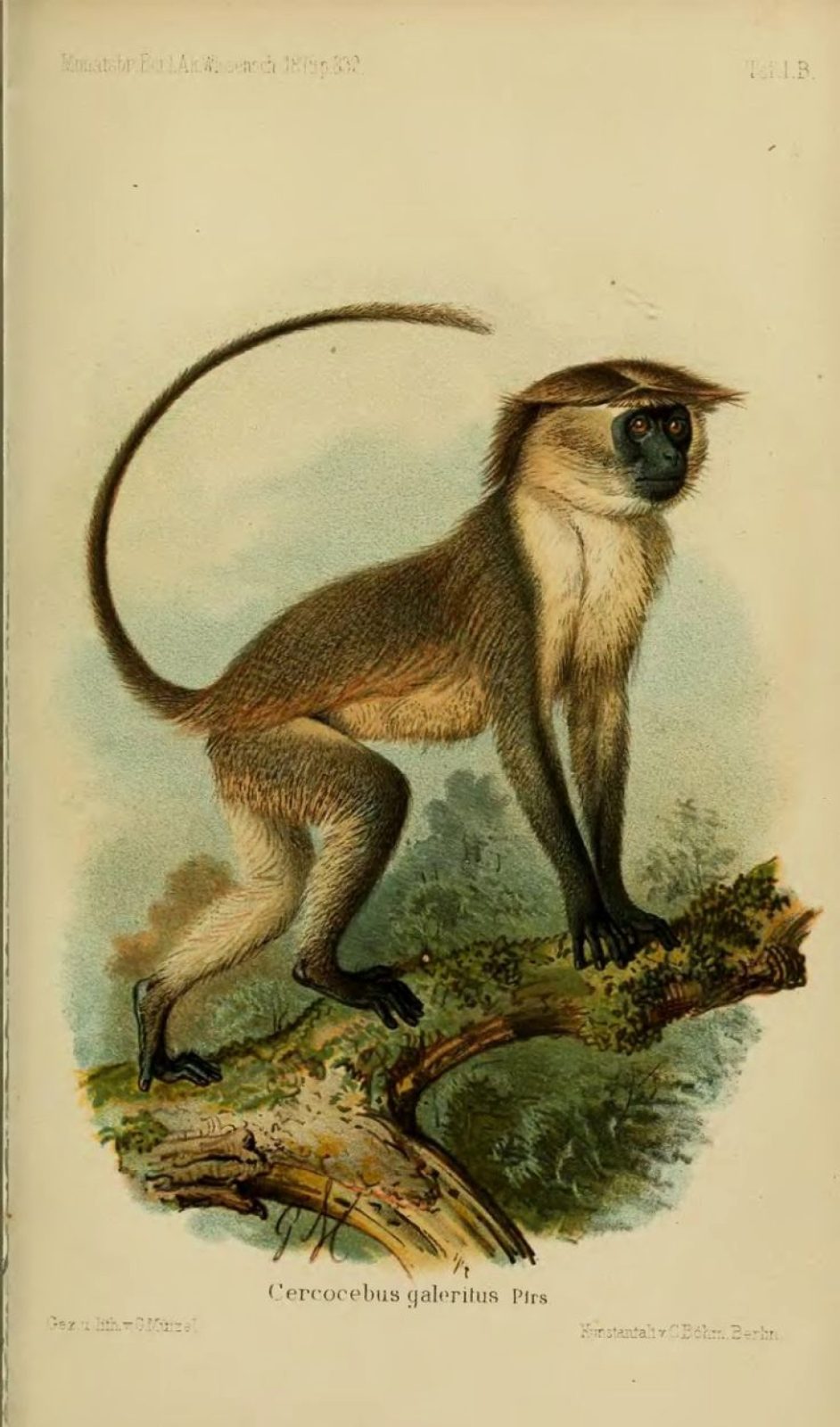
The Tana River mangabey (Cercocebus galeritus) is a highly endangered species of primate in the family Cercopithecidae. Some authorities have included the Agile mangabey and Sanje  mangabey as subspecies of this species, while others award these full species status. These are listed alongside them, or you can click on their names above.

It is exclusively found in the riverine forest patches along the lower Tana River which is found in south-eastern Kenya. It is threatened by habitat loss and degradation, which has increased in recent years (this is at least partially linked to increasing human populations. This species was, together with the equally endangered Tana River red colobus, the main reason for the creation of the Tana River Primate Reserve in 1978, but human encroachment within this reserve continues. Recently, it has been suggested that 20,000 hectares of the Tana River Delta should be transformed into sugarcane plantations, but this has, temporarily at least, been stopped by the High Court of Kenya. Whether this injunction remains in place, will have to come apparent over time – this reserve could be worth a great deal to the local people if local eco-tourism could take off. Help me make this website a success, so that we can make all wildernesses big and small, worth more to the neighbouring people intact, than the land is without the ecosystem which is left.

The Tana river mangabey is a mid-sized yellow-brown primate, with a long semiprehensile tail and long dark fur. It has white eyelids, which are noticeble given its black face. It is thought that the eyelids are part of the species complicated way of communicated. Its teeth are set up for feeding on hard nuts, seeds and fruits.

It is active during the day, and while it spends much of its time on the ground, it is considered arboreal as it sleeps i the trees – at heights of 27-37m up, in forks of the branches near the main trunk. It is thought to sleep up high to reduce the risk of predation, but also choses to sleep near where it is feeding. 

Generally, living in groups between 13 and 36, these groups occasionally join to form larger groups. Over a day, they generally move less than 1.25km. During the dry season, when there is little food, groups have discrete territories, which do not overlap very much . In order to maintain these, males give spatial vocalization and territorial displays at fixed boundaries. When these are ignored, males often engage in physical combat. In the web season when food is abundant, these boundaries do not exist. During these periods, there is more freedom to roam, as well as a greater willingness to mingle with other groups. 

The predators of the area include hte central African Rock python, crowned eagle, martial eagle and the Nile crocodile.

Any articles on this species will appear below in a scrolling list. Below this, you will see any links or contacts we have to allow you to visit the area in question.


[smart_post_show id="19249"]

Sooty Mangabey

Sooty Mangabey

The sooty mangabey is an Old World monkey found in forests of West Africa from Senegal in a margin along the coast down to the Ivory Coast. They are found in Guinea, Guinea-Bissau, Liberia, Senegal, Sierra Leone, and Ivory Coast, and inhabit both old growth and secondary forests as well as in flooded, dry, swamp, mangrove, and gallery forests. 

Sooty mangabeys are terrestrial omnivores, typically spending around 75% of their overall time on the ground (high for the majority of monkeys that are of similar size. Around 85% of travel time and ~71% of foraging time is ground based. In their foraging behaviours, sooty mangabeys typically consume fruits (around 1 fifth of their diet), invertebrates (~13% of diet), and nuts and seeds (greater than half of diet). While Sooty Mangabeys have never been seen using tools to break nuts, they have been observed scavenging the remans of Coula and Panda nuts, which have been cracked open by chimpanzees and red river hogs. If they are using the sounds of cracking nuts or seeing others responding, is it not reasonable to suggest that their tool to access this food source is the chimpanzees? It is certainly worth thinking about.

Until 2016 this and the White crowned/white naped were considered subspecies of each other.

As usual, any articles on this subject will appear below. Below this, we will endeavour to link as many places where you have the opportunity to see this species in the wild.


[smart_post_show id="19239"]

Sanje Mangabey

Sanje Mangabey

The Sanje mangabey  is a highly endangered Old World monkey of the white-eyelid mangabey group from the Eastern Arc Mountains in Tanzania.

They are about 50–65 centimetres in length, excluding the tail, and their body colour is greyish. Fruit makes up about 70% of their diet the rest being made of seeds, nuts, insects and other invertebrates.  They live in valley forests and on mountain slopes, but are mostly ground-dwelling, which makes them susceptible to hunting and poaching. Their habitat is being degraded, and the International Union for Conservation of Nature has assessed their conservation status as being “endangered“.

One of the better places to try to see this monkey is within the Udzungwa mountains of Tanzania, there is a national park in this area.

This species was only identified in 1979 by a couple of scientists visiting the area.

It is only found in 2 forests in the country of Tanzania, which are unfortunately widely split, so there is no genetic exchange between the two populations, and lives in mid-altitude forests.

In 2005, the population was estimated at 1300, while unclear, it is likely to have declined in the intervening time.

You will find a list of any articles on this species below (if any – hopefully these will grow overtime). Below the list of articles, we will add any links we make, where you can see this species.

Visiting the area, is one of the easiest ways to show locals the species has more value alive than dead.

[smart_post_show id="19231"]

Golden-Bellied Mangabey

Golden-Bellied Mangabey

The golden-bellied mangabey  is a social Old World monkey found in swampy, humid forests south of the Congo River in the Democratic Republic of the Congo. It was previously considered a subspecies of the agile mangabey. Little is published about the species and its behaviour has only been studied in captivity.

The only known photograph of golden-bellied mangabeys in the wild is shown below, though though there are more, from captivity.

Its conservation is data deficient, though given the hunting, it is thought that the population is falling.

A tourism industry would definitely help this. Directly below here, is something that will display every article that has been written about this species on this website. I should add, that at the current time, there are none, I hope to link with people in the field so as to have more news coming in. Below this we will add links that would be useful.

[smart_post_show id="19223"]

Collard Mangabey

Collard Mangabey

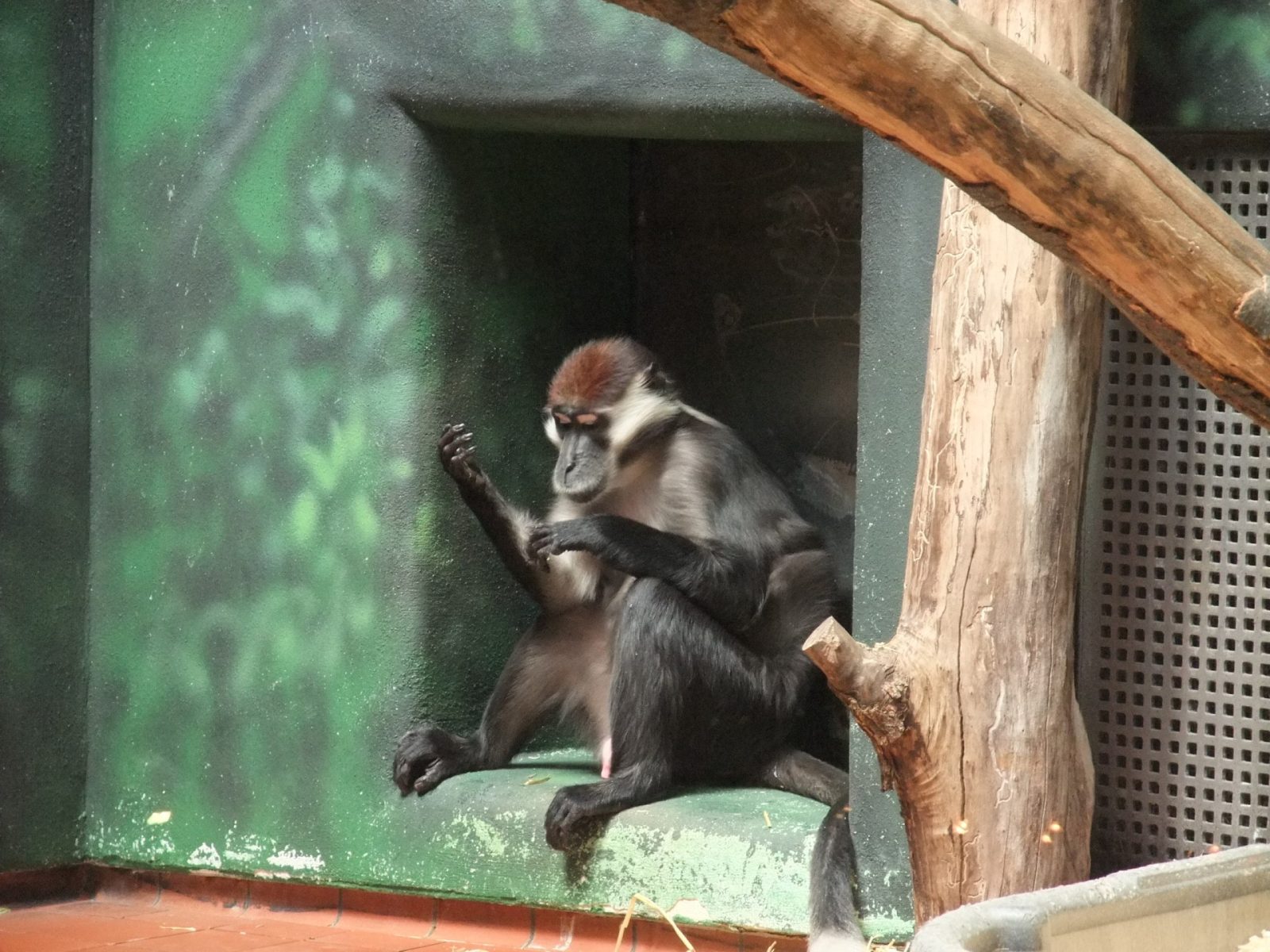
The collared mangabey, also called red-capped mangabey and white-collared mangabey is a species of primate in the family Cercopithecidae of Old World monkeys. It formerly included the sooty mangabey as a subspecies. As presently defined, the collared mangabey is monotypic. The Collard mangabey is found in coastal, swamp, mangrove, and valley forests, from western Nigeria, east and south into Cameroon, and throughout Equatorial Guinea and Gabon as well as on the Congo-Gabon border on the Atlantic shore.

It lives in large groups of 10-35 individuals, which includes several males. The group communicates through cackles and barks when they are out of site of each other.

It has a diet of fruits and seeds, but also eats leaves, foliage, flowers, invertebrates, mushrooms, dung, and gum. The collared mangabey has no defined breeding season, it reaches sexual maturity at five to seven years, and has an average gestation period of 170 days.

Back in 2006, it was estimated that 3000 were being taken for the bushmeat trade, it is unclear how things have changed in the intervening 17 years.

The collared mangabey is listed as endangered on the IUCN Red List due to habitat loss and hunting for bushmeat.[2] It is also listed on Appendix II of CITES and on Class B of the African Convention on the Conservation of Nature and Natural Resources.

They are currently listed as vulnerable, they are widespread and there are areas where they are a lot in a region. If this species is mentioned anywhere on this site, it will appear below. We will add any links that might help you see this animals in the wild below

[smart_post_show id="19213"]

Agile Mangabey

Agile Mangabey

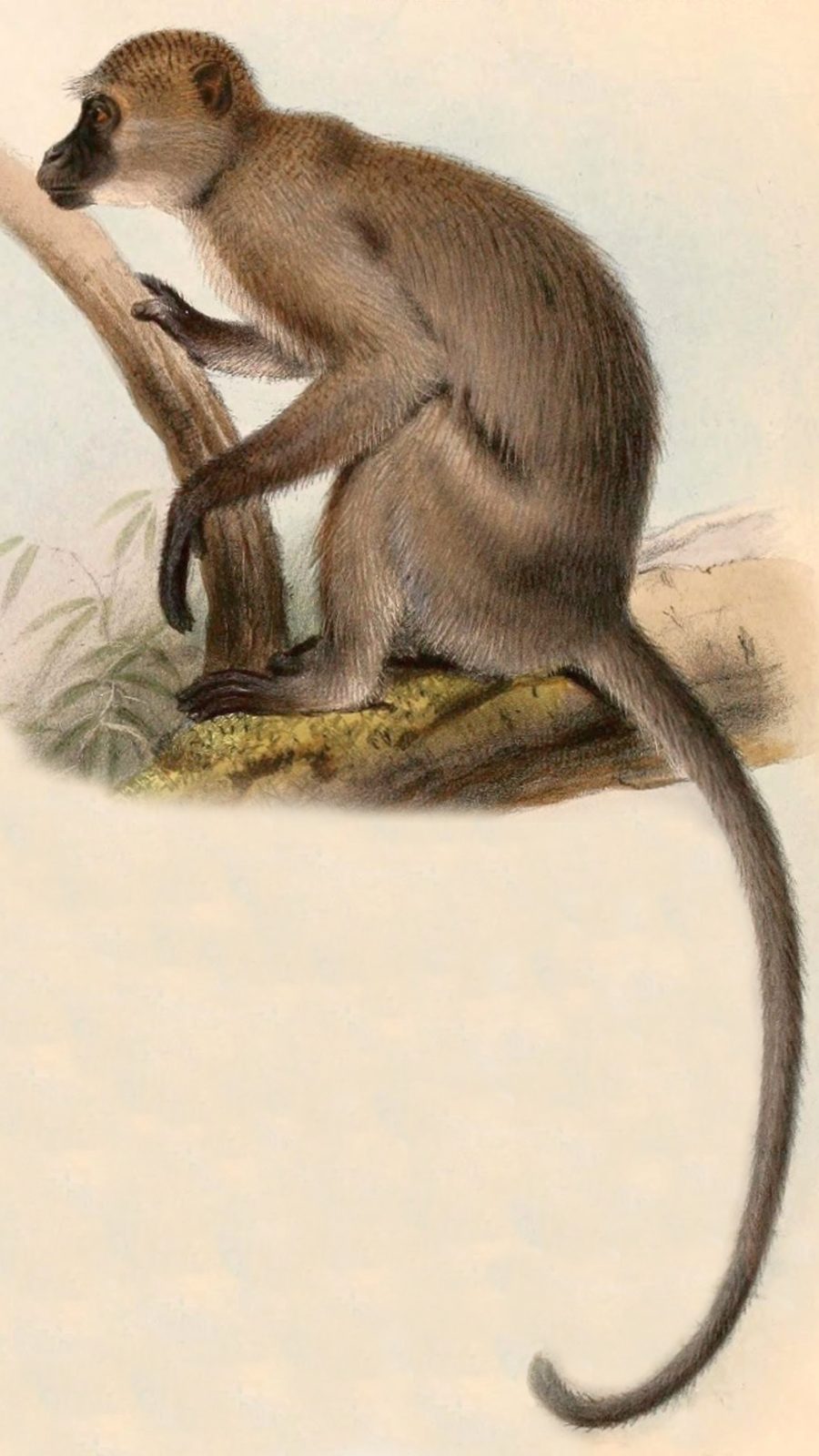
The agile mangabey is an Old World monkey of the white-eyelid mangabey group found in swampy forests of Central Africa in Equatorial Guinea, Cameroon, Gabon, Central African Republic, Republic of Congo, and DR Congo.

Until 1978, it was considered a subspecies of the Tana River mangabey. More recently, the golden-bellied mangabey  has been considered a separate species instead of a subspecies of the agile mangabey.

Similar to other mangabeys, they are active during the day. Although generally tree-living, they do spend a significant portion of their time (12–22%) on the ground, especially during the dry season. It is often heard first, and males have a loud, species-specific call that is believed to be used to space themselves out – in a similar way that wolves operate with howls. Other calls are also used to maintain group cohesion and warn of predators. Group size can be as high as 18 members, led by a single dominant male. Group meetings can be friendly and may involve exchange of members.

Adult males not in groups often travel singly.

Fruit makes up a major portion of the agile mangabey diet. They are known to eat at least 42 different species of fruit. Their tooth structure and powerful jaws allows them to open tough pods and fruits that many other monkeys can not access. Agile mangabeys eat from a number of dominant swamp-forest trees, including Irvingia, Sugar plums when they are fruiting. They also eat fresh leaf shoots from Raffia palm when fruits are scarce. Grass and mushrooms, Invertebrates, bird’s eggs and some vertebrate prey, such as rodents.

As we find links, to help you book to see this species, the links will be added at the bottom of the page.

[smart_post_show id="19206"]

White-naped Mangabey

White-naped Mangabey

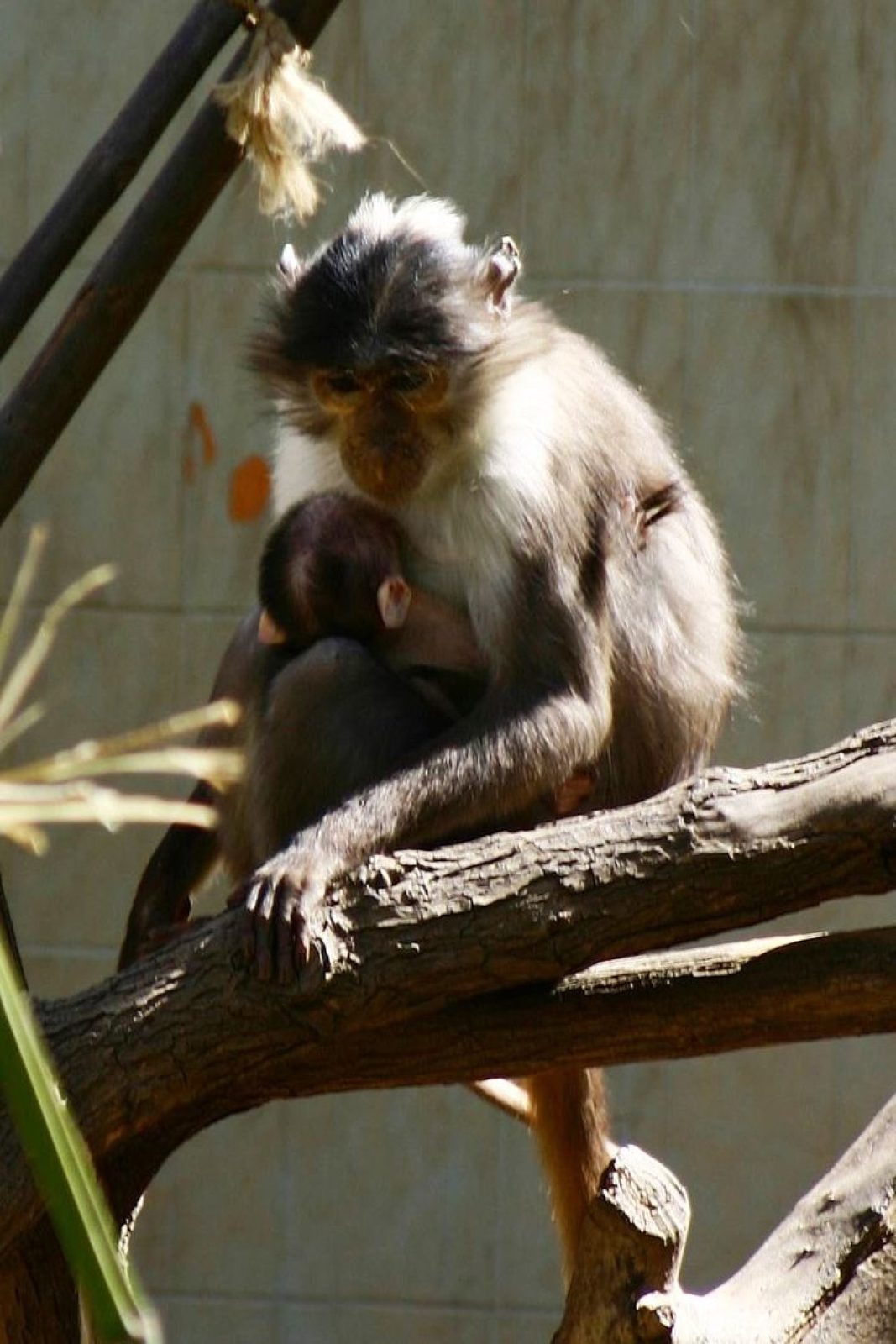
The white-naped mangabey (Cercocebus lunulatus) is a species of Old World monkey in the subfamily Cercopithecinae. The species is found in the forest of Burkina Faso, Ghana and Ivory Coast. The species population has been declining due to deforestation and hunting and has thus been put as an endangered species by the International Union for Conservation of Nature. The species was once considered a subspecies of the sooty mangabey but is now a separate species.

They are considered endangered, which means something needs to happen, in order to improve their status. The population has declined by 50% in just 3 generations. They were discovered in Burkina faso in just 2006. By 2014 they had become locally extinct.

Unfortunately, their range is now patchy and much smaller than they have been historically – especially in Ghana. They used to roam though much of the country, but it is now thought to be restricted to just 2 protected areas, within Ghana. THese are the Cape three points forest reserve, and the Ankasa-Tano community forest. One of the most essential places for the species is the Tanoe swamp forests in Ivory coast (Côte d’Ivoire).

While white-naped mangabeys used to roam throughout much of the country, scientists believe they are now restricted to just two protected areas within Ghana—Cape Three Points Forest Reserve and the Ankasa-Tano Community Forest. One of the most important areas for the species is the Tanoé swamp forest in Côte d’Ivoire, where groups of up to 300 individuals have been reported. White-naped mangabeys make their homes in primary and secondary gallery and swamp forests in the Upper Guinean rain forests of West Africa, a biodiversity hotspot. 

Primary forests are those that are very old, as they have been relatively undisturbed for a long period of time. Secondary forests are younger, as they have regrown after a significant disturbance, like a timber harvest or fire. Gallery forests are those that are situated along rivers and wetlands, while swamp forests grow in waterlogged areas.

Below will appear any articles that get written on this species. Below that, we will link to any areas which allow you to go and visit this species in the wild (remember, that visits are the only current long-term way of protecting them.

We all need to cut our carbon footprint, where we can. However, if we do not visit places like that, there is no reason for locals to conserve -we must balance these two conflicting needs.

[smart_post_show id="19265"]
See Animals Wild

Read more news

Join as a wild member
to list your wild place & log in

Join as an ambassador supporter to
support this site, help save wildlife
and make friends & log in

Join as an Associate member
to assist as a writer, creator, lister etc & to log in

List a wild destination

List a destination in
the shadow of man

List a hide for animals more easily seen this way

Highlight some news
missed, or submit a
one-off article

Browse destinations for fun or future travel

Temporary membership
start here if in a hurry

Casual readers and watchers