Slovakia approves the sale of brown bear meat to the public

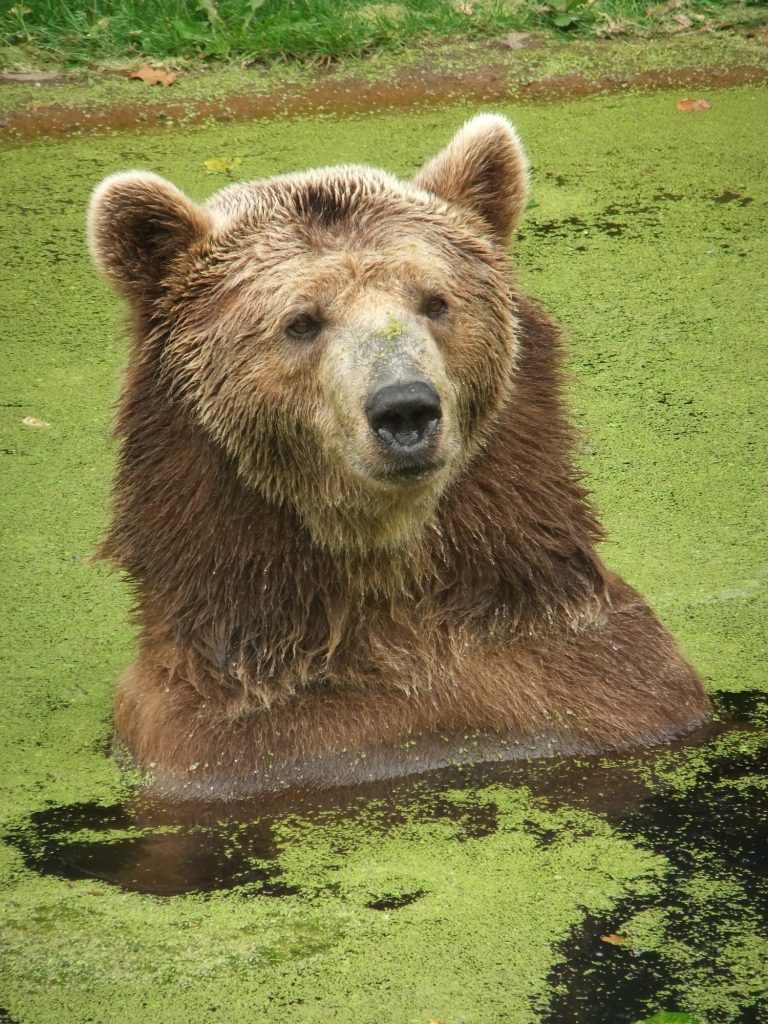
Last month, the Slovakian cabinet approved plans to cull around 1 quarter of the bear population in the country (currently at around 1300) after some high profile fatal encounters between humans and bears.

It is unclear what the actual carrying capacity of Slovakia, and indeed this is often the problem. The government decides what the carrying capacity is of the land, they set quotas for hunting them and they reap the money for hunting permits, as well as having to deal with any livestock predation. These different requirements are often lead to different groups having different desires and therefore results can be skewed to support a decision which is not in the best interest of the country or the population.

Having carrying capacity and population size done by truly independent researchers would help with this, but in most countries, this independence is not real, with the government holding the purse strings or similar power over future studies.

A reduction of a quarter, is a large step, will change the population makeup significantly and is likely to greatly disrupt bear tourism to the country.

Tourism revenue for this country has hovered between 1 and 2 billion dollars in recent decades, and while it is hard to pinpoint exactly how much of this is to do with wildlife, and particularly bear tourism, it is thought that a majority do some sort of ecotourism while in the country – therefore care must also be taken to not destroy this important income for the country.

Should wolves in Europe have their conservation downgraded? Are they really stable enough to be hunted again

The European commision has proposed downgrading the protection of wolves from their current strictly protected, but it has been suggested that this is not based on any science.

A total of 9 countries (The call for a re-evaluation of the annexes of the EU Habitats Directive is included in a note put forward by Finland with the support of Austria, Czechia, Greece, Italy, Latvia, Romania, Slovakia and Sweden, ahead of the EU Agriculture Council meeting of 23 January).

The problem with this move, is that while in some countries like Romania, there is a large and healthy wolf population, in other countries like France it is a very different matter. If there is a change in their status, it needs to be assessed country by country, and the European Union must really require minimum levels, otherwise, this move is highly likely to lead to the extinction of the wolf across much of Europe once again.

While living alongside wolves is not always simple, it is essential to have predators to control populations of prey, such as deer. This is not something that is easily replaced by culling, and in the UK, the likely reduction in car collisions with deer would save far more than the cost of compensation for the occasional livestock that might be lost (of course, the wolf is not currently wild in the UK and the current government sees no reason to change this).

While complicated, the interest in the wolf is high, and it is highly likely that farmers would be able to supplement their farming income by money they could be paid through ecotourism and allowing people to try to see the wolves from their land. Wolves as with many other species are still slowly recovering from centuries of persecution, they are needed for our ecosystem to flourish, and can be good for everyone, with adjustments and compensation for loss of livestock.

See Animals Wild

Read more news

Join as a wild member
to list your wild place & log in

Join as an ambassador supporter to
support this site, help save wildlife
and make friends & log in

Join as an Associate member
to assist as a writer, creator, lister etc & to log in

List a wild destination

List a destination in
the shadow of man

List a hide for animals more easily seen this way

Highlight some news
missed, or submit a
one-off article

Browse destinations for fun or future travel

Temporary membership
start here if in a hurry

Casual readers and watchers