Green projects in the UK are being endangered because of unfair transmission pricing

Transmission charges are paid when transporting electricity from where it is made to where it is used.

This is quite normal, and it is the way that the power grid has worked for centuries. This will become ever more important, as the distance between generation and consumption of electricity increases.

Why is this distance increasing? When you build a coal or gas powered power station, it does not need anything in particular to be able to make power. So long as it has a ready supply of what ever it uses to power its generators, electricity continues to flow.

Renewables are different. Wind turbines need to be erected in places where there is a lot of wind – this is why the UK has built so many off the coast. Solar power is generally either placed on large roofs (factories and such) or out in fields. We need to have more roofs filled and fewer fields – It would be possible to power all the UK power needs if all rooftops were covered, but that is a different subject). Fields are generally expensive near cities and cheap far away.

This is where the problem arises. The UK is capable of generating more than enough power for the British population. However, if electricity generated in Netherlands France and Germany are all let off transmission charges – as they currently are, but our own power generation has to pay it, this is the equivalent of giving all foreign electricity a significant discount. This is obviously insane, as it means that we discourage our own power generation, at a time where we should be investing billions in green power generation.

Analysis shows that on average EU power firms pay 48p per megawatt hour in the transmission system. In Scotland the average is £6.42 – more than 13 times the price. In the windiest parts of Scotland it is £736 per MWH

OFGEM needs to bring in rules that encourage the UK net zero target. This must happen fast. Without, we are likely to end up not building the tens of thousands of wind turbines necessary as it will cost more to export than it is worth.

Right now, we are essentially subsidizing imports and heavily taxing domestic power. This is a quick way for the government to kill off this entire industry.
Easyjet continues to make progress towards its zero carbon planes due in the sky 2030

One of the most complex issues to address in decarbonization is that of air travel. It is all very well for people to suggest that simply nobody should travel. This is not a long-term solution, not least because the vast majority of conservation relies on tourism to raise the funds for it to take place.

Long-haul flight is a problem to be fixed in the future, however easyjet is working on finding a solution to short haul flight of up to 500km.

Wright electric, the company which is developing the planes has announced that it has created an electric propulsion motor at 2MW. The aim would be to use 10 of these motors – which would add up to a similar amount of power as the aircraft the fly today. 2MW for an hour at full capacity would be 20MWH

Whether Wright electric has identified batteries that can supply enough power to run these motors for long is not yet known.

The Democratic republic of Congo has had a moratorium on logging since 2002, the current minister of environment has suggested ending this

Deforestation is rarely good for local communities. Having lived on the land often for hundreds or thousands of years, the deforested land is usually sold off. Furthermore it can no longer be used as a resource for food gathering – and often without the forest the rains are less reliable so local farm crops fail.

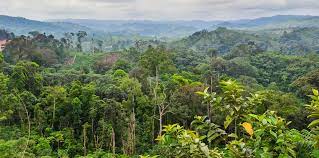
Containing enough carbon to cause serious problems worldwide, the Congo rainforest also houses 3 of our closest relatives

It is thought that as much as 70 million hectares could be lost if this goes through. This is 270,000 square miles an area the size of Morocco lost.

Even with the moratorium in place three logging leases have been given to Chinese companies.

What makes this threat even greater, is that some of this area that would be deforested lies in the peatland areas, which could mean the end of the peatlands and the release of billions of tonnes of carbon (these peatlands are thought to contain 30 billion tonnes of carbon

Tiger doubling from 2010 aim review – Sumatra

Indonesia is a archipelago of islands. Once connected to the Asian mainland, animals were able to make their way along the peninsular. When sea levels rose in the ancient past they were marooned on the islands.

Once they were found on a few islands including Bali and Java. They are now only found Sumatra. Sumatra is thought to have 400 tigers in 2010. This is down from as many as 1000 back in 1978.

San diago zoo estimate the number remaining in the wild at 400-600, but I cannot find any reason for this higher band.

It is possible that the tiger population has increased a bit, but in certainly has not doubled.

2 and a half billion trees died after the El Nino of 2015-6 in the Amazon

El Nino are natural weather phenonium generally occurring between every 2 and 7 years. It would appear that as predicted, the El Nino is getting worse as a result of climate change.

This mass die off released carbon dioxide greater than the annual emissions of a country like the UK or Australia.

The fear is that this will become a common event as the planet warms.

The problem is that with this much carbon released, the Amazon as a whole was flipped from being a net absorber toa net emitter of carbon.

Tiger doubling from 2010 aim review – Thiland

As with many of the other countries on this list, precise population numbers do not seem to be available. What is clear is that in 2010 the tiger population was thought to be in excess of 100. Their current population is around 177 ( the population grew by 50% over the last 2 years).

Rapid growth of the population appears to be possible thanks to an improvement in their habitats health.

Coal power stations could cut coal use, and therefore emissions by 50%

Coal power plants have to be a thing of the past as soon as possible. This is because no matter how efficient they are, they are powered by digging up carbon and releasing it into the air.

However for the time being, there are many coal power stations across the world. Vishwanath Haily Dalvi of the institute of Chemical technology in Mumbai India has been looking at how we could assist this process with the suns energy.

By collecting the suns heat energy, and using this to heat the water, the amount of coal needed is reduced by 50%.

This could therefore be a more economic way of reducing emissions from power generation. Given that coal power emits 0.85 pounds of carbon per kwh (about 380g), cutting this in half would make carbon far cleaner. While this may well be expensive to set up, it might allow coal power plants to operate for a few years longer and therefore be worthwhile, as well as offsetting some of the damage from the large number of coal powered stations being built across countries such as India and China.

Tree planting is another potential problem of Brexit

George Eustice (secretary for environment among other things) announced in may, that the government planned to greatly increase tree planting in the UK. Indeed, his plan was to treble the amount of woodland to be created each year, to 30,000 hectares (which is 74,100 acres or around 120 square miles).

However, this constitutes around 90 million trees (each and every year). The problem is that tree nurseries in the UK, do not regularly have this level of demand – and it is not easy to scale up these tree growing for just a few years. In the past, we imported a great deal of the tree saplings to plant, however the Brexit deal we did makes this hard. Not only is it more expensive, but also there are strict import rules to protect from various tree illnesses. While this is important for the wellbeing of British woodland (it is foolish to try to offset climate change by planting trees, if these trees cause the death of many thousands already growing here.

Labour is also short, with 70,000 requested in recent years, but the government only giving enough visas for 30,000 seasonal workers.

This is an issue we need to solve. British woodland cover is well below that of most European countries, but more to the point it makes a significant part of our plans to reduce our carbon emissions over the next few decades.

Tiger doubling from 2010 aim review – Bhutan

Bhutan is a mountainous country, thought to have a small population of tigers. Tigers have been photographed thousands of meters up mountains, and is the only country where this is known to happen. In 2014 a census counted 103 tigers, up from the previous estimate of 75.

There appear to be no further census done. It is entirely possible that Bhutans tiger population has increased, but we cannot know.

See Animals Wild

Read more news

Join as a wild member
to list your wild place & log in

Join as an ambassador supporter to
support this site, help save wildlife
and make friends & log in

Join as an Associate member
to assist as a writer, creator, lister etc & to log in

List a wild destination

List a destination in
the shadow of man

List a hide for animals more easily seen this way

Highlight some news
missed, or submit a
one-off article

Browse destinations for fun or future travel

Temporary membership
start here if in a hurry

Casual readers and watchers