Electric cars appear to be accelerating in their adoption. The UK is close to having more than half a million electric cars on its roads (currently about 477,000). One could add to this the roughly 348,000 hybrid cars, but these are a half way step, and it entirely depends on how they are used, as to whether they end up being cleaner or not. Never-the-less the number of cars in the UK that can drive at least a little distance on zero emissions is approaching 1 million.
Both the Amazon and the Congo have been given the status of totally virgin rainforest, without any human impact. What is becoming increasingly clear is that this is not the case.
Instead it is the case, that the communities which lived here -sometimes in large numbers, lived in balance with the environment.
Pre Columbian settlement evidence in the Amazon
Archaeologists have found vast network of settlements in the Columbian Amazon, spanning hundreds or even thousands of square km, consisting of a main settlement with huge platforms, and smaller settlements spread out around. All are linked by causeways, and canals and reservoirs dotted the land to make agriculture possible.
To be sure, these settlements were low density, but they successfully lived in harmony with the rainforest for centuries.
Oddly, while these communities prospered for 1000 years, they disappeared before Columbus arrived, and it is not clear why.
How should this impact work these days? I am not sure. There are no large groups of modern people who have learnt to live in harmony with their environment, but clearly bush people have. Perhaps we need to follow their example – though the current indigenous people of the Amazon do not live in settlements of large size, otherwise we would have know about these centuries ago,
Current worldwide pledges on carbon dioxide reduction are no where near enough and would lead to catastrophe.
Last year commonsense was found. It was recognized that global warming of 2 degrees will lead to a horrific situation, and that we need to be aiming for 1.5 maximum degree warming. This has been agreed, but at cop26 the pledges gathered were just enough to limit warming to a maximum of 2 degrees.
Unfortunately, actions taken (those pledges that are actually changing behaviour) fall far behind promises, leaving us on target for 2.7 degrees of warming – the upper band suggests 3.6 degrees of warming is still possible.
Developed countries around the world are not acting fast enough. They are also failing to supply funds promised to help the developing world cut their emissions.
Importantly delay will increase the cost. If we fail to act now, actions in the future could be 10-100 times more expensive
As if we need any examples of the contradictory actions of rich governments, the UK government is still giving permission for new had fields to be created.
It is known that if we are to keep warning to 1.5 degrees or less, more than 50% of fossil fuels must remain in the ground. As such this move is foolish.
The government could do as much for consumer bills by bringing back the green housing grants-and funding it properly. Many people in the country can afford to do the work themselves but many more don’t stand a chance.
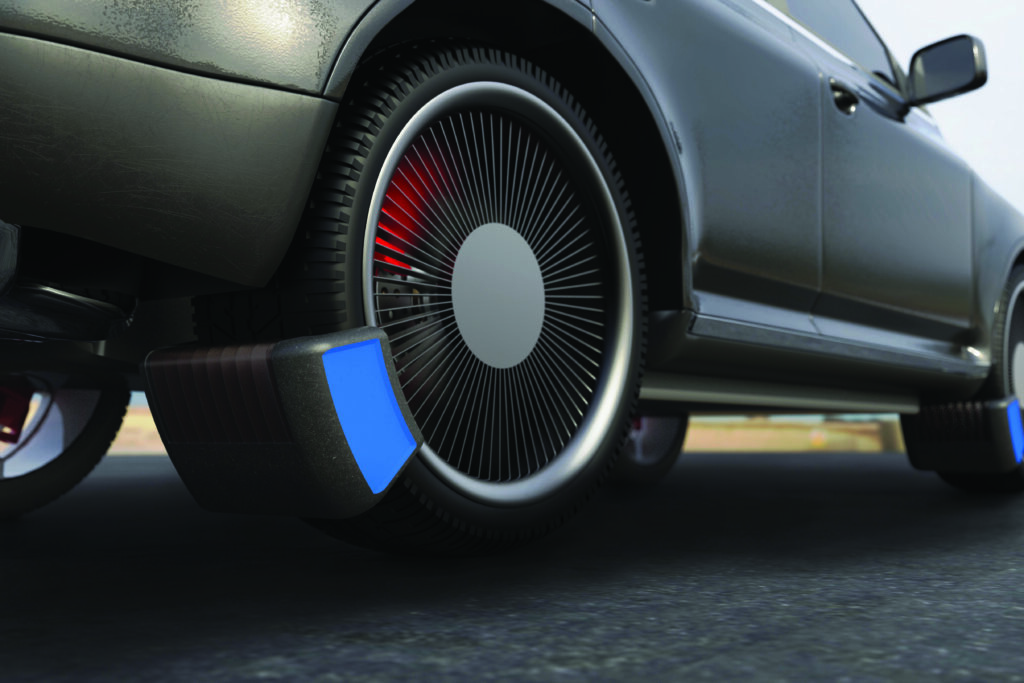
As much as half the particulate emissions from a car, come from they tyres. While electric cars are far cleaner, this particulate emissions is particularly dangerous, to health so this move to do something about it is very good.
The idea is that a device is placed behind each wheel, and is statically charged, allowing it to collect most of the waste. The waste can then be recycled into tyres of into other things. Tyre wear accounts for about 28% of oceanic micro plastics, so it is an area we need to deal with – particularly because with their heavy battery electric vehicles wear down tyres much faster.
Most drivers on petrol engine cars, wouldn’t dream of driving without a catalytic converter – hopefully in the future the same will be said for tyre dust collectors. They should be on the market in the next few years.
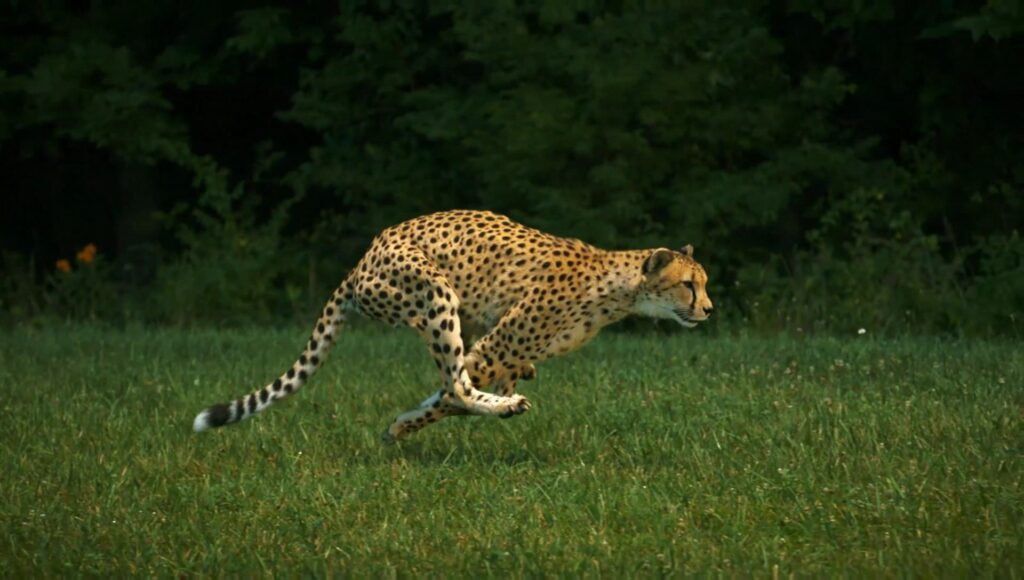
I don’t know what your feelings towards cheetah, for many of not most people they have vague idea of the cheetah because it’s the fastest animal on earth. My family have a model cheetah, full size, something I’ve always loved – and it built a deep love for these animals. I was lucky enough to see one whole in the Kruger – not many at the time, so very lucky. I hope this time we will see more
Cheetah running at speed
However, for perhaps most they know little else. I have written on them many times, I believe they are an essential tool for conservation. Given their size, they don’t generally attack humans, and kill livestock far less. Having a historic range that encompasses most of Africa and much of Asia, there are many places they could be, but instead they face extinction once again.
This study has found that if 44% of the worlds land surface was given increased protection, then we could save many of the current 1 million species threatened with extinction.
While this accounts for almost half of the world land surface, 1.8 billion people live on this land. While this is a large number of people, it is only 23% of the worlds population.
Much of this land is already protected in some way, but roughly 12.4 million square miles would need to be added (around 20% of the land that was identified). About 70% of the land needed to be preserved is in a largely untouched state – unfortunately though, this is not likely to be the case for long if something is not done.
How this is done, while allowing these people to raise their standard of living is a big issue, but it is one we need to solve, if we are to leave our world in a good state for future generations.
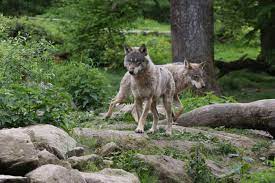
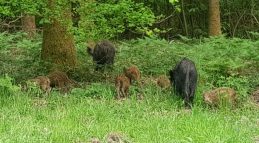
While many people suggested that countries like Holland are far to built up to ever have a population of wolves, this is becoming increasingly clear to be wrong. 15 wolves have not only settled in Holland, but have established territory. This includes 4 pairs, which are likely to have cubs later in this year.
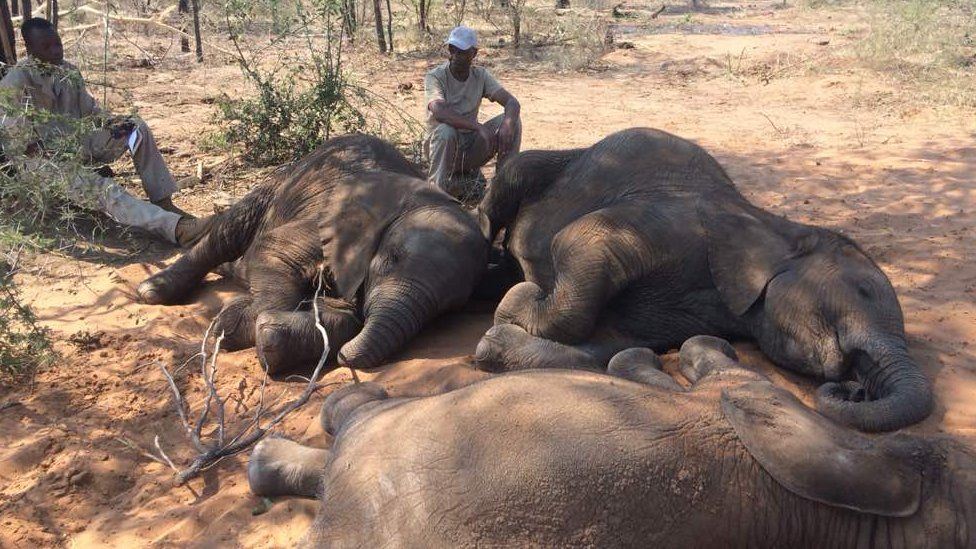
At various times over the last century, the elephant population has been decimated. Between 1979 and 1989 the elephant population halved. Even recently, between 2007 -2014 30% of Africa elephants were lost.
Yet this is only the top of the iceberg. In 1930 there were an estimated 10,000,000 African elephants roaming the continent -today just 415,000 remain 96% decline. That means a sustained loss of almost 1%a year for almost a century.
Bbc photo of a group of elephants killed by Poachers
Now, there is another problem with this. These elephants belong to 2 species, the African forest elephant and the African Bush (or Savannah elephant). It is estimated just 40,000-50,000 African forest elephants remain; and it has to be remembered that the differences between the African forest and Savannah elephants are not small – they are not sub species, they are separate species.
The African forest elephant, overlooked by poachers for a long time, had had precipitous collapse in numbers, from over 700,000 to likely under 100,000. More than half of the remaining population lives in Gabon – which makes them susceptable to any change in policy in this small African country.
All this, is a rather long winded way to say that African elephants have suffered over the last century.
The British government has banned the import of ivory. Now they are closing the loophole, by banning other body parts from elephants – why stop ivory import, if the elephant will be driven to extinction for is ears or feet anyway.
Now, it is true that there is some legal hunting. In some places this does make sense, and I would suggest rules to allow import from these places – however these are few and far between, and many are not currently healthy enough to allow hunting. I am thinking of places like the Selous – 20,000 square miles. At one point housing more than 110,000 elephants, successive round of devestating poaching has reduced that to 10,000 or less.
While a take of 50-100 (even 500) from 110,000 is a founding error, this big a take from 10,000 is quite different. In a healthy ecosystem, this take of 1% or less would be fine, but it is likely that animals are still being lost to the poachers. Furthermore, given such a precipitous decline much of the population knowledge will have been lost – making survival through tough times far harder already.
My feeling, is that hunting should only happen if there is no other option. Sure, a hunted elephant brings in a lot of money, however, the Selous could support a vast photographic Safari destination, if the tsetse fly could be eliminated. This would give well passing jobs to the many poor communities living around it’s fringes. Certainly, I would argue with Africa has no need to trophy hunting of elephants, or most other species – never mind the fact that someone going on a canned lion hunt does not risk his life, and is guaranteed to kill. Essentially a canned lion hunt, is killing an animal in a large zoo.
We continue to build many parts of the website, but another side is to finally have the WordPress app working with the site again. It has not been possible to post from my phone for the last few years – that finally returns.
What does this mean? Firstly, more details publishing of articles and responses. Likely more regular thoughts and responses to news of the day.
We’re still having some problems with the site, but are hoping these are near an end.
What’s coming soon? We hope to get the members area up and working- this website was never intended to be just a blog, instead it is intended to become a wildlife travel marketplace – with the aim of helping travel to places that are most in need of tourists.
My family are traveling to Kruger national park in South Africa, in under 2 weeks. As a result, we hope to be adding many many videos over the next year so follow us there.