According to an expert, despite political decisions stating 20 cheetah will be reintroduced into Kuno reserve however prey is too depleted

Kuno national park in India has been chosen to reintroduce cheetah to India. This is (to be clear) good news. Cheetah were an important part of the Indian fauna, but were driven to extinction by human hunters.
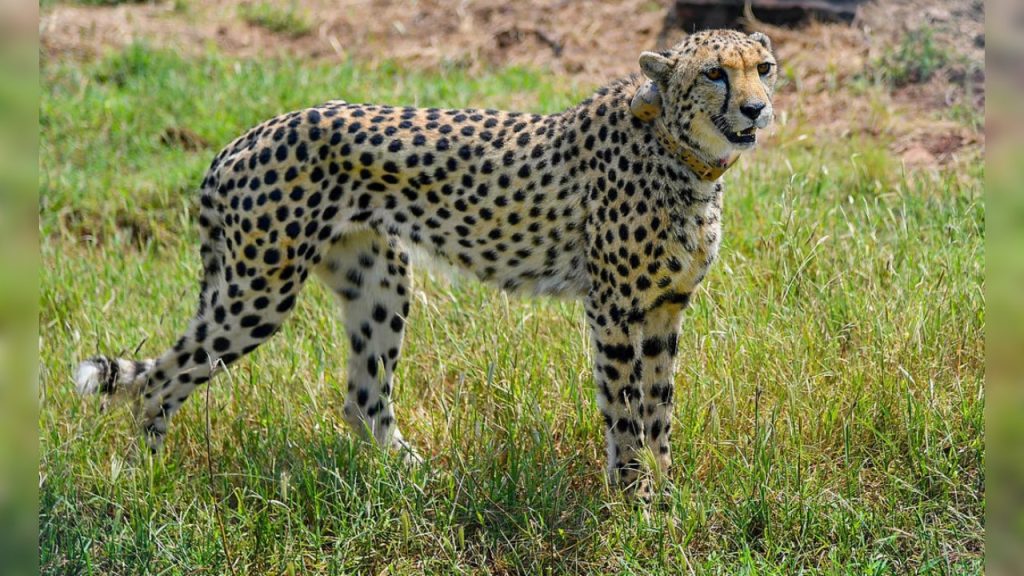
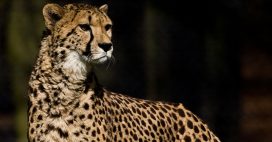
One of the translocated cheetah standing in the Kuno reserve

So what is the problem?

Well quite simple. The area is thought to be able to support 20 cheetah based on the area. However, unfortunately at the moment, Chital density is roughly 20 per square kilometre. While this sounds very healthy, in actual fact, the park hosted an average of 60 Chital per square km in just 2014.

This means that for what-ever reason, the Chital population are heavily depressed. This population needs to be able to rebound if it is to support 20 cheetah.

At the current time, this expert suggests that the reserve cannot support more than 15.

These cheetah are due to be released from their large enclosures into the greater Kuno in the next few weeks. Annoyingly, a tiger has been seen in the area (the reserve is not perfect habitat for a tiger, so there is no permanent tiger population) so some delay will occur to allow this animal to move on.
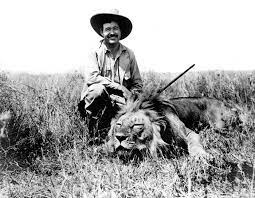
Might a raise in the minimum age for lion trophy hunting help?

At the moment, in most areas, male lions can be hunted from the age of 6. Unfortunately as the age of the lion is regularly over-estimated, this means that lions as young as 4 are often shot.

I dont see any bravery of hunting lions, as such I do not want to publicize any current hunters

A recent proposal is to increase the age to 8. This would mean that young lions are not shot regularly, and will give lions a chance to reproduce before the end of their lives. With male lions naturally living to 12-16 years, this change would be a positive one.

Continue reading “Might a raise in the minimum age for lion trophy hunting help?”

Beavers are returning to London

Beaver reintroduction projects are occurring all over the UK. Given that back in October 2022 the beaver was recognized as a native species once again in England, it becomes far easier to reintroduce them into places that would benefit from their presence.

You might ask why a country would declare an animal non-native after it being pushed to extinction by humans? I share this bafflement. In the UK (as with many countries across the globe) once the species has officially been declared locally extinct it ceases to be a native mammal. This should change – it is absurd that in a country where a native species is driven to extinction, there needs to be any discussion about whether it is native – indeed I would argue that this is simply done to make it politically easier to argue against reintroduction.

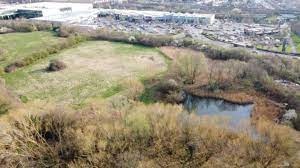
Anyway, the return of beavers to London will occur in Ealing’s Paradise Fields, an eight-hectare site of woodland and wetlands minutes from Greenford Tube station. While the whole site will be closed while the beavers settle in, it will then continue to be a green space for locals to enjoy.

Admittedly low resolution, but this is an ariel view of the site that the beavers will move into

The beavers behaviour is expected to manage water more effectively, and thereby greatly reduce or indeed eliminate the risk of flooding in the local area.

As global warming continues, Tigers and Leopards are extending their range higher into the Himalayas: how will snow leopards cope?

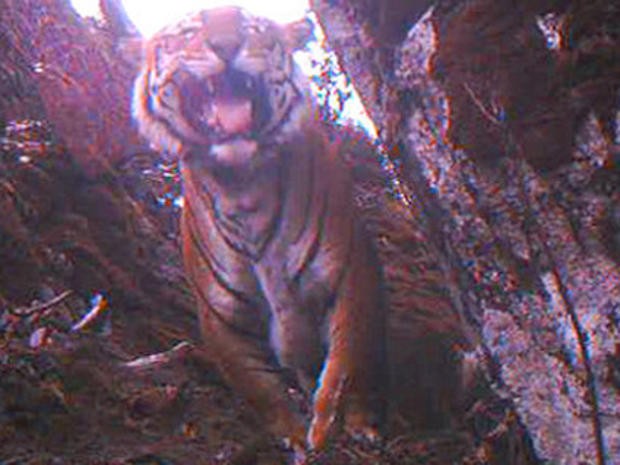
Nepal has significant populations of Tigers Leopards and Snow Leopards. Historical knowledge would state that tigers rule on the countries southern plains, Leopards rule in the mid country hill region and Snow leopards in the Himalayas.

This photo of a tiger high in the Himalayas was taken by a BBC crew for a documentary a few years ago
Continue reading “As global warming continues, Tigers and Leopards are extending their range higher into the Himalayas: how will snow leopards cope?”

Despite the promise to reverse their insane ban on on-shore wind turbines, there are fears that this what is going to happen

On-shore wind-turbines are far and away the cheapest (currently) and easiest form of renewable power to roll out. The UK is targeting net zero emissions by 2050 (as well as a 68% reduction on 1990 levels by 2030), so any rejection of the cheapest and one of the simplest means of power generation goes against all this. More urgent, the aim is to have a power grid that is 100% green by 2035 – just 12 years away.

Why should a very noisy minority be able to stop the countries efforts to cut our carbon footprint.

The simple fact is, that farmers up and down the country can make good extra money by hosting turbines. Whether crops or grazing is the primary use of the land, wind turbines take up a tiny proportion of the land, and have no discernible effect on output.

Continue reading “Despite the promise to reverse their insane ban on on-shore wind turbines, there are fears that this what is going to happen”

We’re back and raring to go – read, join us, get involved

Hello to all!

I have been in South Africa for two weeks. I have returned, refreshed, knowing that the app is well on its way and more determined to make this website reach its potential, so that it can be part of the solution to the destruction of the natural world.

We can not manage this alone.

The website has a whole host of tools to help with this, and we hope for our readers to take us up, and help us use this resource to save as much of the natural world as is possible.

From guest writing articles to becoming a member (if you live or work in some wild area) or an Ambassador supporter – as you travel spread knowledge of the website and help more and more people for which the website could help to find it and start reaping the benefits.

Over the next few weeks, I will be adding many new articles and stories from my time away as well as many other new endeavours.

We finally have everything in place and so it is just a case of getting the word out!

Another habitat which stores vast amounts of carbon needs to be added to our list: Fjords

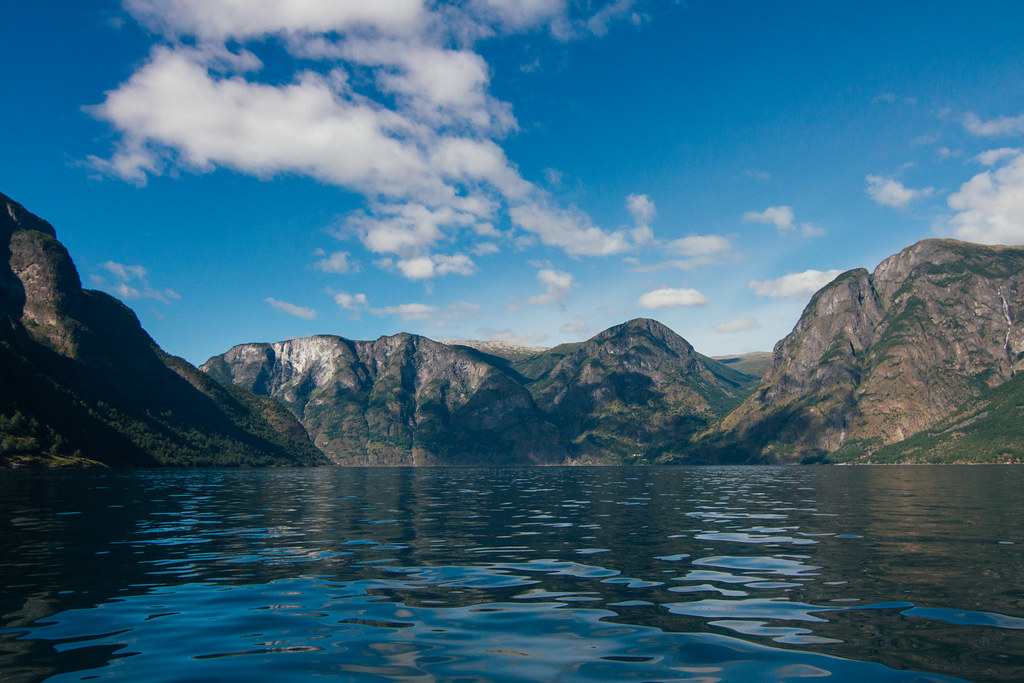
While Fjords are not particular common, and account for just 0.1% of the ocean surface area, they store 11-12% of the oceans carbon. Put differently, there are thought to be roughly 18 million tons of carbon stored in fjords around the world. To put it in perspective, that is a similar area to a speck of zest compared to the whole orange.

Norwegian fjord photo by Bob Vonderau 
Continue reading “Another habitat which stores vast amounts of carbon needs to be added to our list: Fjords”

Could fossil fuels be pushed out of electricity generation by 2035 simply by market forces?

A report from Carbon Tracker (a London based non-profit) points out that Solar and wind have the potential of creating thousands of Petawatt hours of electricity a year, while current electricity demands stand at just 27PWh.

More crazy still is the space that it would take to get all our electricity from Solar. It would take 450,000 square km, which sounds like an insane amount of land. However, this is just 0.3% of land and significantly less than the land currently given over to the Fossil fuel industry. Given that much of our energy needs will come from wind, this is likely to be significantly lower. Another analysis suggests just 0.2% of land for solar, with 0.5% covered in wind turbines.

End of Oil Age? might we as a society end the need for oil within the next few decades? Photo credit Alexey
Continue reading “Could fossil fuels be pushed out of electricity generation by 2035 simply by market forces?”

Fusion breakthrough!

I wrote (rather poorly) back in October about fusion and its potential positives. In the middle of December, we had a breakthrough of incredible proportions.

For the first time, it took less energy to start fusion and sustain it, than was released in the reaction. This is obviously essential, as if it takes more energy to get the reaction to take place, than is generated you are using electricity not generating it.

Could this be the future of all energy creation?
Continue reading “Fusion breakthrough!”
See Animals Wild

Read more news

Join as a wild member
to list your wild place & log in

Join as an ambassador supporter to
support this site, help save wildlife
and make friends & log in

Join as an Associate member
to assist as a writer, creator, lister etc & to log in

List a wild destination

List a destination in
the shadow of man

List a hide for animals more easily seen this way

Highlight some news
missed, or submit a
one-off article

Browse destinations for fun or future travel

Temporary membership
start here if in a hurry

Casual readers and watchers