The Shellys Eagle Owl was last seen in the wild back in 1870. There is only thought to be a few thousand left (though obviously this is higher than we originally thought.). Estimates put the population between 1500-1700 though other estimates could see a population as high as 10,000. The bird was only seen for about 15 seconds, but enough photos were taken to make a positive identification. First identified in 1872 and a specimen was collected for the Natural history museum in London, from a hunter in Ghana. There have been occasional unconfirmed sightings in central and west Africa over the last few decades.
The birds discovery in the Atewa Forest has lead to it being given protection.
Seemingly, often as a result of mapping issues (though this may not have been accidental) Unesco sites and land mapped as Orangutan habitat have been turned into plantations.
The idea that 1/5 of the plantations fall into this category is hard to explain – not surprisingly this is explicitly illegal.
It is a huge threat to a species if it is only found in one reserve. This I believe is common sense, and not hard to explain. If all the remaining members of a species live in one place, an unexpected event could wipe out the entire population.
The UK has had a problem with bovine TB for years. The problem has continued to be that many cattle are lost each year.
Badgers are blamed for carrying the infection between fields. It has been pointed out that cows are often not checked when bought or sold, and that the spread of the illness can often be attributed to this. Never-the-less, the British government has steadfastly continued on this plan for a very long time.
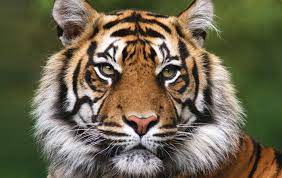
Declared extinct in 2003, recent genetic analysis shows that the Caspian and Amur tiger are so similar that they cannot be declared as sub species. As such, if the Amur tiger population continues to reboand it would be possible to translocate members west to restart the Caspian tiger population.
This should not be done though until the Amur tiger population is more stable.
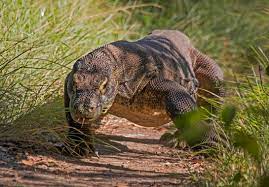
Komodo dragons are the largest lizard that survives. Unfortunately, as they are found only on a series of islands amongst the Indonesia archipelago, sea level rise can quickly rob them of prime habitat.
As a result of this, they have been moved from vulnerable to endangered.
At the beginning of the year, a census showed that the population of wolves in Norway was about 81. This (you would think) is a population way to small to need a cull. Indeed at this population, you would think that even for trophy hunting, if you hope to be able to sell hunting permits again should be kept to single digits. In the Sierra de culebra is a hunting reserve: this reserve hosts around 80 wolves, and they allow at most 10 wolves to be hunted each year.
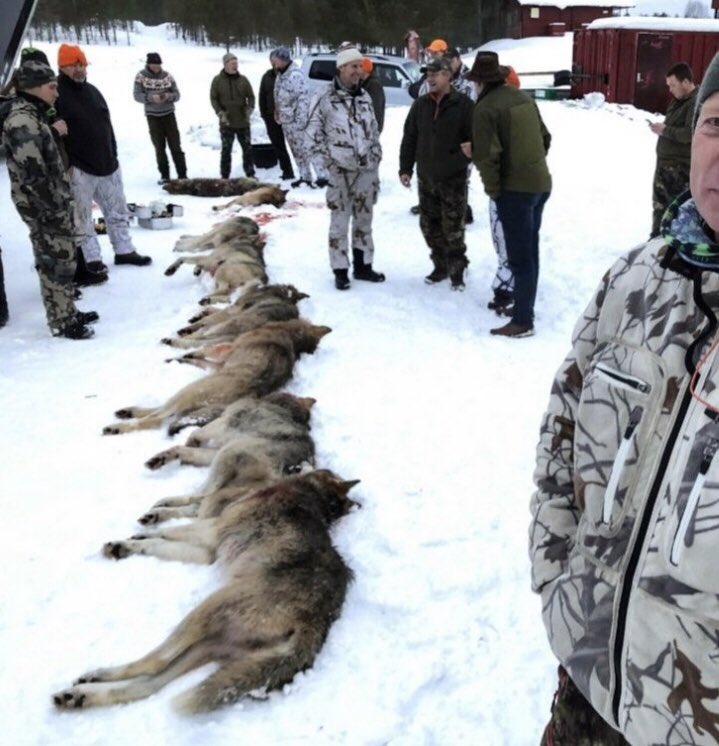
Norway announced that it would allow 51 wolves to be shot – about 60% of the population. This is totally insane, and indeed, they were taken to court. What is more ridiculous, is that the wolves live within the “wolf zone” an area of nature set aside to protect the predators. In virtually every country in the world, the idea of killing animals in an area set aside for their survival seems counter-intuitive. This zone makes up 5% of the country.
The appeal was rejected, and over the weekend hunts went on. A total of 9 wolves were shot.
9 Wolves killed over the weekend in Norway after a cull ban was lifted by the government
This is foolish for Norway’s global reputation, as well as being foolish in terms of managing the local ecosystem. Furthermore, while a small level of culling may be required to control predation of livestock, Norway is likely to be able to make a great deal of money from wolf tourism – many people visit the country to see the wonderful scenery, and the return of the wolf could have increased these wild tourism numbers
Unfortunately all three Nordic countries have similar plans, with Finland suspending plans to kill 3 packs of wolves just last month – citing European legislation.
Sweden has shot most of their annual quota of 27 wolves (this is the country in which I had the best view of a wolf, by chance while sitting in a bear hide).
Pressure on the Nordic nations should be brought to bare, to halt this unnecessary slaughter from being repeated
Russia surveys their tigers every 10 years, but out of sync with the international aims. In 2005 between 423 and 502 tigers were thought to be present. in 2015 this had moved to 480-540. As such there is nothing like a doubling represented, but perhaps more success has been had since