The Sierra de Culebra is a hunting reserve on the North East corner of Portugal, and across the border in Spain.
This hunting reserve was essential in saving the Iberian wolf when it was at its smallest 70 years ago (or so).
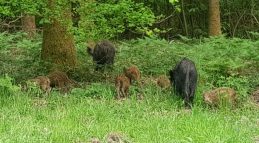
Currently roughly 10 packs live within the reserves boundaries – so around 80 wolves. Given that the reserve only covers 80-100 square miles, this is easily the highest density of wolves in the world.
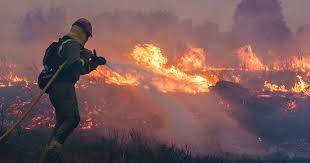
While it is thought that the adults will have mostly survived, this years young are likely to have been too small and weak.
Thankfully, the wolf in Spain is now doing quite well. The Iberian peninsula is thought to contain about 2500 wolves, as such the loss of the Sierra de Culebra is not likely to threaten their further survival.
Speaking from experience, I hope that this reserve recovers as it is a special place.
Over the last couple of years, snow leopards have been sighted in Pingwu county – Sichuan province. This confirms that the range of the snow leopard has expanded eastward as this reserve takes shape.
Pingwu supports around 335 Pandas, or around 20% of the Chinese total.
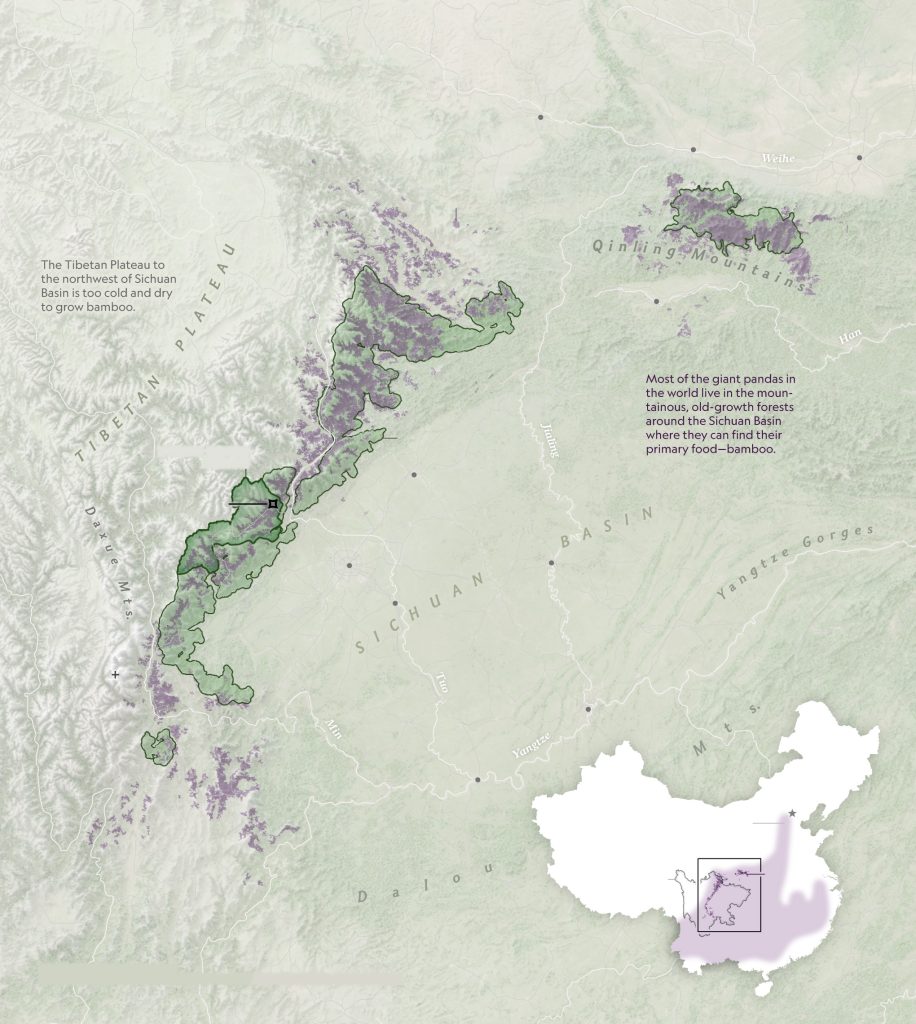
this is a map showing the reserve, and how it compares to the whole of China.
This Giant Panda national park will include 70.25% of known Panda habitat 87.5% of the Pandas currently living in the wild.
I wrote back in November about plans to move African cheetah from South Africa to India. Should you wish to read this original article, I have linked it below.
There has been an update. The first batch of cheetah will be moved to Kuno reserve, in August, 5-6 Cheetah will be moved to Kuno reserve in the first batch.
Kuno reserve was supposed to be the place that Asiatic lions were due to be moved to before Gujarat claimed exclusive ownership – and therefore refused to translocate the lions. The fact that cheetah are being introduced to Kuno should not rule out lions following, though Gujurat is still behaving badly on this front.
What should we make of this? Well in theory, Iranian cheetah would be far better. Unfortunately the cheetah is doing so badly, that it would be impossible to translocate cheetah to India, without risking eliminating the cheetah in Iran. African cheetah are very similar, and I would argue that a similar animal is better than none filling this ecological niche.
In the 1990s the bear population of this mountain range consisted of about 50-65 in the western population, and 14-20 in the east. No more than 30 years later, that population numbers 300-400 (as much as a 6 fold increase).
How did they do this, and can the success be replicated. It is thought that just two stems were responsible for their recovery.
Firstly, efforts to protect the environment have been successful. With a healthier ecosystem, the country is more capable of sustaining a bear population.
Secondly, education of both locals and visiting tourists has lead to a greater acceptance of the bears. Furthermore, with the success of tourism, locals increasingly seeing the bears as an asset rather than a threat.
These bears are almost entirely vegetarian, and while efficient hunters whatever meat the consume, here it is usually carrion – animals that have naturally died, or been killed by other animals.
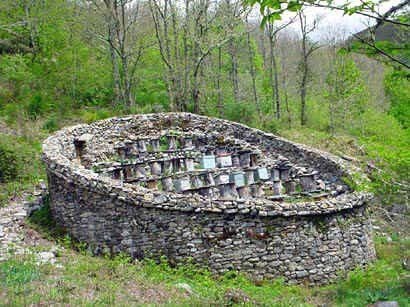
As a result, the bears are far less of a threat than wolves (though even wolves can cause little threat if farming is set up correctly). Bee keepers are threatened to a greater degree by the bears, however by returning to ancient bee keeping habits, this can be reduced to a minimum.
With a Bee keeping structure like this, if built properly then bears are incapable of breaking in
Back in the 1950s there is thought to have been as many as 1000 bears in the wilds of Spain, so the population still has some recovery to go through.
Never-the-less this is a good news story that is extremely encouraging that large carnivores and omnivores are still capable of surviving in the modern landscape of a western European country.
This is well worth a visit. A link will hopefully be added to this page in the next week or so
When you go on safari, as with other places there are animals that while fascinating you can be almost certain you will not see.
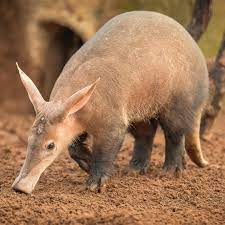
This Aardvark lives at Chester zoo
I am not talking about Black leopards, or white lions – rare genetic mutations which are therefore not always present, and when they are, there might be one or two in the whole of an ecosystem. In recent times, when a black leopard was sighted, a British photographer flew out specifically to stake out the area it was in to get his shot. He did succeed, but spent a whole trip getting the picture (Will Burrard Lucas) flew to the part of Kenya where it had been sighted, and put up camera traps which caught the creature). These are almost impossible to see, as they tend to occur very rarely. The white Lions of Timbivati are very good for this private reserve as it is almost impossible to see wild white lions anywhere else.
No, the animals that are rarely seen (and perhaps for most would not feature on a list of 100 animals they would like to see) tend to be nocturnal. I am talking of animals like the Aardvark and the pangolin. Often these species are also extremely fussy eaters, which means that not only are they incredibly hard to see in the wild, but they are incredibly hard to keep alive in captivity – increasingly zoos are starting to get these fascinating animals, as the unfounded belief that pangolin scales can treat a variety of conditions has pushed all species nearer to extinction (so it is becoming increasingly necessary to have a captive population to back up the wild one).
In the UK, the only place that you can see an Aardvark is in Colchester zoo, where they have a group of them. Knowing this, Colchester zoo is one of those that I will visit as often as I get the chance, and spend a significant amount of time by the Aardvark burrow hoping to see them awake.
Our visit last week was incredibly lucky, as the Aardvarks had to be weighed, so they all had to wake up and be moved around. I hope to put together a video after the summer, with pictures of Aardvark burrows in the wild, and the animal in captivity. If I am very lucky, I will be able to add in some wild Aardvark pictures but this is very unlikely.
We have 2 trips planned in the next few months. Later this week, I am travelling to Spain in the hope of seeing bears and wolves, and over August, my family are travelling to Kruger national park. Our aim is to film many videos during these trips, and be able to add greatly to what is listed on the channel.
Impacts on the worlds ecosystems from this many animals disappearing could have disastrous effects. The loss of this many reptiles could cause knock-on effects such as huge increase in the number of insects. As much as 30% of forest dwelling reptiles are threatened by extinction, due to their homes being cut down.
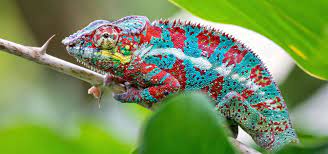
Reptiles are often quite beautiful, but we would also miss what they do- if they ceased to be there
Hunting is also adding an unhelpful pressure, as many reptile species have skins that can be made into items for human consumption.
In some countries such as the UK, it is usually looked down on so much, that you rarely see reptile skins (we have other problems) but elsewhere this is not the same. Reptiles are also very important seed dispersers
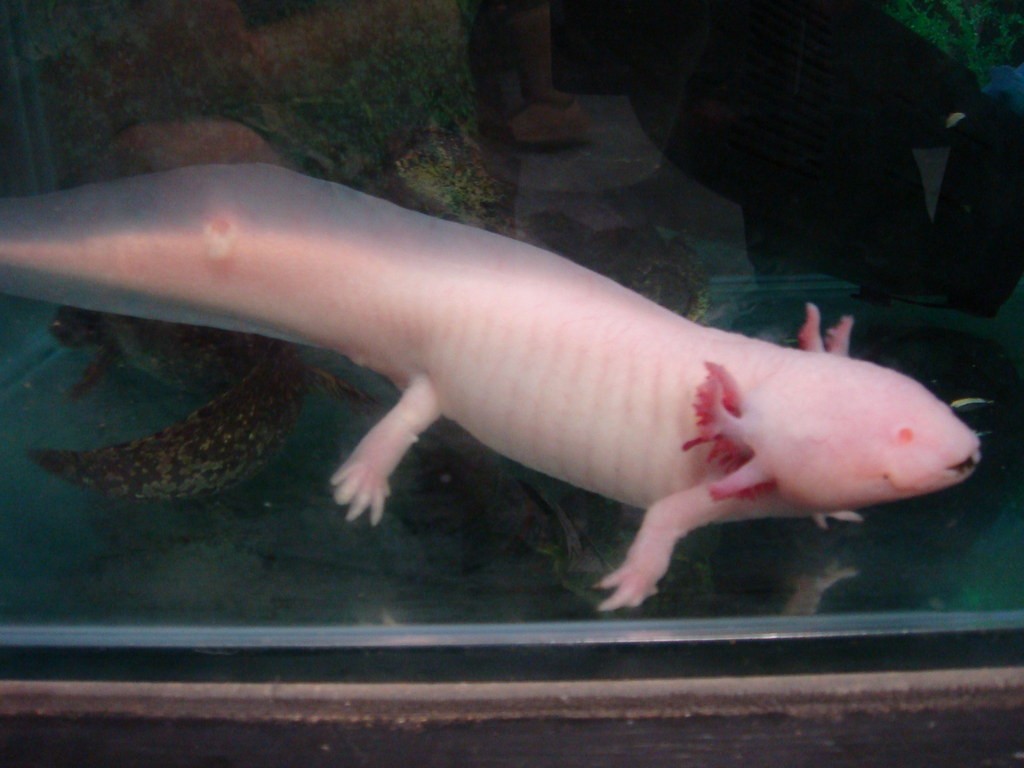
Axoloti look strange, and have got a lot of attention after being included in Minecraft. Unfortunately they are threatened with extinction
Having lost much if their habitat, the Axoloti is struggling to survive. Once widespread through the high-altitude lakes around Mexico city, the Axoloti an amphibian that is about 30cm long is restricted to just a few inland canals. Here somewhere between 50 and 1000 of these lizards live. Water pollution, habitat loss, and predation by invasive fish species such as Carp and Tilapia are all pushing this amphibian towards extinction.
Public awareness of this animal has exploded. Apart from its inclusion in games, it also features on the 50 peso coin from 2021.
Will it be able to survive? certainly there is now the will, however, it is hard to clean up waterways that lie so close to a huge city.
Time will tell if the Axoloti will survive in the wild, or whether future generations will think that they are a phantom of the game creators imagination.
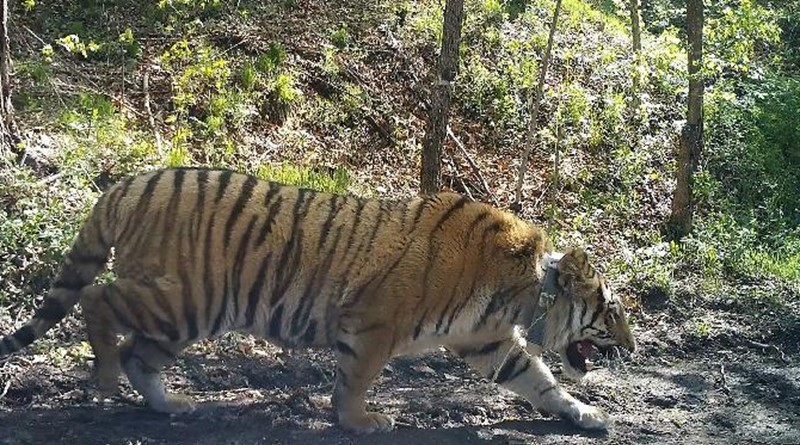
The Amur tiger lives in the far east of Russia, and across the border in china. As little as 15 years ago, the number of Amur tigers living within China had fallen to 20 (or possibly even less.
The first analysis of the genome of the Straight-tusked elephant (a long extinct species) may well rewrite the elephant family tree – while at the current time there are 3 species of elephant (African forest, African bush and Asian Elephant) there are many more long extinct species.
It also suggests that the straight tusked elephant, long thought to be closely related to the Asian elephant, is actually an African elephant species. It does perhaps give another warning, to not classify animals by how they look but by their genes – convergent evolution can often mean species that look similar have little recent genetic links at all.
There has been much argument about whether the African forest is indeed a separate species. This debate must now be over. 2/3 of the African forest elephant has been lost in the last 15 years, we must stop arguing about its genes and get down to the work of saving this species.
Just 2500 years ago, the never-ending forests of west Africa was made up of fragments of forest, with areas of open land between them. This fragmentation was down to a change in the environment occurring which meant that the dry season started to loosing far longer.
It seems that this changed because of seed disposal animals – including chimpanzees, which helped by leaving heavy seeds behind with a healthy dollop of fertilizer, allowing these slow growing trees to have a good start in life. Unfortunately, now as we are destroying the rainforest, there are also human hunters that are killing these seed dispersers in great numbers, making sure that the forests cannot regenerate.
Are we making sure that forests cannot recover? Not only are we destroying them, but also removing the natural gardeners that helped it return last time it was threatened. My fear is that it may become necessary for humans to replant vast areas by hand. Should it become necessary and recognized, then I am sure we would rise to the occasion, but far better to recognise it before it is too late.