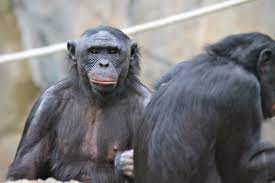
I have written about Bonobos in the past, I hope that readers are aware of this species. In brief, Bonobos (often known as Pygmy chimpanzees) are a separate great ape species. These two species split about 1 million years ago as the Congo river formed and became an impenetrable boundary between them intermixing again.
Looking very like Chimpanzees, these animals behave in a very different way
Found only in the DRC and the last of the great ape species to be discovered, Bonobos should be of great interest to humans.
Around much of the world, as the various European countries expanded their empires, one of the first things that Europeans did, was to create reserves to protect the wildlife, and required the local people to move out.
Many tribes have incredibly small footprints on the ground, ad look after their environment far better than many conservationists would succeed
In many of these places, the local tribes were forcefully thrown of their land, and begrudgingly given small areas often with little value compared to where they lived before.
Now there is a difficult issue: those people who are living their lives in the same way that they have lived for thousands of years, are often fantastic for the reserve. However, in many places these people will turn to harvesting the wildlife in a totally different way, leading to many local extinctions.
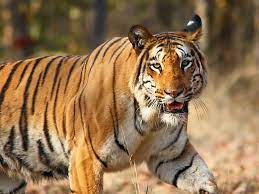
The Caspian tiger once lived in 12 countries, from the west in Turkey, to the east in central Asia. Seemingly, across this range, they did not have consistent populations but the tigers lived on the shores of lakes in the region, with 15-20 valleys being their strongholds.
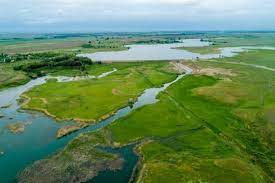
The Kazakhstan delta is mostly ready for a return of the Tiger, with just the missing prey base needing addressing, this is well in hand
On the whole, the Caspian tiger lived in relative harmony with humans up until the Russian invasion. The Russians brought with them, the custom of keeping livestock, which brought the humans into direct competition with the tigers. As a result, Russia started paying a bounty for every tiger killed. This was incredibly successful, such that by the 1940 they were exterminated. The hunting was banned in the 1940s but too late to save these tigers.
After this, the tigers former home was taken over and converted into farmland, so the few that survived the hunting, soon lost what home was left.
In the 1990s as Russia fell, WWF started working to help the ecosystem recover. As a result in the late 2000s a satellite analysis was carried out on the area, and one area stood out – a delta of the Lli river in Kazakhstan. It was found that if the prey base was first helped to recover (animals such as boar and deer) then this area could easily support tigers.
Now, it is true that the Caspian tiger went extinct 70 years ago. However, recent genetic analysis has shown that the Caspian and Amur tigers are not distinct enough to be classed separately – they are essentially one subspecies, with a large range. It is true that Caspian tigers tend to have had shorter fur, but tigers are able to adjust in this way, so tigers that are moved to warmer climates will grow less fur and be able to thrive.
Given Kazakhstan being the most advanced of the countries in the area, with relatively high living standards, they should be able to carry out the plan. The delay until 2026 is to allow time for the prey base to build up to sensible levels.
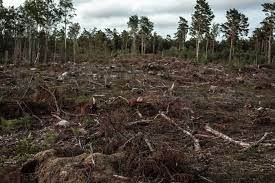
Most of Sweden is still covered in forest. I have visited the country, and have enjoyed exploring it. Never the less, an alarming study has shown that most of the forestry – about 97% relies on clear cutting ancient woodland, and then replanting it with monocultures of trees, not all of which are native.
Sweden so called environmental forestry may be nothing of the sort. Clear cutting old growth, and replacing it with non-native monocultures is not the same thing
Clearly Sweden must buck its ideas up, or change fast. I have commented on the low density of bears and wolves. In the past, this has been put down to the countries large number of hunters, but perhaps this is an early warning about what is happening to these forests.
Might this hit the IKEA brand? certainly if they wish to survive, they are going to have to change their behaviour dramatically.
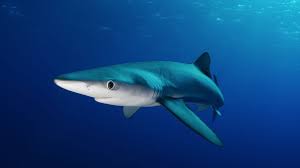
For the first time since 1847 a shark has attacked a human in British waters! On this occasion it was a Blue shark that attacked the lady in question – she survived.
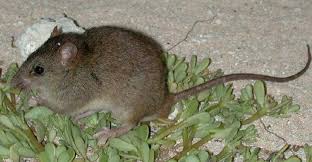
No one knows how the melomys got to Bramble cay a small island 31 miles off the coast of Papua New Guinea, but they did. In 2015 they became the first mammal to go extinct purely as a result of climate change, as their little island home at the end of the great barrier reef sink beneath the waves.
In 1978 a few hundred were counted, in 1998 just 100. In 2002 and 2004 just a few dozen were found. The amount of lady plants shrink by 97% between 2004-2014, and when a survey was carried out in 2014 no specimens could be found.
I don’t know what your feelings towards cheetah, for many of not most people they have vague idea of the cheetah because it’s the fastest animal on earth. My family have a model cheetah, full size, something I’ve always loved – and it built a deep love for these animals. I was lucky enough to see one whole in the Kruger – not many at the time, so very lucky. I hope this time we will see more
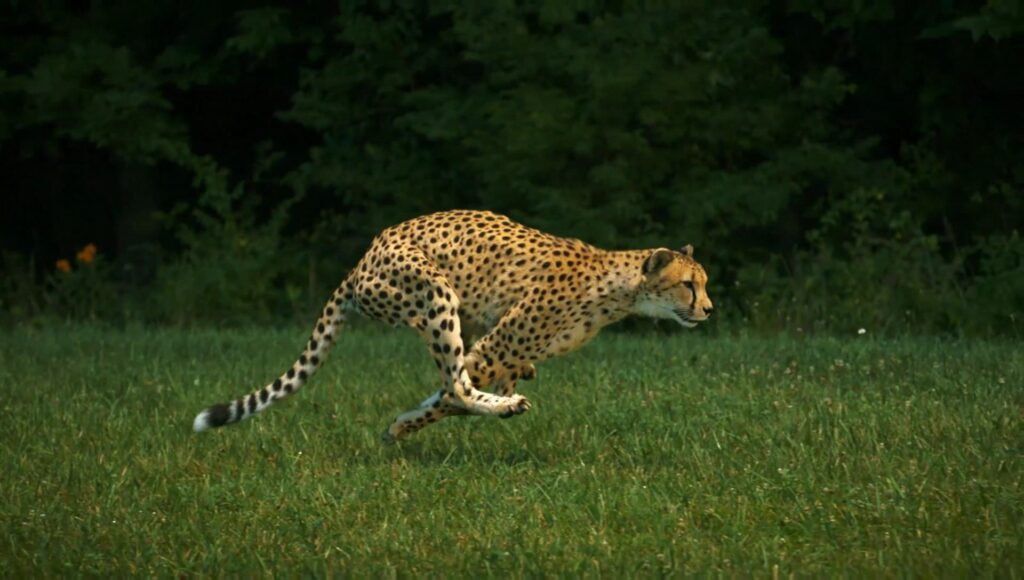
Cheetah running at speed
However, for perhaps most they know little else. I have written on them many times, I believe they are an essential tool for conservation. Given their size, they don’t generally attack humans, and kill livestock far less. Having a historic range that encompasses most of Africa and much of Asia, there are many places they could be, but instead they face extinction once again.
At various times over the last century, the elephant population has been decimated. Between 1979 and 1989 the elephant population halved. Even recently, between 2007 -2014 30% of Africa elephants were lost.
Yet this is only the top of the iceberg. In 1930 there were an estimated 10,000,000 African elephants roaming the continent -today just 415,000 remain 96% decline. That means a sustained loss of almost 1%a year for almost a century.
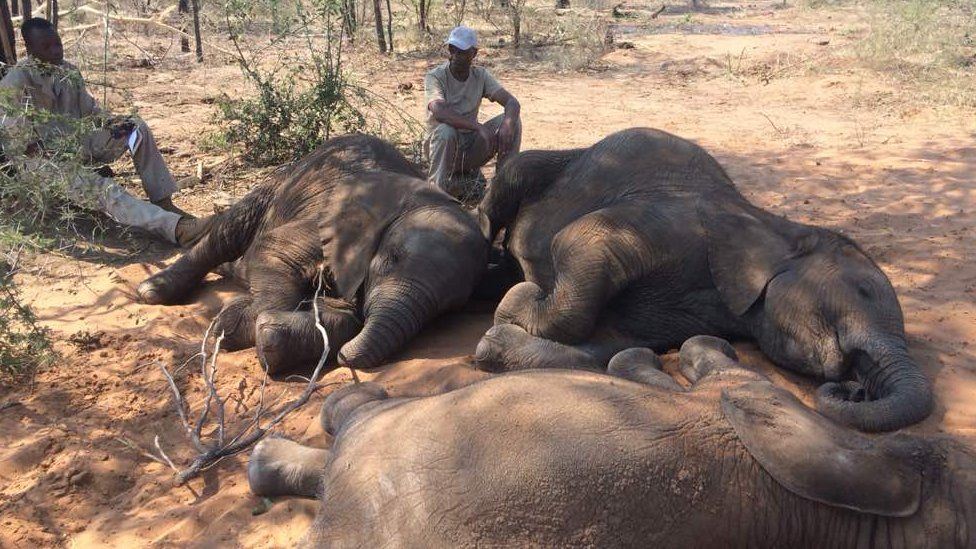
Bbc photo of a group of elephants killed by Poachers
Now, there is another problem with this. These elephants belong to 2 species, the African forest elephant and the African Bush (or Savannah elephant). It is estimated just 40,000-50,000 African forest elephants remain; and it has to be remembered that the differences between the African forest and Savannah elephants are not small – they are not sub species, they are separate species.
The African forest elephant, overlooked by poachers for a long time, had had precipitous collapse in numbers, from over 700,000 to likely under 100,000. More than half of the remaining population lives in Gabon – which makes them susceptable to any change in policy in this small African country.
All this, is a rather long winded way to say that African elephants have suffered over the last century.
The British government has banned the import of ivory. Now they are closing the loophole, by banning other body parts from elephants – why stop ivory import, if the elephant will be driven to extinction for is ears or feet anyway.
Now, it is true that there is some legal hunting. In some places this does make sense, and I would suggest rules to allow import from these places – however these are few and far between, and many are not currently healthy enough to allow hunting. I am thinking of places like the Selous – 20,000 square miles. At one point housing more than 110,000 elephants, successive round of devestating poaching has reduced that to 10,000 or less.
While a take of 50-100 (even 500) from 110,000 is a founding error, this big a take from 10,000 is quite different. In a healthy ecosystem, this take of 1% or less would be fine, but it is likely that animals are still being lost to the poachers. Furthermore, given such a precipitous decline much of the population knowledge will have been lost – making survival through tough times far harder already.
My feeling, is that hunting should only happen if there is no other option. Sure, a hunted elephant brings in a lot of money, however, the Selous could support a vast photographic Safari destination, if the tsetse fly could be eliminated. This would give well passing jobs to the many poor communities living around it’s fringes. Certainly, I would argue with Africa has no need to trophy hunting of elephants, or most other species – never mind the fact that someone going on a canned lion hunt does not risk his life, and is guaranteed to kill. Essentially a canned lion hunt, is killing an animal in a large zoo.
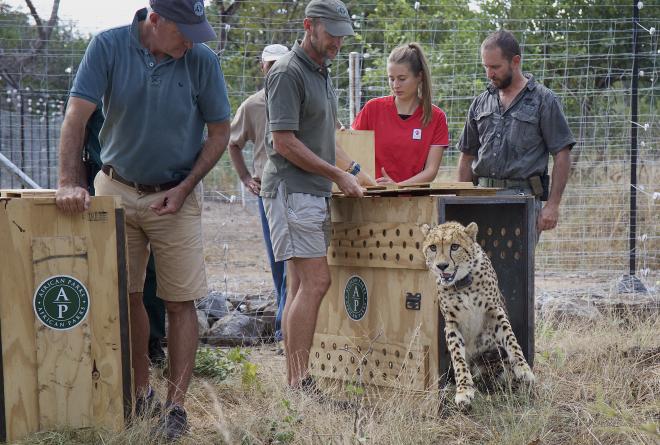
In liwonde national park, 4 species of vulture; all considered critically endangered have returned. What has prompted this? Well the reintroduction of lion and cheetah has retires some meat two be put out and this has attached the vultures.
The park is a little over 2000 square miles (5500 square km) and the cheetah population has reached 42.
One of the first cheetah to be released
Lion and cheetah were lost around 2000, and as a result the vultures left.
The problem is that was vultures are the main group cleaning up bodies, without them the bodies started and rotted. This was a perfect breeding ground for various illnesses that threaten the lives of both humans and livestock.
Farmers will often take revenge on livestock killings by poisoning the body. This usually like the lions, along with any scavengers that come along such as jackals and hennas.
However, it can have a decorating impact on vultures. Due to their way of finding near to scavenge, there can often be 20-30 vultures waiting while the lion eats – if a kill is poisened, it can kill every vulture for miles around.
Both lions and cheetah are missing from dozens of countries across Africa and Asia, places they historically roamed. While lions can cause more issues, cheetah cannot generally kill much livestock. As a result, there will be dozens of reserves where cheetah could return, allowing the reserve to start to operate more as it once did. Once this happens, tourists will start visiting and this leads to money which can help the rest of the reserves rejunivatiom. This in turn makes return of lions far easier, as assist from bringing in the funds to compensate livestock losses, it also brings in lots of money – allowing poor farmers to make more money and raise the standard of living for their family.