A study has shown Bonobos combining words in ways thought to be human

Bonobos and Chimpanzees are thought to be our closest relatives, and when you watch this young bonobo play with water. Knowing this, it is perhaps not strange that researchers are finding that bonobos combine words in ways that sound very human. They are able to combine several sounds, to create a phrase, with more meaning than its individual parts.

This is something that was considered unique to human language. A simple example of this ability would be something like “brunette painter” is something that many animals can do – it is a person which is both brunette and a painter – however bonobos can combine them is such a way like a “good painter”, good is not another description, but instead changes the meaning of painter- the two words give more meaning together.

I have tried to write on Bonobos, relatively regularly on this website. This is for a variety of reasons. Being the last species of unique great ape to be found (species like the Tapanuli Orangutan have been discovered since, but the bonobo is far more distinct. Bonobos are female dominated society, and it is a far more peaceful society than with chimpanzee. Violence is rare, with bonobos using sex to deal with tension and conflict instead.

They did a great deal of analysis, recording hundreds of vocalisations. They identified 7 different calls, used in 19 different combinations and found that of these 4 followed the rules of human sentences (the other 15 have not been properly analysed as yet.

One example, was where Yelps are thought to mean “lets do that” while grunts are thought to mean “look at what I am doing” but when combined into a yelp-grunt it appeared to mean lets do what I am doing – and was often used to encourage other members of the group to build their night nests.

Bonobo are still loosing territory in the wild, and with their whole range restricted to just the Democratic republic of Congo, their population is far more fragile than many other great apes.

Visiting the Bonobos will give the country more reason to preserve them.
Slovakia approves the sale of brown bear meat to the public

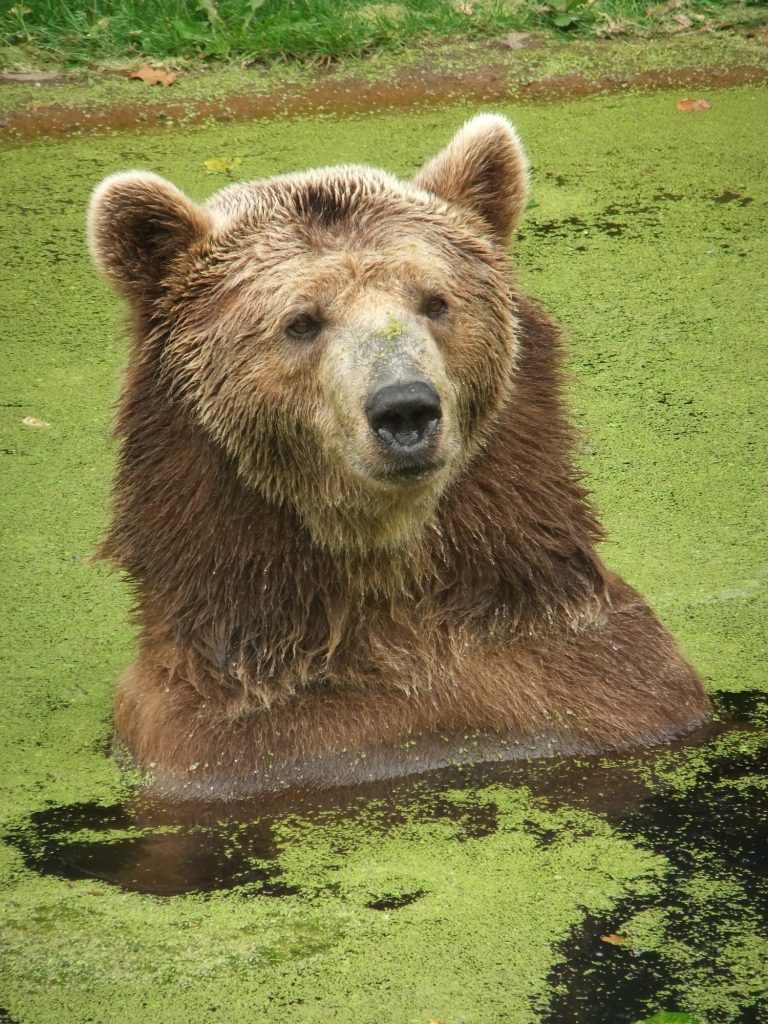
Last month, the Slovakian cabinet approved plans to cull around 1 quarter of the bear population in the country (currently at around 1300) after some high profile fatal encounters between humans and bears.

It is unclear what the actual carrying capacity of Slovakia, and indeed this is often the problem. The government decides what the carrying capacity is of the land, they set quotas for hunting them and they reap the money for hunting permits, as well as having to deal with any livestock predation. These different requirements are often lead to different groups having different desires and therefore results can be skewed to support a decision which is not in the best interest of the country or the population.

Having carrying capacity and population size done by truly independent researchers would help with this, but in most countries, this independence is not real, with the government holding the purse strings or similar power over future studies.

A reduction of a quarter, is a large step, will change the population makeup significantly and is likely to greatly disrupt bear tourism to the country.

Tourism revenue for this country has hovered between 1 and 2 billion dollars in recent decades, and while it is hard to pinpoint exactly how much of this is to do with wildlife, and particularly bear tourism, it is thought that a majority do some sort of ecotourism while in the country – therefore care must also be taken to not destroy this important income for the country.

Wild boar continue to spread across the UK, arrive just a mile from where i live (Still sorting issues, but progressing)

I have missed writing regularly, but have been having some issues with this website. I am hoping that in the near future these will be resolved, and allow the website to reach some of its potential – however for now, back to this article.

The UK is recognized as one of the most nature depleted places on earth. never the less, there is wildlife in the shadow of humans. A very wide range of wildlife has been lost, as humans have not left the space – this is causing us issues, not least because there are no apex predators left.

Wild boar, however, were accidently released – they were bred for meat, and between a variety of escapes and intentional released populations, a wild population has been established in the UK. Domestic pigs are descended from wild boar – it is thouoght that they were domesticated twice, once in the near middle east around 8500 years ago, and again in China around 6500 years ago (though it should be noted that these dates are still pretty unclear. 8500 years is not a long time in genetic evolution, and as such they are still capable to interbreed, even though there is a significant difference in how these two groups live.

There is an estimated 2600 wild boar living in the UK. The largest populations are listed below, though it does not account for all of them

  • Forest of Dean: This area has the most established and largest wild boar population in the UK. The population is estimated to be around 1,200 animals.
  • Kent/East Sussex: This area has a population of 250-300 wild boar.
  • West Dorset: This population is estimated to be over 50 animals.
  • North Devon: This area has a smaller population, estimated to be between 50 and 100 wild boar.

Wild boar are incredibly important for the health of forests – wild boar turn soil in their search for roots and tubers, and this is perfect for the growth of new seedlings. Boar rootling areas are often full of tree saplings and shoots growing together. It is something that has been missed for a very long time, and the health of forests that the boar returns to is greatly improving.

The area that I live in, has a great deal of army land, and therefore, I believe that the area could support hundreds of boar, if not more.

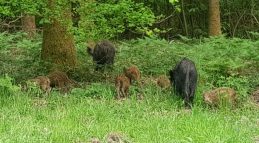
This individual boar, is likely to be a young roaming male, and usually, the first visitor does not settle within an area, however, females also roam, and should a male and female meet, they are likely to become a breeding pair, and at that point the population can grow fast as a breeding pair (when they have some domestic pig genes in them) potentially having 3 litters of 10 or more a year.

Will a breeding population be established around here? It is still for the time being, chance, however at this breeding rate, it is quite conceivable for boar to be back across the UK within the next couple of decades. Pure wild boar would be better, however adaption back to living in the wild will likely slow their breeding rate relatively fast.

See Animals Wild

Read more news

Join as a wild member
to list your wild place & log in

Join as an ambassador supporter to
support this site, help save wildlife
and make friends & log in

Join as an Associate member
to assist as a writer, creator, lister etc & to log in

List a wild destination

List a destination in
the shadow of man

List a hide for animals more easily seen this way

Highlight some news
missed, or submit a
one-off article

Browse destinations for fun or future travel

Temporary membership
start here if in a hurry

Casual readers and watchers