Back on the 10th I wrote about the Tiger recovery, here is more details about the Kazakhstan reintroduction: by 2026?

The Caspian tiger once lived in 12 countries, from the west in Turkey, to the east in central Asia. Seemingly, across this range, they did not have consistent populations but the tigers lived on the shores of lakes in the region, with 15-20 valleys being their strongholds.
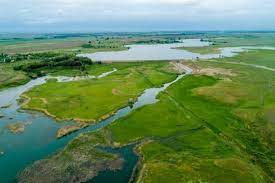
The Kazakhstan delta is mostly ready for a return of the Tiger, with just the missing prey base needing addressing, this is well in hand

On the whole, the Caspian tiger lived in relative harmony with humans up until the Russian invasion. The Russians brought with them, the custom of keeping livestock, which brought the humans into direct competition with the tigers. As a result, Russia started paying a bounty for every tiger killed. This was incredibly successful, such that by the 1940 they were exterminated. The hunting was banned in the 1940s but too late to save these tigers.

After this, the tigers former home was taken over and converted into farmland, so the few that survived the hunting, soon lost what home was left.

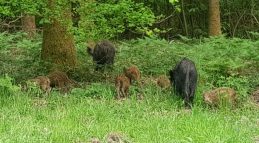
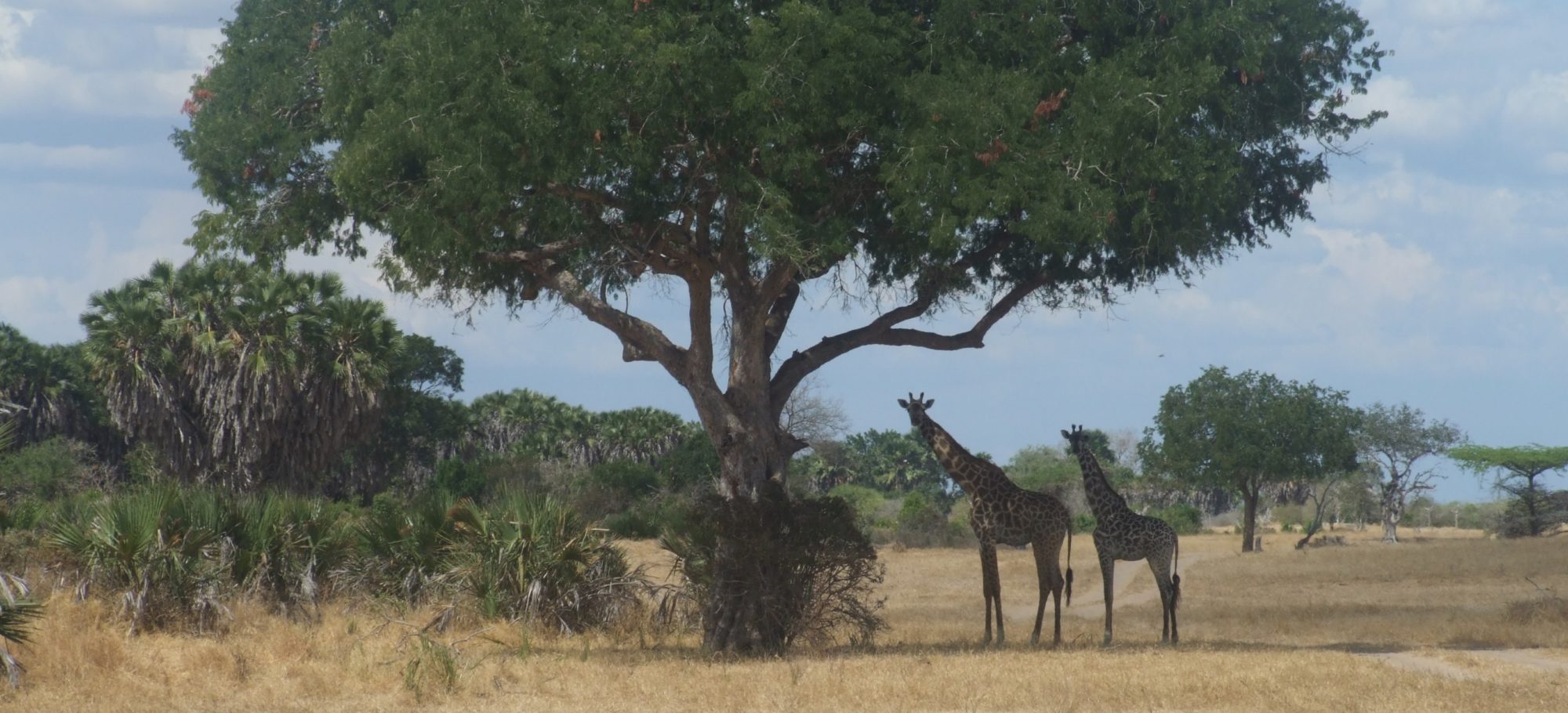
In the 1990s as Russia fell, WWF started working to help the ecosystem recover. As a result in the late 2000s a satellite analysis was carried out on the area, and one area stood out – a delta of the Lli river in Kazakhstan. It was found that if the prey base was first helped to recover (animals such as boar and deer) then this area could easily support tigers.

Now, it is true that the Caspian tiger went extinct 70 years ago. However, recent genetic analysis has shown that the Caspian and Amur tigers are not distinct enough to be classed separately – they are essentially one subspecies, with a large range. It is true that Caspian tigers tend to have had shorter fur, but tigers are able to adjust in this way, so tigers that are moved to warmer climates will grow less fur and be able to thrive.

Given Kazakhstan being the most advanced of the countries in the area, with relatively high living standards, they should be able to carry out the plan. The delay until 2026 is to allow time for the prey base to build up to sensible levels.
Apparently Democrat voters are not impressed with what Biden is doing for climate change

More than 80% of democratic voters believe that Biden has not done enough for climate change. Now it is certainly true that overall, just 15% of republicans think that Bidens plans are a good idea, while 79% of democrats approve of the direction.

What does this say? Well there are several things to bare in mind. Firstly, as Trump spent the last 4 years lying to his supporters, it is not surprising that they think that what Biden is doing is not necessary. What is perhaps more worrying, is the fact that this is roughly half the population in one of the most highly educated countries in the world – which does not believe in scientific facts, because they were lied to.

Unfortunately, Joe Manchin a democratic senator has been able to block much of the needed action. A new bill which he did support, has recently passed, which aims to cut emissions by 30% (against 1995 levels) by 2030 levels. If this happens then this is fantastic news.

Given a choice between Biden with his hands tied behind his back by Manchin, and Trump who did nothing but make it worse, any sensible person would choose Biden every time.

Sweden is often held up as the way to do forestry, but is the bubble about to burst?

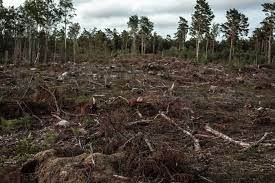
Most of Sweden is still covered in forest. I have visited the country, and have enjoyed exploring it. Never the less, an alarming study has shown that most of the forestry – about 97% relies on clear cutting ancient woodland, and then replanting it with monocultures of trees, not all of which are native.

Sweden so called environmental forestry may be nothing of the sort. Clear cutting old growth, and replacing it with non-native monocultures is not the same thing

Clearly Sweden must buck its ideas up, or change fast. I have commented on the low density of bears and wolves. In the past, this has been put down to the countries large number of hunters, but perhaps this is an early warning about what is happening to these forests.

Might this hit the IKEA brand? certainly if they wish to survive, they are going to have to change their behaviour dramatically.

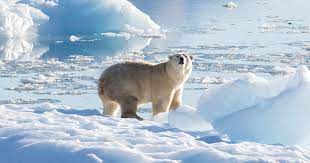
Polar bears appear to be surviving despite the lack of sea ice, should we take this as a positive sign?

A group of polar bears are surviving in south-east Greenland are surviving despite there not being sea ice for most of the year.

A new Polar bear population genetically isolated from other Polar bears has been identified in South East Greenland
Continue reading “Polar bears appear to be surviving despite the lack of sea ice, should we take this as a positive sign?”

While 79% of emissions come from the developed world, these countries only account for roughly 20% of the worlds population

A quick search tells you that the developed world is responsible for roughly 79% of all historical emissions. What is worse, is that this represents under 20% of the world population.

This means that per person emissions are as much as 16 times more the result of each person living in the developed world than the developing world.

Last year was a case in point. Last year, costs for extreme weather events like droughts floods and wildfires cost an estimated $329 billion, which is approximately twice the total money given by donor nations – in other words, when you take into account the financial damage that our behaviour is causing, the developing world is actually donating hundreds of billions to the rich developed world.

We in the west have had politicians claim for decades, that stopping climate change would cost to much. If we had to pay the full amount, clearly the numbers would be quite different.

Bramble Cay melomys have become the first mammal lost exclusively to climate change

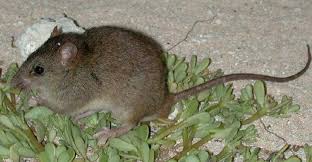
A melomy bramble cay

No one knows how the melomys got to Bramble cay a small island 31 miles off the coast of Papua New Guinea, but they did. In 2015 they became the first mammal to go extinct purely as a result of climate change, as their little island home at the end of the great barrier reef sink beneath the waves.

In 1978 a few hundred were counted, in 1998 just 100. In 2002 and 2004 just a few dozen were found. The amount of lady plants shrink by 97% between 2004-2014, and when a survey was carried out in 2014 no specimens could be found.

Large thriving network of settlements thrived in Columbian Amazon before European settlers

Both the Amazon and the Congo have been given the status of totally virgin rainforest, without any human impact. What is becoming increasingly clear is that this is not the case.

Instead it is the case, that the communities which lived here -sometimes in large numbers, lived in balance with the environment.

Pre Columbian settlement evidence in the Amazon

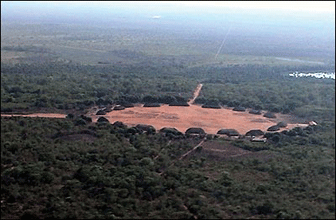
Archaeologists have found vast network of settlements in the Columbian Amazon, spanning hundreds or even thousands of square km, consisting of a main settlement with huge platforms, and smaller settlements spread out around. All are linked by causeways, and canals and reservoirs dotted the land to make agriculture possible.

To be sure, these settlements were low density, but they successfully lived in harmony with the rainforest for centuries.

Oddly, while these communities prospered for 1000 years, they disappeared before Columbus arrived, and it is not clear why.

How should this impact work these days? I am not sure. There are no large groups of modern people who have learnt to live in harmony with their environment, but clearly bush people have. Perhaps we need to follow their example – though the current indigenous people of the Amazon do not live in settlements of large size, otherwise we would have know about these centuries ago,

A group of former UN leaders is warning our pledges aren’t enough on climate change

Current worldwide pledges on carbon dioxide reduction are no where near enough and would lead to catastrophe.

Last year commonsense was found. It was recognized that global warming of 2 degrees will lead to a horrific situation, and that we need to be aiming for 1.5 maximum degree warming. This has been agreed, but at cop26 the pledges gathered were just enough to limit warming to a maximum of 2 degrees.

Unfortunately, actions taken (those pledges that are actually changing behaviour) fall far behind promises, leaving us on target for 2.7 degrees of warming – the upper band suggests 3.6 degrees of warming is still possible.

Developed countries around the world are not acting fast enough. They are also failing to supply funds promised to help the developing world cut their emissions.

Importantly delay will increase the cost. If we fail to act now, actions in the future could be 10-100 times more expensive

NOT A LEGACY I WISH TO LEAVE FOR MY CHILDREN

UK government gives go ahead for shell to develop a new gasfield

As if we need any examples of the contradictory actions of rich governments, the UK government is still giving permission for new had fields to be created.

It is known that if we are to keep warning to 1.5 degrees or less, more than 50% of fossil fuels must remain in the ground. As such this move is foolish.

The government could do as much for consumer bills by bringing back the green housing grants-and funding it properly. Many people in the country can afford to do the work themselves but many more don’t stand a chance.

See Animals Wild

Read more news

Join as a wild member
to list your wild place & log in

Join as an ambassador supporter to
support this site, help save wildlife
and make friends & log in

Join as an Associate member
to assist as a writer, creator, lister etc & to log in

List a wild destination

List a destination in
the shadow of man

List a hide for animals more easily seen this way

Highlight some news
missed, or submit a
one-off article

Browse destinations for fun or future travel

Temporary membership
start here if in a hurry

Casual readers and watchers