We have an extensive train network. We also have an extensive motorway network. With all the check in and the traveling to and from airports which are usually some distance outside cities, many domestic flights take longer than their train or car equivalent.
More importantly, these other methods have a fraction of the carbon footprint. This was also after signing a net zero emissions target. Importantly, this does not include travel to Northern Ireland as this is more easy to justify.
34 of these flights were by the minister themselves.
This only came to light through a freedom of information request from the shadow minister for green transport.
In the 6 months after the 2050 net zero target was signed into law the department took 395 domestic flights.
These all happened in the run up to us hosting a conference on cutting emissions.
We can only hope that now the COP26 has happened, the government starts to practice what it preaches.
The UK is known as a democracy around the world. This is why there is increasingly alarmed commentary on a new bill working its way through parliament. The Police and crime bill like many bills is a large complicated piece of work. I am sure that it has some positive things inside it, but there are significant numbers of negative ones which will cause issues for many of the subjects that this website addresses.
On new years day Priti Patel announced that she was going to concentrate on cracking down on Eco protestors during 2022. The bill contains all sorts of astounding bits. Police will be able to stop or constrain protest – they will even be able to fine protesters for inadvertent breaches of restrictions that the “ought” to know.
Why is this a problem? Well, because as a world we are facing joint problems with the climate crisis, and the extinction crisis.
In neither field is the government pulling its weight! We are a wealthy country, yet we are doing little to help in either respect.
It is particularly concerning, that this law is being pushed through on the understanding that police need to be protected from violence – even though in most instances, the violence is both started by and mostly done by the police to the protesters. Upping stress levels in the protestors is also a regular method, which often naturally leads to violence -then blamed on the protestors. One such method is kettling where large numbers of people are forced into a small area and then not let out.
Delegitimising protest at this time is an afront to British freedoms. If the police (and the law) start viewing all protest as illegitimate it changes how they police it.
Currently, there are two substantial threats to a healthy planet earth. The first is climate change and the second is extinction rebellion. Extinction rebellion has on many occasions done things that are extremely disruptive, however, to basically give the police the power to delegitimize protest is far to large a step in the other direction for a free country.
What has the UK done to fight climate change?
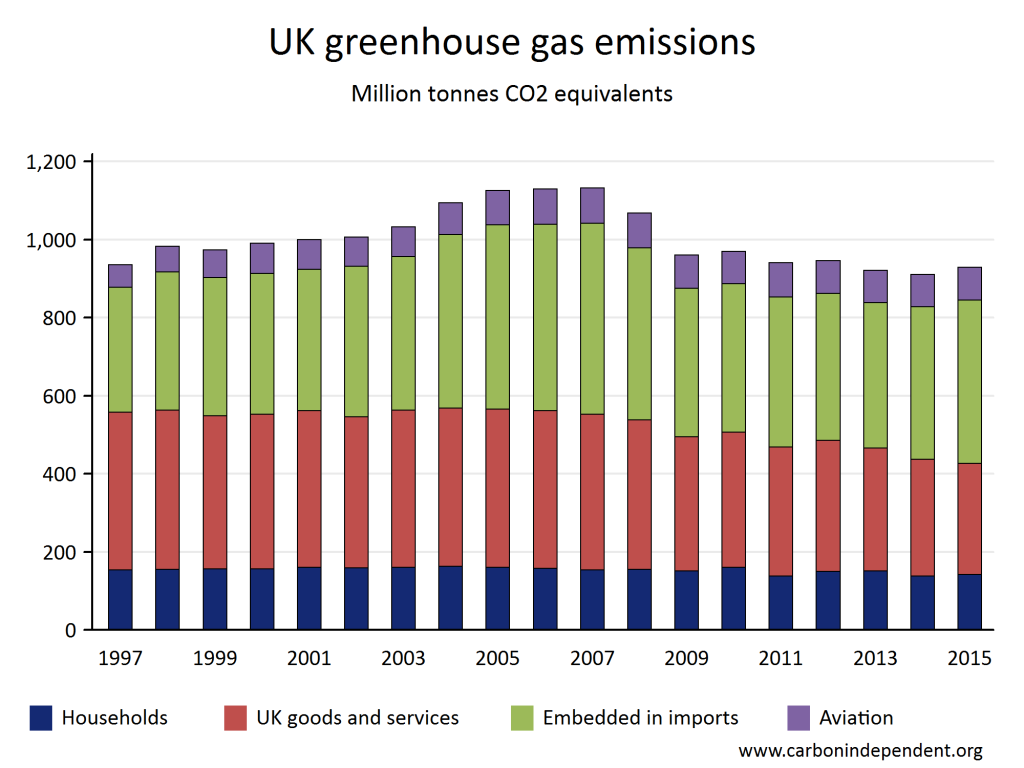
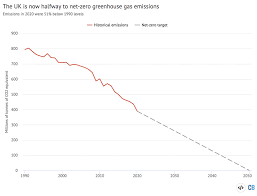
Now we may well have done better than some other countries, however, look at the increase in emissions from imports. Last March it was announced that we had reduced our carbon footprint by 51% excluding aviation and the carbon footprint of our imports. We live in a global world- if we cut our emissions in the UK, but increase them abroad by getting other countries to make what we use, the impact is identical.
As you can see, this graph does not show the whole story
This strikes me as a perfect example of a government which needs to be challenged. Yet protests against the governments inaction will become illegal without approval – by definition not freedom.
Extinction rebellion has likewise caused many problems. Now like many of you, I have been inconvenienced by their actions in the past however they are raise an important issue. The more of the natural world we loose the worse it is for us. The natural world should be valued far more simply for being wild, yet there are huge services that the natural world supplies for us anyway. Rainforest loss will likely turn vast areas to desert, and cause large areas to be come incapable of growing crops. What untold medicines lie undiscovered in the last great rainforests -destined to be cut down before they unveil their secrets.
With politics as it is, it is often not in the interests of an elected government to do things that will only come to fruition in decades time, they need to be re-elected every 5 years. A democracy, particularly at times like this, must allow demonstrators. On these two issues the government is not acting with enough urgency
We must not be silenced! Now, I say this writing in a blog. The last time I looked, this blog is usually read at least a few thousand times. It is unfortunately far easier for the government to ignore these sorts of media.
Will Boris Johnson survive? Who knows, though it is clear that he should not. Labour is currently far ahead in the polls. However, as the Conservatives do not need to face the public in an election for another 3 years, it is not something that they need to worry about at the moment. For my British readers, do write to you MP! it is an alarmingly authoritarian step, and it must be stopped if we are to be able to pressure our government to act to save our planet from the worst of the potential damage.
I have written on the situation with the British governments attempt to put in an outright ban on trophies from hunting being imported into the UK (though bizarrely they continue to support hunting in the UK).
I strongly disagree with this situation.
While the idea of hunting is relatively repugnant, and I far prefer the excitement of walking in the presence of these animals, but then leaving with them continuing to get on with their lives. I should add in this vein, that during my families trip to the Kruger later this year, I will be going on a 3 day 2 night wilderness trail. This will mean my going to a very small remote camp, and then walking for the 3 days – the likelihood of close encounters with many animals is relatively high.
Anyway, this group of conservationists have just written to the government to get them to reconsider their position.
There are many activities that should be banned outright. Canned lion (or any other animal) hunts should cease to exist. Going into a relatively small area, to kill an animal that in many cases has not been living wild for more than 6 months is not what I call brave, but I would say its disgusting. Another behaviour I dislike, is where a hunting outfit buys a small area on the side of a reserve, then as animals walk out of the reserve onto this hunting area they can be shot. Hunting outfits, should only be able to hunt animals which can fit on their land.
One prime example is the Selous: the largest hunting reserve in the world. Here, they protect an area of land large enough to have a lion population of 5000 or so Lions. From this they kill perhaps 50 out of the estimated population (about 1%) of course this relies on their estimate being accurate. Brink et all (2012) estimated the lion population was about 4300, with the range from 1900 up to 6900. though they admit this was extrapolated from a survey of only 1%. Other surveys have put the number between475 (absolute lower bound) up to 4953. This means that even with hunters wanting to kill the big adult males (deaths of pride leading males almost always lead to deaths as a new male tries to take over, firstly all young cubs are likely to be killed so the new male can sire his own offspring, and then often several mothers who try to defend their cub – 1 male killed might lead to 5-10 deaths as a result).
Never-the-less the Selous does not look like its lions are in danger of extinction. A different place to look at is the WAP complex. This includes 10200 square miles spread out across an area of Burkina Faso, Niger, and Benin. It includes 5 national parks and 14 hunting reserves. Given the lion population is 400 here, and the west lion (recently found to be the same subspecies as the indian lion) is so endangered, having a healthy take here is far harder. It is hard to find sensible numbers on hinting here, but a take of more than 4 per year would be very foolish.
In conclusion, while I would prefer that no one in the world ever went hunting animals for sport (generally all the meat is given to local communities, though this is not the reason for the hunt) there are some places which are so hard to reach or infested with unpleasant parasites (the Selous has an insect that carries something called sleeping sickness), I will accept it with clear documentation from places that can support it. This is because often a hunt will bring in so much money for local communities. However (and this is a big proviso) I believe that there are very few places where this is truly the case: The Selous is one, there are probably areas within the KAZA park that are similarly alright. Similarly in Europe, while I would never wish to hunt a wolf myself, the Sierra de culebra has provided a refuge where the wolf would not be exterminated – specifically because a handful of wolves were killed each year. This new rule that the government is bringing in is too simple, it does not take into account the unique situation in each country. My suggestion would be that each hunting organiser needs to get their hunt approved- perhaps some sort of hunting body, but for now in the UK the government would have to employ someone. That person would have to analyse the whole hunt plan, check that the area has a viable population of the animal in question and any other details. This would enforce far higher standards, so that we could be sure when the wealthy go to hunt that they arent going to create the extinction of a species.
To much fanfare, the British government decided to ban the sale of Ivory 3 years ago. This is certainly a good thing. Unfortunately, they have just delayed its introduction again – and we are already 3 years after this law was supposed to come into effect. Admittedly, this time the delay is only supposed to be for 2 months, but it sends the wrong message.
Forest and Savannah elephant populations across west and east Africa have been decimated over the last decade or two.
Ivory trade is (most of us will be surprised to hear) is still going in the UK, Will lord Goldsmith keep to his promise this year? And how many elephants will die before he does – in the hope of adding ivory to our trade?
Ministers claim that background work has not been carried out, but given they have had 3 years this is inexcusable. Someone should be fired for this.
At the moment elephants are being killed at the rate of one every 15-25 minutes or 50-100 a day. The UK is the largest exporter of Ivory. Also much ivory from recently poached animals is passed off as antique – avoiding the rules.
The EU is now considering acting on this pressing issue. Our original advance has been destroyed, and we now look like we are incompetent.
It is currently down to issues creating the technical standards for exempting legal ivory.
My proposal would be to ban all ivory sale until this system was in place. This would put pressure on people to finish it quickly (and I would be surprised if it wasn’t solved very fast).
Lord Goldsmith wrote in a letter that he committed to enacting the bill by the end of 2022, though similar things were said 3 years ago.
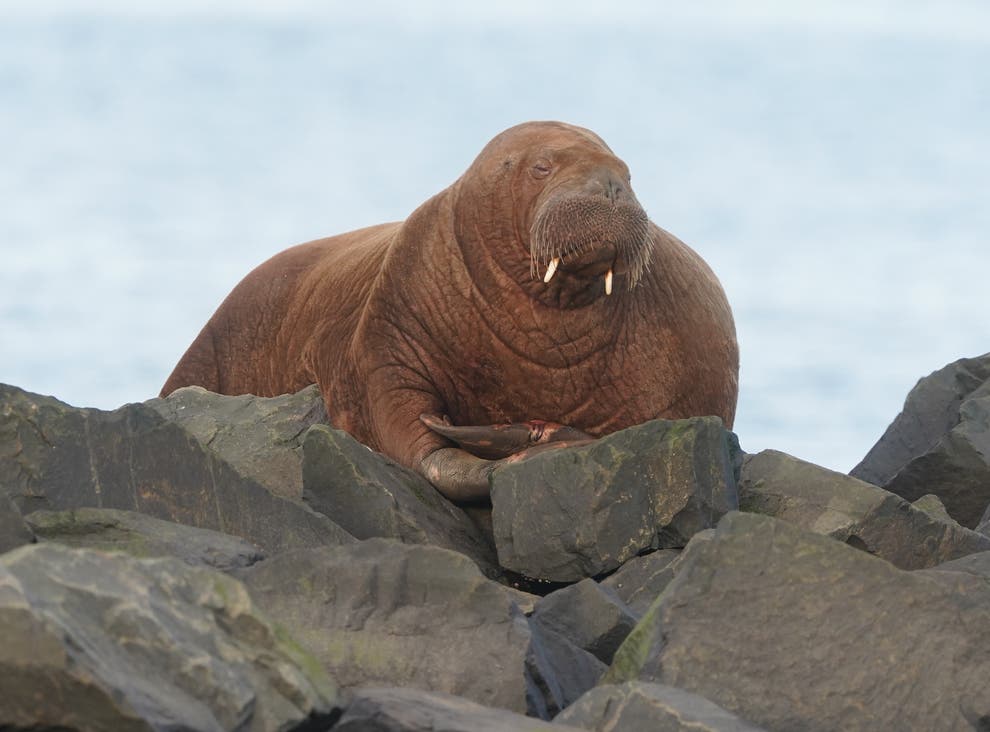
I wrote back in March about a Walrus that was seen around Ireland for some time.
There were 2 walrus in British waters last year, a male and a female. The last male walrus and his harem of 3 females were killed back in 1847. Both walrus are thought to be young.
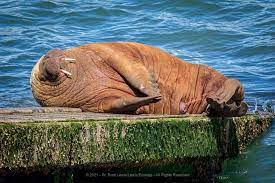
Freya the walrus turned up a month after wally leftWally the walrus spent some time moving around parts of the uk, here in CornwallWalrus are natural parts of the UK wildlife, but were locally hunted to extinction
2 Walrus in a country of ours is not many. Indeed, 2 walrus in the waters of the British Isles is very few. However, if the same 2 walrus were to return next year and meet, it is not impossible that young walrus result. This could become the start of a new walrus colony.
We do not think of the UK as an Arctic country, but we are a natural part of the Walrus range so the natural return of these animals would be very positive.
Could Walrus return, and thrive here? could we have a population of hundreds of walrus in a few decades? The advantage of sea-faring mammals, is that they can return on their own. Walrus can be dangerous if humans get too close, never-the-less the risk of harm to humans is incredibly low, indeed far different to that of wolves and bears (and the risks of injury from these species are already very low). The return of walrus can only be good. They are essential for a healthy sea ecosystem, in the same way that land based carnivores are also needed.
Were a male and a female walrus to meet somewhere remote on the coast of Scotland, I could well imagine it being the start of a Walrus colony in the UK once again. The last dominant male and his 3 sows were killed about 150 years ago, it is about time that this animal would return. Walrus have significant impacts on ecosystems that they live in. Indeed, they do so much, that they are known are keystone species. so their permanent return would be highly positive. Importantly, as they prefer feeding at the bottom of shallow waters, eating clams, molluscs, worms, snail, soft shell crabs, shrimps and sea cucumbers, they are not generally competing with any of the species that humans harvest.
I hope to be able to report on more similar visits in the near future.
European Bison (or close relatives) were once an important part of the UK fauna, as the largest UK mammal, they had the strength to push down trees and therefore had an important role of ecosystem engineer.
The project is aimed at starting by reintroducing these animals into Blean woods near Canterbury. I have walked in Blean woods a number of times, as it is close to where my father works some of the year. Only a small herd will live in this wood (alongside iron age pigs, longhorn cattle and exmoor ponies) but these 4 species are likely to have a great deal of impact on the woodland.
For the time being, the Bison will live in a 150 hectare enclosure, with no footpaths, never the less the hope is that descendants of these pioneers could be released into truly wild parts of the UK.
Admittedly, the European Bison probably never lived in the UK, but the steppe bison an incredibly similar animal did.
A major part of the rangers job will be to take people on walks in the enclosure. This will help people get used to the idea. After all, there are currently no wild animals in the UK that weigh anywhere near the tonne that these animals would weigh.
These gentle giants would do wonders for the British ecosystem, and I for one look forwards to the time when seeing European Bison is like spotting highland ponies or wild horses in different parts of the country.
Currently, the weight of solar panels mean that (along with the cost) it is rare that companies have the money to cover large roofs with solar panels.
A new product developed by a firm in Sunderland may change this. They have developed a light weight alternative which can be stuck in the same place panels would usually go. This method is much cheaper and at least as effective as many flexible panels.
They still have tests to run, but if they are a success, the company aims to start selling it 0.3mm thick solar film in the middle of 2022. This would also easily go on cars and lorries as well. Although the initial aim will be to cover large building, a lorry has roughly 20 square meters of flat roof space – even with relatively poor panels, this should make 20-30kwh a day easily. While an electric lorry will use more than this, over the year, a system like this could make as much as 6megawatt hours, which is certainly not to be sniffed at.
Could this new product move us faster towards gaining significant amounts of our power from solar? I would hope so.
I wrote about Silvopasture recently, there is now a trial going on down in Devon. A farmer is now planting huge numbers of trees sparsely across his land. Each row has trees roughly every 6m and each row is roughly 14m apart.
This will produce a patchwork of shade and sun.
Trees being planted are Oak Aspen and Alder – native British species.
Neighbours have suggested that he is mad, and concreting over his land would have the same benefit. Of course common sense would suggest that concreting over the land would leave far less grass than sparsely planted trees but there we are.
5600 trees will be planted across his 165 acre farm. He is taking part in a 12 year trail to see what benefit Silvopasture can have. The expectation is that the environment will benefit, but that there should also be increased productivity for the farmer.
If it can be shown that grazing sheep under sparse woodland increases yield, roughly 63% of agricultural land could have similar treatment. This could amount to hundreds of millions of trees across the country.
Studies elsewhere suggest benefits include reducing flooding increasing drought resilience, improving animal health and weight, as well as boosting biodiversity and sequestering vast quantities of carbon.
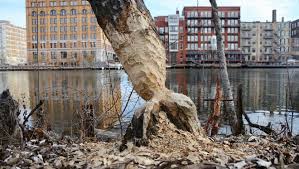
Having only green-lit beaver reintroduction in the UK in the last decade, there are large numbers of places that they will return to over the next few years.
At the current time 26% of the UK is designated as a national park, area of outstanding beauty or other form of protected area. However, to claim that this whole area is set aside for nature, is absurd. British national parks, unlike African ones still have human habitation within them.