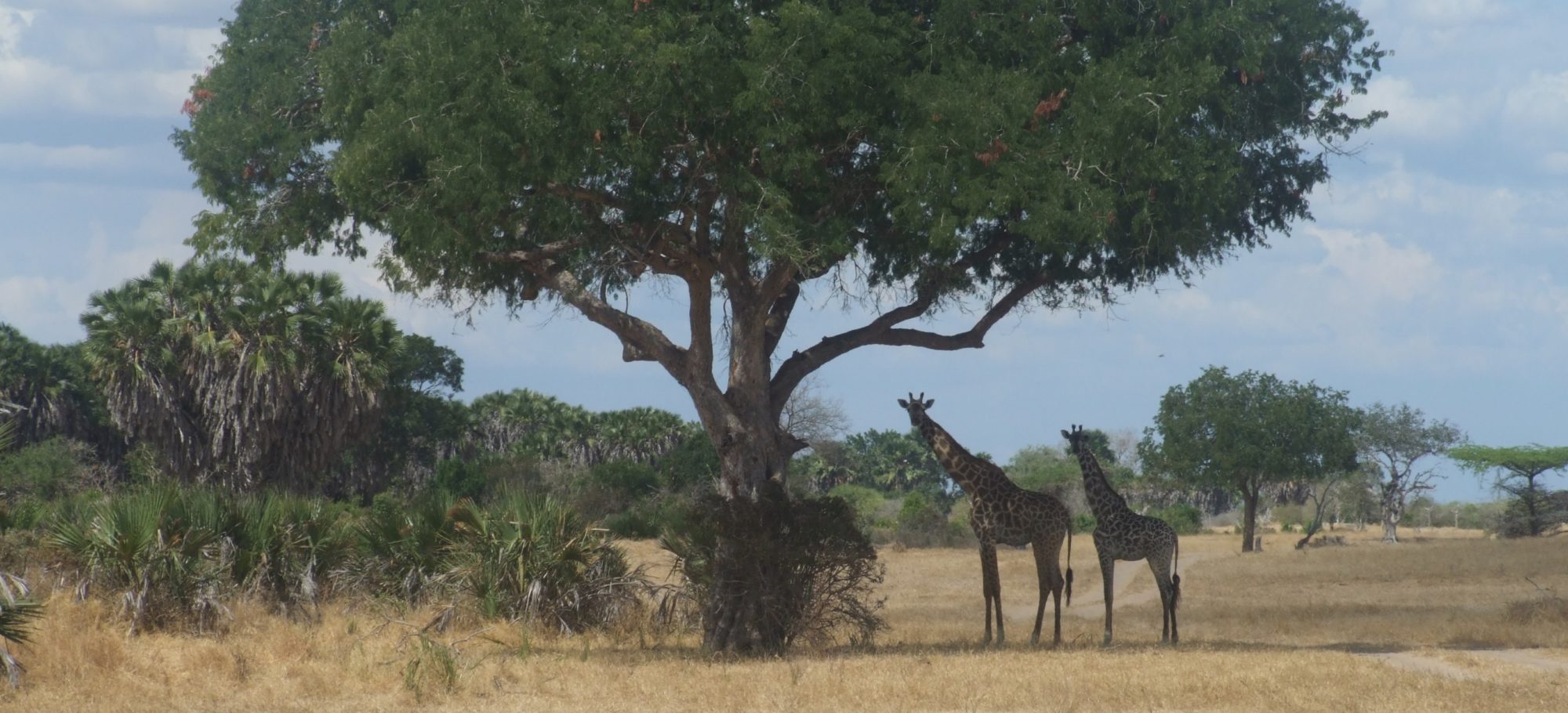
Cheetah trade continues despite the CITES ban on their trade.

Trade of wild cheetah from east Africa (including the horn of Africa) to be kept as status symbols in the Arabian peninsula has thankfully declined, but has not been eradicated. Indeed, this decline may well be more down to better policing on the smuggling route and less down to a change in circumstance. All of the problem countries have laws banning the keeping of these animals yet these are not effectively enforced – when a cheetah or other exotic animal arrives in the Middle east it is likely too late, they are probably never going to be able to be returned to the wild. If as is usually the case, it is a cub, it is highly likely that the mother was killed in the cubs capture.

Reports of cheetahs for sale occur almost every week in the gulf states. In many states, keeping cheetahs as pets only became illegal in recent times UAE for instance only banned cheetahs as pets in 2017.

The problem is that (as readers of this blog will know) cheetah live in small and isolated populations – as a result, taking just 10 cheetah from a reserve could lead to the local extinction of the animal.

Other animals including chimpanzees orangutans and gibbons also enter these countries. It is essential that proper education of populations in countries like this is undertaken, so that they know these animals were not bred in captivity. Many of the owners would be horrified to learn that their action is causing these animals to be wiped out in the wild.

Global work on wildlife smuggling is far from over, and becomes only more and more urgent. There are many species that could be wiped out if we fail.

If you have friends looking for exotic animals as pets do encourage them not to, or we will find that our children will never be able to see cheetah in the wild where they belong.
Poachers killed 24 rhinos in the last two weeks of 2021, that is the equivalent of 1000 a year

Rhino poaching is devastating rhino populations across Africa and Asia. Many species such as the Indonesian species are already lost or on the brink. African species are not far behind.

If you have a strong constitution, do look up images. They are not nice particularly if you have seen this animal alive, as such I have not included a picture.

Currently there are about 16,000 wild rhinos in South Africa, out of a worldwide population that might not number more than 30,000.

9 people have been arrested for this poaching. Now it is clear that the rhino poaching is down from its peak, never-the-less what is necessary is to kill the demand for rhino horn. Currently, an Asian rhino horn can be worth $400,000 with an African rhino horn being worth $20,000. Given that the average annual salary in South Africa is $2000, even $20,000 can be a life changing amount.

It is highly likely that the end of ecotourism during the epidemic is responsible for the uptick in rhino poaching, as people become desperate with their income having vanished.

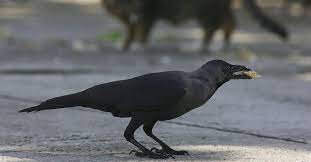
Swedish firm deploy crows to pick up cigarette butts

Sodertailje, a city in Sweden is turning to an unlikely litter picker in an attempt to tidy up after smokers who cant be bothered to dispose of their cigarette ends properly.

What does it say, that we can teach crows to pick up cigarettes butts but cannot teach people to stop dropping them

Wild birds do the clean up, there is a bespoke machine which dispenses a little food for every butt end that it is given. in other words they are voluntarily assisting in the cleanup for payment.

Continue reading “Swedish firm deploy crows to pick up cigarette butts”

The Swedish government has decided to cull as much as half of the wolf population – why?

Wolf numbers in Sweden started to fall after a law in 1789 allowed commoners to hunt moose and deer, led to a lack of food for the wolf population. It is thought that there were no wolves in the South of Sweden by 1800, and they had vanished from the north by no later than 1900.

However, unlike the UK, Sweden is on mainland Europe. This means that countries bordering Sweden can have very different wolf policies – allowing wolves to naturally return. This happened in 1980s when 3 Finnish-Russian wolves crossed over the border and migrated to the south. These 3 (with occasional new migrants( has grown to 480, mostly in central Sweden.

Conservationists have argued that 300 wolves is the bare minimum for a healthy population. Those who study wolves suggest that wolves have a density of between one every 4.6 squire miles (12 square km) and one every 46 square miles (120 square km). Sweden has an are of 173,000 square miles suggesting a carrying population of between 3700-37000 wolves.

200 is therefore roughly 5% of the minimum carrying capacity of Sweden. Remember that most of Sweden remains heavily forested, and therefore perfect habitat for the wolf. These forests are also shared by 3000 bears.

What these numbers show, is that the current number of wolves in Sweden – 480 spread across roughly 40 packs, is absolutely fine.

The government minister did not give a figure as to how big she thought the population should be, but said that while Sweden must meet its EU obligation to not eradicate the wolf, she supported people “who live where wolves are, who feel social anxiety, and those who have livestock and have been affected”. Now it should be noted that these two policies are not compatible. For many farmers, the only number of wolves that they will be happy with is zero – they will always feel nervous with any wolves still staying wild.

It should be noted that the countries hunting lobby is powerful, and have argued that the wolves eat moose (which they want to be able to hunt) and kill their dogs if they get close enough.

I have experience of the wilds of Sweden. There is a Swedish bear hide listed on this site. Our visit gave us 6 bear sightings and a wolf, and when we went south to the centre of the wolf range we also saw some elk (moose) being harried by a wolf – exciting, even if the sighting was very brief. There is a great deal of money that flows into Sweden for ecotourism, and the potential of this is far higher than the money gained from hunting

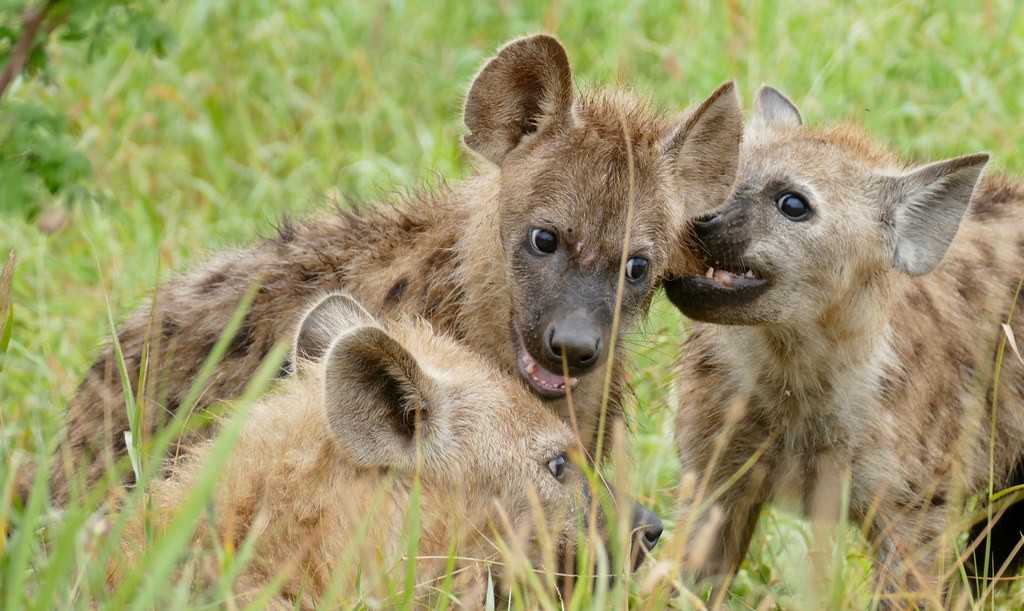
Spotted hyenas in the Serengeti are changing their behaviour as the rain patterns change

Spotted hyena mothers are finding that they have to travel further to find food. The hyenas are having to travel long distances, more and more regularly as the rain changes mean that the huge migration herds arrive later.

What is fascinating is that researchers have found that they are spending no less time with their cubs.

Now it should be noted, that many of the remaining wild hyenas live in far more fragmented habitats, and in these places the issue may be more serious. Never-the-less, for the time being what is clear is that these highly adaptable animals are currently adapting to changes bought about by climate change with relative ease.

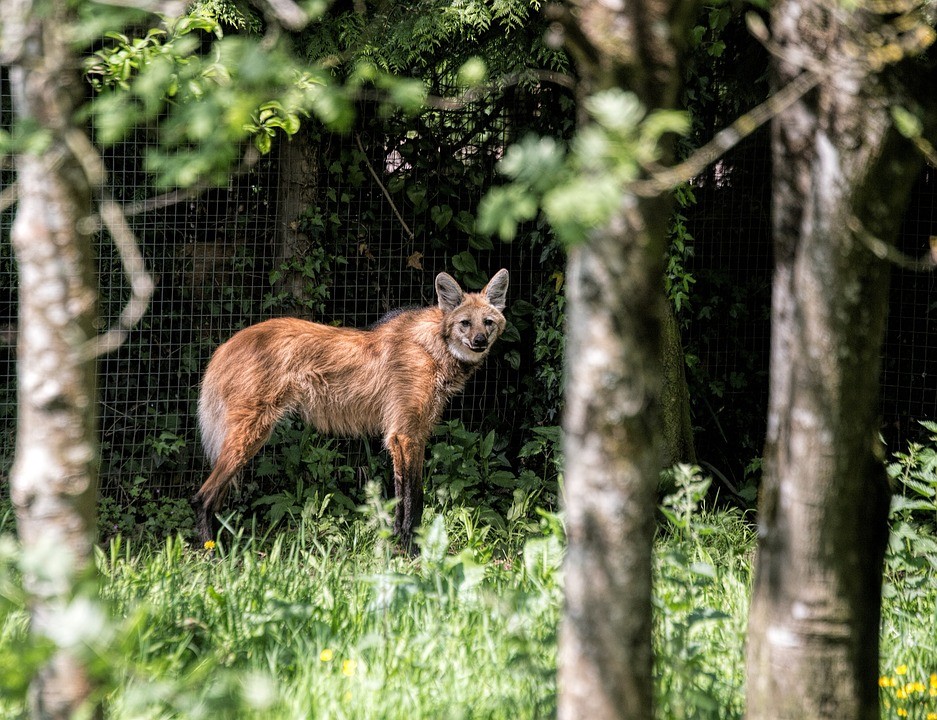
The manned wolf is being seen increasingly often in the Amazon rainforest

The manned wolf that looks rather like a fox on stilts. It is found throughout South American Savannahs

Not actually a fox or a wolf, the manned wolf exists in its own genus.

Living on open savannahs the manned wolf is unfortunately facing the loss of most of its habitat. Though we hear about the loss of the Amazon rainforest the most, all other ecosystems in South America are also under threat.

Continue reading “The manned wolf is being seen increasingly often in the Amazon rainforest”

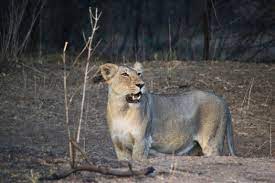
One of the four remaining viable west African Lion habitat has been badly treated but perhaps it is now on the mend.

West African lions are heavily endangered with just 400 members remaining. While the west African population of the Asiatic lion is less at risk than the Gir forest population – being spread over 4 unconnected sites, it would be impossible for an epidemic to wipe out the whole population, or indeed some sort of freak flood or other dangerous weather.

The west and central African lion is close to extinction, however what is important is that despite living in Africa, this lion population is part of the Asiatic lion subspecies, and is not remotely the same as the eastern or southern lion, but is the same as the Indian lions and the now extinct Barbary lion
Continue reading “One of the four remaining viable west African Lion habitat has been badly treated but perhaps it is now on the mend.”

Can the Malaysian tiger be saved?

If is easy to think that we should not be saving subspecies, but instead investing money in conserving other animals that are still threatened.

Unfortunately, this is the wrong way to look at it. Malaysia tigers only exist in a small strip between Malaysia and Thailand. The dense rainforest here has been standing in its current form for longer than the Amazon or the Congo.

In the 1950s there were 3000 tigers, yet in just 70 years this number has been reduced to just 200.

Subspecies are different – obviously, and their differences actually make a difference in the species survival, as well as its success. Introducing a subspecies from another area can have unexpected effects. If the subspecies is lost, then a different subspecies is likely to fill the niche better than none.

Tiger subspecies while extremely closely related, have evolved for millennia to be suited to their environment. If we take this to its extreme can you imagine reintroducing Sumatran tigers into the frozen wastelands of Siberia? The Amur tiger can measure 3m from head to end of tail, where as a Sumatran tiger only measures 2.4m

My feeling is that we should be moving from concentrating on specific species to ecosystems. it is certainly harder to generate the interest, but by looking at it on the ecosystem level we recognize that we need the apex predators for that ecosystem – whether they are a subspecies version of the tiger leopard or something else.

Wolf encounter in France (not mine unfortunately)

I have had an encounter with a wolf – perhaps 100m distant, and no reaction to my presence. I have also watched a wolf from the safety of a bear hide. I have even listened to the eery sound of a wolf howl, both within an English zoo (late at night) and more excitingly from all around when trying to see wolves on the edge of the Sierra de Culebra in Spain. Annoyingly, although our guides howl was answered from 4 different locations, on that occasion the wolf did not allow us to see them at all.

In France, with a wolf population (as of 2021) of about 580, unless you know what you are doing, or are incredibly lucky you are unlikely to encounter a wolf. Indeed even wildlife guides working in nature reserves do not normally see wolves every day. Here I will recount an encounter someone had in France.

Continue reading “Wolf encounter in France (not mine unfortunately)”

Species Watch: Cross river gorilla and western lowland gorilla

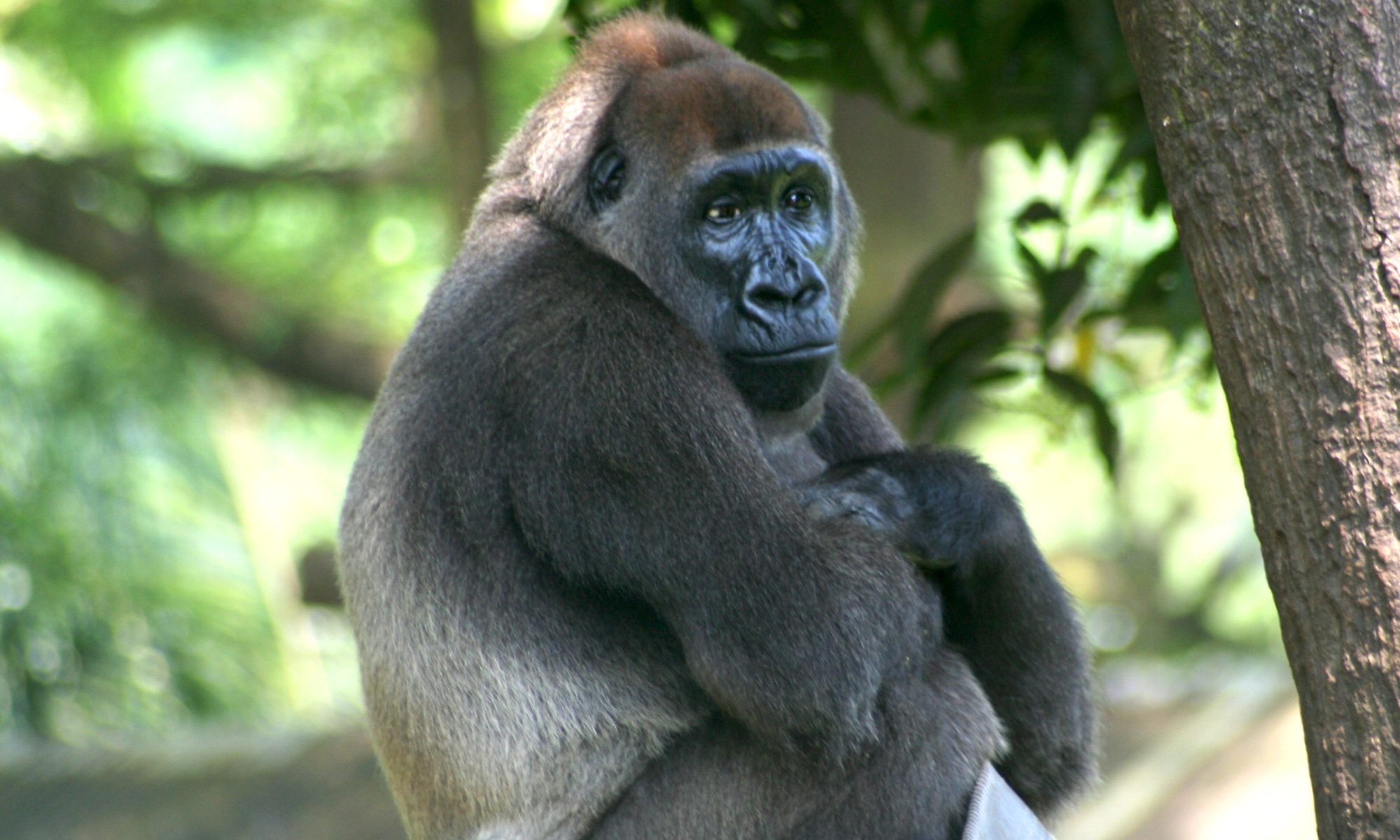
The cross River gorilla (picture above) is a critically endangered subspecies of the Western lowland gorilla species. The cross River gorilla are scattered in at least 11 groups across the lowland montane forests and rainforests of Cameroon and Nigeria, an area of 3,000 square miles, or a little smaller than Puerto Rico. There are only 200-300 that remain of this subspecies.While there are some physical traits that are different between these species, the cross River gorilla has become a Highland specialist. Although known to have interbred in the past, genetic analysis suggests this stopped more than 400 years ago. Changes in climate may well have been the catalyst to stop the interbreeding.


In this way, the cross River gorillas and the mountain gorillas have similar habits and ecosystem niches. In this way, it could be suggested that cross River gorillas are simply 50 years behind mountain gorillas in the sense that 40 years ago, there were only around 250 mountain gorillas – this population has increased to over 1000, so clearly it isn’t too late for the cross River gorillas numbers to recover.


Could a similar recovery take place? Perhaps following the pattern set up by Diane Fossey for tourism of the mountain gorillas, might work?


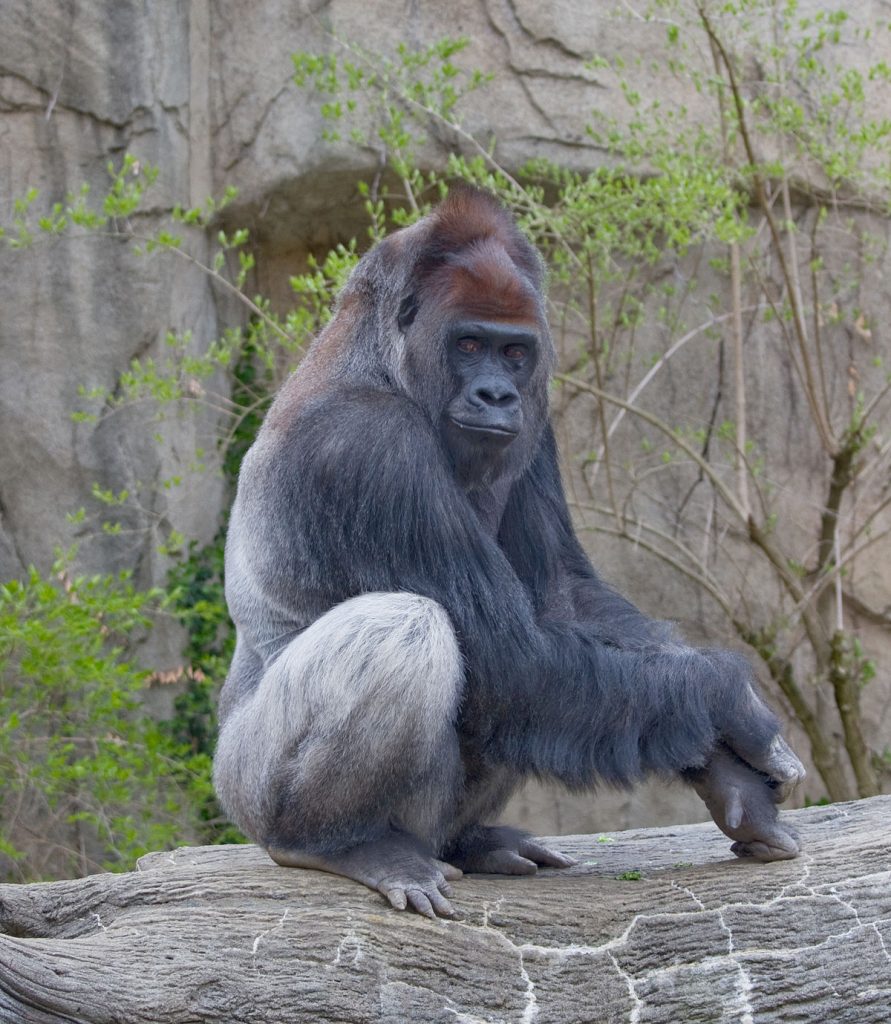
Western lowland gorillas have a wild population in a fast healthier position, with an estimated 100,000 remaining. Unfortunately though, this is a very tough estimate as they live in some of the hardest to reach jungles so an accurate count is hard. It is however, thought that this gorilla population has seen a 60% reduction over the last 10-25 years. It is thought that if the pressures of placing and diseases were removed this population would recover in about 75 years (of course these pressures are unlikely to disappear, and with the loss of rainforest there may be nowhere for these gorillas to live if they did recover.

Western lowland gorillas are closely related to cross river gorillas, in the same way that eastern lowland gorillas are closely related to mountain gorillas. However, retaining these different subspecies is highly important as they are adapted to the different conditions where they live.

It is unfortunate that there is little positive news on either of these species at the current time, but many people are working on it.

See Animals Wild

Read more news

Join as a wild member
to list your wild place & log in

Join as an ambassador supporter to
support this site, help save wildlife
and make friends & log in

Join as an Associate member
to assist as a writer, creator, lister etc & to log in

List a wild destination

List a destination in
the shadow of man

List a hide for animals more easily seen this way

Highlight some news
missed, or submit a
one-off article

Browse destinations for fun or future travel

Temporary membership
start here if in a hurry

Casual readers and watchers