Re-wilding in the UK

Currently, 70% of the land in the UK is given over to agriculture. Of this, just 15% is used to grow crops for human consumption. A further 22% goes towards feeding livestock. The rest is given over to livestock grazing.

This means that we give over 44% of the country to livestock, and a further 15% of the country to feed the livestock.

If growing food in a lab does indeed take off, 59% of the UK would suddenly be freed up – lab grown meat done properly could have a near 0 carbon footprint, and can be created in close proximity to the shop that will sell it -further reducing or eliminating the transport carbon footprint of food.

Now, assuming that this is to happen we would still need to keep some livestock. This would be needed to harvest cells. Never the less, we could still see a reduction of more than 99% of the livestock and land required. I do not believe that I am the only person who would be far happier satisfying my desire for meat, without the climate implications or indeed the fact that animals have to die to satisfy it (I am not a vegetarian, but over the last few years we have made efforts to reduce our meat footprint).

This would free up more than 50% of the country. What could we do with this?

Well my argument is that this land could be given over to rewilding. With this amount of land, we could suck up vast amounts of carbon a year. 50% of the UK is roughly 120,000 square kilometres. Now roughly speaking, forest suck up 500g per square m per year, or 500 metric tonnes per square km. Therefore, the UK could suck up 60 million tonnes a year. Now it is true that this is not huge compared to our emissions and we might have some other uses, never-the-less I am sure that I am not the only person that is frustrated by the lack of wilderness in the UK. Even just 10% of the gained land being given over to rewilding could make great progress in returning wilderness to the UK.
Matt Ridley argues climate change is doing more good than harm in lecture

Chartwell lectures needs to be careful. If it regularly hosts people like Matt Ridley and allows him to argue that there are more good impacts from global warming than bad, they are likely to lose their following.

In his lecture he identified the following positive outcomes of global warming, I will take each one and respond

Fewer winter deaths: it is true, that warmer winters could lead to fewer deaths. Unfortunately what has been shown so far, is that global warming makes the climate more changeable. As such, while as an average winters get milder there are more extreme cold periods. This inconsistency far from reducing deaths as is posited, is likely to increase deaths due to cold weather.

An increase in global plant growth: This is not as simple as made out. The accompanying increase in temperature is often a bigger impact on the plant – and in most tests, it has been shown that increasing carbon levels while initially having a surge of growth do not increase output permanently.

Fewer deaths from extreme weather: this is closely related to the first, and it is not true.

He then has the nerve to suggest that blame mainstream media from cherry picking.

It is alarming that these stupid views are still being given the space to be spouted. I hope that space for views like this are pushed out soon, as they are not true.

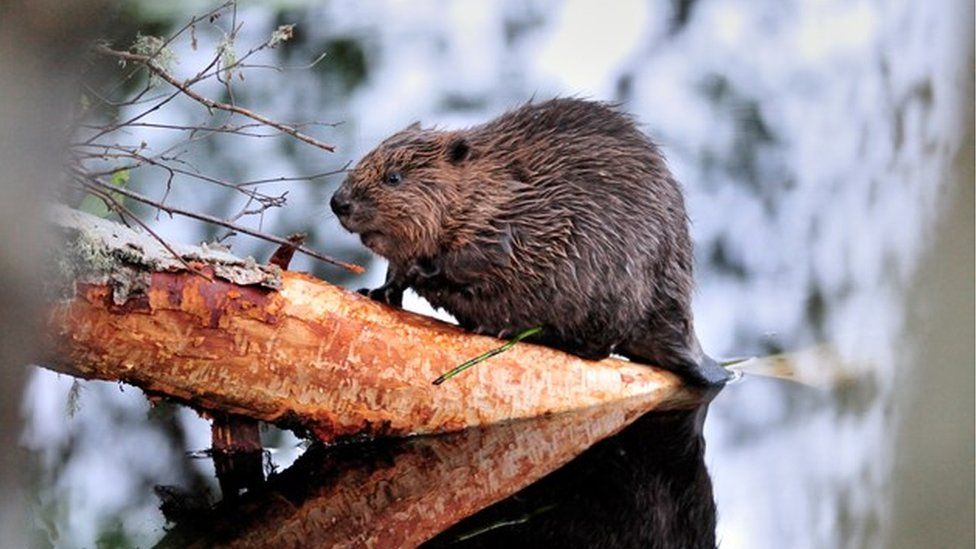
NatureScot has found that there are more than 1000 beavers now living in the wilds of Scotland

Beavers are well and truly back in Scotland. With a population of more than 1000 animals, they are having a big impact on the environment. Less welcome news was that 115 of these animals were killed under licence. Now a population of this size can probably cope with deaths at this level, but it hard to believe that in all these cases this was necessary. At this point, as the population is slowly growing, you would think that translocation would have been a better option. There have also been 31 beavers that were trapped and moved to official reintroduction projects in England and Wales.

Protections must remain in place but beavers are rapidly re-establishing themselves across parts of the uk
Continue reading “NatureScot has found that there are more than 1000 beavers now living in the wilds of Scotland”

In 2020, for the first time the UK got more energy from renewable sources than from fossil fuels

In 2020, renewable electricity accounted for 43% of the UK electricity, while fossil fuels accounted for just 38%. The remaining generation came from nuclear. Unfortunately, that proportion was reversed in 2021.

Never-the-less the British prime minister announced in October at the Conservative conference, that the aim is to reach 100% renewable electricity by 2035 (I would suggest that they need to decide if nuclear is a green generation or not – I would suggest it is, but it should therefore be included in the figures, in the long-term it is not likely to be needed, we should be able to generate all our electricity from solar and wind).

It is encouraging to think that by 2035 all our electricity will come from green sources. In addition as no ICE cars should be sold after 2030, by 2035 the proportion of clean propulsion should be rapidly moving towards 100%

In the UK the Advertising standards agency (ASA) has promised to crack down on green washing

It is disgusting, that despite the science being clear for decades now (and the urgency needed) there is still so many companies that are desperately trying to hang on to their business as normal way of life.

As the world, and customers in particularly are increasingly voting with their feet and moving if a supplier is not being green enough, a lot are continuing to push out false news to try to throw climate change into doubt.

There has been much success on this, however it has run its course. The ASA has announced a regulatory crackdown on ads which seek to mislead on climate change.

Currently, the ASA rules are loose enough to allow significant misleading claims and mistakes to be gotten away with.

Time will tell if they are successful, however it is work long overdue. Much of the incorrect ideas on climate change have been placed in peoples minds on purpose.

Past examples include oil companies bigging up tiny parts of their business in adverts (and failing to mention the vast emissions from the 99% or more of their core business, along with companies like Volkswagen who cheated on emission standards allowing them to get away with far more emissions than they admitted to. Others include Coke who had a big campaign about waste plastic in the oceans – failing to admit that most of this plastic was their fault.

We will have to watch this carefully. Thankfully, in this day and age, there are many different people watching to keep account of what is going on. We must not avert our eyes.

Pine martens are back in the new forest! for sure. How will they fare?

Pine martens are an important part of the UK ecosystem. Indeed, it is only through their absence that the grey squirrel was able to get a foothold. Might this pine marten group return to save the red squirrel and remove the grey?

This video was filmed a few months ago

Pine martens are very good for the UK. It is the reason that red squirrels are so acrobatic – it is the only way to avoid this arboreal predator.

It is not thought that this population can be large, but its size is being studied.

If they are given the space to survive and thrive (it is probably necessary to translocate a few more) they could be really good for the forest.

Grey squirrels only arrived in the new forest in 1940s, and if this arboreal predator gets fully re-established, it is likely that the grey squirrel will disappear once again. This would then allow the return of the red squirrel. There is a red squirrel colony on Brownsea island, which is likely to benefit from the pine martens return, as they will greatly reduce grey squirrels in the area.

An area twice the size of London is set aside for driven grouse moors in our national parks, why?

One of the most nature deprived parts of the UK is the driven grouse moors. While grouse are native to the UK these grouse moors are definitely not.

While national parks can be important places for conservation, and in Africa are the home of many of the big animals, in the UK that is not the case at all.

Driven grouse moors are regularly burnt of all their natural vegetation. In addition birds of prey in the area suffer pretty blanket illegal persecution.

Alarmingly, these areas makeup 44% of the Cairngorms national park,28% of north moors national park and 28% of the peak district.

If this huge area of land was given over to rewilding, far more of the British population could enjoy these areas. Furthermore, this land would hold vastly more carbon in its natural state, never mind the fact that with a proper balance, we could see many highly endangered animals return to thrive in the UK.

Boris Johnson pledged to preserve 30% of the UK for nature, and importantly included national parks in that total. If these driven grouse moors are not eliminated that is a claim that cannot stand. We are the only country in the world that undertakes this dangerous practice.

It really should not be the case, that large parts of public land are set aside for the extremely wealthy, who could afford to do this on their own private lands.

In the last year, the government has listened to the anger, stopping burning of moorland where peat is more than 40cm thick. While this is a good move from the environmental side of things it is not the sole thing that bothers the average person in the UK.

Grouse shooting interests point out that the industry supports 1500 full time jobs. This is good, but the 23 large scale rewilding sites in the UK have increased employment by 47% in the areas that they operate, which suggests that 1500 is probably a very low number of jobs to what could be supported.

Maybe the British red squirrel is not doomed on mainland britain?

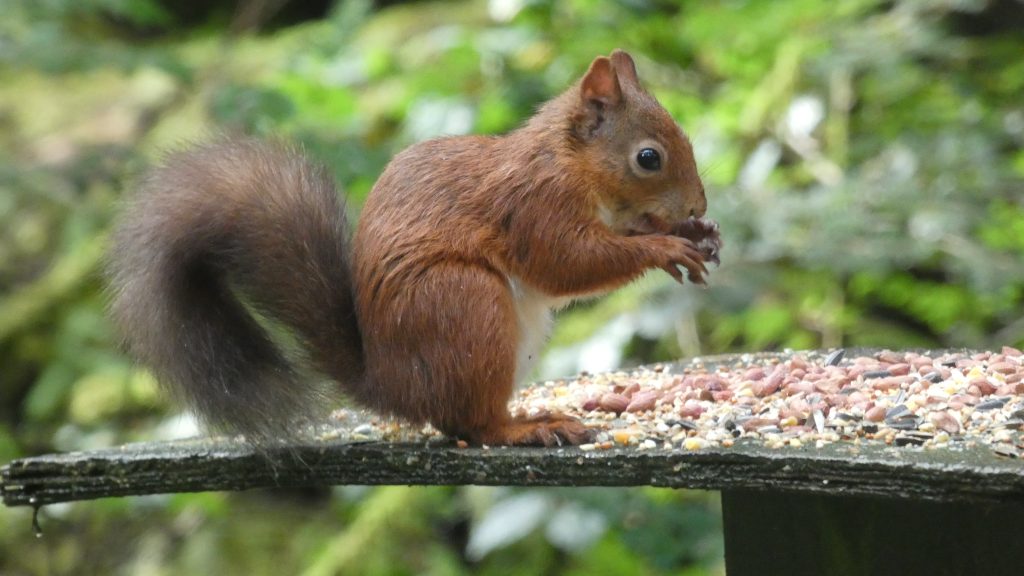
There are few animals more loved than the native red squirrel, yet in the UK we have watched its gradual decline since the non-native grey introduction

At the moment, red squirrels still survive in reasonable numbers up in Scotland. It is not that grey squirrels out compete red ones, but that they carry an illness which kills red squirrels very fast.

Continue reading “Maybe the British red squirrel is not doomed on mainland britain?”

UK makes a lot of noise about its green spending, unfortunately we are spending more on polluting ones

£145 million was earmarked in the March 2021 British budget for environmental spending. Let almost 40 billion is spent on polluting ones. Tax breaks to companies, to encourage investment in projects (that will damage the environment ) along with £4.5 billion lost from the fuel duty freeze (it has been frozen for 11 years).

Continue reading “UK makes a lot of noise about its green spending, unfortunately we are spending more on polluting ones”

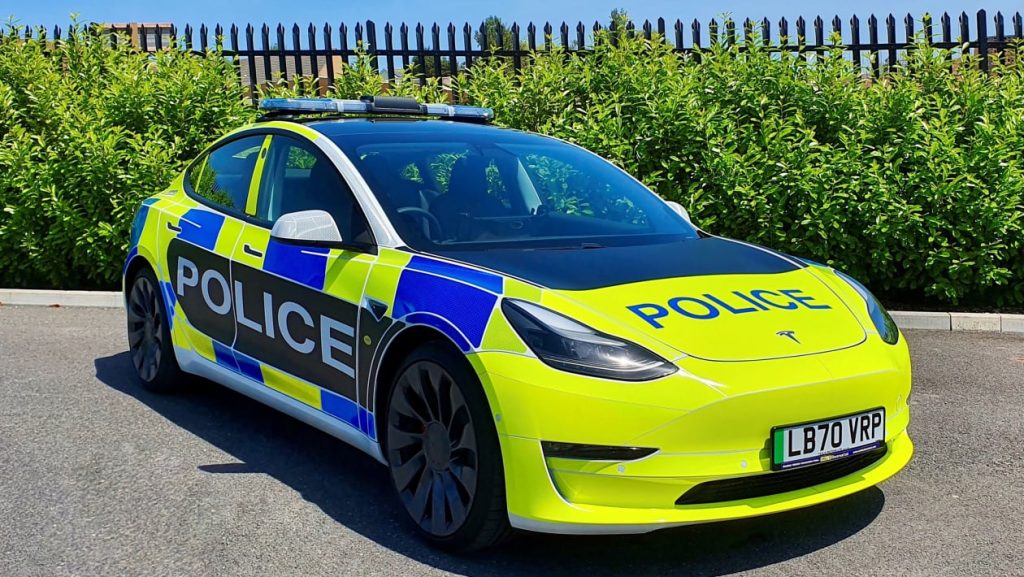
UK police looking at changing their cars to tesla model threes – paramedic and fire cars may follow

A recent trial, by the police have suggested that a tesla model three may well be a better car for police work, despite many doubters suggesting that it would never be able to handle work like this.

Tesla police car, looks quite normal, though the suggestion was to incorporate the lights into the body of the car to improve wind resistance

The average blue light run lasts between 7-15 minutes, yet the tesla model 3 has been able to take part in runs over 4 hours on active deployment, and it is thought to be possible to do more than 200 miles of blue light advanced driving on one charge.

Continue reading “UK police looking at changing their cars to tesla model threes – paramedic and fire cars may follow”
See Animals Wild

Read more news

Join as a wild member
to list your wild place & log in

Join as an ambassador supporter to
support this site, help save wildlife
and make friends & log in

Join as an Associate member
to assist as a writer, creator, lister etc & to log in

List a wild destination

List a destination in
the shadow of man

List a hide for animals more easily seen this way

Highlight some news
missed, or submit a
one-off article

Browse destinations for fun or future travel

Temporary membership
start here if in a hurry

Casual readers and watchers