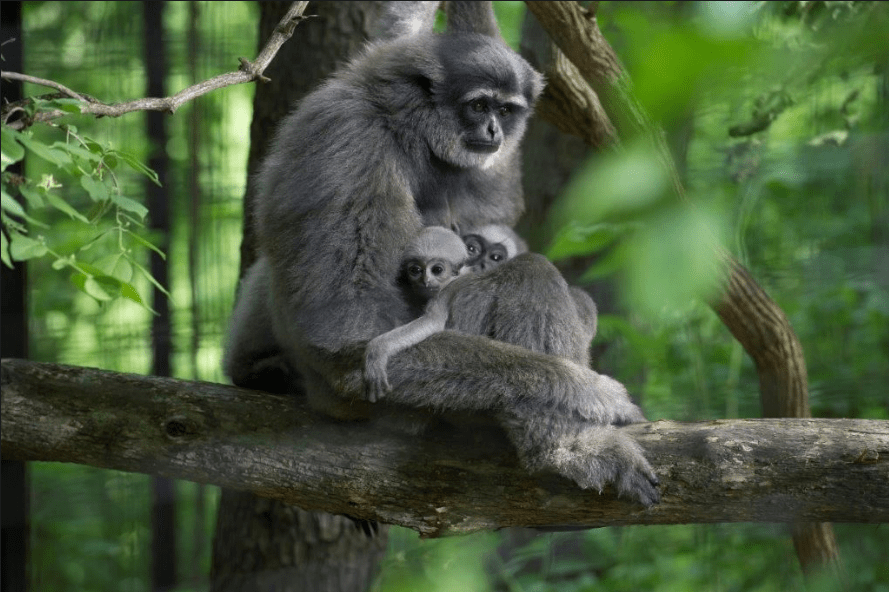
Gibbon – grey (Mullers/Southern, Northern, Western(Abbots) and Eastern)

The Grey Gibbon (also known as Mullers/Southern, Northern, Western (abbots) and Eastern

The Grey (Mullers/Southern, Northern, Western(Abbots) and Eastern) gibbon is a species endemic to the island of Borneo. As you can see, it goes by a variety of names.

Thought, until recently to be a single species, alongside the Northern and the Southern grey, recent studies have demonstrated that they are distinct enough to be separated either as subspecies or species. However, we are going to deal with them together. It is true that along the border of their ranges, there have been occasions of breeding together -and while lions and tigers have interbred, this seems different. It is possible that in the future, I will separate them out.

Borneon grey gibbons are as a whole considered endangered, having suffered a greater than 50% decline in numbers in the last 45 years.


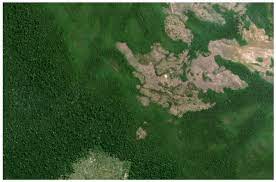
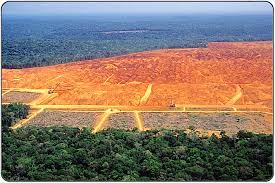
The rainforests of Borneo are thought to be 140 million years old yet humans have destroyed half of it in just 40 years. The biggest driver of this deforestation is the Palm oil industry, which has required land to grow its crops. Never-ending growth of the lands for this crop must end, though whether this end will be reached while Borneon forests still stand is anyones guess.


This is not a species that I have written about, but if I do in the future, it will appear below. Furthermore, as we add destinations that are good for this species they will appear below the news (do feel free to send news articles that you write to be included here)
 

[smart_post_show id="13409"]

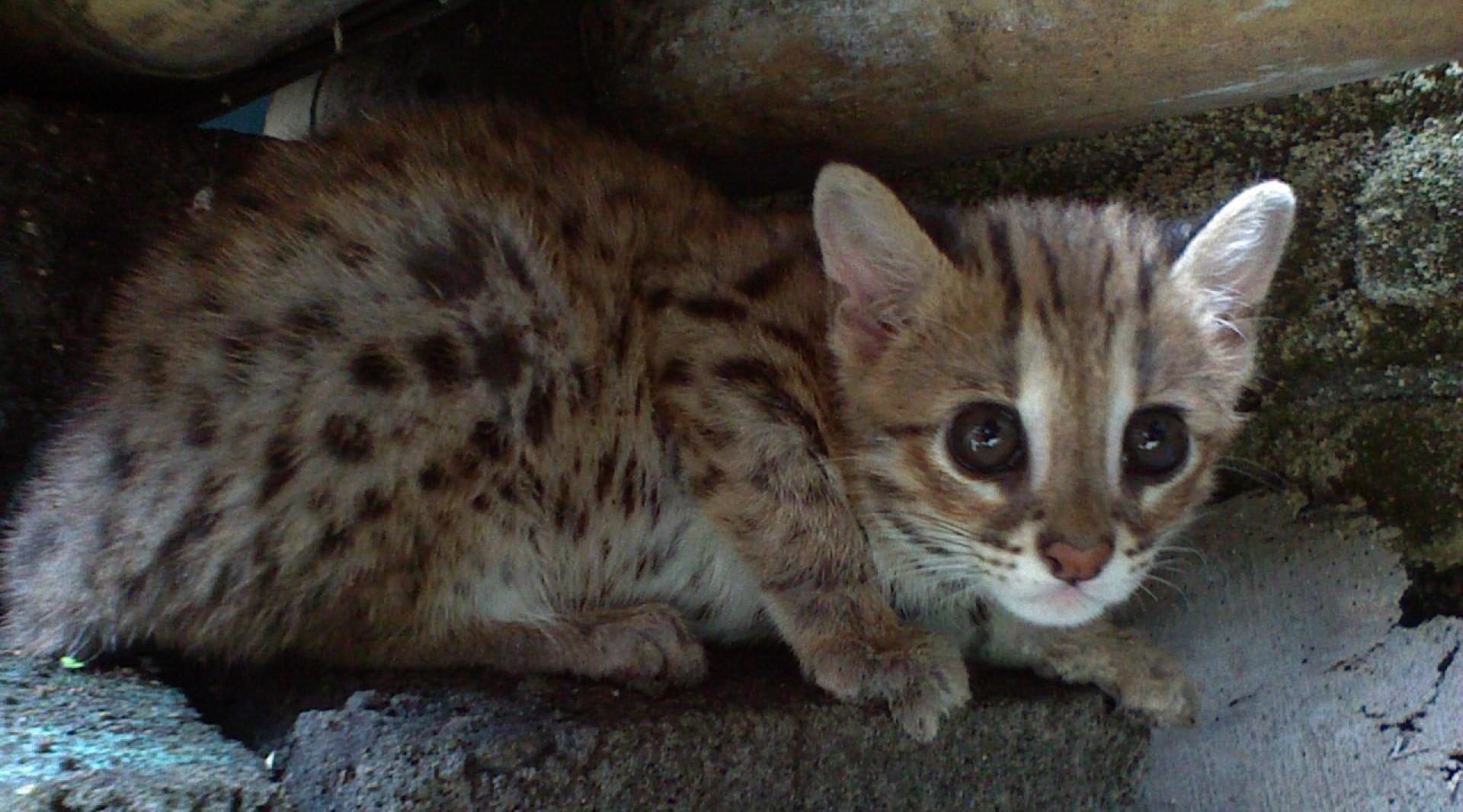
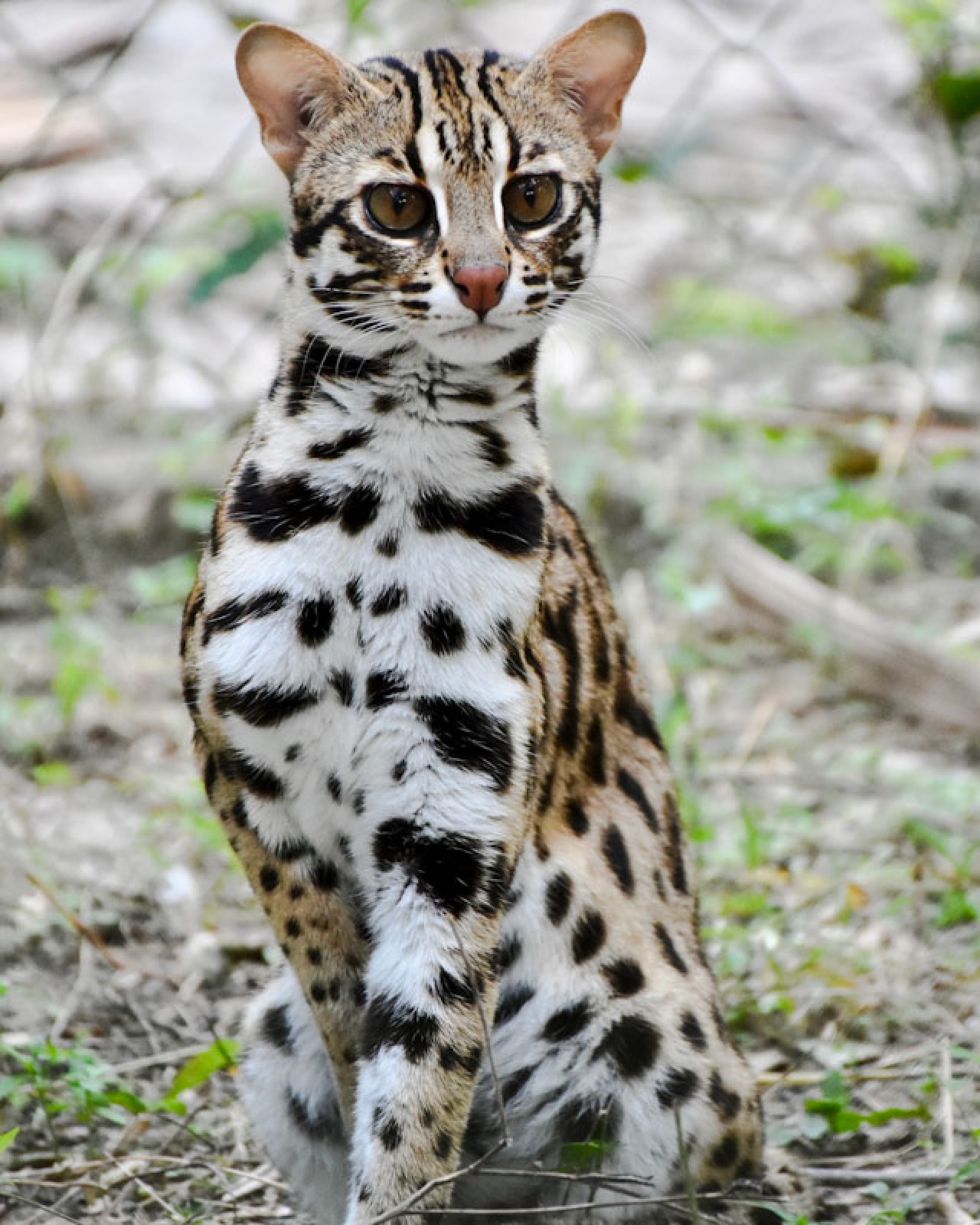
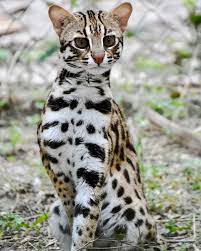
Asian Leopard cat and Sunda leapard cat

An Asian Leopard cat

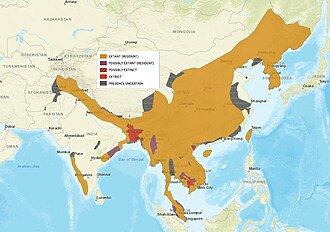
Asian Leopard cat


As you can see quite an impressive range. They Asian leopard cat, was once thought to be the same species as the Sunda leopard cat, with the difference only recognized in 2017. It is roughly twice the size of a domestic cat.

There are 2 subspecies currently agreed, one being the  mainland and the other being the Island Sunda leopard cat (I have included an image of the Sunda Leopard cat below).

Below that is a list of any article which mentions the leopard cat, as well as a video of this species. Beneath all of this, we will also add any links that we can to help you see this species in the wild. Do get in touch if you work in ecotourism and ever see this species. We would love to help people find you.

The majority of videos are of this species in captivity, as they are hard to see in the wild. Having said this, we are eager to list any people who work in ecotourism in the this animals range and occasionally see it in the course of their work (we are also keen to list people working in this field who see other species, but they will not appear on this species page but others).

[smart_post_show id="24962"]

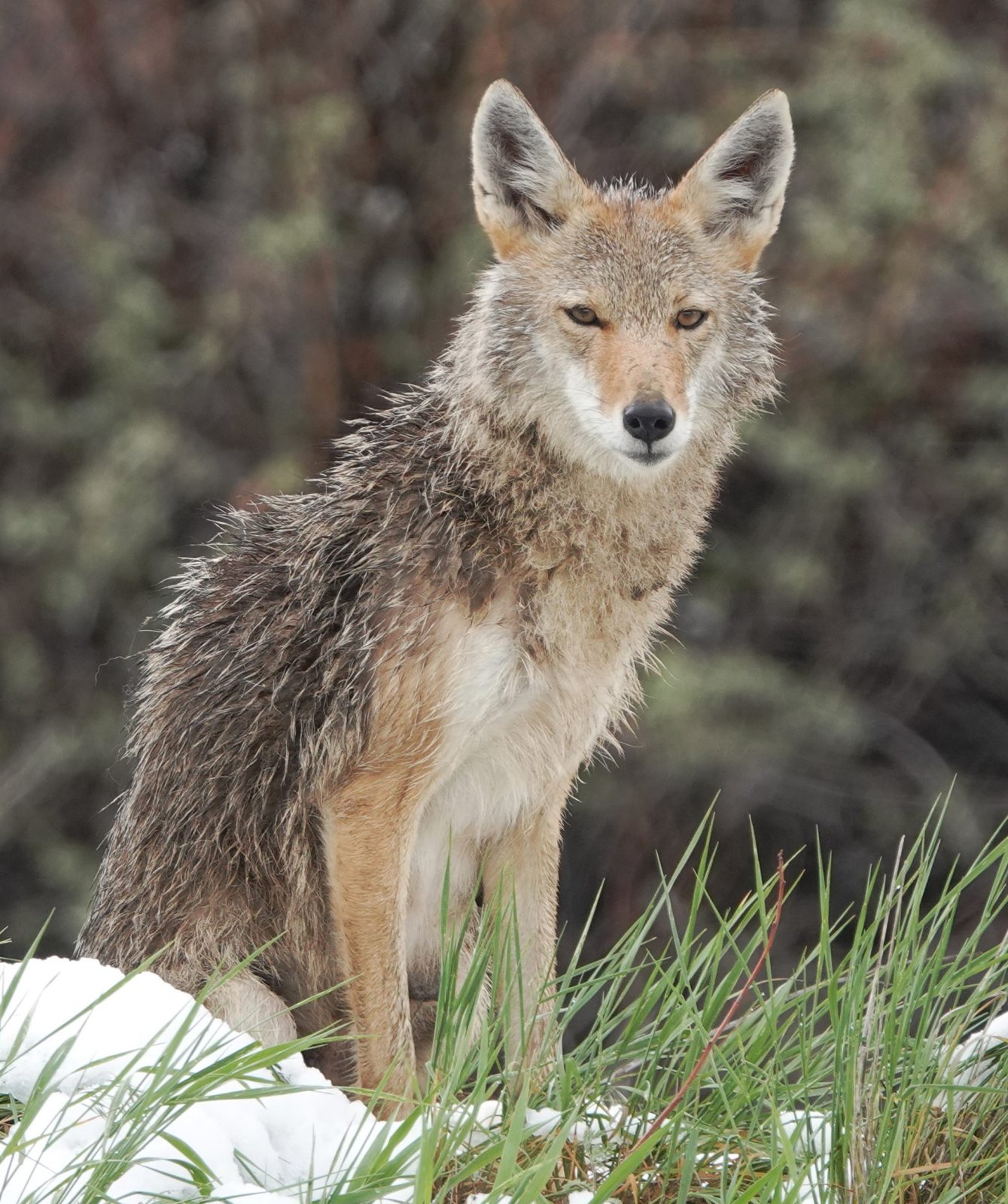
Coyote

Coyote

Coyotes are mid sized canids, and lie between the wolf and the fox in size. It is also smaller than red wolves or Algonquin wolf. It is closely related to the wolf.

It is a species which is listed as least concern, with a wide distribution across North America.

It is odd to think that this species is a closer relation of the wolf than any other dog (except the domestic dog, which is genetically essentially a wild wolf)

[smart_post_show id="12232"]

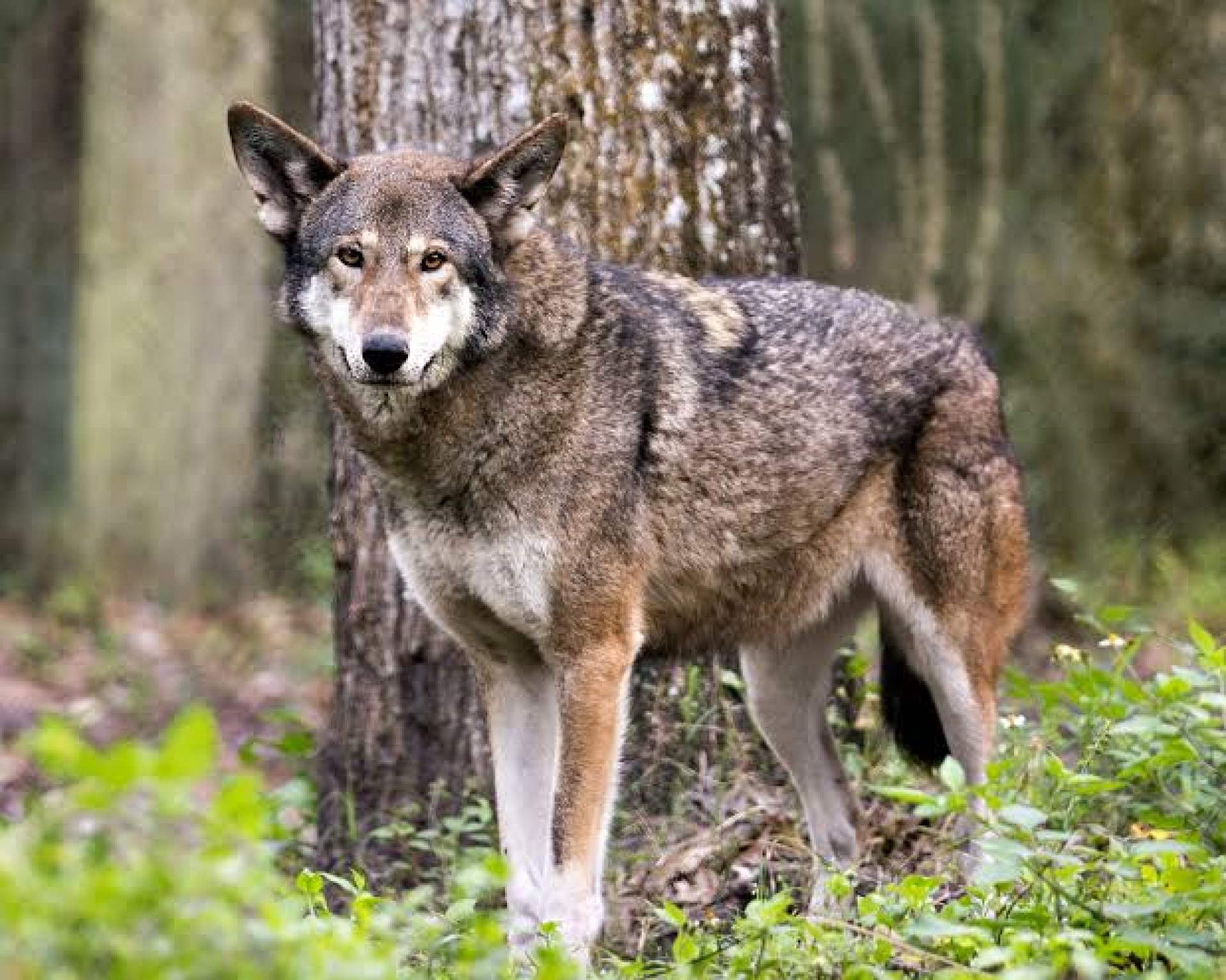
Red wolf

Red wolves

Red wolves have varied a bit about whether they should be classed as their own species or a subspecies of the grey wolf, however it has now been settled that they are separate for quite some time.
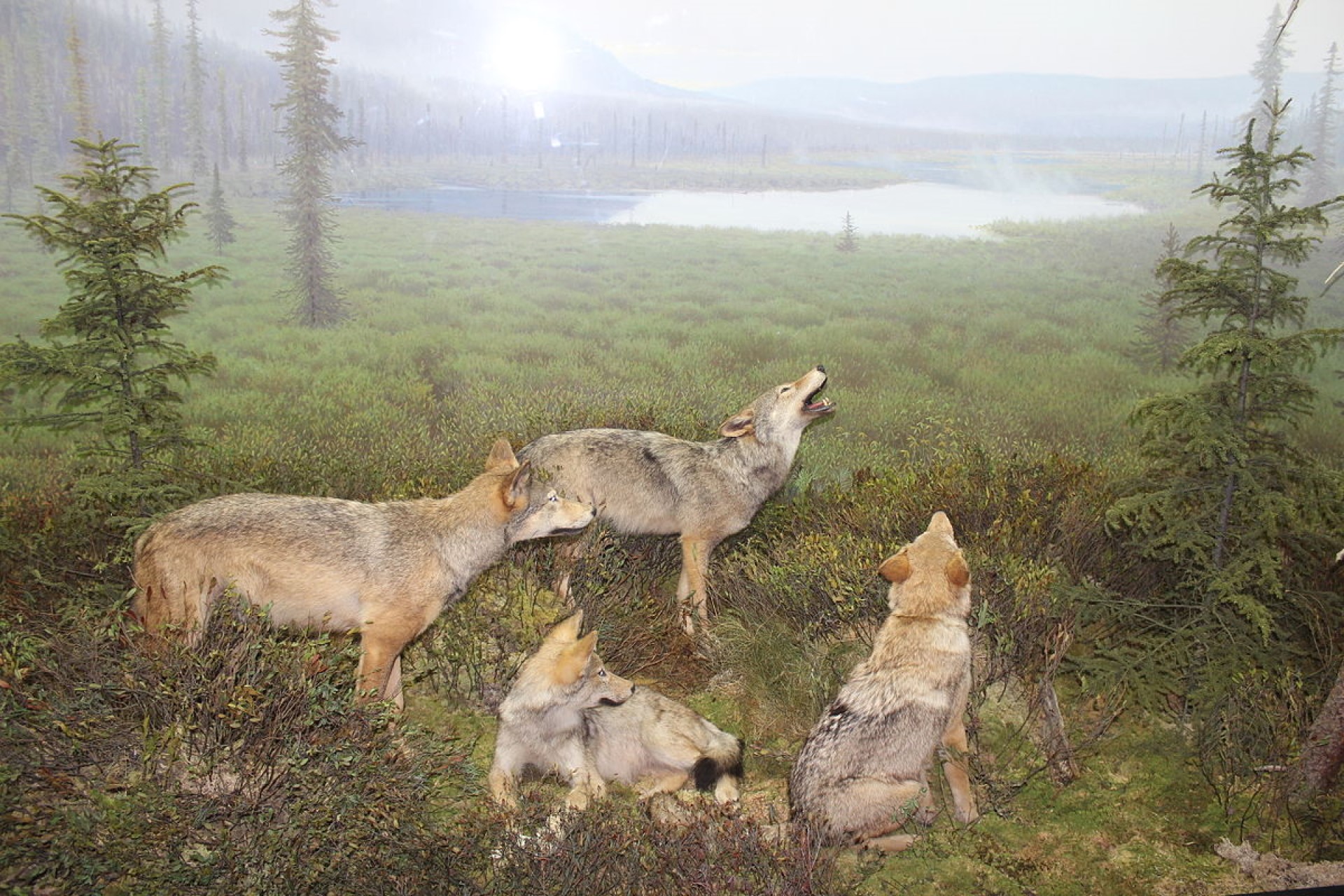
Size-wise it lies midway between a grey wolf and a coyote. Indeed, despite its serious danger of extinction, it is often missing from the endangered list. It has at various times been suggested to be a cross between the wolf and the coyote, or been a subspecies of the wolf.

It has been listed as critically endangered since 1996 by the IUCN, yet the same species is not listed in the CITES appendices of endangered species.

If or when we write any articles on this subject, they will appear below

To return to the canine family, click here

[smart_post_show id="12175"]

Algonquin wolf

Algonquin Wolf

This wolf was formerly called the Eastern Timber wolf, and was considered a subspecies of the grey wolf. There are only around 500 of this species that live in the wild. They are classified as vulnerable, presumably as there was never a large population of these wolves in the wild. They are thought to have split from grey wolves 67,000 years ago (for reference, this is more than twice the minimum distance back to when red and grey wolves split).

Found in the area of the great lakes and eastern Canada.

At the point at which it was decided that this wolf is a separate species, it already has a relatively low population, though it is considered to be mid-way between secure and extinct.

Any articles that we write in the future will appear below. We hope in the future to link to people who can help you see them in the wild, this will lie below the news. Do get in touch if you live or work in the area, we are really keen to connect you with those people visiting the area, so that they can see this newly split species and to bring you income from this species on your doorstep.

Both of the below videos are from Algonquin park, the first is a natural howl of a wolf in the stillness of the morning, while the second, is a howl prompted by a human howling into the wilderness – while this should not be done too often, as it can make the wolves nervous (they howl to spread themselves out, so hearing howls can make them think that they have to fight – though howling in North America is far more common, likely as a result of centuries of persecution in Europe.
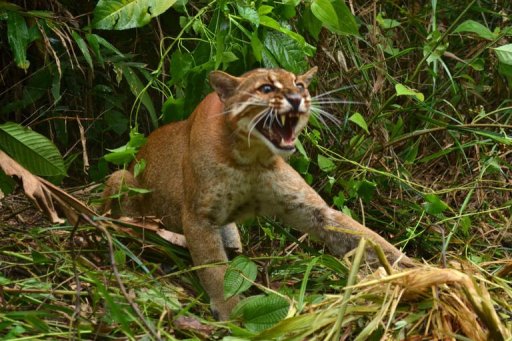
As we make links in the field to see this species, they will appear below the  videos and the list of articles.

[smart_post_show id="12163"]

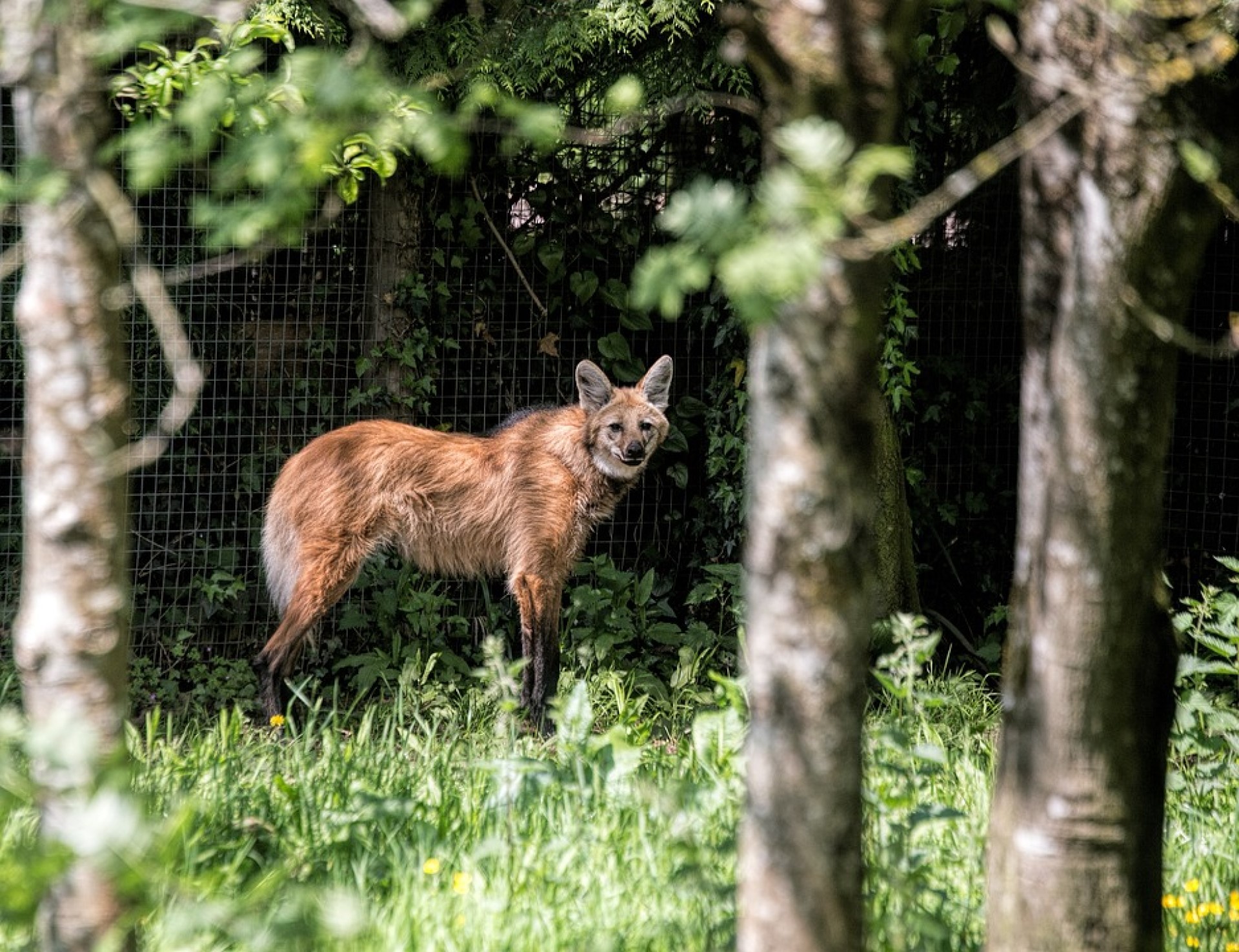
The Manned wolf

Looking, at first glance, like a fox on stilts, it is found in Argentina, Brazil, Bolivia, Peru, and Paraguay, and is almost extinct in Uruguay. It is actually not a wolf or a dog, but instead sits in its own genus Chrysocyon  which means “golden dog”. It is crepuscular and omnivorous, and lives on the open habitat of the South America Savanna. The IUCN classes it as near threatened, while a Brazilian organisation with a similar role lists it as vulnerable.
Its name in a local language calls it a big fox. Indeed some studies have suggested that it should be in the same genus as pseudo-foxes.

A recent study suggested that its nearest relative was the Falkland islands wolf, and its mainland relatives – but you have to go back 7 million years to find a common ancestor with this group.

It only hunts solitarily, and its preferred habitat is grasslands, scrub prairies, and forests.

It is not currently considered endangered, given its wide area in which it inhabits, never-the-less it is recognized as a near threatened species due to its reducing numbers. In Brazil, Argentina and Uruguay it is forbidden to hunt them. It has been used to publicize the fight to protect the Brazilian cerrado, by placing it on one of the Brazilian notes.
This animal was shown in great detail in planet earth 3 episode 3, however, this clip is from a bbc series a few years ago.

As we make contacts which you can use to plan your travel to see this animal for yourself.

[smart_post_show id="24034"]

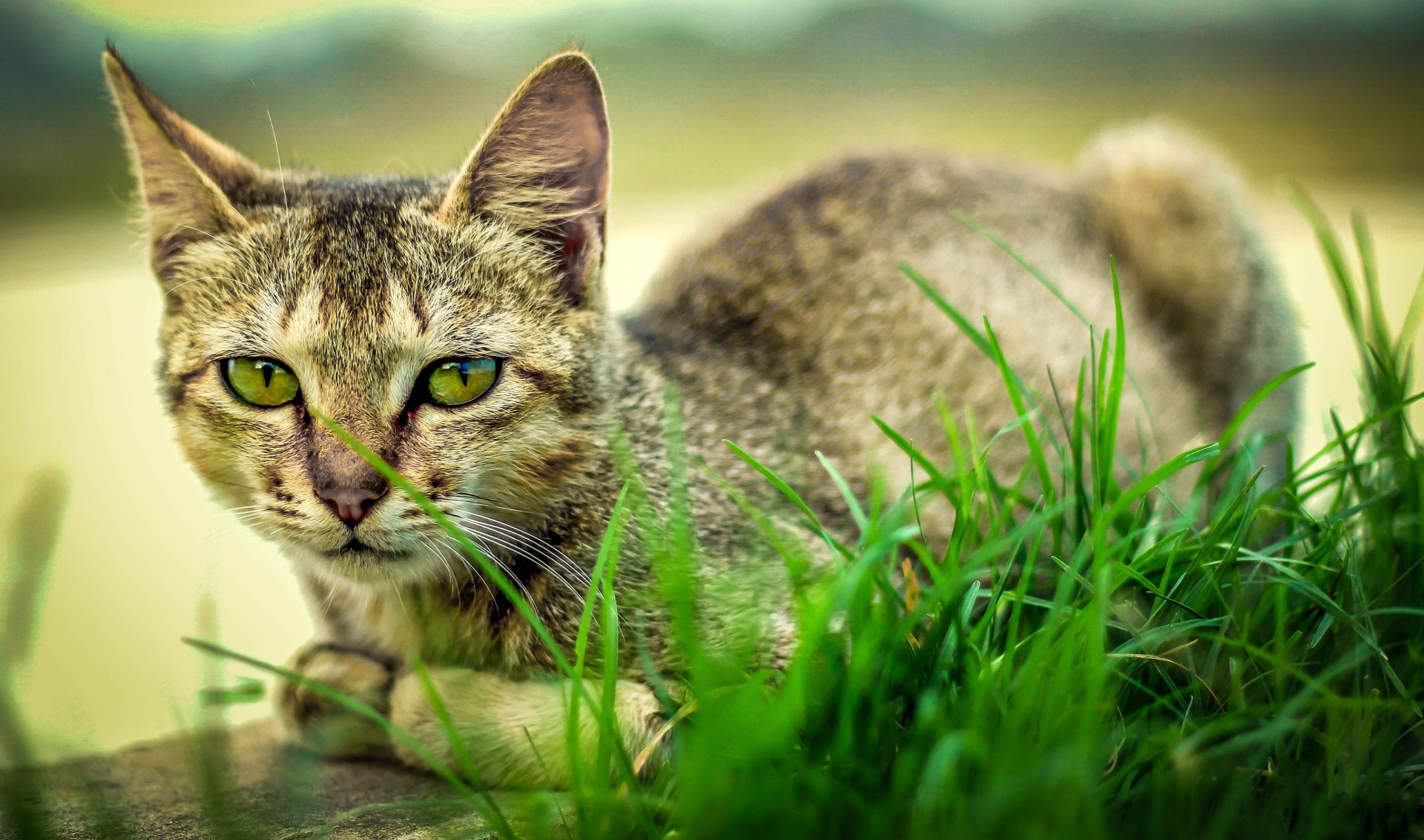
Domestic cat

Domestic cat

Domestic cats are thought to have been first tamed back around 10,000 somwhere in the middle east. Unfortunately, as this is the cat that makes up the worldwide domestic cat population (almost exclusively) in many regions like Scotland, while reduction in numbers made specific subspecies of wildcat endangered, it has often been hybridisation that has pushed them over the edge.

There is little point in showing a map of the world, as they are found in almost every human population. It is thought that there are at least 200 million across the globe
Domestic cats are thought to have been tamed in Israel, which has unfortunately meant that this species of wild cat is now spread across the globe – many local species of wildcat have become extinct through hybridisation, the British wildcat is just one such example. There are now only pure British wildcats in captivity, and while there are still quite a few living wild in Scotland they have Asiatic wildcat features. This has happened in many places and solutions are not yet forthcoming.
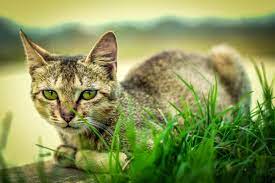
While unfortunate, there is still work being done. In the UK there are plans to clear a peninsular of domestic cats, and re-establish a wildcat population. Only in situations like Scotland is hybridization likely, the most common reaction to a wildcat meeting a domestic cat is for the wildcat to kill the domestic cat. I hope to live to see the wildcat roaming Scotland once more, but we will se what happens.

[smart_post_show id=”11927″]

They are not hard to see if you are in the right place. I have seen them in Africa, take a night drive in almost any nature reserve. Links will be added below.

Lynx (canada)

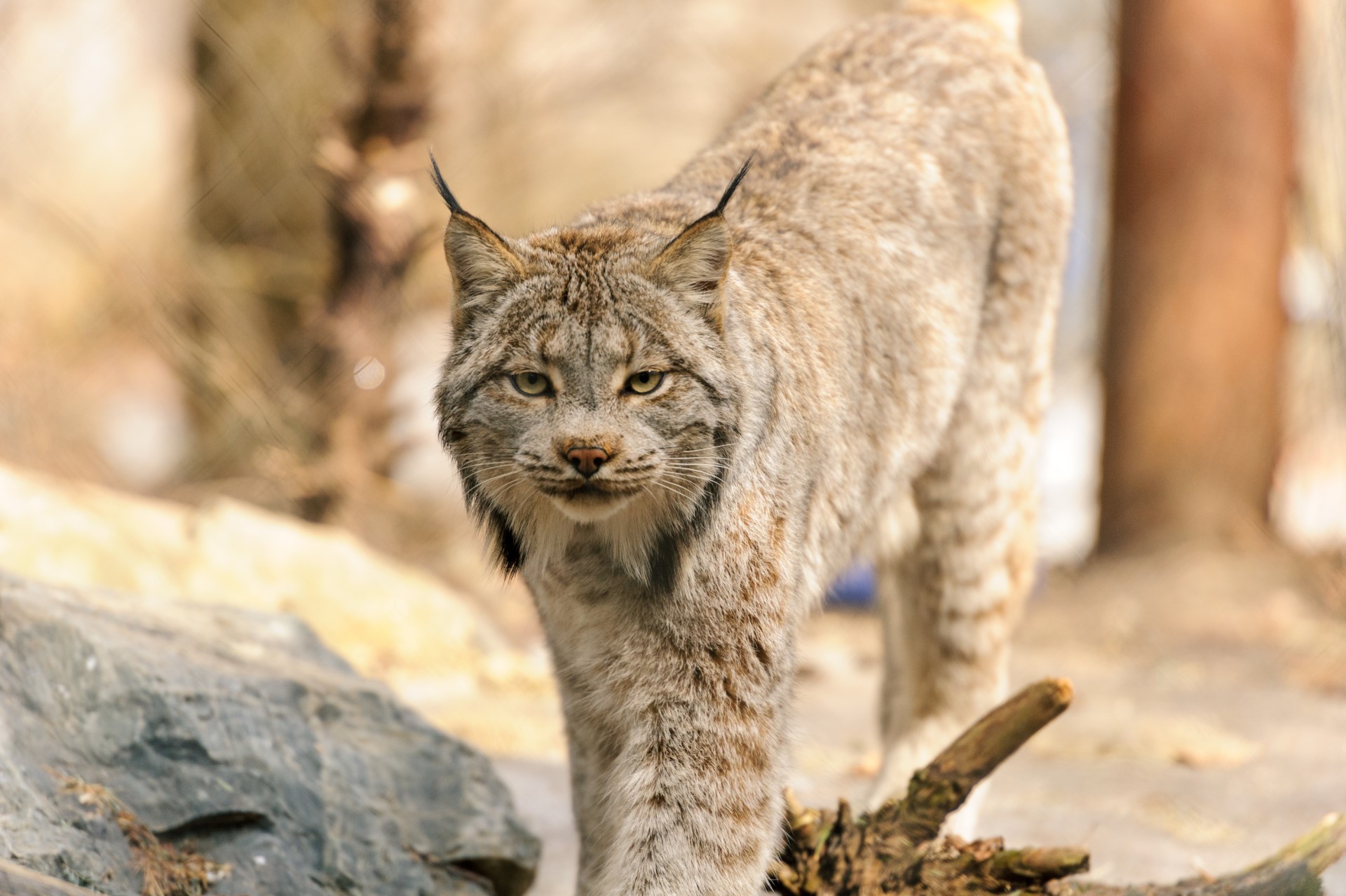
Canada lynx

The Canada lynx is one of 2 new world species, and is found through much of Canada and Alaska, throughout the Boreal forests of spruce and fir. They are hunted but the harvest is worked out on the basis of the population, so it rises and falls quite a lot. Climate change is effecting its northern range, and unfortunately is bringing this cat and the bobcat into more common contact, leading to an increasing number of hybrids along the area that they meet. There are thought to be 10-12 thousands of the Canada lynx across its range.

[smart_post_show id="11904"]

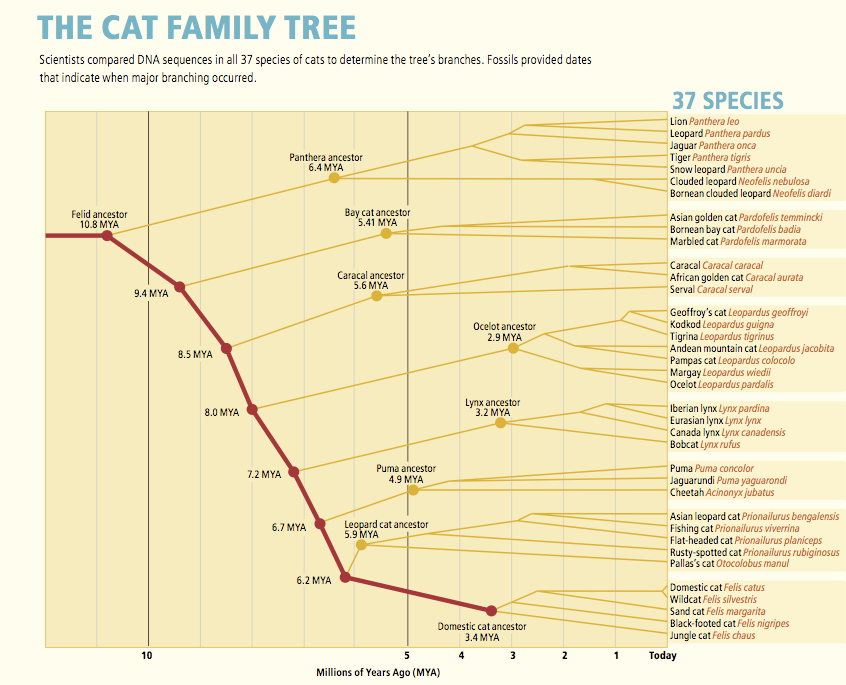
Big cat family tree

The Cat (felidae) family tree

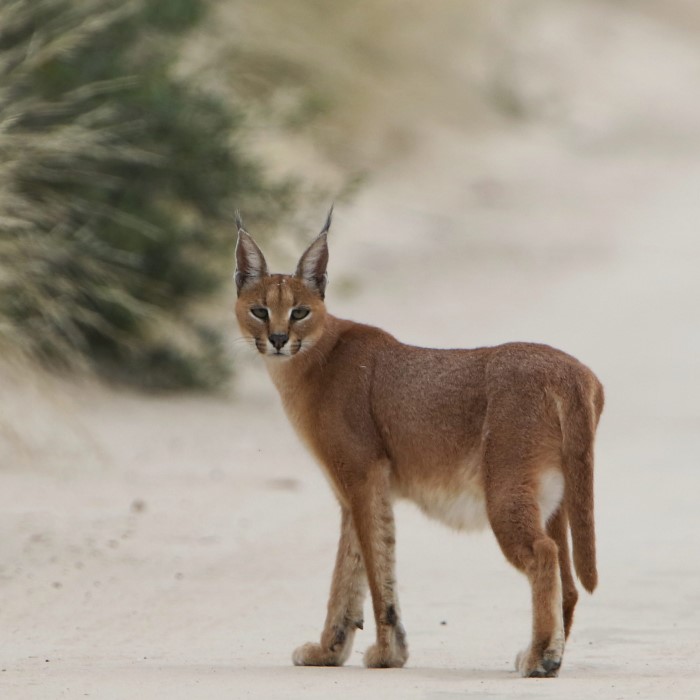
The Cats form an incredibly successful family. It is true that they are missing from the polar regions, and Australasia, but everywhere that they reached they have been successful, and in many ecosystems they are the undisputed kings

Panthera Family

 This family split from hte Felid ancestor 10.8 million years ago. There have been some debate as to whether the two species of clouded leopards should be included in Panthera. On the circular mammal tree (which we are using – look in the species watch tab, or click here)

They are generally included in a subgenus Panthera_Neofilis


Bay cat Familiy

Bay cat ancestor split 9.4 milion years ago

Caracal Family

Caracal Ancestor split 8.5 million years ago

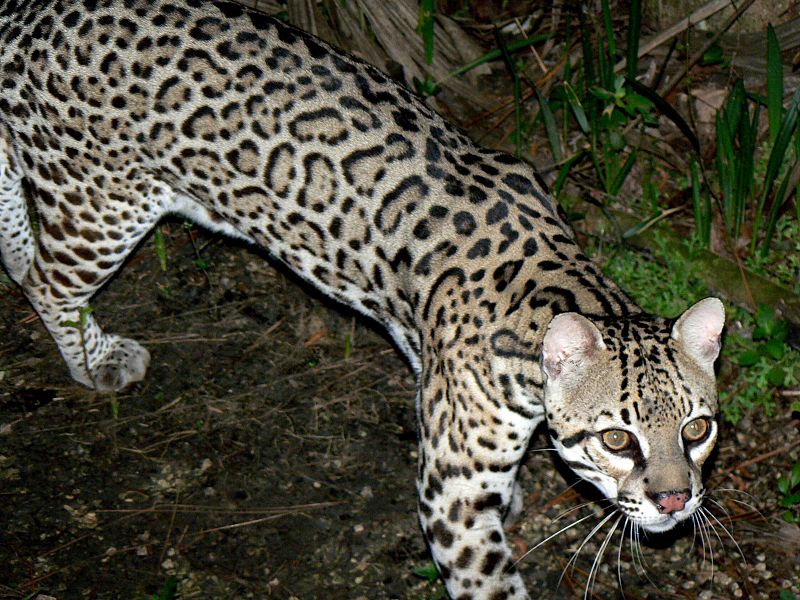
Ocelot Family

Ocelot Ancestor 2.9 million years ago

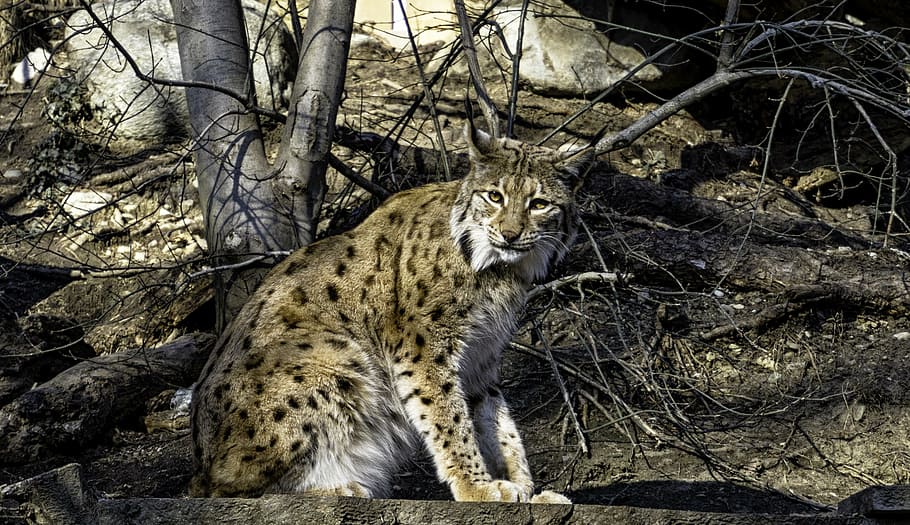
Lynx Family

Lynx Ancestor 3.2 million years ago

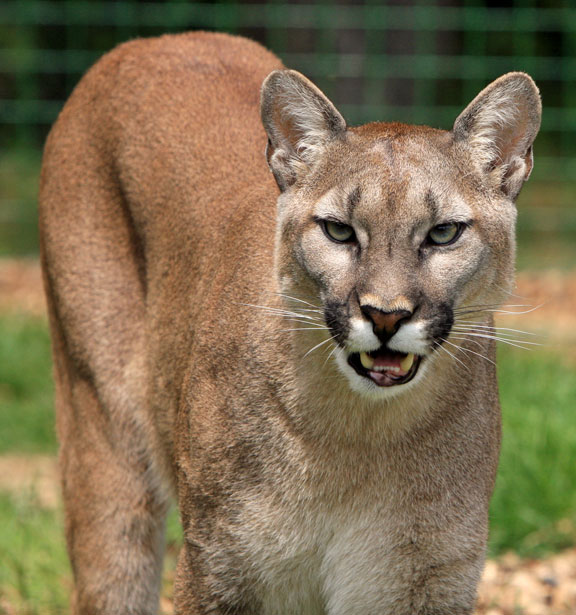
Puma Family

Puma ancestor 4.9 million years ago

Leopard cat Family

Leopard cat Ancestor 5.9 million year ago

Domestic cat Family

Domestic cat Ancestor

See Animals Wild

Read more news

Join as a wild member
to list your wild place & log in

Join as an ambassador supporter to
support this site, help save wildlife
and make friends & log in

Join as an Associate member
to assist as a writer, creator, lister etc & to log in

List a wild destination

List a destination in
the shadow of man

List a hide for animals more easily seen this way

Highlight some news
missed, or submit a
one-off article

Browse destinations for fun or future travel

Temporary membership
start here if in a hurry

Casual readers and watchers